Employee GPS Tracking Policy: Laws, Examples, Best Practices
Updated on 6 Feb 2026
Jump to
Summary

An employee GPS tracking policy defines when, why, and how location tracking happens at work.
According to Gartner, over 50% of employees resist location tracking when it’s introduced without clear limits or explanation.
U.S. laws vary by state, with many requiring notice or consent, especially for personal phones or vehicles.
Clear policies separate work-hour tracking from off-duty privacy, reducing legal disputes and employee pushback.
Well-defined GPS policies improve compliance, protect trust, and prevent misuse of sensitive location data.
An employee GPS tracking policy is an official document that shows how employers track employee location. It ensures safety and transparency through employee consent. Usually, tracking is limited to company-owned devices within working hours to comply with different state and country laws.
In this guide, I will discuss what a GPS tracking for employees policy should include, what the law actually allows, and how to use GPS without crossing privacy lines.
So let’s start!
What is Employee GPS Tracking Policy?
An employee GPS tracking policy is a written rule that explains when, why, and how an employer tracks employee locations during work hours. The goal is pretty simple. To allow legitimate business tracking while protecting employee privacy and legal rights.
But why does this policy matter?
To know that, you first need to look at ownership. Like, who owns the employee tracking devices or the vehicle being tracked changes everything. When employers track company-owned phones, laptops, or service vehicles, the law generally allows it. The employer has the right to monitor how business assets are used.
That permission, however, does not extend to personal property, of course. As soon as tracking involves employee-owned vehicles or smartphones, legal risk increases. According to research, intrusive digital monitoring reduces trust and job quality. That is especially true in remote and hybrid work.
Because of this risk, timing and scope become critical. Even when tracking is tied to work, monitoring beyond business hours can cross legal boundaries. Legal guidance in 2024 still favors consent-first tracking for any personal device.
These legal pressures explain why written policies are now essential rather than optional. According to Gartner, unclear monitoring rules are a cause of employee distrust and compliance failures. Without defined tracking boundaries, they face higher legal and cultural risk.
A clear GPS tracking policy connects all these pieces. It defines what is tracked, when tracking starts and stops, and how location data is protected. More importantly, it turns legal expectations into daily operating rules.
Legal Considerations of Employee GPS Tracking
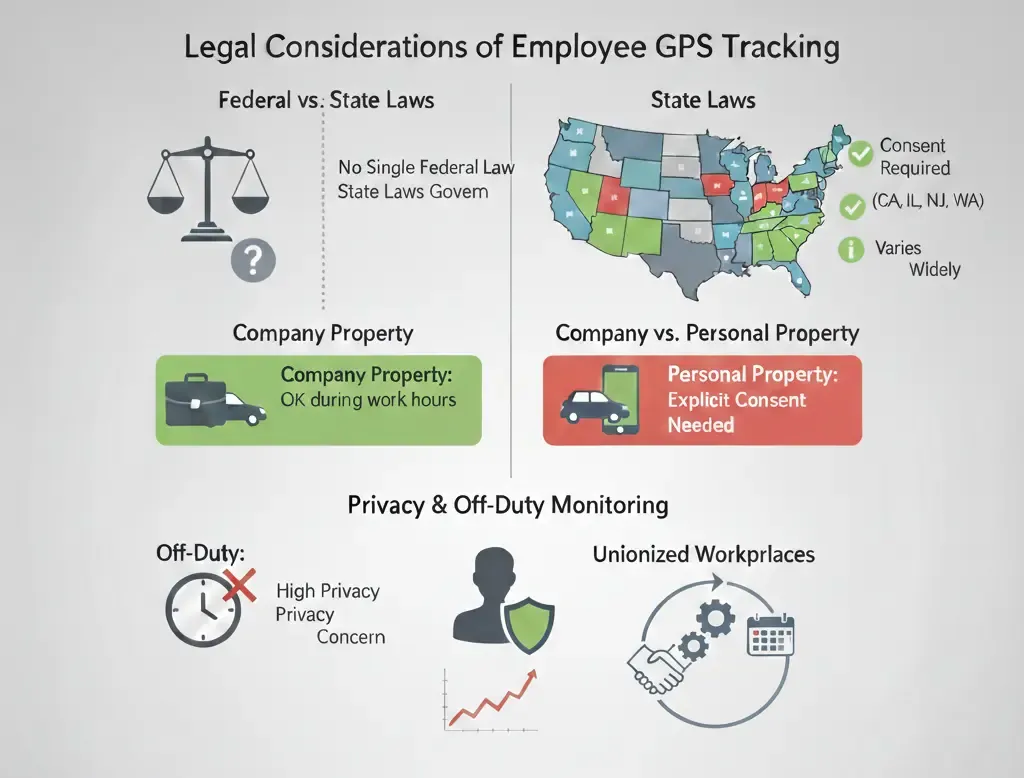
Using GPS tracking at work is a legal decision, too. If you don’t understand the law, you can easily get into trouble. This is especially true in the U.S. because different states have different laws.
Federal Law Doesn’t Give Clear Rules
In the U.S., there is no single federal law that spells out exactly how employers can use GPS to track employees. Some national laws touch privacy or data use, but none focus on location tracking by bosses.
That means the law you follow comes mostly from the states you operate in. When the ground shifts under you, a written policy keeps you steady.
State Laws Differ a Lot
Once you look at the states, things get complicated fast.
That’s because some states require an employee GPS tracking consent form before tracking can begin. While others treat tracking like any other monitoring tool.
States like California, Illinois, New Jersey, and Washington tend to require notice or consent for tracking, even on company devices.
One survey shows that more than half of the companies in the U.S. use monitoring tools of some kind. Yet many don’t communicate this clearly to workers.
That means you can violate the law simply by assuming the same rule applies everywhere.
Company vs. Personal Property Matters
If the company owns the device or the vehicle, tracking it during work hours is fine. That is because the employer owns the property.
But if you track someone’s personal phone or car, even for work, you likely need their explicit consent first.
Many legal disputes start here. Employees feel their privacy was invaded because they did not know they were being tracked on their own property.
Employee Privacy Concerns and Off-Duty Monitoring
Even when tracking is legally allowed at work, privacy still matters.
Employees don’t like being tracked when they are off the clock. In fact, a 2025 survey found that nearly 61% of Americans oppose tracking workers’ movements with AI or location tools.
Tracking after hours or on personal time can lead to privacy claims, even if tracking was legal during work hours. A clear policy that defines exactly when tracking is active protects both sides.
Unionized Workplaces Require Extra Steps
If your workforce is unionized, GPS tracking becomes part of labor relations.
Tracking is often seen as a change to working conditions, not just a technical feature. That means you must bargain with the union before introducing it. Skipping this step can make the policy unenforceable and can trigger grievances. This is one of the most common places policies fail. Because the process was wrong.
Legal Protection Through Written Policy Documentation
Most legal issues around GPS tracking come from the same source:
- Employees weren’t told clearly.
- Consent was assumed, not documented.
- Tracking went beyond what was communicated.
A written GPS policy stops this pattern. It says when tracking happens, why it happens, whose devices it applies to, and how long the data is kept. It also explains rights and limits clearly.
Ironically, the more companies monitor, the more employees worry about privacy. A survey found that 46% of workers saw an increase in tracking in the past year. Plus, monitoring is now so common that it can affect stress, trust, and morale.
Stay Compliant Across States Without Extra Work
Start free - No credit card required!
Why You Need an Employee GPS Tracking Policy
You need an employee GPS tracking policy because GPS without rules causes problems. Legal risk rises. Employees push back. Teams get confused.
A written policy explains why tracking exists, when it runs, how data is used, and how privacy is protected. Without that clarity, GPS feels intrusive fast.
Think about it from the employee side. If you were being tracked, wouldn’t you want to know why?
That’s why when a company decides to use GPS, policy should come first. According to Gartner, monitoring fails when it feels like control instead of insight. Clear rules set limits. They define purpose. They prevent mistrust before it shows up.
Plus, a good policy explains the business reason for tracking. It also explains how tracking works and how data is secured.
Only 22% of employees say they know if tracking is used at work. When people don’t know, stress goes up. Resistance follows.
If no one explains it, what do you think employees assume?
Legal compliance is another reason you need a policy.
The U.S currently lacks federal law for employee GPS tracking. State laws fill the gap. Many states limit tracking to company-owned property. Others require consent for personal devices. When policies include these rules upfront, disputes are easier to avoid.
Discipline also needs to be clear. If disabling a GPS device can lead to warnings or termination, employees must know that in advance.
And in the end, that’s the point. A GPS tracking policy removes surprises.
Key Components of an Effective GPS Tracking Policy
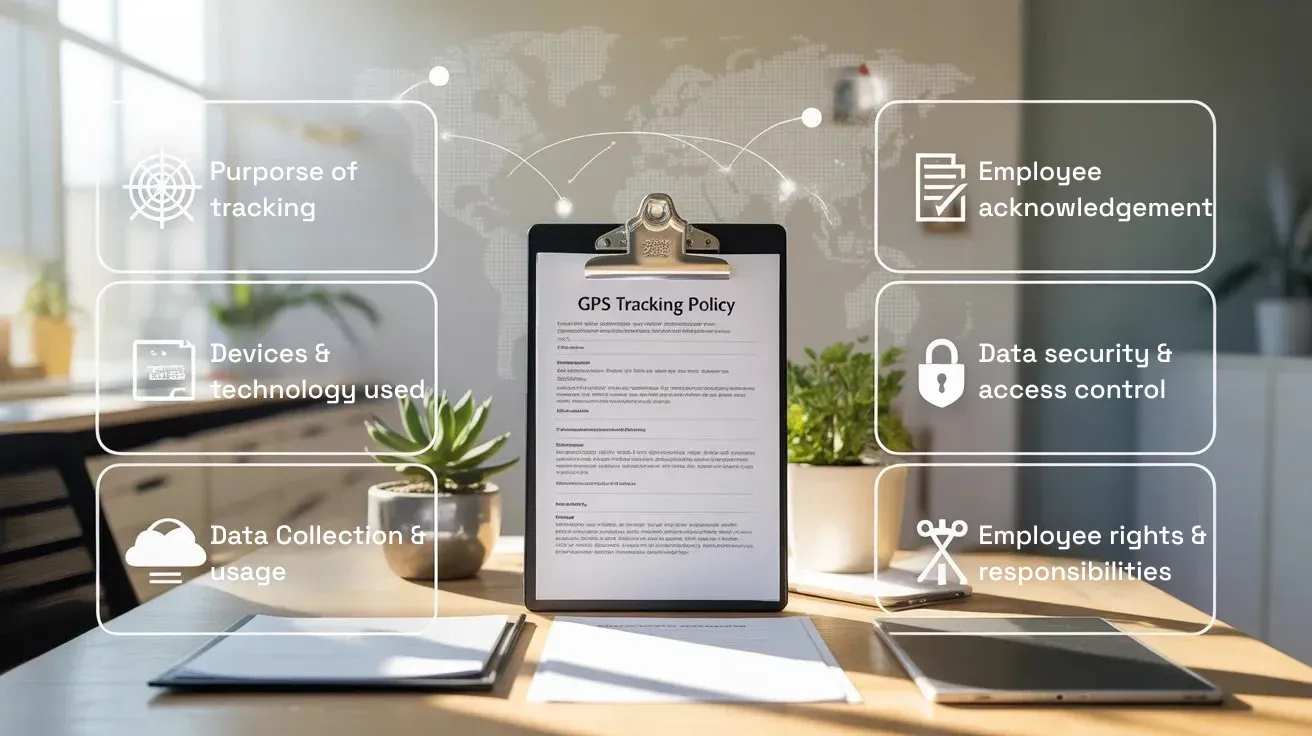
When GPS tracking causes problems, it’s rarely because tracking exists. It’s because no one explained it properly.
Purpose of GPS Tracking
This is where everything begins.
Policies mostly fail because they are opened with vague language like “operational improvement.” That tells employees nothing. Say why GPS is used.
People are far more comfortable when they know the reason. According to IOSH magazine, employees are most accepting of tracking tied to safety or logistics. They resist when it feels like behavior monitoring.
If you can’t explain the purpose in plain English, don’t expect anyone else to trust it.
Devices and Technology Used
This part sounds simple, but it’s where confusion usually starts.
Spell it out. Are you tracking company vehicles? Work phones? A GPS unit in a truck? An app that runs during shifts? Don’t assume people know. Also, explain whether tracking follows the device or only applies while someone is working.
Most complaints I’ve seen came from someone saying, “I didn’t know that was tracked.” That’s a communication failure, not a technology one.
Employee Consent and Acknowledgment
Consent should never feel sneaky.
Employees should see the policy before tracking starts and acknowledge it in writing. This isn’t just about legality. It’s about respect. If personal vehicles or phones are ever involved, consent isn’t optional. It’s critical.
When people feel informed instead of surprised, the tone of every conversation changes.
Data Collection, Storage, and Usage
Be honest here. Don’t oversell it. Don’t overcomplicate it.
Explain what data is collected. Is it location, time, or distance? Explain what it’s used for.
If data doesn’t have a clear use, employees will assume it’s being watched “just in case.” That’s when trust erodes.
Data Security and Access Control
This is where employees quietly worry, even if they don’t say it out loud.
Who can see this data? How many people? For what reason? Keep that list short. Operations. HR. Maybe a supervisor. That’s usually enough.
According to the news, most employee data complaints weren’t about hackers. They were about internal misuse. Too many people having access creates unnecessary risk.
Employee Rights and Responsibilities
Employees should know they’re not powerless.
They should be able to ask for their own data. Ask questions. Raise concerns. At the same time, expectations should be clear. Devices shouldn’t be disabled during work hours. GPS shouldn’t be tampered with.
When rules are clear, enforcement feels fair instead of personal.
FieldServicely help by enforcing these rules in real life. Tracking stays within work hours. The software follows the policy, instead of quietly breaking it. That’s what makes GPS tracking feel reasonable instead of invasive.
Track jobs, not people, with policy-safe GPS
Start free - No credit card required!
Best Practices for GPS Tracking at Work
GPS tracking can help work run more smoothly. It can also damage trust if handled poorly. These practices reflect what actually works in day-to-day operations:
Tell Employees Before You Start
GPS should never come as a surprise.
Employees need to know what is tracked, when it is tracked, and why it exists. Better if you discuss the benefits too.
When companies explain this early, tension drops. According to SHRM, employees were far more likely to accept tracking when it was explained before rollout.
Keep Tracking Inside Work Hours
This boundary matters more than any feature.
Track employees only while they are working. Stop tracking when the shift ends. Do not follow commutes. Do not track breaks. Do not blur the line.
In a workforce ethics review, most disputes around GPS tracking were linked to unclear stop times. When tracking ends on time, most concerns disappear.
Tie GPS to Real Business Needs
GPS should exist for a reason that makes sense.
Common reasons include job verification, route planning, mileage reimbursement, payroll accuracy, and worker safety. These are practical needs.
GPS tracking delivers value only when it supports specific workflows, not general oversight. Employees respond better when tracking solves real problems.
Build trust with work-hour-only GPS tracking
Try for free - No credit card required!
Collect Only What You Need
More data creates more risk.
Most teams do not need live tracking all day. Many only need the location at clock-in, clock-out, or job arrival. Collecting less data reduces privacy concerns and lowers liability.
According to research, companies using event-based tracking faced fewer internal complaints than those using continuous monitoring.
Trust me, less tracking often works better.
Treat Location Data Like Sensitive Data
GPS data shows where people go. That makes it personal.
Limit access. Lock it down. Delete it when it’s no longer needed. In recent compliance reviews, internal misuse of location data was flagged more often than external breaches.
If too many people can see GPS logs, problems follow.
Get Consent and Document It
Employees should acknowledge GPS tracking in writing. This matters most when personal phones or vehicles are involved. Even when consent is not required by law, it shows respect and builds trust.
Lack of documented consent remained a common weakness in employee tracking programs. Clear consent avoids future disputes.
Review Your Practices Often
GPS policies should evolve as work models, tools, and laws change. Many organizations now review tracking policies annually to stay aligned and avoid drift.
Keep GPS compliant, limited, and work-hour only
Try for free - No credit card required!
Company Vehicle GPS Tracking Policy
Purpose and Scope of Vehicle Tracking
The policy should start with intent.
Company vehicle GPS tracking exists to support work. It helps optimize routes, manage fuel use, protect assets, and respond faster to customers.
Research shows that route optimization alone can reduce fuel spend by up to 15% when tracking is used correctly.
Next comes scope. Tracking applies only to company-owned vehicles. It runs only during work hours. It does not follow personal errands or after-hours movement.
When employees read this, they should feel informed, not monitored.
Legal Compliance and Employee Expectations
Now comes the legal side.
This matters because compliance failures are costly. According to research, most GPS-related disputes came from unclear notice, not illegal tracking.
A good policy sets expectations early. It states that tracking follows state laws and that employees are informed in writing.
Clarity prevents conflict before it starts.
Transparency and Consent
Even when the law allows tracking without consent, transparency still matters.
Employees want to know what data is collected and who sees it. The report found that trust dropped when tracking systems were perceived as hidden or vague, even when legally compliant.
Consent is not just a form. It is a signal. It tells employees that this system has boundaries.
Data Use, Access, and Retention
GPS data should never drift.
The policy must explain what data is collected. That may require location and routes, time. Nothing more. It must also explain how long data is stored and who can access it.
Did you know 95% of data breaches were tied to human error in 2024? Too many eyes create too much risk.
If data has no business purpose, it should not exist.
Enforcement and Fair Use
Rules without enforcement confuse everyone.
The policy should explain what happens if vehicles are misused or GPS devices are disabled. It should also explain what GPS will not be used for. No constant surveillance. No after-hours tracking.
Fair enforcement builds credibility. Selective enforcement destroys it. Employees notice the difference fast.
Employee GPS Tracking Policy Example
This sample employee GPS tracking policy explains how and why GPS tracking is used within the company:
Purpose of GPS Tracking
The company uses GPS tracking strictly for legitimate business purposes. These include employee safety, route verification, and accurate time. Plus mileage reporting, customer service validation, and protection of company assets.
GPS tracking is not used for constant supervision or personal monitoring. It exists to support work-related activities and operational accuracy.
Scope of Tracking
GPS tracking applies only to work-related activities and company operations.
Tracking is limited to:
- Active work hours
- Assigned job locations
- Company-owned vehicles, devices, or approved work applications
Tracking does not occur during breaks, after scheduled shifts, or during personal time.
Devices and Systems Covered
GPS tracking may be enabled on:
- Company-owned vehicles
- Company-issued mobile devices
- Authorized work applications used during active shifts
Personal vehicles or personal devices are never tracked without explicit, written employee consent.
Employee Notice and Consent
Employees are informed in writing about GPS tracking before it is implemented. This policy is provided during onboarding or before tracking begins.
Employees are required to sign an acknowledgment. It confirms they understand how GPS tracking works, what data is collected, and how it is used. Consent is required where mandated by state or local law, especially when personal property is involved.
Data Collection and Use
The company collects limited GPS data related to:
- Location during work assignments
- Time spent at job sites
- Distance traveled for work purposes
GPS data is used only for approved business functions. Such as payroll verification, safety response, route planning, or compliance requirements. It is not used for unrelated performance surveillance.
Data Access and Security
Access to GPS data is restricted to authorized personnel with a legitimate business need. Such as operations management, payroll, or safety teams.
The company takes reasonable measures to protect GPS data from unauthorized access, misuse, or disclosure. Data is stored securely and retained only for as long as necessary for its intended purpose.
Employee Rights and Responsibilities
Employees have the right to:
- Be informed about GPS tracking practices
- Understand when tracking occurs
- Ask questions or raise concerns regarding tracking
Employees are responsible for:
- Using company vehicles and devices appropriately
- Keeping GPS systems enabled during work hours
- Following company policies related to vehicle and device use
Policy Violations and Enforcement
Disabling GPS tracking during work hours without authorization, misusing tracked assets, or accessing GPS data may result in disciplinary action. Depending on the severity of the violation, this action may include termination.
All enforcement actions are handled consistently and in accordance with company procedures.
GPS Tracking Policy Template
EMPLOYEE GPS TRACKING POLICY
GPS TRACKING POLICY FOR (Company Name)-------------------------
STATEMENT OF PURPOSE AND OVERVIEW
The purpose of this Employee GPS Tracking Policy is to define the criteria for protecting (Company Name) ______________________________ property, operations, and legitimate business interests.
This Policy is also intended to ensure transparency regarding the employee location data that (Company Name) ______________________________ collects, uses, stores, and protects.
This Policy constitutes official notice to employees and is implemented in compliance with (Applicable Privacy Law / Regulation) ______________________________.
By acknowledging this Policy, employees of (Company Name) ______________________________ consent to the GPS tracking practices described herein.
DEFINITION OF GPS TRACKING
(Company Name) ______________________________ is committed to employee safety, vehicle safety, and responsible fleet management.
Global Positioning System (GPS) technology is used to monitor company vehicles or company-approved devices during work-related use.
GPS tracking may be implemented through:
- A GPS device installed in a company vehicle
- A GPS-enabled application installed on a company-issued device
GPS technology is capable of recording the following data points, where applicable:
- Vehicle location at stops
- Time of arrival
- Length of stops
- Traveling speed
- Idling time
- Vehicle mileage
- Acceleration and deceleration
- Rapid starts (jackrabbit starts)
- Seatbelt usage (where supported)
SCOPE OF APPLICATION
This Policy applies to:
- Company-owned vehicles
- Company-issued mobile devices
- GPS tracking applications approved by (Company Name) ______________________________
GPS tracking applies only during working hours. Tracking will stop once an employee clocks out or completes their assigned work shift.
DATA COLLECTION AND USE
(Company Name) ______________________________ will collect GPS data solely for legitimate business purposes, including but not limited to:
- Route planning and operational efficiency
- Payroll and time verification
- Safety and emergency response
- Asset protection
- Compliance with legal and insurance requirements
GPS data will not be used for personal surveillance or non-work-related monitoring.
PRIVACY PROTECTION
(Company Name) ______________________________ will collect, process, and store only data that is relevant and necessary for business operations.
GPS monitoring will occur only while employees are working. Monitoring will cease during non-working hours.
Access to GPS data is limited to individuals in the following roles:
DATA RETENTION
GPS data will be retained for a period of:
After this period, the data will be:
EMPLOYEE RESPONSIBILITIES
Employees operating vehicles or devices equipped with GPS are expected to:
- Comply with all applicable traffic and safety laws
- Use company vehicles and devices responsibly
- Do not disable, tamper with, or interfere with GPS tracking systems
POLICY ENFORCEMENT
Disabling GPS tracking during work hours without authorization, misusing tracked assets, or accessing GPS data improperly may result in disciplinary action.
Depending on the severity of the violation, this may include termination.
ACKNOWLEDGMENT AND CONSENT
By signing below, I acknowledge that I have read and understand this Employee GPS Tracking Policy and consent to GPS tracking as described.
Employee Name: ______________________________
Employee Signature: __________________________
Date: ___________________
Conclusion
When companies get into trouble with employee tracking, it’s rarely because they used GPS. It’s because they used it quietly, inconsistently, or without clear limits.
A clear employee GPS tracking policy removes that friction. It tells people what’s being tracked, when it starts, when it stops, and why it exists in the first place. More importantly, it sets expectations before assumptions take over.
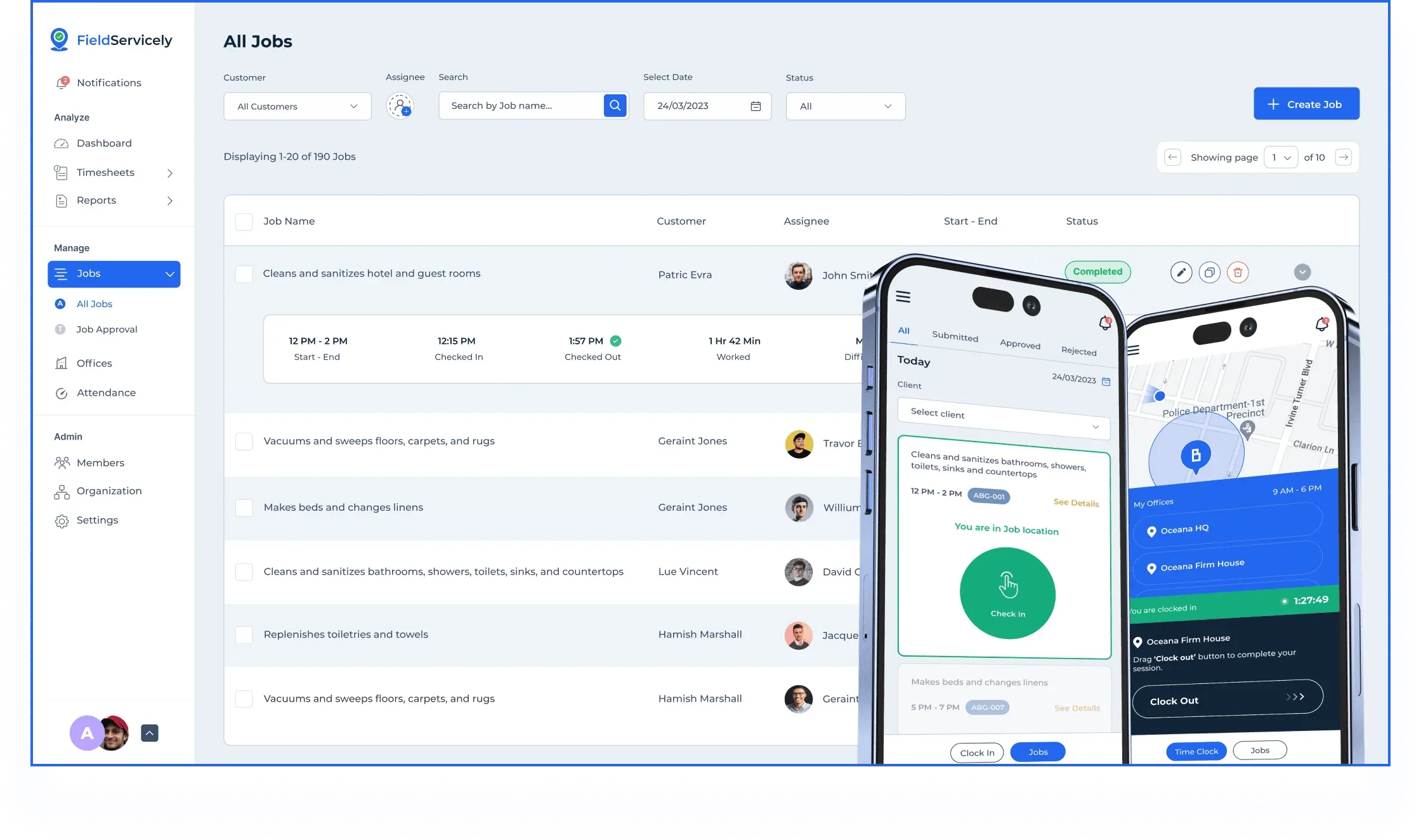
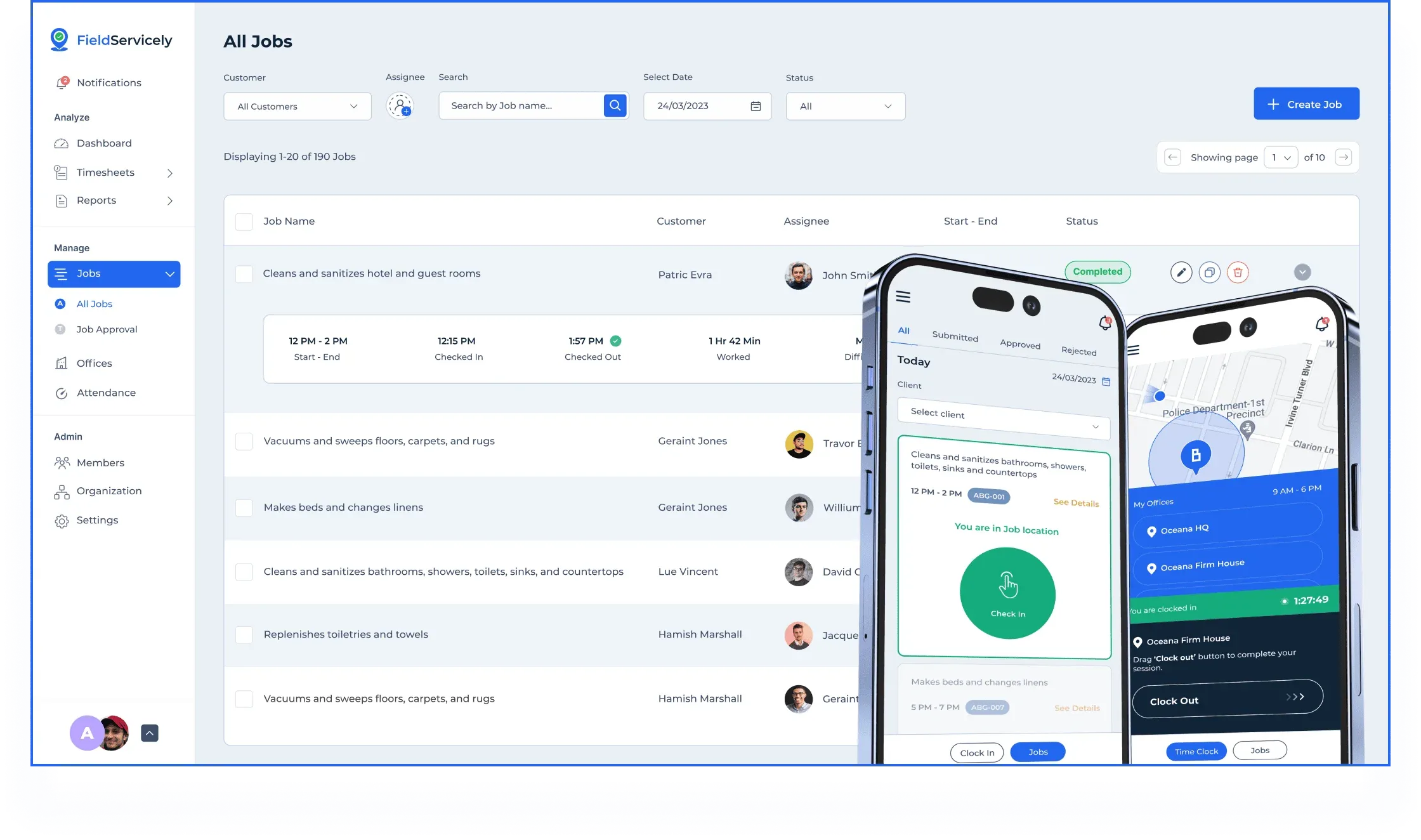
If you’re managing field teams, the right tools make this easier to live by, not just write down. FieldServicely is an employee GPS tracking app. It is built around work-hour tracking, job-based location visibility, and role-based access. That makes it easier to follow your policy in practice, not just on paper.
Frequently Asked Questions
Is it legal to track company vehicles?
Yes, most of the time. If the vehicle belongs to the company, employers can usually track it while work is happening. That said, people should be told upfront. Tracking without context is where problems start.
Can my employer track my location on my personal phone?
Not unless you agree to it. A personal phone is still personal, even if you use it for work. In most states, tracking it without clear consent crosses a legal and ethical line.
Can my employer track me without telling me?
That’s risky. Even when tracking might be allowed, doing it secretly almost always creates backlash. Laws aside, it damages trust fast, and that’s usually what turns tracking into a real issue.