Top 20 Field Service Management Best Practices in 2026
Updated on 10 Dec 2025

Jump to
Summary

Automating routine tasks and going paperless cuts costs and reduces errors while letting your team focus on important work.
Using mobile-first solutions and proper communication tools helps field techs work faster and solve problems on the first visit.
Good scheduling software and route planning save time and money by helping technicians get to more jobs each day.
People who have field workers often lose efficiency and eventually profit due to not following the field service management best practices.
What's the real cost of mismanaged field operations? For most businesses, it's not just about lost dollars - it's about missed opportunities.
Implementing the best practices can make business more competitive and day-to-day operations smoother.
In this article, we will try to help you explore the best practices, tips and tricks so that you can manage the team more effectively.
According to a report from Fortune Business Insights, the Field Service Management (FSM) market will grow from USD 4.72 billion to USD 11.87 billion in the 2024-2032 period. Field Service Organizations that can navigate the fields in this crucial time will reap the most benefits. Managing field services is essential for achieving that growth.
Pro Tip
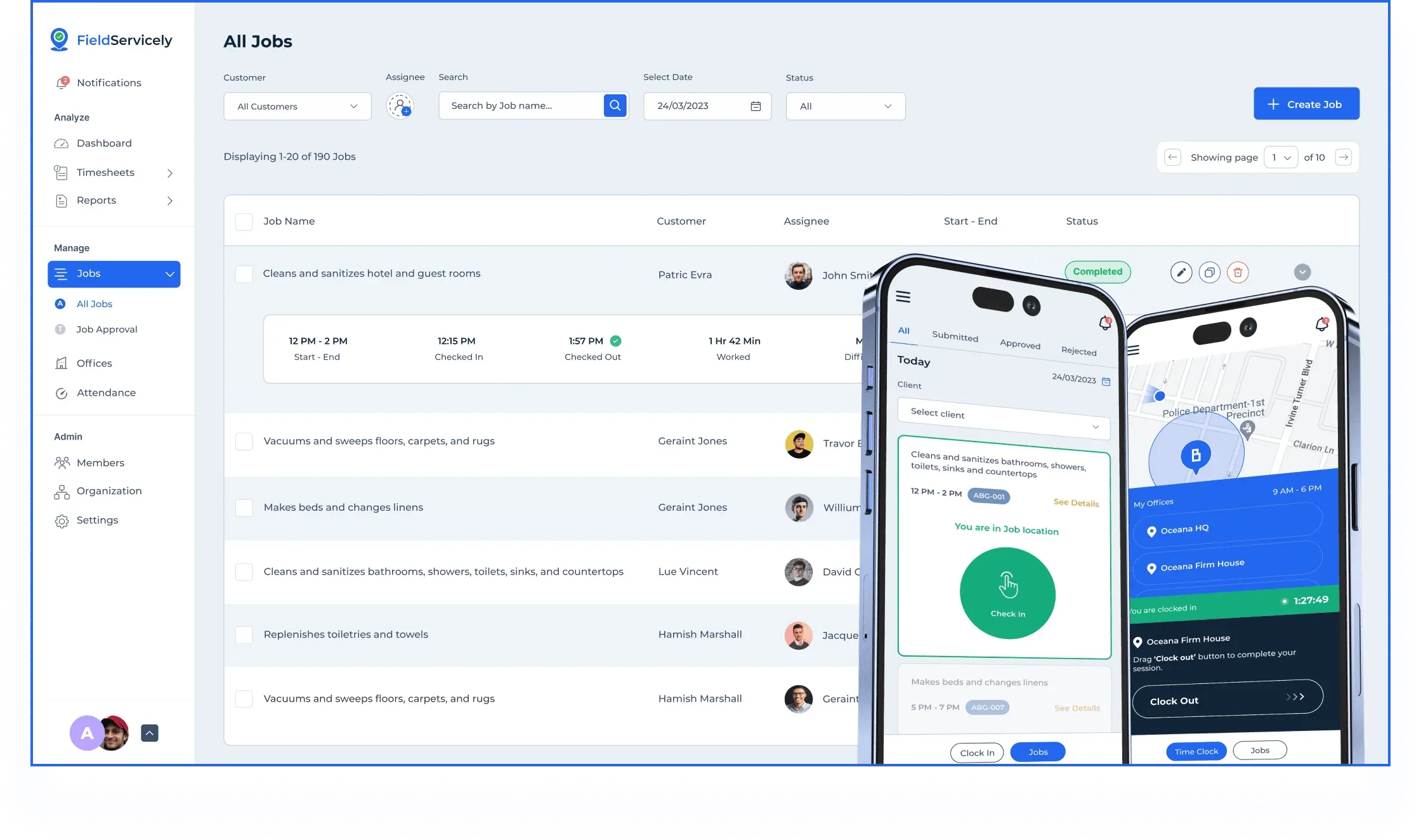
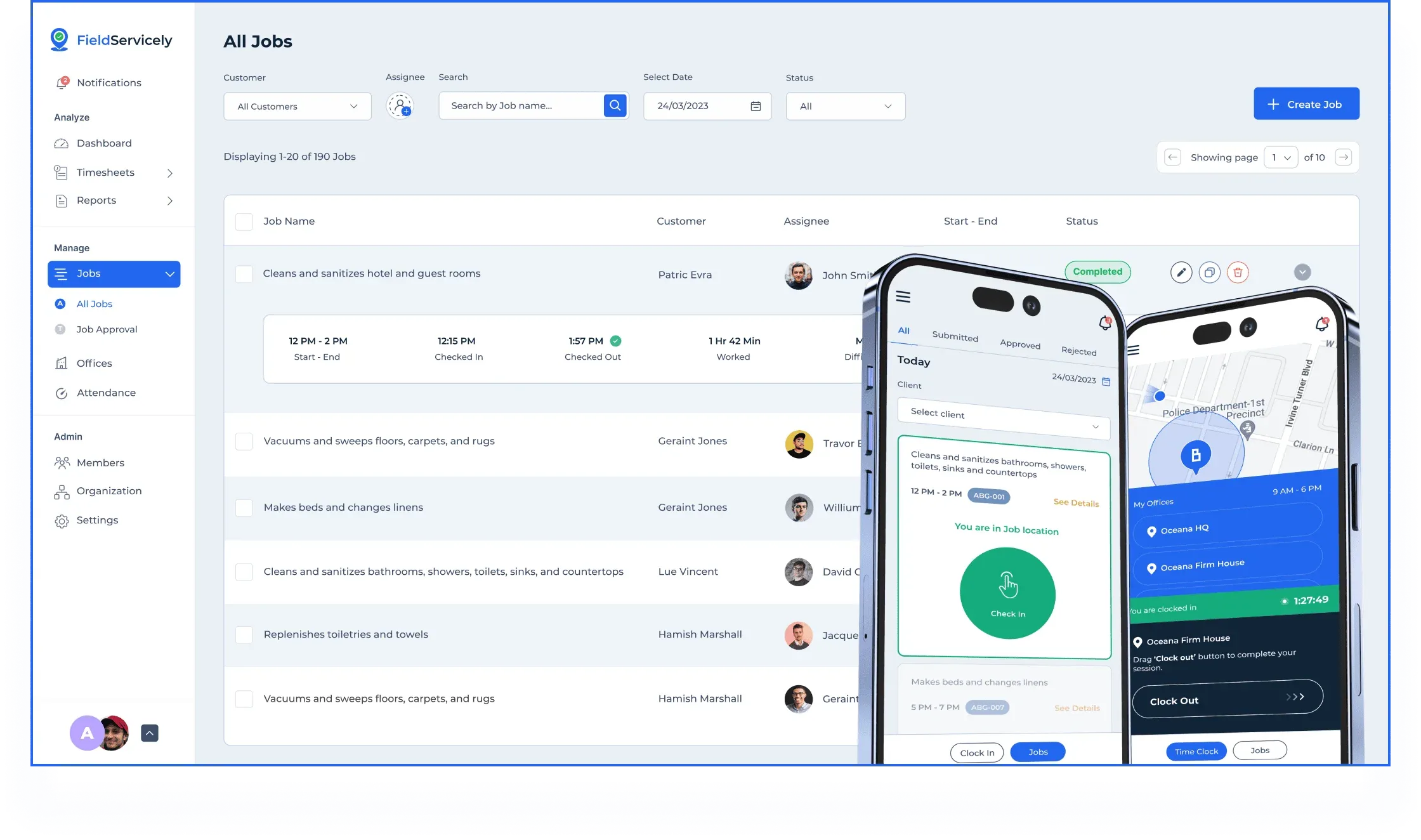
Boost your field workers' performance with FieldServicely’s scheduling, tracking, and management, ensuring efficient service and long-term success.
Pro Tip
Unlock service business ideas and discover new opportunities tailored to your skills and expertise. Find the perfect fit to grow your business.
Detail on the best practices for managing field services
1. Automate Processes Wherever Possible
One of the best field service management practices is automating processes wherever possible. Nobody likes doing repetitive tasks. It's tedious, time-consuming, and prone to errors. Think of automation as your assistant, tirelessly working in the background.
Ways to approach automate process in field service:
- Identify repetitive tasks that can be automated (e.g., scheduling, invoicing, report generation)
- Implement software solutions that offer automation features
- Start small and gradually expand your automation efforts
Benefits:
- Reduced manual errors
- Time savings for staff to focus on more complex tasks
- Improved consistency in operations
2. Reduce Paperwork

Remember, we rifled through filing cabinets and desperately searched for that one work order from last month. Managing things manually in field service is tough when everyone is trying to optimize processes.
It's about having information at your fingertips, whether in the office or the field. Going paperless isn't just good for the environment; it's good for your business.
Steps to reduce the paperwork:
- Switch to digital forms and documentation
- Use e-signatures for service confirmations
- Implement a cloud-based document management system
Benefits:
- Faster information retrieval
- Reduced storage costs
- Improved data accuracy and consistency
3. Give Technicians the Correct Tools
Imagine trying to fix a car with just a hammer and a screwdriver. Frustrating, right? The same goes for your field technicians. When your techs have what they need, they're more efficient and capable, which translates directly to happier customers.
Ways to equip your technicians for efficient service delivery:
- Provide mobile devices with necessary apps and access to information
- Ensure technicians have the proper diagnostic tools for their job
- Regularly update and maintain equipment
Benefits:
- Improved job completion rates
- Enhanced technician confidence and capability
- Reduced time spent on each job
4. Proper Communication with Field Technicians
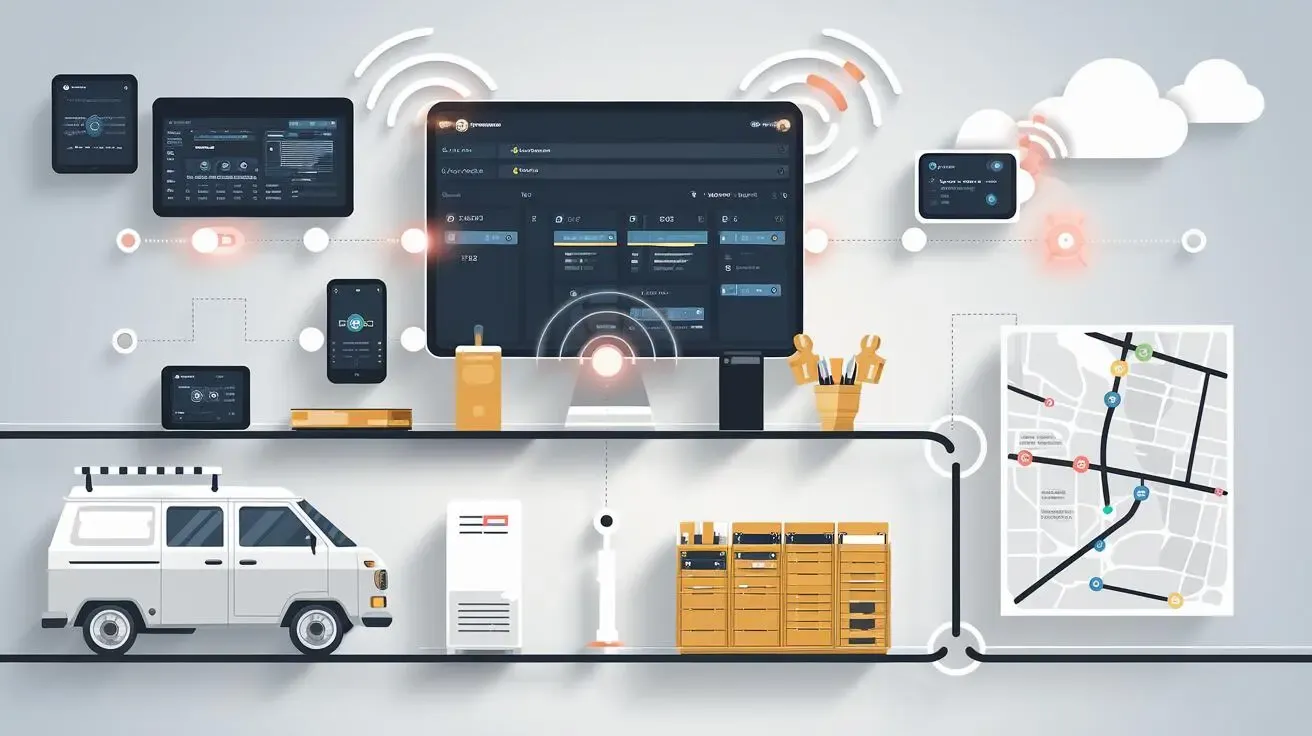
In field service, miscommunication can be costly and ruin a company's reputation. Clear, timely communication can distinguish between a quick fix and a costly mistake. Therefore, it's about connecting your field techs, even when they're miles away from the office.
Steps for timely communication is essential for effective field operations:
- Implement a reliable mobile communication system
- Establish clear protocols for urgent communications
- Provide a platform for technicians to reach back-office support easily
Benefits:
- Faster problem resolution
- Improved team coordination
- Enhanced job satisfaction for technicians
5. Enhanced Customer Communication
Keeping customers in the loop isn't just polite—it's expected. And when you exceed those expectations, you're not just fixing a problem but building a relationship.
Ways to keep customers informed and engaged:
- Implement automated notifications for appointment reminders and technician ETAs
- Offer multiple communication channels (phone, email, text, app)
- Provide real-time updates on job status
Benefits:
- Reduced no-shows and cancellations
- Improved customer satisfaction
- Fewer inbound calls asking for status updates
Similar Read: Improve Field Service Customer Engagement
6. Utilize Customer Feedback Systems

You know that friend who always gives it straight, even when it's not what you want to hear?
That's what a sound feedback system does for your business. It tells you what you're doing right and where to improve.
Steps to use feedback effectively:
- Implement post-service surveys
- Understand customers' pain points
- Set up a system to collect and analyze input regularly
- Act on feedback by making visible improvements
Benefits:
- Direct insights into customer satisfaction
- Identification of recurring issues
- Opportunities for service improvement
7. Measure and Analyze Data
In the old days, managers might have gone with their gut feeling. Today, we have something better – cold data. But data alone is just a bunch of numbers. The magic happens when you turn that data into insights and those insights into actions.
Ways to make Data-driven decisions:
- Identify key performance indicators (KPIs) for your business
- Implement tools to collect and analyze relevant data
- Regularly review data to spot trends and areas for improvement
Benefits:
- More informed decision-making
- Ability to predict and prevent issues
- Continuous improvement of operations
8. Monitor Job and Work Order Progress
Imagine the uncertainty of a critical service job. Keeping tabs on your jobs in real-time isn't about micromanagement – it's about being proactive. It's the difference between putting out fires and preventing them in the first place.
Techniques of field employee tracking:
- Implement real-time job-tracking software
- Set up alerts for jobs that are taking longer than expected
- Provide easy ways for technicians to update job status
Benefits:
- Quicker response to delays or issues
- Improved resource allocation
- Better ability to keep customers informed
9. Take Care of Your Field Equipment
Your equipment is like another player on your team. When it's performing at its best, everything runs smoothly. But if you neglect it, it'll let you down at the worst possible moment. Regular maintenance might seem like a hassle, but it's nothing compared to the headache of equipment failure in the middle of a crucial job.
Ways to equipment well-maintained:
- Implement regular maintenance schedules for all equipment
- Train technicians on proper equipment care and usage
- Keep detailed records of equipment maintenance and repairs
Benefits:
- Reduced equipment downtime
- Lower replacement costs over time
- Consistent service quality
10. No Compromise with Service Quality
In field service, your reputation is everything. And that reputation is built one job at a time. Quality isn't just about doing good work – consistency, reliability, and going the extra mile. It's what turns one-time customers into lifelong advocates for your business.
Strategies for maintaining high service standards:
- Establish clear quality standards for all services
- Implement quality checks and audits
- Address quality issues promptly and thoroughly
Benefits:
- Improved customer satisfaction and loyalty
- Reduced callbacks and warranty claims
- Enhanced reputation in the market
11. Continuous Learning for Field Technicians
Continuous learning is very important for your techs. When your techs are learning, they're not just improving themselves but your entire operation.
Ways to upgrade your technicians' skills:
- Provide regular training sessions on new technologies and techniques
- Encourage knowledge sharing among team members
- Offer opportunities for certifications and skill advancement
Benefits:
- Improved service quality and efficiency
- Higher job satisfaction and retention among technicians
- Ability to handle a broader range of service requests
12. Implementing Scheduling and Dispatching Software
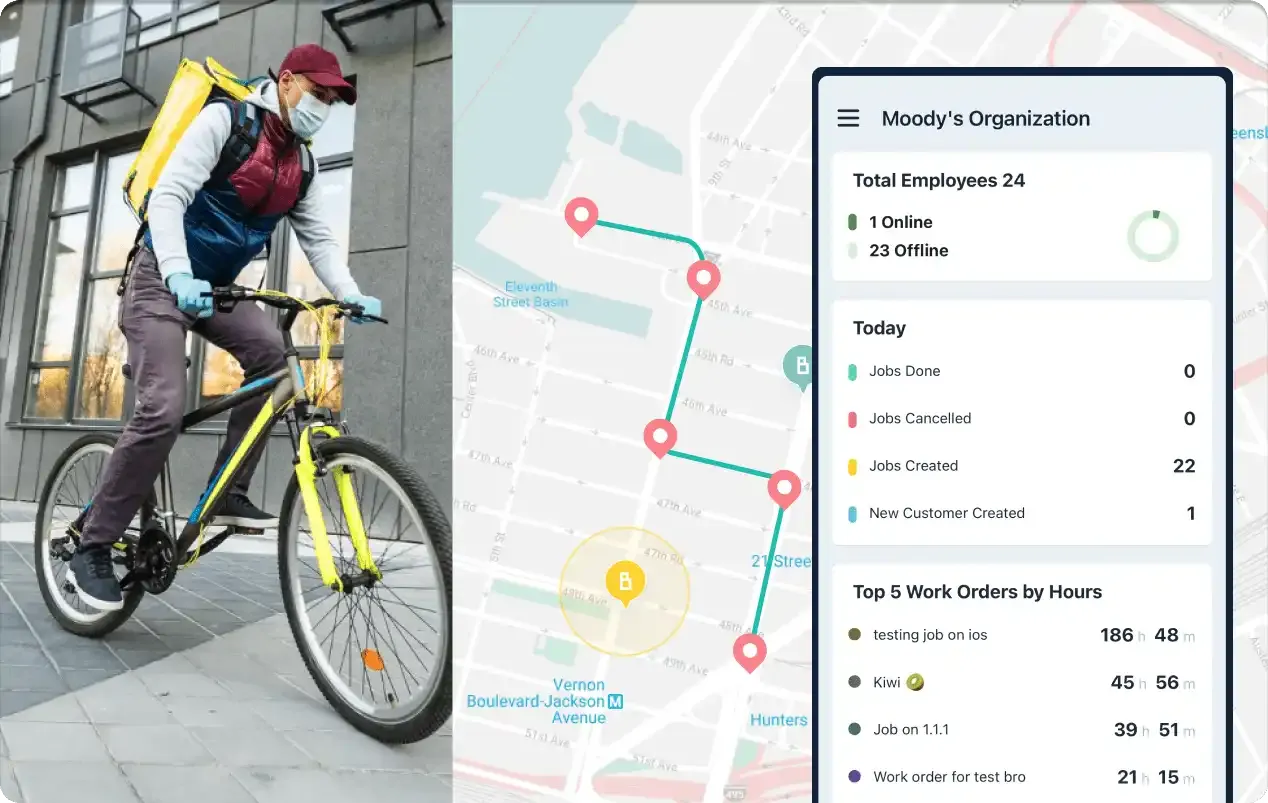
You know how hard it is to plan your day, right? Well, now, picture trying to plan for your whole team! It's a bit of a headache at first - you've got workers all over the place, customers calling in, and you're trying to figure out who can get where and when.
But here's the good news: getting the right planning tool changes everything. The scheduling software handles all that busy work, so your team knows exactly where they need to be.
Steps for efficient scheduling and dispatching include:
- Choose software that considers technician skills, location, and job requirements
- Implement real-time schedule updates and notifications
- Use AI-powered solutions for optimal scheduling
Benefits:
- Improved technician utilization
- Reduced travel time and costs
- Higher customer satisfaction due to timely service
13. Optimize Route Planning
Time is money, and in field service, much of that time is spent on the road. However, thoughtful route planning is crucial to completing as many tasks as possible. It's about considering traffic, job urgency, technician skills, and many other factors.With an optimized route plan, techs can smoothly move from one successful job to another.
Ways to adopt route planning optimization:
- Use GPS-integrated software for real-time route optimization
- Consider traffic patterns and job urgency in route planning
- Optimize multi-stop routes for efficiency
Benefits:
- Reduced fuel costs
- More jobs completed per day
- Improved on-time arrival rates
14. Adopting Mobile-First Solutions
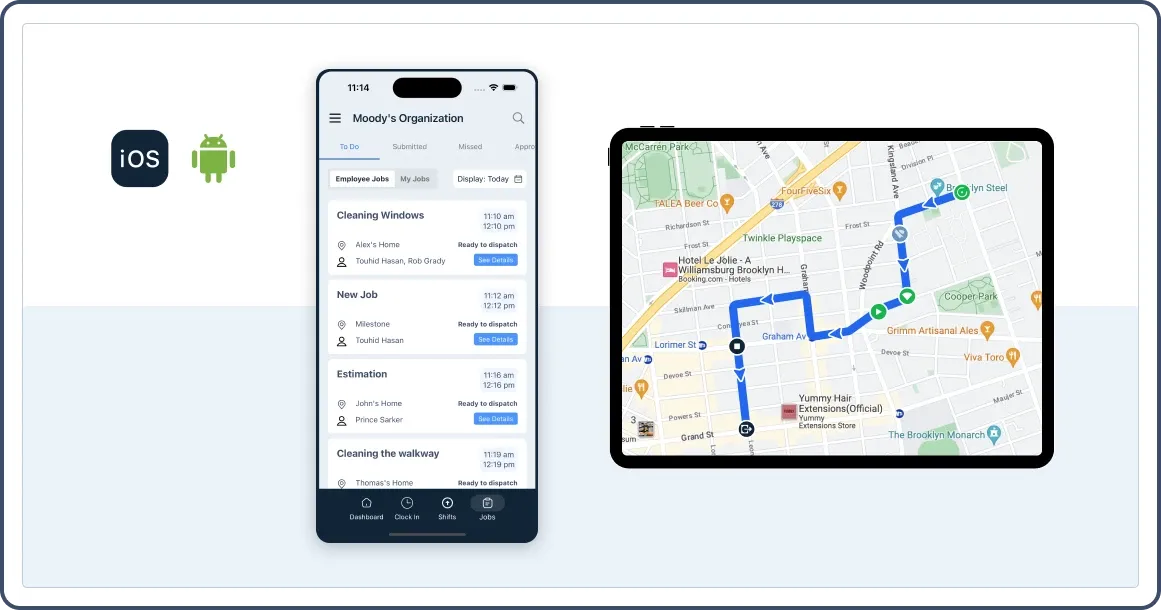
For better field service management, there is no alternative to adopting mobile-first solutions for field techs; they can access customer histories, equipment manuals, inventory data, and more at their fingertips.
Ways to equip technicians with mobile-first solutions:
- Equip technicians with smartphones or tablets loaded with necessary apps
- Ensure your mobile solutions work offline when needed
- Provide access to customer information, manuals, and inventory data on mobile devices
- Adopting mobile timesheet app to check employees' timesheets
Benefits:
- Real-time information access in the field
- Improved data accuracy and completeness
- Enhanced professionalism in customer interactions
15. Optimizing Inventory Management
When techs arrive at a job, diagnose the problem, and then realize they don't have the necessary parts. It's frustrating for them and the customer. Good inventory management is crucial: it ensures your workers have what they need when needed.
Required actions for efficient inventory management:
- Implement real-time inventory tracking across vehicles and warehouses
- Use predictive analytics to forecast parts needs
- Set up automated reordering for commonly used items
Benefits:
- Reduced job delays due to missing parts
- Lower carrying costs for inventory
- Improved first-time fix rates
16. Establish Clear SLAs
Set clear SLAs (Service Level Agreements) for what you'll deliver and how you'll deliver it. They're not just for your customers but also a guide for your team, helping everyone understand what "good" looks like. Clear SLAs turn vague promises into concrete commitments, building customer trust and alignment within your team.
Things to remember while making a Service Level Agreement:
- Define measurable service standards
- Communicate SLAs clearly to both customers and team members
- Regularly review and update SLAs based on performance and feedback
Benefits:
- Clearer customer expectations
- A benchmark for measuring service quality
- Improved customer trust and loyalty
17. Optimize First-Time Fix Rates
Getting it right the first time is crucial for customer satisfaction and operational efficiency. Every return visit is a double whammy: it costs money and tests your customer's patience. Boosting your first-time fix rate is about more than technical skills. It's about having the right information, parts, and approach from when your tech arrives on-site.
Ways to resolve issues on the first visit:
- Ensure technicians have complete information before arriving on-site
- Stock vehicles with commonly needed parts and tools
- Provide ongoing training to expand technicians' problem-solving skills
Benefits:
- Improved customer satisfaction
- Reduced costs from repeat visits
- More efficient use of technician time
18. Implementing Digital Documentation
We've all been there - spending ages looking for that one piece of paper you need. It's a real pain, right?
Moving everything to computers makes life so much easier. Instead of digging through folders or wondering if that important paper is sitting on someone's desk, you can find what you need with a quick search.
Process to implement digital documentation:
- Replace paper forms with timesheet app
- Implement e-signature capabilities
- Use cloud storage for easy access to documents from anywhere
Benefits:
- Reduced errors in data entry
- Faster processing of job information
- Improved information accessibility for office staff and field technicians
19. Establishing a Centralized System for Seamless Operations

The document shows why it's good to put all your data and processes in one place. When you use one big system to manage fieldwork, you can:
- Keep all customer info, jobs, schedules, and bills in one spot.
- Stop having the same info in different places.
- Make real-time communication and teamwork better between groups.
- Make work easier and help people make better choices.
Benefits:
A centralized system helps everyone - the workers, bosses, and customers - see the right info when they need it. This means fewer mistakes and better service for customers.
20. Integrating Field Service Management Software with Other Business Systems
The document talks about why it's smart to connect FSM software with other business tools you use, like:
- Payroll and HR systems - To track work hours and handle worker stuff correctly.
- Enterprise Resource Planning (ERP) systems - To use money and resources better.
- Customer Relationship Management (CRM) software - To know customers better and give them what they want.
- Accounting and invoicing tools - To make billing easier and do less paperwork.
Benefits:
When all these tools work in sync, you get better field service reports, faster work, and smoother field operations. Having your FSM software talk to your other important systems means everything runs better, and you don't have info scattered all over the place.
Pro Tip
Stay with the industry trends to manage your service business. Manage your services with automation.
Field Service Management Best Practices
Field Service Management (FSM) is more than dispatching field workers. Coordinating assets and ensuring technicians arrive on time is hard work, not to mention managing complicated workflows. It requires proper strategy and careful management to get everything right.
That's where the best practices come in. They will help you improve your field service management, leading to happy customers and business growth. Whether you want to improve scheduling, increase efficiency, or improve your operations, follow these best practices to optimize your FSM.
Implementing these best practices can significantly enhance your field service operations. Prioritize based on your specific business needs and gradually work towards incorporating all these practices over time. Continuous improvement is critical in the dynamic field service industry.
Remember, implementing these practices isn't about changing everything overnight. It's about continual improvement, taking one step at a time towards a more efficient, effective field service operation. Start with what makes the most sense for your business, and build from there.
Pro Tip
Track your service professional's location and time accurately to ensure precise payroll with no missed or overstated hours.
Conclusion
To create the best FSM strategy, you need to follow the mentioned field service management best practices.
This will increase your business's efficiency and customer satisfaction and lay a strong groundwork for long-term success.
FAQs About Field Service Best Practices
What is the field service management process?
The field service management process involves a few steps to efficiently manage field operations. The process begins with the customer requesting service and creating a work order. After a work order is created, jobs are scheduled, and field technicians are dispatched to the job site. Service technicians then complete the job and update the status. Finally, the customer is invoiced, and payment is completed.
Recurring schedules and follow-up maintenance can be part of the field service process. Sometimes, customers provide feedback, and the payroll is also included in it. Usually, the entire process is managed using FSM software to ensure timely job completion.
What is an example of field service management?
Examples of field service management (FSM) include repair and maintenance, dispatching technicians, field inspections, customer support, and product delivery. FSM can encompass a variety of industries, such as utilities and energy, HVAC, construction, telecommunications, healthcare, IT support, logistics, etc.
What are the critical elements of field service management best practices?
The three essential elements of best practices in FSM are scheduling, dispatching, and work order management. However, reporting, invoicing, and connecting field crews with office staff are also key components. Real-time data helps monitor jobs and locations to optimize the workflow.
Ready to Scale Your Field Operations?
Manage, schedule & track jobs and employees easily.