SEO for Contractors: Boost Local Visibility and Drive Qualified Leads
Updated on 2 Dec 2025

Jump to
Today we’re going to guide you about SEO for contractors. Search engines love local businesses—especially contractors.
However, here's the thing: when someone in your area needs a contractor, will they find you or your competitor? Search Engine Optimization (SEO) makes the difference between showing up on the first page of Google or being lost in the depths of search results.

In this guide, you'll learn practical SEO techniques that bring local customers to your contracting business.
Whether you're a general contractor, plumber, or electrician—these strategies will help your business rank higher and attract qualified leads who are actively searching for your service business.
What is SEO for Contractors?
Picture a potential customer who needs a bathroom remodel. They pull out their phone and type "bathroom contractor near me" into Google. The contractors who appear in those first few search results? They're using SEO to their advantage.

SEO for contractors means optimizing your online presence so search engines recommend your business to local customers.
It's like having a 24/7 salesperson who points qualified leads to your door - except instead of paying commission, you're investing in making your business more visible online.
Why SEO for Contractors is So Important?
The days of relying solely on word-of-mouth are behind us. Here's why: 97% of people search online for local services, and 75% never scroll past the first page of results.
For contractors, this shift in consumer behavior creates both a challenge and an opportunity. Think about your own search habits.
When your sink clogs at midnight, you're not flipping through the Yellow Pages - you're searching online for a local plumber. Your potential customers do the same thing when they need your services.
Without SEO, your business website sits in the dark corners of the internet. With SEO, you:
- Show up when locals search for your services
- Build credibility through organic search presence
- Generate leads while you sleep
- Stand out from competitors who ignore SEO
SEO in Numbers
Let's look at what the numbers tell us about SEO for contractors. Think about this– 68% of people start their search for services online. That means when someone's kitchen pipe bursts or they're dreaming up a home renovation, they're heading straight to Google.
Here's what makes this powerful: 46% of all searches are people looking for local services, meaning your potential customers are searching specifically for nearby contractors.
With over 70% of searches happening on phones, people aren't waiting to get to their computers. Think of a homeowner with a leaking roof – they're reaching for their phone to find immediate help often after scanning materials or tools that generate QR codes, to find service providers faster.
Want to know the real kicker?
- Over 70% of shoppers use their phones to buy online, indicating that a mobile-optimized website is essential for contractors to capture mobile search traffic. (SEMrush)
- The #1 result in Google gets approximately 27.6% of all clicks, demonstrating the significant advantage of achieving top search rankings. (Backlinko)
- 88% of consumers trust online reviews as much as personal recommendations. (forbes.com)
Local SEO for Contractors
Local SEO focuses on making your business visible to people in your service area. It's different from general SEO because it targets customers in specific locations.
Here's what makes local SEO work for contractors:
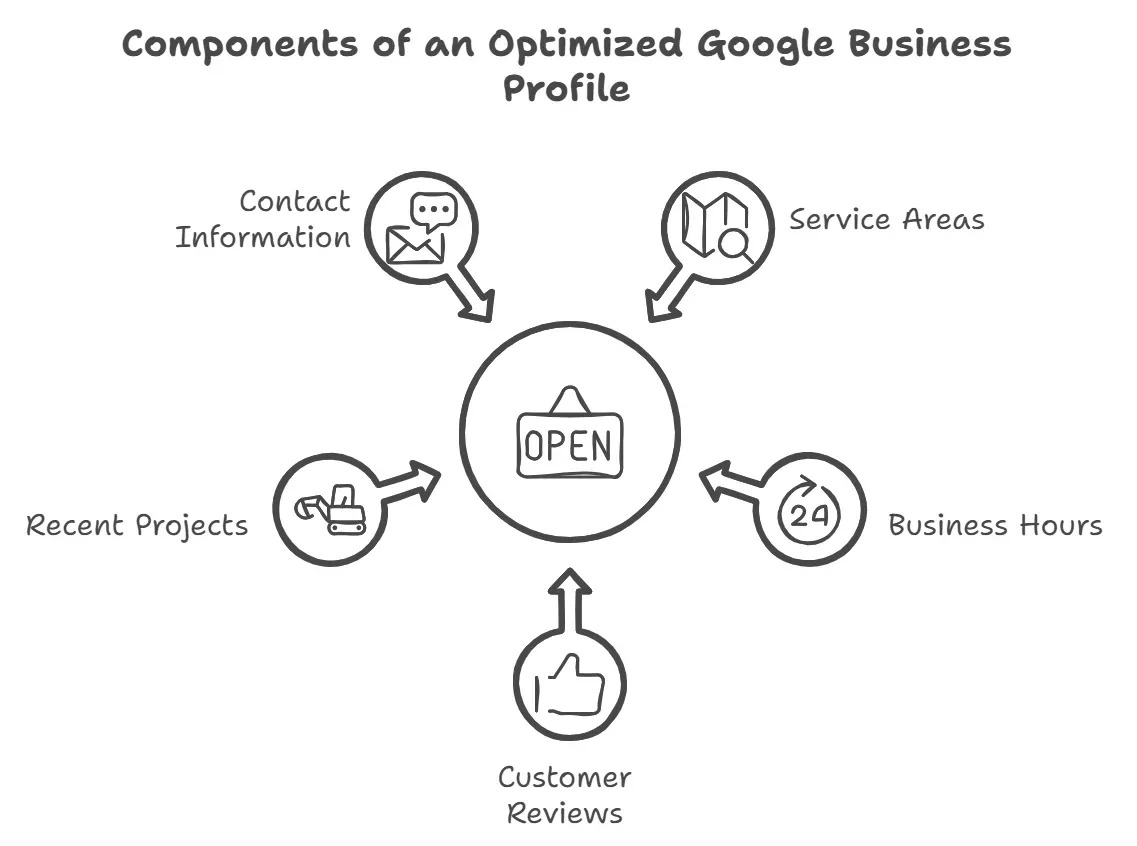
Google Business Profile
Your Google Business Profile acts as your digital storefront. When optimized correctly, it displays your:
- Service areas
- Business hours
- Customer reviews
- Recent projects
- Contact information
NAP Citations
Consistent business listings across local directories strengthen your local presence. Make sure your Name, Address, and Phone number match everywhere online - from Yelp to the Better Business Bureau.
Local Link Building
Connect with local suppliers, real estate agents, and home improvement stores. Getting mentioned on their websites shows Google you're an active part of the local business community.
Local Content Creation
Develop content that speaks directly to your local audience through website localization guide:
- Write about area-specific building regulations
- Share projects completed in local neighborhoods
- Address common home issues in your climate zone
- Create neighborhood-specific landing pages
- Include local landmarks and reference points
For example, How [City] Homeowners Can Prevent Water Damage, Field Service Best Practices in [Neighborhood], Top Roofing Materials for [City's] Weather, Construction Site Security of [City/State], and others of your service-specific expertise tailored to local needs.
For creating localized content, you can now even use an AI writer to automate the writing process. However, before publishing, it’s smart to find a humanizer tool to refine AI-generated content and a plagiarism checker to ensure it is original to your local audience. To keep that content looking professional and on-brand across your site and social profiles, an AI logo maker can help you create a clean, consistent logo without hiring a designer.
Review Management
Build trust through active review management:
- Request reviews from satisfied local customers
- Respond promptly to all customer feedback
- Share testimonials from local projects
- Display review ratings on your website
- Monitor and address reviews across all platforms
Setting Up Your SEO Strategy for Contractors
Building a successful SEO strategy isn't about quick fixes - it's about making smart, sustainable choices that grow your online presence. These core principles align closely with marketing fundamentals that help contractors attract, engage, and convert local customers more effectively.Taking help from modern-day tools like AI, automation, and technician management software. Using an ai humanizer can ensure that any AI-assisted content or automated messaging sounds natural and resonates with your audience.
Let's break down the exact steps you need to take to rank higher in local searches.

Target Audience and Keyword Research
Understanding who searches for your services shapes your entire SEO approach. This insight also supports answer engine optimization (AEO) by helping you structure content that directly answers the exact questions your potential customers are asking. Start by answering these questions:
- What specific contracting services do you offer?
- Which neighborhoods or cities do you serve?
- What problems do your ideal customers face?
For example, if you're a roofing contractor in Boston, your ideal customers might search:
- "emergency roof repair Boston"
- "roof replacement cost Massachusetts"
- "best roofers near me"
- "metal roofing installation Boston"
Understanding the customer pain points plays a crucial part here. It allows you to create content that directly addresses their concerns.
By aligning your services with these pain points, you increase the chances of attracting and converting potential customers.
Overall, finding the right keywords involves three steps:
- List Your Services
First, list every service you offer. A general contractor usually starts with core services like home renovations, kitchen remodeling, and bathroom updates. Include specialty services too - perhaps basement finishing or addition construction that set you apart.
- Add Location Modifiers
Combine your services with:
- City names
- County names
- Neighborhood names
- "Near me" variations
- Check Search Volume
Finally, use Google's Keyword Planner to verify which combinations attract searches. Look for keywords that get at least 10 monthly searches and have manageable competition levels.
Most importantly, focus on terms that show clear buying intent - these bring in customers ready to hire contractors. For many contractors managing keyword lists, tracking rankings, and analyzing traffic trends, getting excel help can make organizing and reviewing SEO data much easier and more effective.
Website Optimization for Contractors
Your website needs to impress both search engines and potential customers. Here's how to make that happen:
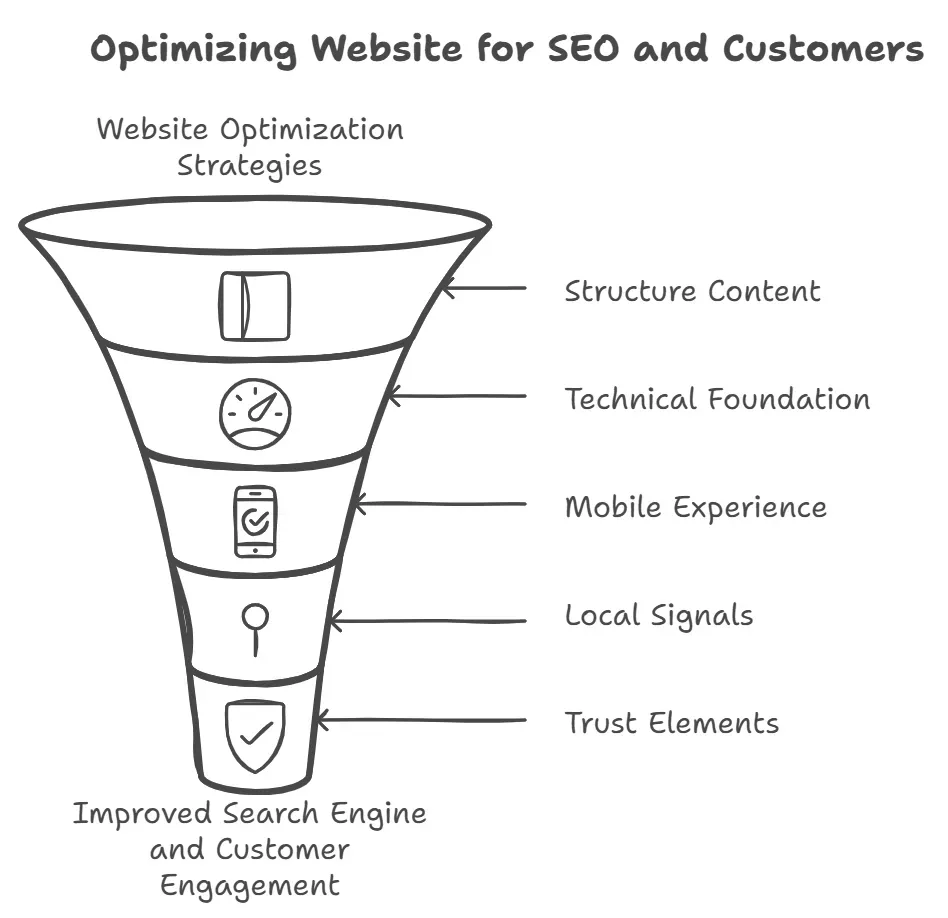
- Structure Your Content
Create separate pages for each service you offer. A plumbing contractor should have individual pages for:
- Emergency plumbing repairs
- Water heater installation
- Pipe replacement
- Bathroom plumbing
- Kitchen plumbing
Each page should include:
- Detailed service descriptions
- Benefits to the customer
- Your service area
- Clear calls to action
- Technical Foundation
Your website should load in under 3 seconds. Studies show 53% of mobile users leave websites that take longer to load. Make sure you:
- Compress images
- Use fast hosting
- Enable browser caching
- Minimize code
- Mobile Experience
Pull out your phone and visit your website. Can you:
- Read all text without zooming?
- Click buttons easily?
- Fill out forms without frustration?
- Find your phone number quickly?
If not, work with your web developers or web development companies to fix these issues.
- Local Signals
Add your service area details:
- Include your address on every page
- List all neighborhoods you serve
- Embed a Google Map
- Add schema markup for local businesses
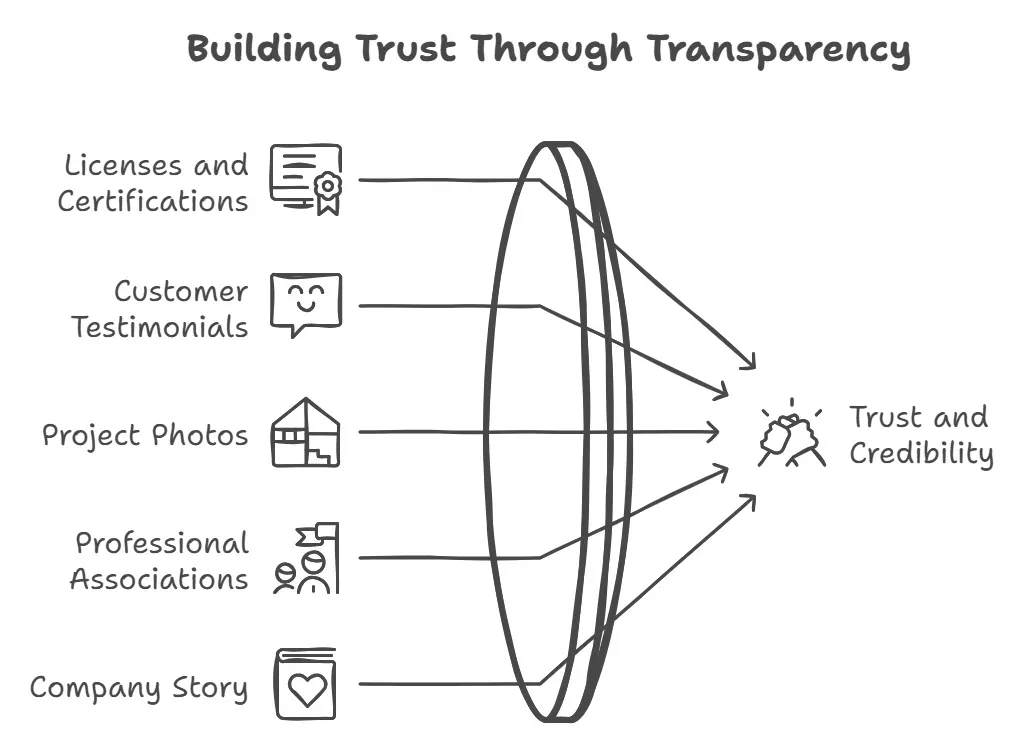
- Trust Elements
Show visitors why they should choose you:
- Display licenses and certifications
- Feature customer testimonials
- Show photos of completed projects
- List professional associations
- Share your company story
Remember: every change should serve both your visitors and search engines. When you focus on creating helpful, informative content that answers real questions from potential customers, you're already halfway to ranking well in search results.
Advanced SEO Techniques for Contractors
Once you've built your SEO foundation, these advanced strategies will help your contracting business stand out in search results. These methods require more effort, but they create lasting advantages over competitors who stick to basics.

Building Quality Backlinks
Think of backlinks as digital recommendations. When reputable websites link to yours, Google sees your business as more trustworthy. Here's how to build quality backlinks:
- Partner with Local Businesses
Start by partnering with local businesses. Work with your suppliers to get featured on their "preferred contractors" pages, and build relationships with real estate agents who constantly need reliable contractors.
Your local Chamber of Commerce membership can also open doors to valuable networking opportunities.
- Create Project Portfolios
Create compelling project portfolios to attract attention. Share your best work through case studies on home improvement websites, tell success stories on industry blogs, and document standout projects for trade publications. These assets can also support creative link building by giving relevant websites useful amd original content worth referencing.
These showcase your expertise while naturally attracting links.
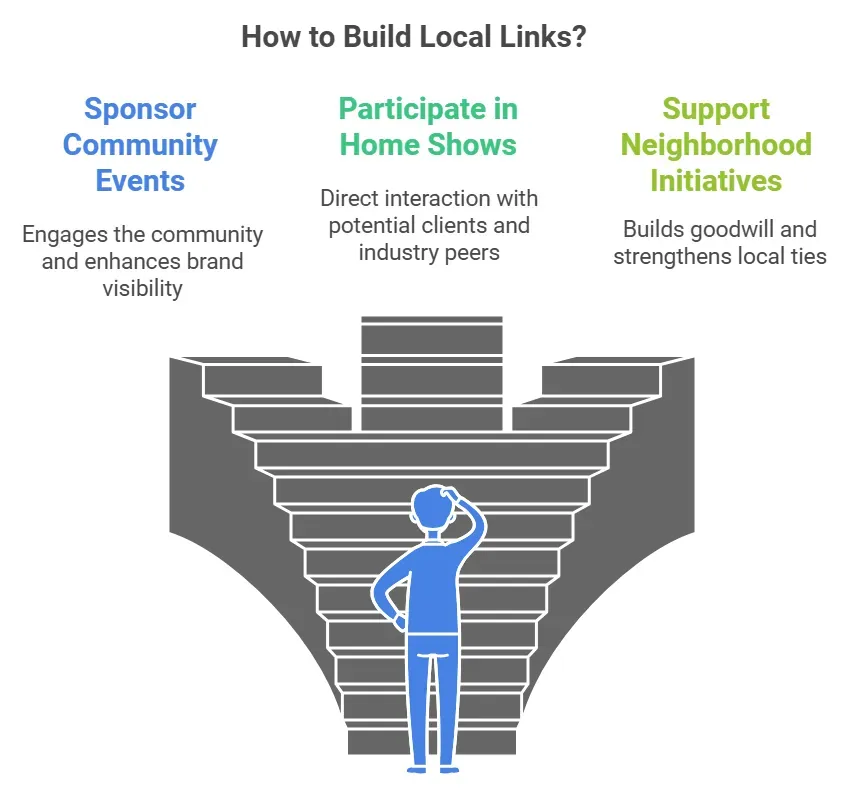
- Local PR Opportunities
- Sponsor community events
- Participate in local home shows
- Support neighborhood initiatives
- Contribute to local news stories about home improvement
Pro tip: Focus on getting links from websites related to construction, home improvement, or local businesses. These links carry more weight than random websites.
Technical SEO and On-Page Optimization
Technical SEO might sound complex, but it's simply about making your website work better for both users and search engines.
- Page Structure
Structure each service page with:
<title>Service + Location + Business Name</title>
<h1>Main Service Heading</h1>
<h2>Key Benefits</h2>
<h2>Service Process</h2>
<h2>Service Area</h2>
<h2>FAQs</h2>
Here is the interpretation of the above instruction. Overall, structure each service page with:
Title: [Your Service] in [Location] | [Business Name] Example: "Kitchen Remodeling in Phoenix | Smith Contractors"
Main Page Heading: [Primary Service] Example: "Professional Kitchen Remodeling Services"
Subheadings should include:
- Key Benefits
- Our Process
- Service Area Coverage
- Common Questions
- Schema Markup
- Add these schema types:
- LocalBusiness
- Service
- Review
- FAQ
- Image Optimization
For project photos:
- Use descriptive file names
- Add alt text with location details
- Compress without losing quality
- Include captions with keywords
- URL Structure
Create clean URLs like:
- domain.com/services/bathroom-remodeling-chicago
- domain.com/projects/historic-home-renovation-boston
Content Marketing for Contractors
Content marketing isn't about writing random blog posts. It's about answering real questions from potential customers.

Create content around:
Common Problems
Start with common problems your customers face. Write about identifying water damage in basements, recognizing when a roof needs replacement, or deciding between HVAC repairs versus replacement.
These topics help homeowners make informed decisions while showcasing your expertise.
Pricing Guides
Pricing is often the first thing customers want to know. Create detailed guides that break down cost factors for kitchen remodeling and bathroom renovations.
Explain what influences home addition prices, but keep the information general enough to start conversations rather than lock you into specific quotes.
Project Timelines
Help customers understand project timelines. Share realistic schedules for kitchen remodels, outline bathroom renovation phases, and explain the steps involved in home additions. Many contractors use pull planning software to keep projects on schedule and improve team coordination.
This sets proper expectations and shows your professional approach to project management.
Maintenance Tips
Finally, share valuable maintenance advice. Create seasonal checklists, explain how to prevent common emergencies, and offer tips for extending the life of home improvements.
This type of content brings value to existing customers while attracting new ones. For example:
- "Seasonal home maintenance checklist"
- "Preventing plumbing emergencies"
- "Extending the life of your roof"
Overall, add value by:
- Including real project photos
- Sharing actual cost ranges
- Offering downloadable checklists
- Creating video walkthroughs
Remember to focus on your local market. If you serve Chicago, add a local perspective to your content. Share insights about building codes that affect home renovations in historic neighborhoods like Lincoln Park.
For example, discuss how Lake Michigan's weather patterns impact roofing choices, or explain why certain foundations work better in Chicago's clay-heavy soil. Include practical information about material costs in the Midwest and how they compare to national averages.
This local expertise helps potential customers see you as more than just another contractor - you're a trusted expert who understands their specific needs and challenges.
Measuring and Adjusting SEO Performance
Numbers tell stories. When you track the right SEO metrics, you'll know exactly what's working and what needs fixing in your contractor marketing strategy. The same discipline applies beyond Google results, since measuring ChatGPT visibility shows whether AI answers are recommending your business at all.
SEO Metrics to Track
Focus on these key performance indicators:
Search Rankings
Track where you rank for priority terms like:
- "[service] contractor [city]"
- "[service] company near me"
- "best [service] [location]"
Look beyond just ranking positions. Notice:
- Which pages rank best
- How rankings change by location
- Mobile vs. desktop rankings
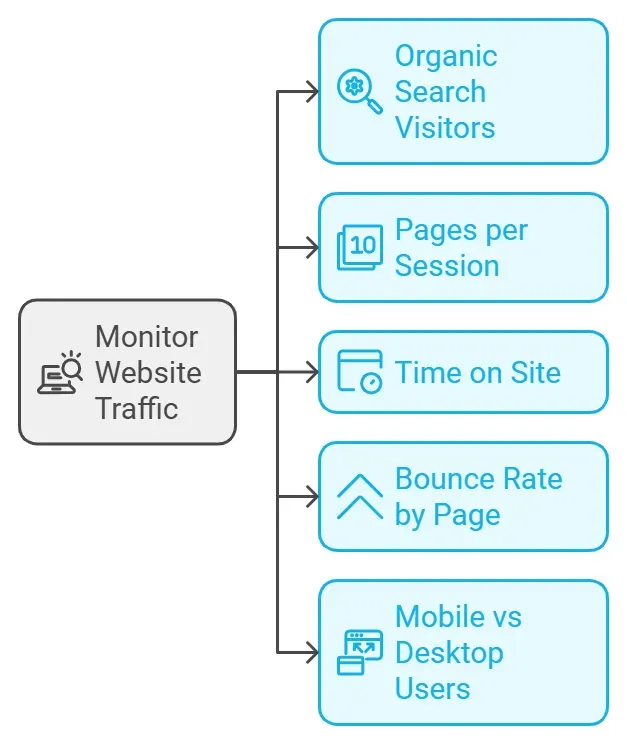
Website Traffic
Monitor these Google Analytics metrics:
- Organic search visitors
- Pages per session
- Time on site
- Bounce rate by page
- Mobile vs desktop users
Lead Generation
Count the inquiries coming from:
- Contact form submissions
- Phone calls from organic search
- Quote requests
- Schedule bookings
- Email sign-ups
Local Performance
Watch your Google Business Profile stats:
- Profile views
- Direction requests
- Phone call clicks
- Website clicks
- Photo views
Adjusting Your SEO Plan
Use your performance data to make smart adjustments:
Content Updates
If pages don't perform well, take time to strengthen them. Start by adding depth to thin sections and refreshing any outdated information.
If you regularly use AI to update website copy, reviewing drafts with a Quillbot AI checker can help identify AI-generated patterns before publishing, allowing you to refine the content for a more natural, human-written style.
Sprinkle in photos and details from your recent projects - like that Victorian home restoration or modern kitchen remodel you just completed.

Address the questions you hear most often from customers during consultations, and weave in local context about working in your specific area. These updates show both search engines and potential customers that your content stays fresh and relevant.
Technical Fixes
When traffic drops suddenly:
- Check for 404 errors
- Test page load speeds
- Fix broken links
- Update XML sitemaps
- Verify mobile usability
Local Optimization
If your local rankings begin to slip, a few quick updates can help. Keep your business hours current and stay active with review responses. Upload fresh photos of recent projects, refresh your service area information, and verify your business categories. These simple maintenance tasks signal to Google that you're an active, engaged local business.
Conversion Optimization
When traffic is up but leads are down:
- Simplify contact forms
- Make phone numbers clickable
- Add trust signals near calls-to-action
- Test different button placements
- Include pricing information
Pro Tips:
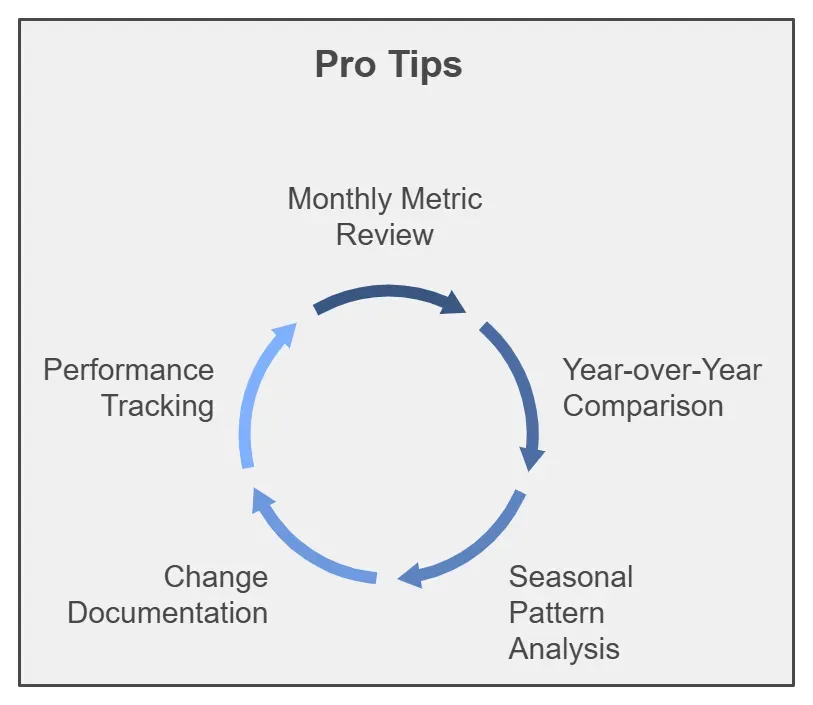
- Check metrics monthly at minimum
- Compare year-over-year data
- Note seasonal patterns
- Document what changes you make
- Track how changes affect performance
Common SEO Mistakes Contractors Should Avoid
Let's learn from others' mistakes instead of making them. Here are the top SEO missteps that hold back contracting businesses from ranking well in search results.

Building One-Size-Fits-All Service Pages
Many contractors create a single page listing all their services. Instead, break out each service into its own page. Rather than creating “domain.com/services”,
Create (for example):
- domain.com/services/kitchen-remodeling
- domain.com/services/bathroom-renovation
- domain.com/services/home-cleaning
- domain.com/services/basement-finishing
All of these reflects exactly what your business is about. Whenever someone will see the URL, they'll know exactly what products or services you and your team provide.
Neglecting Reviews
Some contractors ignore online reviews, thinking word-of-mouth is enough. But search engines and potential customers value fresh reviews. Make it routine to:
- Ask satisfied customers for reviews
- Respond to all feedback professionally
- Share positive reviews on your website
- Address negative reviews promptly
Missing Local Signals
Generic content doesn't help local rankings. Strengthen your local presence by:
- Mentioning specific neighborhoods you serve
- Including local landmarks and reference points
- Discussing regional building requirements
- Sharing local project examples
Poor Mobile Experience
Your website might look great on your office computer, but most searches happen on phones. Common mobile issues include:
- Tiny text that requires zooming
- Buttons too small to tap
- Forms that don't work on mobile
- Images that load slowly
- Phone numbers that aren't clickable
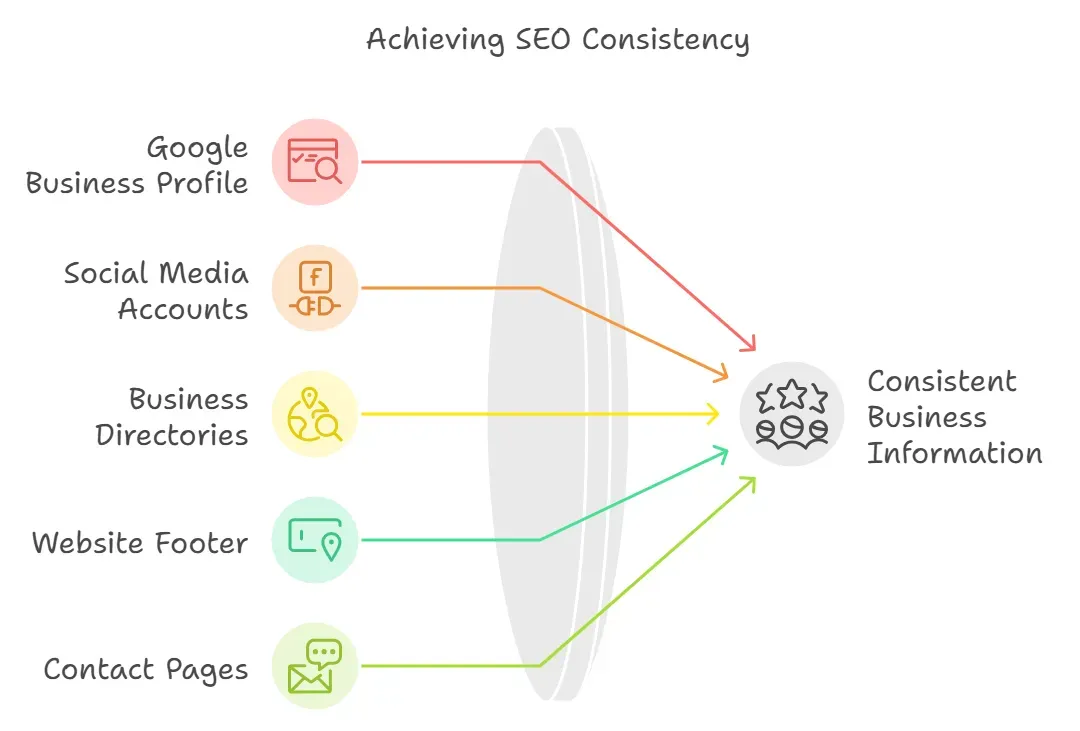
Inconsistent Business Information
Different addresses, phone numbers, or business names across the internet confuse both search engines and customers. Keep these details identical everywhere:
- Google Business Profile
- Social media accounts
- Business directories
- Website footer
- Contact pages
Focusing on Quantity Over Quality
Publishing ten shallow blog posts won't outperform one detailed guide. Create content that:
- Answers specific questions
- Includes real project photos
- Provides actual cost ranges
- Offers practical tips
- Reflects your expertise
Forgetting About Existing Content
Many contractors create new content but never update old pages. Set reminders to:
- Review pricing information
- Update service descriptions
- Refresh project galleries
- Add recent testimonials
- Check for outdated information
Skipping Analytics Setup
Without proper tracking, you're flying blind. Make sure you:
- Install Google Analytics correctly
- Set up Google Search Console
- Track form submissions
- Monitor phone calls
- Measure conversion rates
Fix these issues, and you'll see improvements in both rankings and leads. Remember: SEO success comes from consistent attention to details that matter to your local audience.
Bottom Line
SEO puts your contracting business where local customers can find it. Start with the basics: optimize your website, create service-specific pages, and build your local presence. Track your progress, adjust your approach based on results, and stay consistent with your efforts.

The contractors who rank well on Google didn't get there overnight. They invested time in understanding their customers' needs and creating content that answers their questions.
Whether you handle SEO yourself or work with professionals, the principles in this guide will help your business show up when local customers search for your services.
Frequently Asked Questions
How much does SEO cost for contractors?
Professional SEO services for contractors typically range from $500 to $5,000 monthly, depending on your market size and competition. Basic local SEO might cost less, while competitive markets require larger investments. The cost includes website optimization, content creation, and ongoing maintenance.
Can I do SEO myself as a contractor?
Yes, you can handle basic SEO tasks yourself. Focus on creating detailed service pages, maintaining your Google Business Profile, gathering customer reviews, and sharing project photos. However, technical aspects like schema markup and link building might need professional help.
What are the best keywords for contractor SEO?
The best keywords combine your services with location terms. Examples include:
- "[service type] contractor [city name]"
- "[type of] renovation [location]"
- "licensed [service] contractor near me"
- "[service] company [neighborhood name]"
How long does it take to see results from SEO?
Most contractors start seeing initial improvements in 3-6 months. Significant results typically show up in 6-12 months. Factors affecting the timeline include:
- Your market's competition level
- Current website condition
- Content quality and frequency
- Local market size
- SEO investment level
What is local SEO, and why does it matter for contractors?
Local SEO focuses on ranking your business for searches in your service area. When someone needs a contractor, they're looking for help nearby, not across the country.
Google understands this and prioritizes local businesses in search results, connecting you with ready-to-hire customers in your area. These local rankings typically convert better because you're reaching people who need your services right in your service zone.
Try FieldServicely #1 Field Service Management Software
Try for free - No credit card required!