- Field Service Business
HVAC Maintenance Checklist: Cut Your Bills by 25%
Updated on 9 Jun 2026
Jump to
Summary

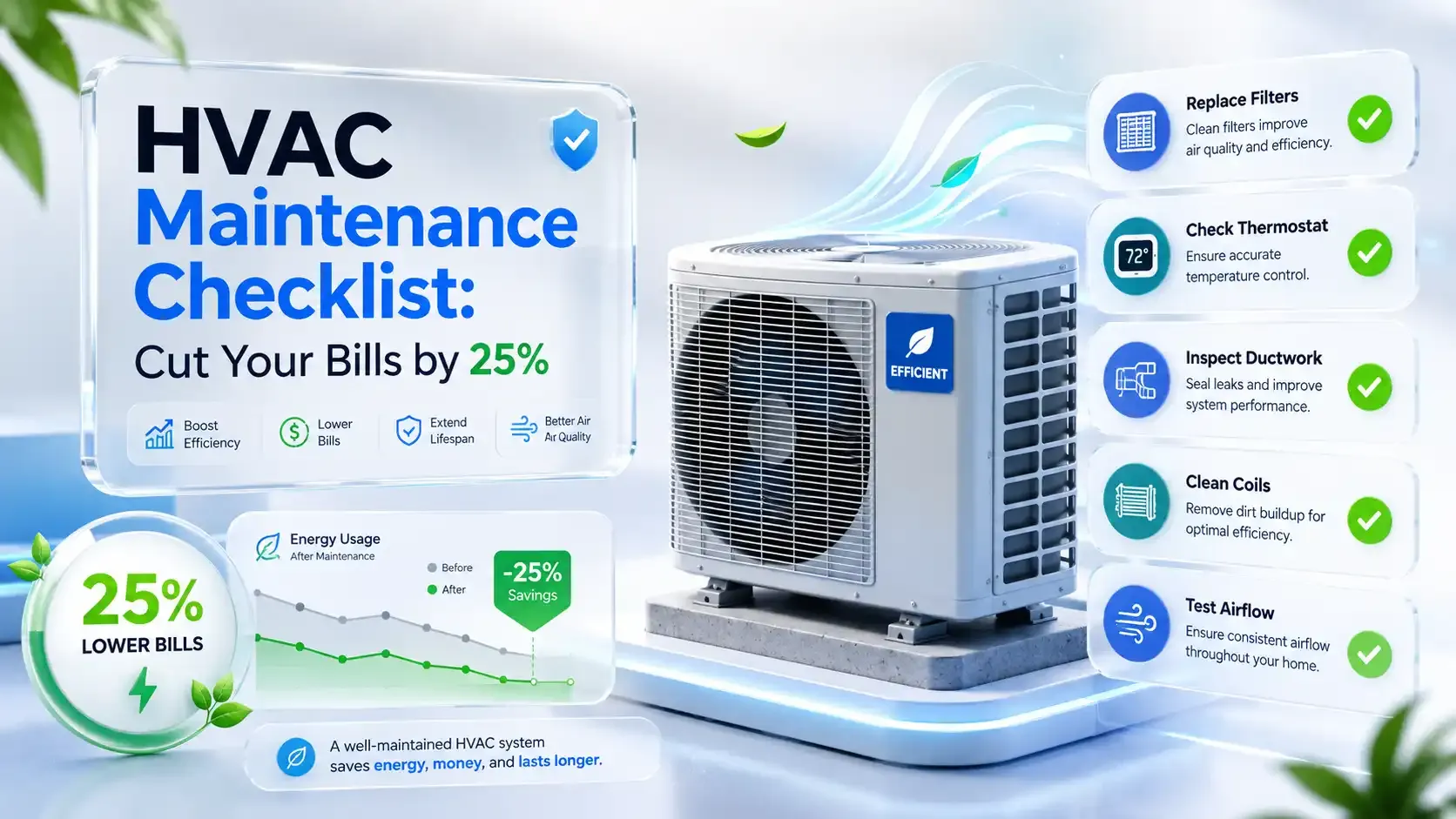
A neglected HVAC system uses up to 25% more energy and loses years off its lifespan.
Homeowners can handle six routine tasks themselves, from filter swaps to ductwork checks.
Professional technicians should inspect electrical, refrigerant, and combustion components twice a year.
Each season requires a different maintenance focus, so timing matters as much as the task itself.
Commercial buildings need a separate, more frequent checklist due to stricter compliance and higher stakes.
Most people don't think about their HVAC system until something goes wrong. A weird noise in the middle of the night, a house that won't cool down in July, or an energy bill that suddenly doubles for no clear reason.
A solid HVAC maintenance checklist helps you avoid all of that. It keeps your system running efficiently and catches small problems before they turn expensive.
But here's what bugs me about most checklists online. They dump every task into one long list without telling you what you can handle yourself and what actually needs a licensed technician.
So in this blog, I'll walk you through DIY maintenance tasks and professional inspection checklists. I'll also break down a seasonal schedule and a dedicated commercial HVAC maintenance breakdown.
Why Does HVAC Preventive Maintenance Matter?
Nobody wakes up excited about HVAC maintenance. But everyone notices when their energy bill jumps 25% for no obvious reason. And that's exactly what the U.S. Department of Energy says happens when a system stops getting regular service.
Here's why: dirt builds up on your coils and filters over time. That buildup forces the system to run longer and harder just to hold the same temperature. The harder it runs, the faster parts like contactors and capacitors wear down. Once those small parts give out, they take the expensive stuff with them.
That constant strain also cuts years off your system's life.
With regular tune-ups, most units hold strong for 15 to 20 years. Without them, you're shopping for a replacement closer to year 10. And the whole time, dirty ductwork has been pushing allergens, mold, and dust into every room your family breathes in.
A simple HVAC preventive maintenance checklist prevents every one of those problems before they start.
| Task | Who Does It | How Often |
|---|---|---|
Replace or clean air filters | Homeowner | Every 30 to 90 days |
Clear outdoor unit debris | Homeowner | Seasonally |
Flush the condensate drain line | Homeowner | Every 1 to 3 months |
Clean vents and registers | Homeowner | Monthly |
Inspect visible ductwork | Homeowner | Seasonally |
Electrical and wiring inspection | Licensed Technician | Twice a year |
Refrigerant check and leak test | Licensed Technician | Twice a year |
Coil cleaning (evaporator + condenser) | Licensed Technician | Twice a year |
Combustion and safety checks | Licensed Technician | Once before the heating season |
HVAC Preventative Maintenance Checklist: What Homeowners Can Handle
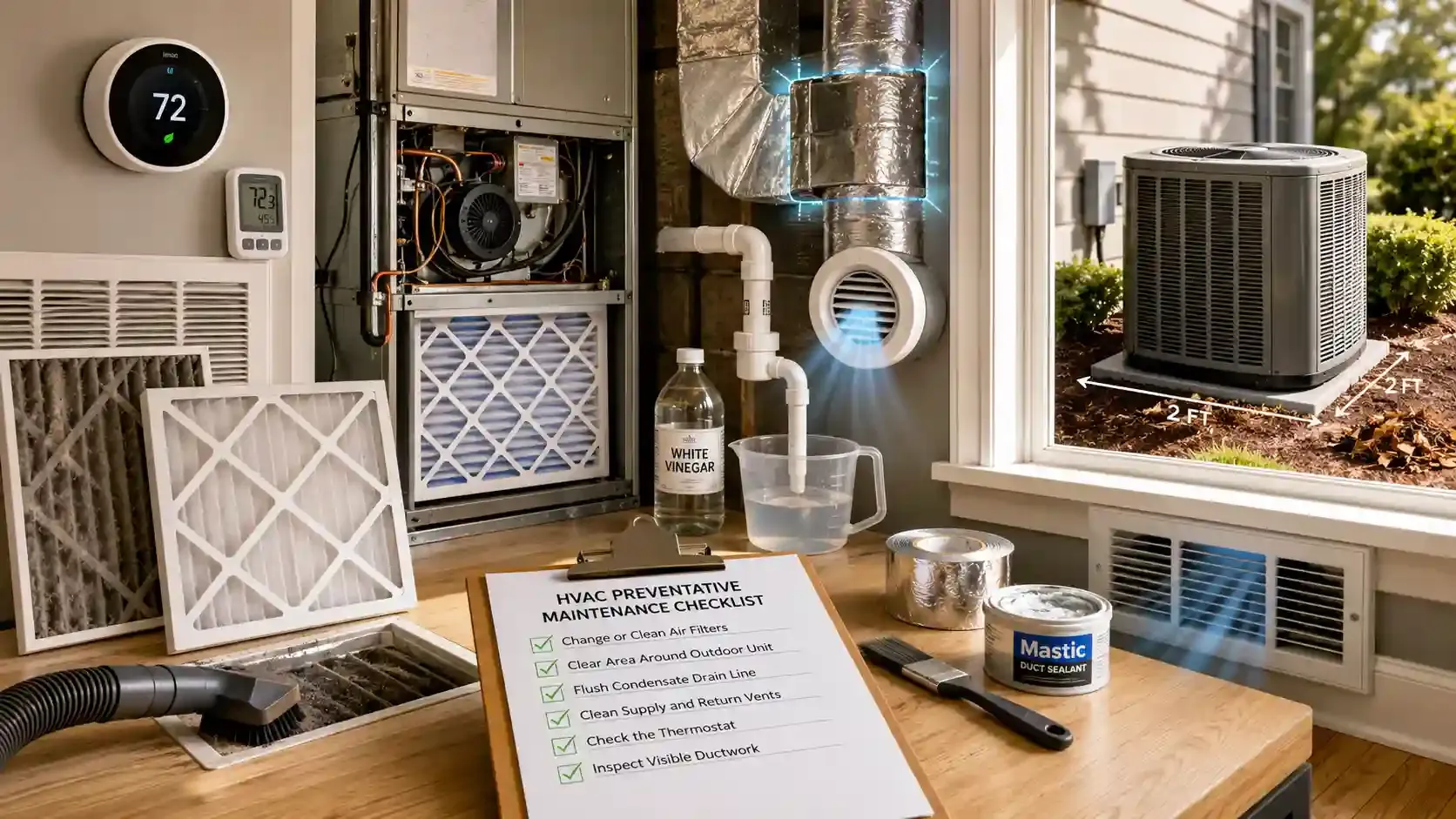
Change or Clean Air Filters
When dirt clogs the filter, airflow drops. The blower motor then works overtime to push air through, which burns more energy and wears the motor out faster.
Check yours every 30 days. Fiberglass filters need swapping monthly. Pleated ones hold up for about 90 days, though homes with pets or allergy issues should swap closer to 60. Washable filters just need a rinse each month. Let them dry fully before putting them back.
Clear the Area Around Outdoor Units
Your condenser sits outside collecting leaves, grass clippings, pollen, and dirt all year long. That buildup blocks airflow and forces the system to strain. So keep at least 2 feet of clearance on every side and trim back any plants that have crept too close.
Flush the Condensate Drain Line
Your AC drains moisture through a small PVC line that clogs with algae and sludge over time. Most people have no idea this even exists until water starts pooling.
The fix takes five minutes. Pour a cup of white vinegar or a 50/50 bleach-water mix down the drain opening. Let it sit for half an hour, then flush with clean water. Do this every one to three months during cooling season.
Clean Supply and Return Vents
Dusty vents restrict airflow and push debris back into your ductwork. Run a vacuum with a brush attachment over every register once a month. Wipe the covers down with a damp cloth. Also, make sure no furniture, rugs, or curtains are blocking them.
Check the Thermostat
A thermostat that reads wrong wastes energy quietly. Compare its reading with a separate thermometer placed nearby. Replace batteries once a year if they're not hardwired.
Still using an old manual dial? A smart thermostat is one of the easiest upgrades you can make. Energy Star models cut heating and cooling bills by about 8% on average.
Inspect Visible Ductwork
Walk through your attic, basement, or crawlspace and check any ductwork you can see. Look for gaps, disconnected joints, or holes where conditioned air is escaping. Leaky ducts waste 20 to 30% of the air your system pushes through them.
That's a huge chunk of your energy bill disappearing!
Seal small gaps with metal-backed foil tape or mastic sealant. Skip regular cloth duct tape for this. Despite the name, it breaks down fast and can't handle temperature swings.
Track every maintenance task across every unit.
FieldServicely logs each job with timestamps, photos, and notes.
Professional HVAC Technician Checklist: Bi-Annual Inspections
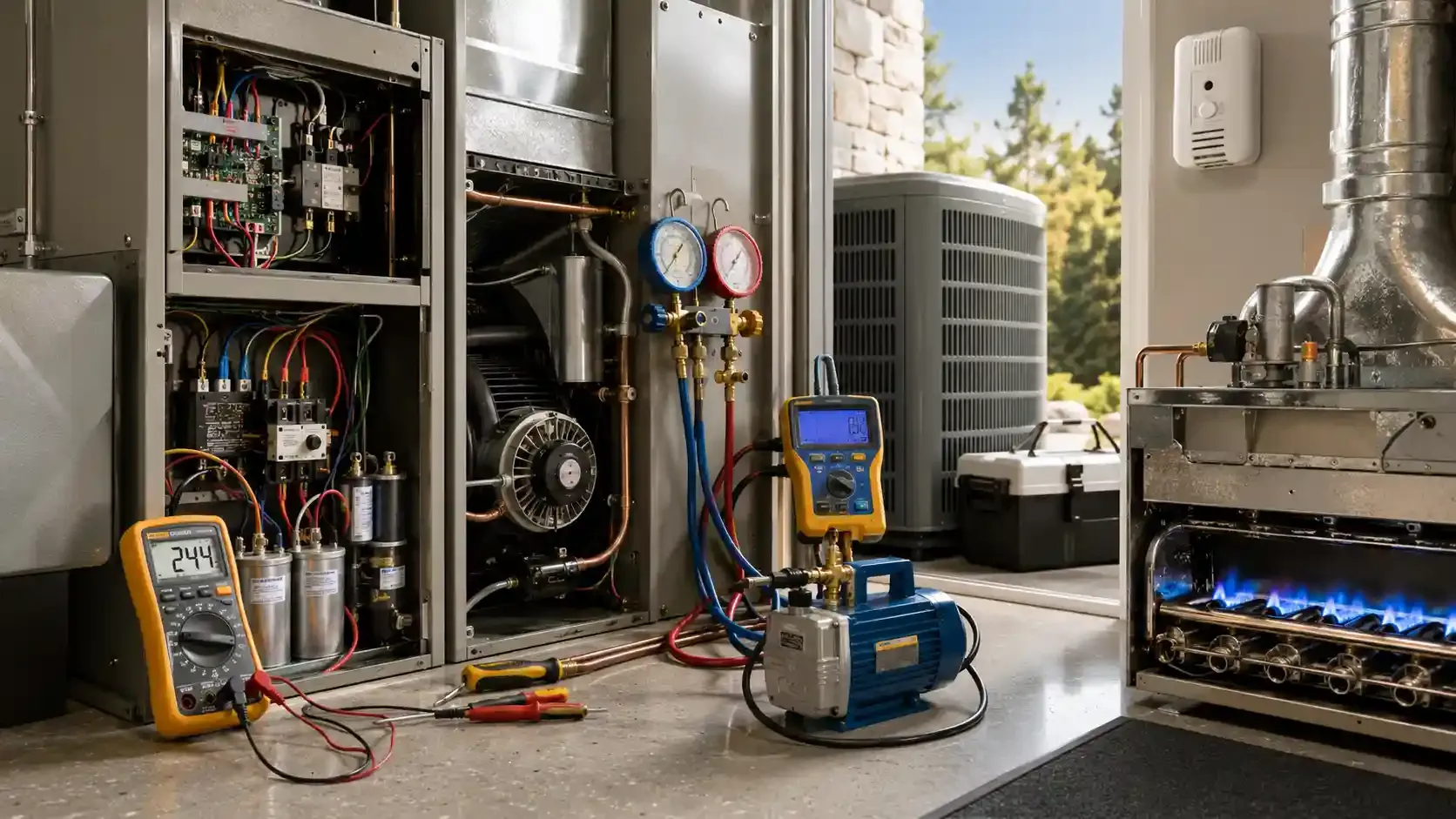
These tasks go beyond what a filter swap can fix. A certified technician should handle them during a seasonal tune-up.
Inspect and Tighten Electrical Connections
Loose wiring is a fire hazard. It also causes those random shutoffs that make you think your system is possessed. The tech checks all wiring for wear, corrosion, or scorch marks and measures voltage and amperage draw on motors. If a motor pulls more amps than it should, that's a sign it's failing.
Test Capacitors and Contactors
These two parts fail more often than any other components in aging systems. Capacitors kick-start your compressor and fan motors. Contactors complete the electrical circuit when the thermostat calls for heating or cooling. A tech checks for burn marks, weak engagement, and signs of wear.
Check Refrigerant Levels and Inspect for Leaks
Low refrigerant doesn't just reduce cooling. It overheats the compressor and can destroy it entirely. A technician measures operating pressures against manufacturer specs. If levels are low, they fix the leak first, then recharge.
Clean Evaporator and Condenser Coils
You know what kills efficiency faster than almost anything? Dirty coils. Grime blocks heat transfer, and the system ends up running longer cycles just to hit the same temperature. A tech uses commercial-grade cleaners that go way deeper than what a garden hose can do.
Lubricate Motors and Moving Parts
Dry bearings create friction. Friction draws more current, builds heat, and shortens motor life. A tech oils the fan motor bearings and other moving parts as needed.
Heating Safety and Combustion Checks
This is the one you never skip. The tech tests gas lines for leaks, inspects the burner flame, and examines the heat exchanger for cracks. A cracked heat exchanger leaks carbon monoxide into your air supply. They also verify the flue system and test every safety control, from limit switches to flame sensors.
Build digital checklists your techs complete on-site.
No skipped steps. Every task gets logged from their phone.
Seasonal HVAC Maintenance Schedule: When to Do What
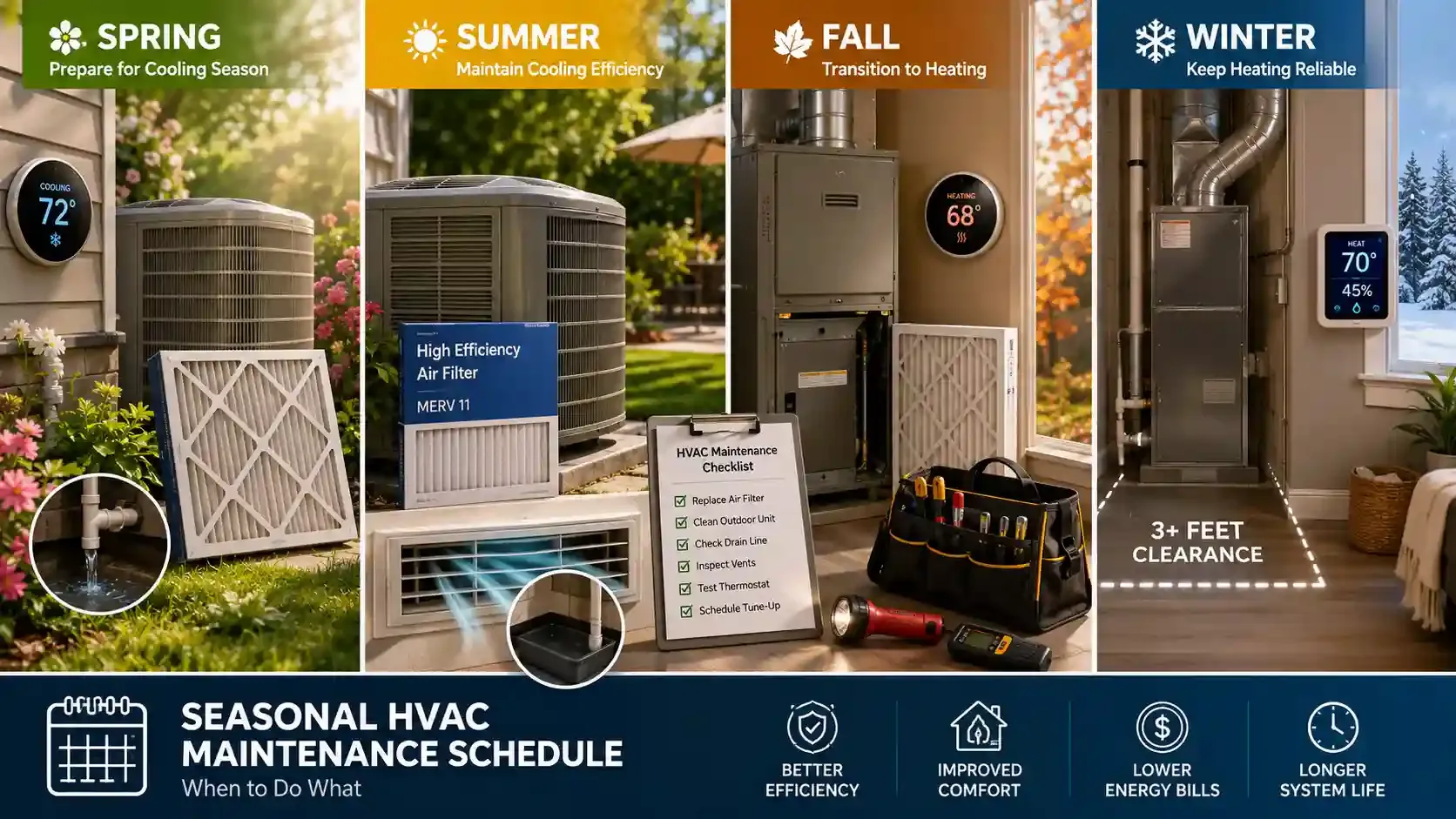
Knowing what to do is only half the job. Timing matters just as much. Each season puts different demands on your system, so the focus shifts throughout the year.
Spring: Prepare for Cooling Season
Spring is your window to get ahead before the heat hits. Run through the DIY tasks above: fresh filter, clear the condenser, flush the drain line, and test the thermostat in cooling mode.
Then schedule a professional AC tune-up. Get this done before May and your system is ready for whatever summer throws at it.
Summer: Maintain Cooling Efficiency
Your AC works hardest during these months. Swap the filter monthly since heavy use clogs it faster. Check the drain pan for standing water every few weeks. Keep all vents open and unblocked.
Pay attention to how the system sounds, too. Rattling, buzzing, or frequent on-off cycling are signs that something needs attention. Catching those early saves you from a mid-July breakdown.
Fall: Transition to Heating
Fall is about switching gears. Put in a fresh filter before firing up the furnace for the first time. Run the system for 15 to 20 minutes on an early cool day. A faint burning smell for the first few minutes is normal. That's just dust burning off. Anything that lingers means you should call a tech.
Schedule a professional heating tune-up so the burner, heat exchanger, and safety controls get checked before you rely on them daily.
Winter: Keep the Heating System Reliable
Your heating system carries the heaviest load now, so don't ignore it once it's running. Keep swapping filters regularly. Leave at least 3 feet of clearance around the furnace or air handler.
Watch for cold spots in certain rooms, frequent cycling, or odd smells. Also, keep an eye on humidity. Dry winter air makes your home feel colder than it is.
Set recurring spring and fall visits once.
FieldServicely sends reminders so seasonal tune-ups never slip.
Commercial HVAC Maintenance Checklist
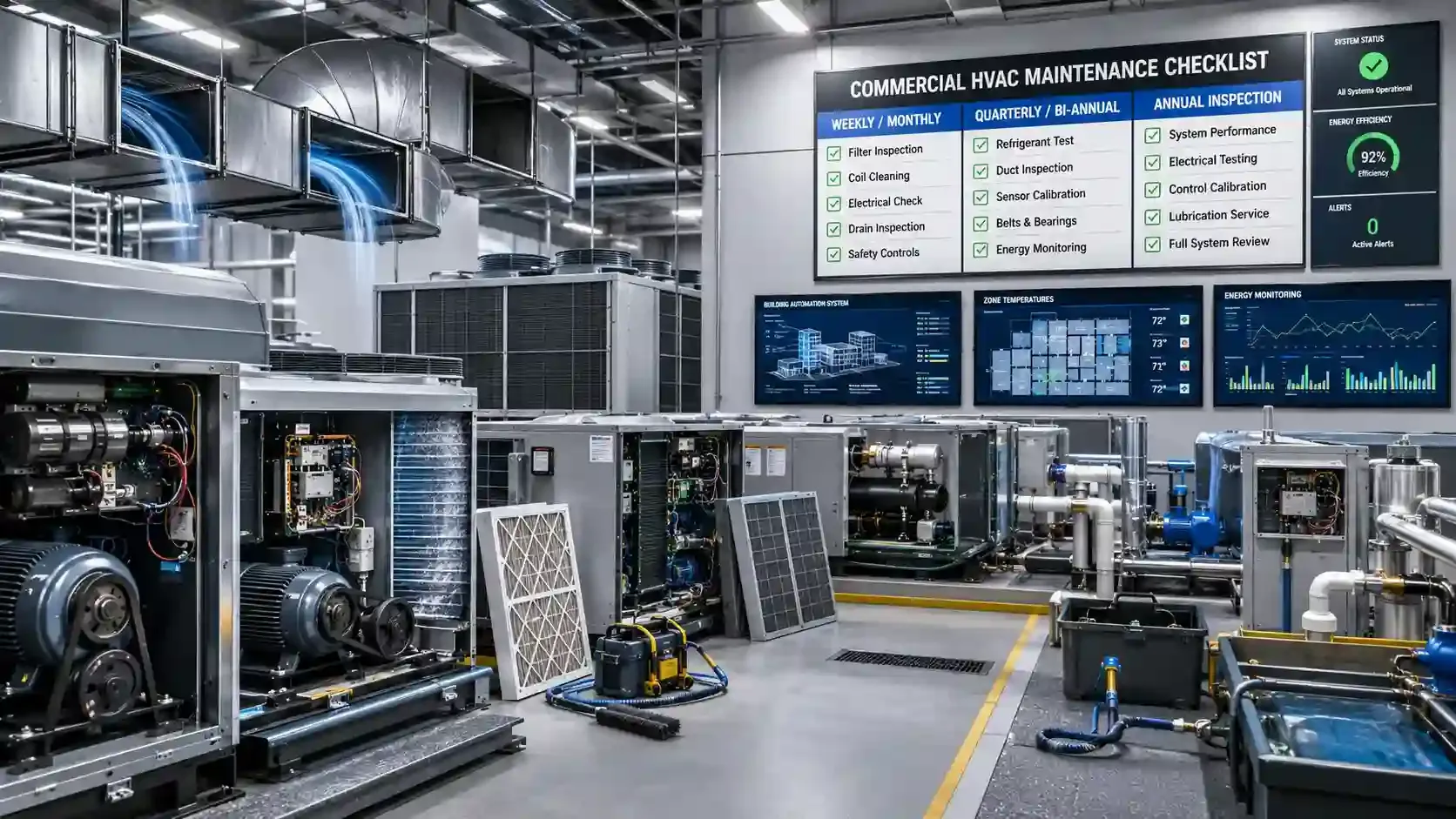
HVAC accounts for roughly 40 to 60% of energy use in commercial buildings, so when maintenance slips, the energy bill is the first thing that spikes. Here's what a solid commercial HVAC maintenance checklist looks like, broken down by frequency:
Weekly to Monthly
- Monitor for unusual sounds, vibrations, or temperature inconsistencies across zones.
- Verify thermostat and BAS settings in every zone.
- Check airflow at all vents, returns, and dampers.
- Replace or clean filters on the manufacturer's schedule.
- Inspect condensate drains and pans for buildup.
Quarterly to Bi-Annual
- Full electrical inspection: wiring, contactors, capacitors, and control boards.
- Clean both coils, check refrigerant charge, and inspect for leaks.
- Lubricate motors and bearings. Replace any worn belts.
- Test all safety controls, interlocks, and economizers.
- For heating: inspect burners, heat exchangers, gas pressure, and flue venting.
- Review energy consumption data for anomalies.
Annual
- Full ductwork inspection and cleaning.
- Cooling tower servicing: cleaning, water treatment, and basin inspection.
- Chiller maintenance: tube cleaning, oil analysis, leak testing.
- Calibrate all BAS sensors, thermostats, and zone controls.
Review and update the preventive maintenance plan based on equipment age and service history.
Manage HVAC maintenance across every building.
One dashboard for scheduling, work orders, and service history.
Tools That Make HVAC Maintenance Calls More Efficient
Having a checklist is one thing. Actually staying organized across dozens of units, multiple techs, and recurring seasonal visits is where most operations fall apart. Paper checklists get lost. Service history lives in someone's head. And seasonal tune-ups slip through the cracks because nobody set a reminder.
FieldServicely puts scheduling, digital checklists, and service records in one place. Techs complete an HVAC checklist for preventive maintenance right from their phone on-site. Every completed job gets logged with timestamps, notes, and photos tied to that specific unit or client.
You can also set up recurring spring and fall visits once, and the system handles the reminders from there. This tool quietly keeps your operation from dropping the ball.
Run your HVAC maintenance operation from one app.
FieldServicely keeps checklists, schedules, and records in one place.
Conclusion
The affordable HVAC repair is the one you never need. And that's exactly what a consistent maintenance schedule gives you. Handle the basics yourself, book a tech twice a year for the stuff that needs trained hands, and your system will run longer, quieter, and cheaper.
If you're managing maintenance across multiple units or clients, FieldServicely keeps every checklist, schedule, and service record in one place so nothing falls through the cracks.
Frequently Asked Questions
How Often Should HVAC Systems Be Serviced?
Twice a year. Schedule one visit in spring before cooling season and another in fall before heating kicks in. Between those visits, check your filters every 30 days and swap them when they look dirty. This is the standard recommendation from both Energy Star and most HVAC manufacturers.
What Does an HVAC Tune-up Include?
A tech cleans the evaporator and condenser coils, checks refrigerant levels, and tightens all electrical connections. They also test safety controls, inspect the heat exchanger, lubricate motors, and calibrate your thermostat. The goal is to catch anything worn or failing before it turns into a breakdown.
How Much Does HVAC Maintenance Cost?
A single tune-up costs $75 to $200 in 2026, with most homeowners paying around $100 to $150 for a standard visit. Annual maintenance plans that bundle spring and fall visits typically run $150 to $350 per year. These plans often include priority scheduling and repair discounts.
Can I Do HVAC Maintenance Myself?
Yes, for the basics. Filter changes, clearing debris around the outdoor unit, cleaning vents, and flushing the drain line are all safe to do on your own. But anything involving electrical components, refrigerant, or gas lines needs a licensed technician. Refrigerant handling alone requires EPA Section 608 certification by law.