- Operations management
Operational Agility Explained: Pillars, Benefits, & Why Efforts Fail
Updated on 3 Feb 2026

Jump to
Summary

Operational agility helps businesses adjust daily workflows, people, and priorities fast without freezing activities during disruption.
It relies on pillars like flexible processes, decentralized decisions, cross-team collaboration, tech integration, and continuous learning.
Agility improves resilience, speeds up delivery/time-to-market, boosts performance, and increases customer satisfaction through faster response.
Common blockers include cultural resistance, legacy systems, and siloed data that reduce visibility and slow decision-making.
Most agility initiatives fail due to unclear purpose, fear-based culture, slow approvals, “ceremony agility,” and lack of ongoing improvement.
Operational agility means you can adjust your day-to-day operations fast when things change. You shift workflows, people, and priorities without freezing the business. You keep moving, even when the plan breaks.
And trust me, the plan always breaks!
Because when operations stay rigid, even small disruptions feel expensive. Work piles up, teams blame each other, and customers have to wait. And you end up spending more time managing chaos than delivering results.
In this blog, we will discuss what operational agility really means and the key pillars that support it. We will also discuss the real benefits it brings, why most agility efforts fail even with tech and frameworks.
What is Operational Agility?
Operational agility is an organization’s ability to transform business processes, technology, and resources quickly to market conditions, customer demands, or business disruptions. But the changes must not decrease efficiency. In short, operational agility helps you stay stable and responsive when the market gets messy.
Now here’s the key part.
Operational agility is not the same as strategic agility. Strategic agility is about long-term direction, like entering a new market or changing your business model. Rather, it is more practical because it focuses on how quickly your teams can react today.
For example, if customer demand spikes overnight, an agile operation can reshuffle schedules, reroute tasks, and keep delivery times stable. If a supply chain issue hits, the company can switch vendors or update production plans without weeks of approval delays. This is why operational agility is often called the backbone of business resilience.
Most leaders now agree that digital tools and automation are central to agility. In North America, 82% of decision makers say their business processes must become more agile. Yet only 22% consider their organizations leaders in operational agility today.
Why is Operational Agility Important?
Operational agility helps manufacturers adapt quickly when demand rises or raw materials run short. When a company shifts processes fast, it keeps production running, avoids cost spikes, and stays reliable to customers even in sudden market swings.
This strong response drives better performance in real business conditions.
Operational agility also protects revenue during disruption. If supply chains break or new customer needs emerge, companies that adjust plans quickly save time and money by fixing problems. Firms using real-time data and flexible planning cut downtime and losses compared to rigid competitors.
Customers reward fast responders with loyalty and repeat orders. When operations pivot quickly to deliver products on time, buyers trust the company and return more often. This reliable delivery strengthens a manufacturer’s market position and drives long-term growth.
In short, operational agility is important because it keeps production stable, protects profits, and improves customer trust amid change. Companies that balance speed and quality stay competitive in today’s fast-moving markets.
Key Pillars of Operational Agility
Operational agility doesn’t come from working longer hours. It comes from building operations that can shift fast without creating chaos. And honestly, once you experience a real disruption week, you start respecting these pillars a lot more.
I’ve seen teams that survive pressure don’t have superhuman employees. They have systems that don’t fall apart when the plan changes.
So what actually makes that possible? Let’s break it down.
Flexible Processes
Flexible processes mean your workflow can change fast without needing a full reset. You move away from rigid steps and build adaptive workflows that still keep quality intact.
Let me explain. Imagine you have 20 jobs scheduled for the day, then three customers reschedule, one urgent job shows up, and one technician calls in sick.
What happens next?
If your processes are rigid, the day collapses. But if they’re flexible, you adjust schedules, update priorities, and keep service moving.
And here’s a question most teams don’t ask early enough: “Can our workflow survive a bad day?” Because bad days are not rare anymore. They’re quite normal.

Decentralized Decision-making
Decentralized decision-making means frontline teams can act without waiting for five approvals. This is not just annoying, but also time-consuming.
I’ve worked with teams where one small change required a manager, then a director, then a meeting. By the time the decision came, the problem had already grown bigger.
Now compare that to an agile operation. A dispatcher sees a delay and reroutes jobs instantly. A team lead sees a shortage and shifts resources on the spot. That’s the difference.
And this matters because many organizations still struggle to build future-ready capability. Gartner found that only 29% of supply chain organizations have built enough “future-ready” capabilities.
Cross-functional Collaboration
Cross-functional collaboration means teams share information instead of guarding it. Ops, support, finance, service, and delivery work like one unit.
Here’s what I’ve noticed. Silos don’t fail loudly. They fail quietly. They show up as delays, miscommunication, and blame.
One department says, “Not my job.” Another says, “We didn’t know.” Then the customer gets the worst experience.
So here’s a real question: “When something goes wrong, do teams fix it together or point fingers?” Agile teams fix it together. Always.
Technology Integration
Technology integration means your tools give you real-time visibility, not scattered updates. You use cloud systems, automation, and analytics so leaders can act based on live data.
This is where most teams struggle. They run operations using spreadsheets, chats, and memory. That works until scale hits.
Then the cracks show up.
- Jobs get missed
- Updates arrive late
- Managers chase information all day
And here’s the key: visibility isn’t a nice-to-have. It’s the foundation of speed.
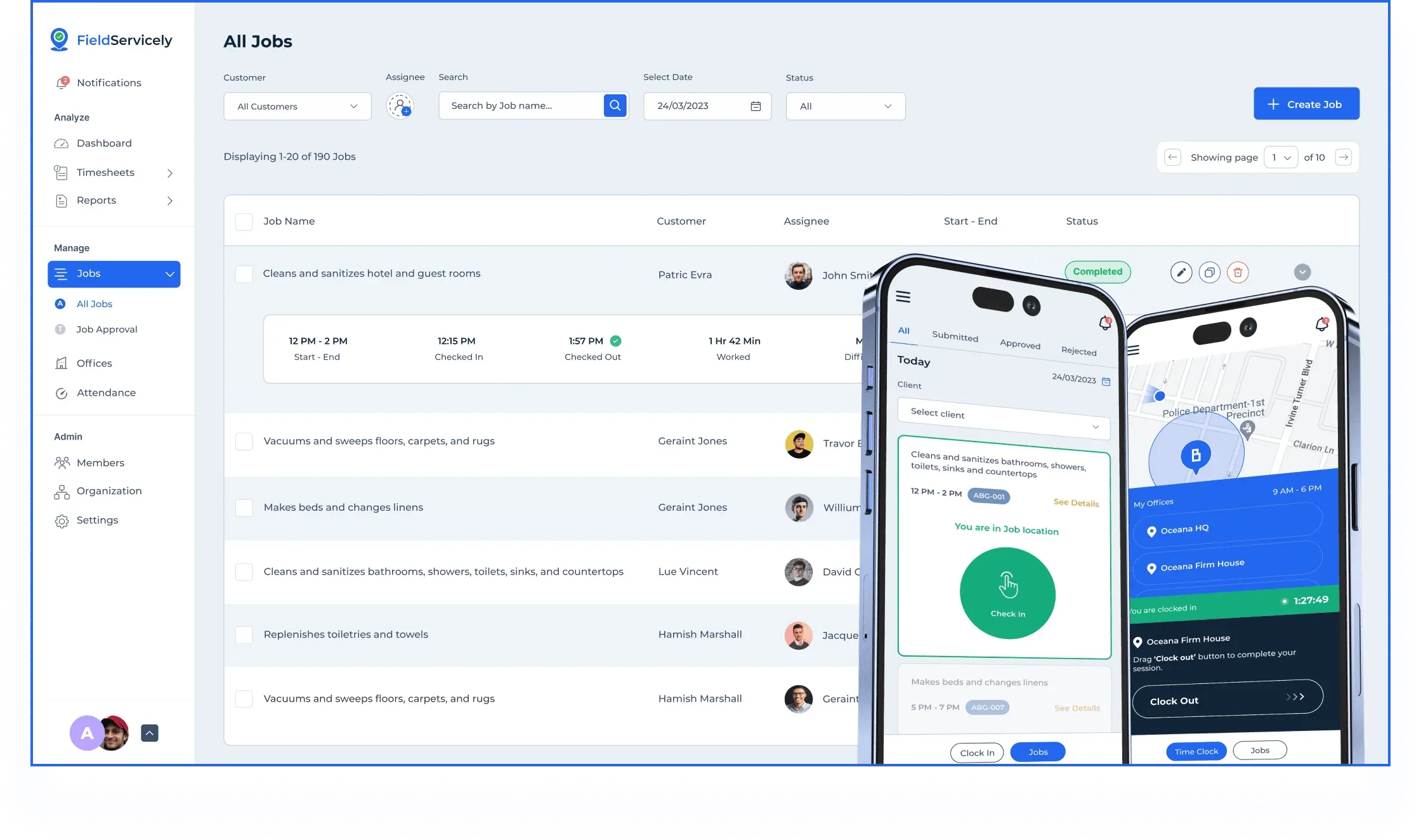
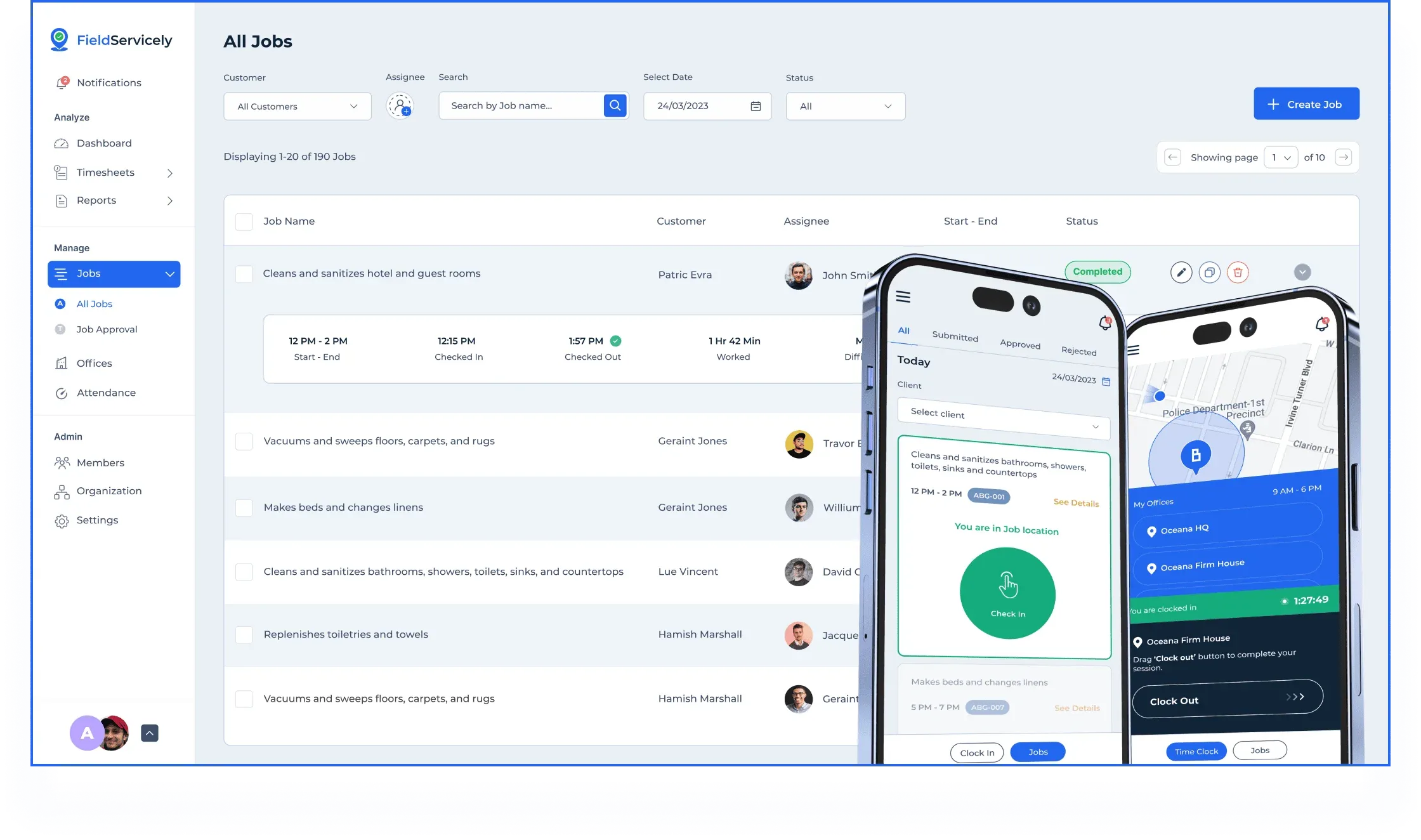
This is also where FieldServicely fits naturally. It helps teams track jobs, schedule faster, and stay aligned without constant back-and-forth.
Stop managing operations through spreadsheets and guesswork
Try for free - No credit card required!
Continuous Learning
Continuous learning means you review performance regularly and fix what slows you down. Agile teams treat problems as feedback.
They don’t say, “That’s how we’ve always done it.” They say, “What should we change so this doesn’t happen again?”
And that mindset compounds fast.
Because once teams start reviewing workflows weekly, small improvements stack up. After a few months, you don’t just work faster. You work smarter.
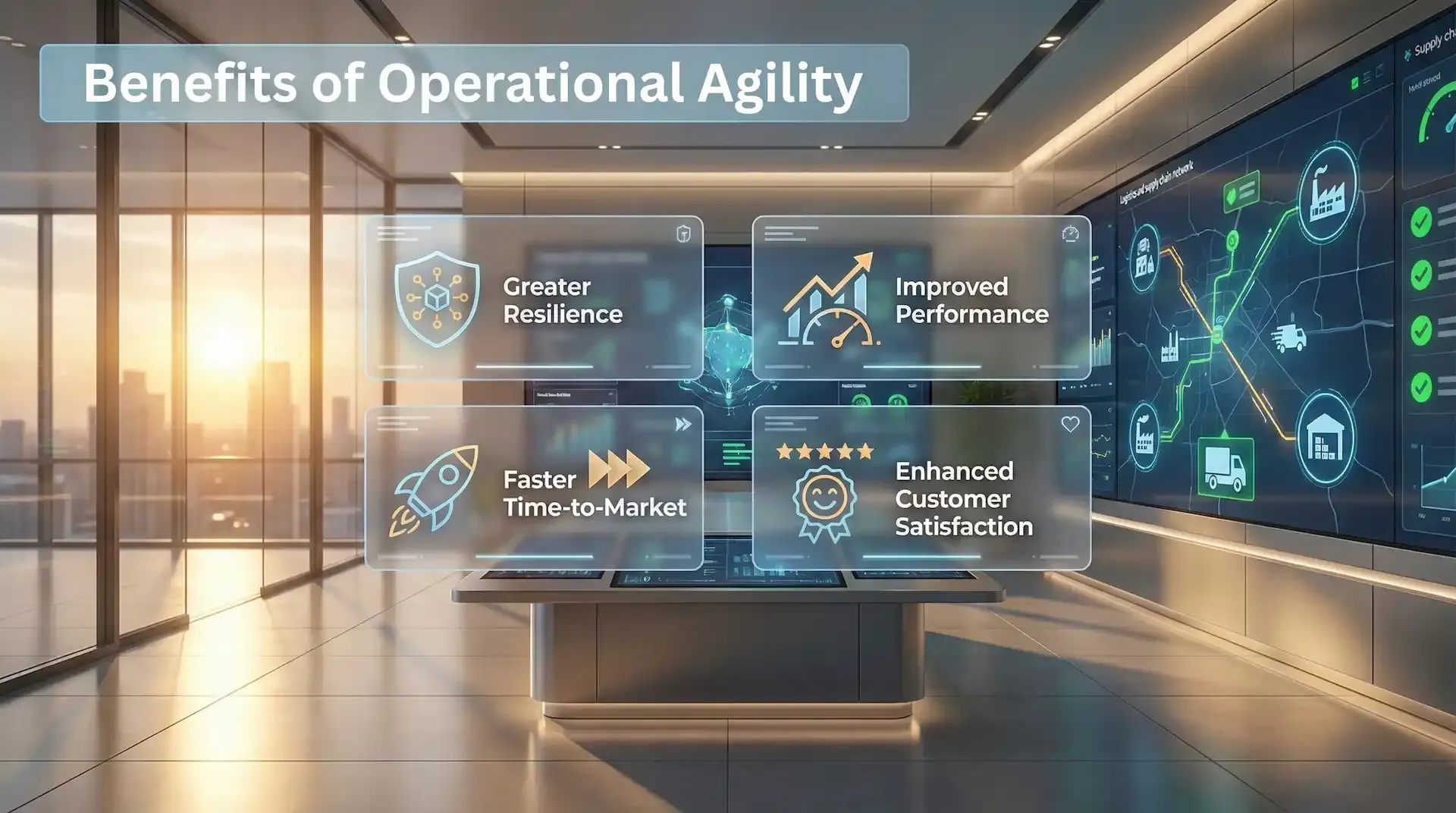
Benefits of Operational Agility
Let me be honest. Most teams don’t “care” about operational agility until the day operations break.
I’ve seen it happen in real life. A company runs fine for months, then one disruption hits. A supplier delay, a sudden demand spike, or a key employee leaving. And suddenly, the whole system starts choking.
That’s where operational agility proves its value. It doesn’t make your business perfect. It makes your business hard to break.
So what do you actually gain from it?
Greater Resilience
Greater resilience means you keep delivering even when conditions get out of hand. You don’t freeze. You don’t collapse into endless meetings. You shift resources and keep the flow alive.
Here’s a real scenario. A field service team gets hit with a storm warning. Half the day’s jobs become impossible. In a rigid operation, managers waste hours reshuffling schedules manually.
In an agile operation, dispatch updates routes in minutes, high-priority customers get rebooked first, and the rest receive automatic updates.
That’s resilience. Not “staying calm.” Staying operational.
And disruption isn’t rare anymore. In 2024, Gartner reported that only 29% of supply chain organizations built enough “future-ready” capabilities. That means most businesses still struggle when disruption hits.
If your top vendor fails tomorrow, can you still deliver this week? If the answer is no, you might need to consider operational agility.
Faster Time-to-Market
Faster time-to-market means you deliver products, updates, and service changes faster than competitors. This is not about rushing. It’s about removing delays caused by approvals, silos, and outdated workflows.
I’ve worked with teams where a simple service change took 3 weeks. Not because the change was hard. Because it had to pass through 4 people, 2 meetings, and a long email chain.
Agile operations fix that. Cross-functional teams review feedback quickly, decide fast, and ship changes without drama.
Highly successful agile transformations typically deliver around 30% gains in operational efficiency, customer satisfaction, employee engagement, and operational performance.
Improved Performance
Improved performance means your operations stop leaking time and money. You reduce rework. You cut waste. You increase output without burning people out.
This benefit sounds like a corporate promise, but it shows up in hard numbers. That kind of result doesn’t come from “trying harder.” It comes from:
- clearer workflows
- faster decisions
- fewer handoffs
- better real-time visibility
So are your teams busy, or are they productive? Because those are not the same thing.
Enhanced Customer Satisfaction
Enhanced customer satisfaction means customers feel your responsiveness in real time. You solve issues faster. You communicate better. You adapt to what they want now, not what they wanted last month.
Here’s what I’ve experienced. Customers forgive mistakes. They don’t forgive silence.
Operational agility helps you avoid silence because teams can respond quickly with:
- updated ETAs
- fast rescheduling
- clear service status
- proactive communication
This is where FieldServicely helps teams. It helps service teams manage jobs, schedules, and updates without messy manual coordination. That improves customer experience because customers get clarity instead of excuses.
Turn customer frustration into trust with faster updates
How to Achieve Operational Agility
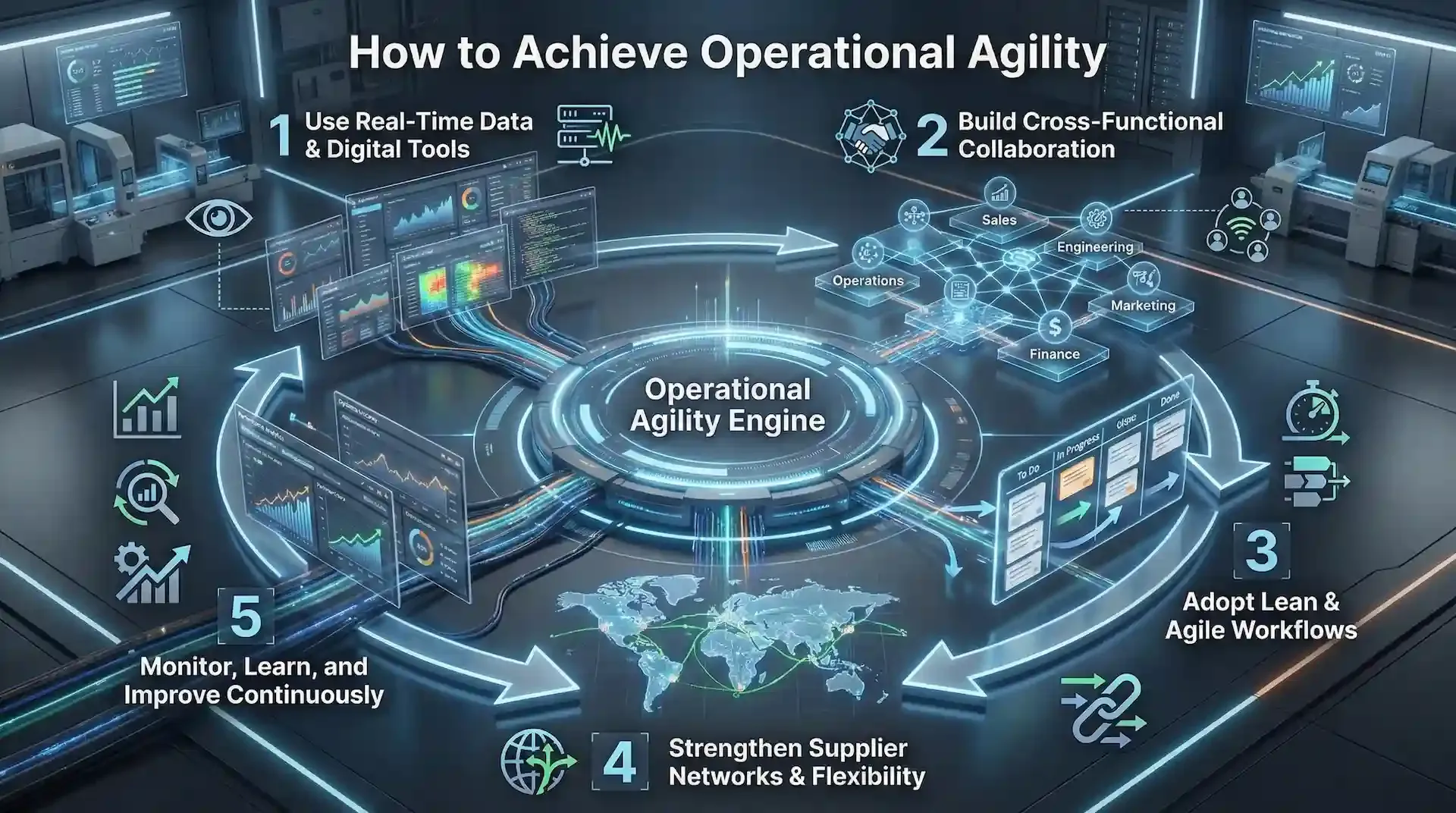
Use Real-Time Data and Digital Tools
Start by collecting live data across your operations. Real-time visibility into demand, inventory, and production helps you spot issues early and act fast, rather than reacting too late.
Next, invest in planning and execution systems that connect teams and machines.
Modern supply chain and production software lets every department see the same information at the same time. Thus, it speeds up decisions and reduces confusion. This shared visibility also allows you to adjust capacity and schedules without interrupting quality or delivery.
Build Cross-Functional Collaboration
Start by breaking down silos between teams and partners.
When operations, logistics, and planning teams work together, you reduce delays caused by miscommunication or duplicated tasks. Strong collaboration means your company can adjust orders, capacity, or materials faster when markets shift.
Then, empower teams to make informed decisions quickly.
Grant workers the authority to act on real data. So they don’t just wait for approvals. This change speeds up problem-solving and removes bottlenecks that slow agility.
Adopt Lean and Agile Workflows
Remove unnecessary steps in processes to reduce waste and delays. Lean principles help you focus on value-creating work so teams respond to change without dragging tasks through slow chains of approval.
Also, break large work into smaller, manageable tasks. Approaches similar to Agile or Kanban let teams iterate quickly, get real feedback, and correct course without heavy disruption.
Companies that integrate lean thinking achieve better flow and adaptability.
Strengthen Supplier Networks and Flexibility
Begin by diversifying your supply sources and strengthening supplier ties.
Relying on a single vendor makes you vulnerable when disruptions occur. Partnerships and multiple sourcing improve flexibility to switch suppliers or adjust schedules when one link in the chain slows down.
Then, integrate suppliers into your planning systems.
When your vendors share real-time data with you, they can adjust deliveries before shortages happen. This cooperation keeps production flowing even in tight markets.
Monitor, Learn, and Improve Continuously
Start by tracking key metrics like cycle time and adaptation rate. Monitoring these growth signals tells you where changes help and where bottlenecks persist.
Next, set up regular reviews of processes with teams. Use data and feedback to refine workflows and remove steps that slow responses.
This ongoing improvement loop helps employees embrace change and drive deeper agility over time.
Common Challenges in Operational Agility
Cultural Resistance
Cultural resistance means people prefer old ways of working, slowing down change. When leaders try to introduce new workflows, employees often push back because comfort and familiarity outweigh the promise of improvement.
A study on agility shows that culture and leadership alignment are key to performance outcomes.
To overcome this, successful organizations invest in communication, training, and incentives. So teams understand the why behind changes and feel included in the process.
Legacy Systems
Legacy systems are old and rigid technology platforms that can’t support real-time operations or modern data access. These systems create inefficiency and require manual workarounds, which kill responsiveness and slow execution. [Source: Lumenalta]
Modernizing infrastructure or moving to flexible platforms helps organizations operate faster and improves decision accuracy.
Siloed Data
Siloed data means different departments hold their own information, so no one sees the full picture. This fragmentation keeps teams from making fast, data-driven decisions and increases errors.
According to US Business News, it’s a common operational challenge for businesses today.
Bringing data together into unified platforms and encouraging cross-team collaboration lets leaders react more quickly to changes.
Break through resistance, outdated systems, and siloed data with one platform
Why Most Operational Agility Efforts Fail (Even With Tech and Frameworks)
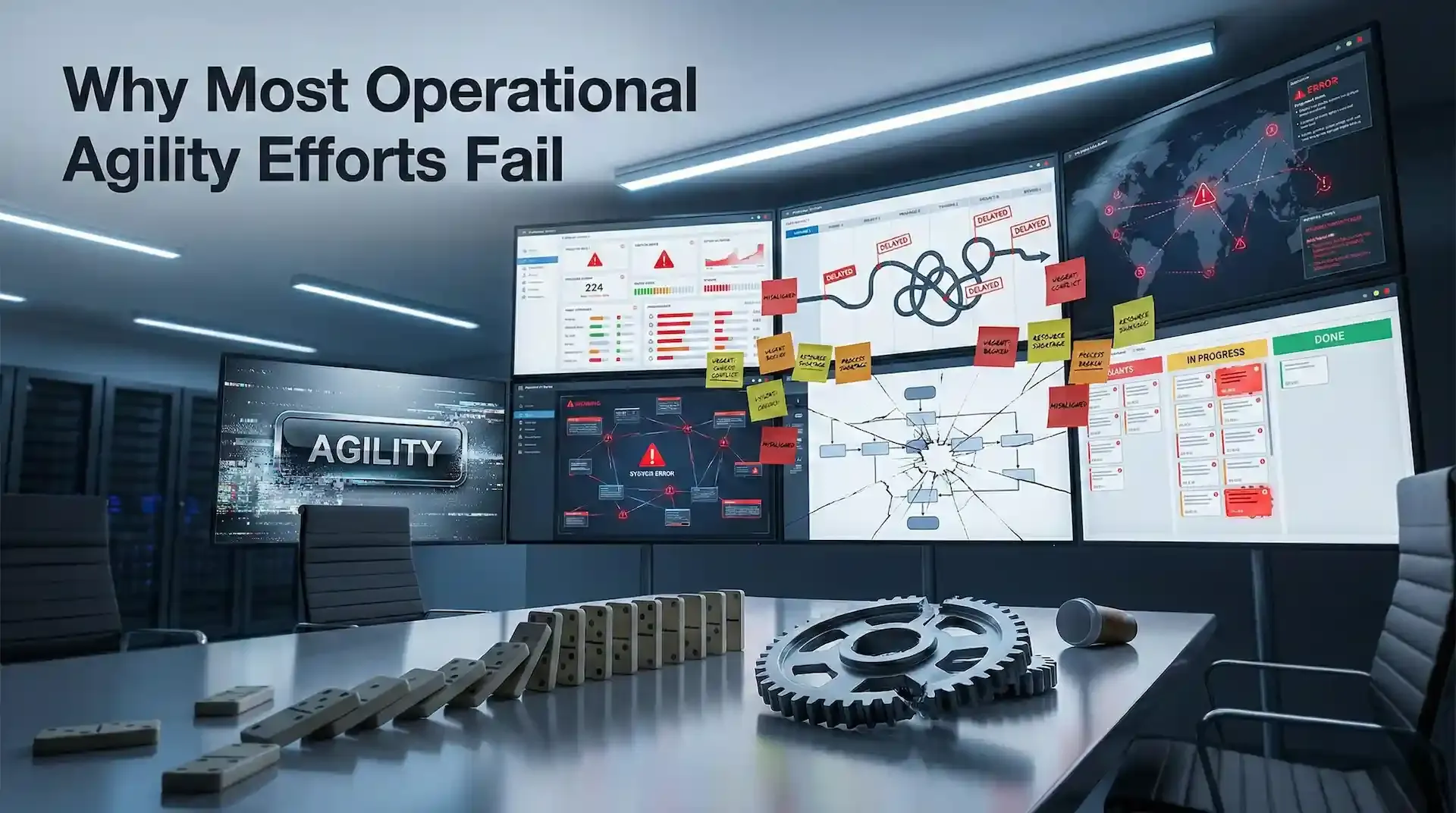
Let me say this clearly. Most companies don’t fail because they pick the wrong framework. They fail because they treat agility like a “system install” instead of a real operating change.
I’ve watched teams roll out project management software, create squads, rename managers, and run daily standups. Everything looks modern on paper. Yet on-time delivery stays slow, decisions stay stuck at the top, and customers still wait.
So what goes wrong?
No Clear “Why”
Leaders rarely define the real reason for change.
Teams hear lines like “we need agility” or “we need to move faster.” But nobody explains what that means in business terms. Faster delivery? Less rework? Better customer response? Lower cost?
Companies launch a full transformation without defining success. Then, after 6 months, everyone feels tired, confused, and disappointed.
So here’s the real question: what problem are you solving, exactly? If you can’t answer that in one sentence, your teams can’t align.
Culture Doesn’t Match the Message
Agility needs trust. It needs people to experiment, learn, and improve. But many companies still operate on fear-based control.
And this problem shows up everywhere.
So ask yourself. Do your people feel safe to make decisions, or do they play defense all day? Because defensive teams never move fast.
Leaders Still Control Decisions
Most efforts fail because decision-making stays stuck in approval chains.
I’ve worked with teams where frontline staff had the most context. They knew what customers wanted. They knew what broke the workflow. Yet they still needed permission for every move.
So what happens? The work waits. Customers wait. The backlog grows. And people lose energy.
Here’s the hard truth: you can’t build agility with slow approvals. You need decisions closer to the work.
Teams Worship Frameworks
Many times, companies copy rituals instead of fixing the flow.
They run standups. They run sprints. They add story points. They talk about velocity. Yet customers don’t feel any improvement.
I call this “ceremony agility.” It looks good. It sounds smart. But it changes nothing.
So if meetings rise and delivery stays slow, the transformation runs in the wrong direction.
Middle Managers Block Change
Often, middle management quietly slows everything down.
This doesn’t always come from bad intent. Many managers fear losing control, relevance, or authority. So they hold decisions, resist new structures, and demand reporting layers.
I’ve seen this pattern many times. Leadership announces change, but middle layers keep the old system alive.
Incentives Reward the Wrong Behavior
Most efforts fail because performance systems reward predictability, not adaptability.
People get praised for “following the plan.” They don’t get rewarded for fixing broken workflows. They don’t get rewarded for reducing customer pain.
So teams play it safe. They ship what they planned, even if priorities change. That kills responsiveness.
Teams Stop Learning
Companies treat agility as a one-time rollout.
They do training. They do a pilot. They celebrate. Then they stop improving.
But agility lives in continuous review. Teams must keep asking: what slowed us down, what broke, what should we change next week?
If that habit dies, agility dies with it.
Build real operational agility with clear workflows
Conclusion
Operational agility is what keeps your work from falling apart when reality hits. Because the truth is, things will go wrong. And in those moments, you don’t need a perfect plan. You need an operation that can adjust without panic.
That’s what operational agility gives you.
It helps you make faster calls, keep teams aligned, and move work forward even when the situation shifts. And once you build it into your daily workflow, you stop living in “firefighting mode.”
And if your work involves field teams, field team scheduling, job tracking, or service delivery, tools like FieldServicely can make that transition easier. It gives you the visibility and control you need without making the process feel heavy.
Frequently Asked Questions
What is the goal of operational agility?
The goal of operational agility is to help your business respond fast without breaking operations. It keeps everything stable while adapting to new conditions like demand shifts, delays, or customer changes.
Is operational agility only for large enterprises?
No, operational agility matters even more for small and mid-sized businesses. Smaller teams have fewer backup resources, so one disruption can hurt revenue fast. Agility helps you adjust workloads, protect service quality, and avoid customer churn without needing massive teams.
What industries benefit the most from operational agility?
Industries with high daily variability benefit the most. This includes field service, logistics, manufacturing, healthcare operations, retail fulfillment, construction, and customer support. Any business that deals with schedules, delivery timelines, and service commitments will gain from faster operational adaptability.
What is the difference between operational agility and operational efficiency?
Operational efficiency focuses on doing the same work with less waste. While operational agility focuses on changing the work fast when reality changes. Efficiency helps you run smoothly in stable conditions, but agility helps you survive and perform when conditions shift unexpectedly.
Can operational agility reduce operational costs?
Yes, operational agility can reduce costs because it prevents small problems from becoming expensive disruptions. It lowers rework, missed appointments, overtime spikes, urgent shipping costs, and downtime. Over time, agile operations also reduce the cost of miscommunication and delayed decisions.