- Field Service Business
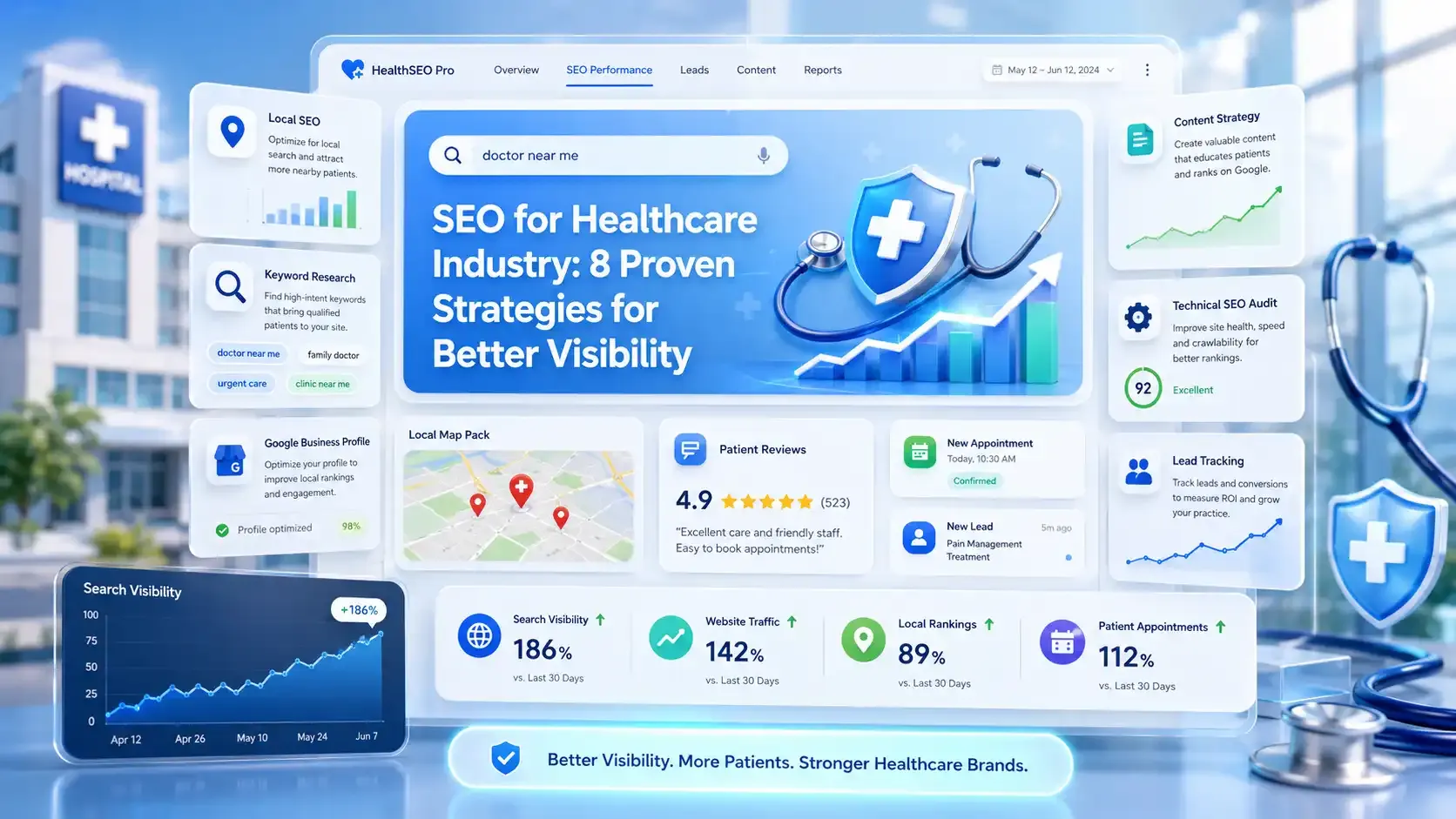
SEO for Healthcare Industry: 8 Proven Strategies for Better Visibility
Updated on 18 Jun 2026
Jump to
Summary

Google gets over a billion health searches daily, so SEO is very important for healthcare providers.
Healthcare sites follow stricter rules because Google treats them as YMYL content that needs trusted information.
Local SEO and Google Business Profile help clinics appear in nearby searches.
Patients search in simple words, so the content should match their language.
AI search results are growing, so content must be easy for AI to read.
A good patient experience can improve reviews and help SEO rankings.
Yes, you heard it right! Hospitals, clinics, and private practices that want to grow must follow the SEO techniques for the healthcare industry. Without it, healthcare providers lose visibility while competitors appear first in search results. And it reduces appointment bookings and patient trust.
Research shows that 77% of patients use search engines before booking a healthcare appointment. That means strong online visibility directly impacts patient growth.
So, what is healthcare SEO?
TL;DR: It is a specialized form of SEO that helps medical organizations appear in front of patients searching for care.
In this write-up, you will know exactly how to make healthcare services more visible online. This will help you convert searches into real patient appointments.
Why Healthcare SEO is A Must in 2026
SEO for the healthcare industry has become critical. This is because of how patients seek healthcare information in the digital age.
For example, people today research symptoms, compare providers, and read reviews. Some of them take things further by using AI-powered search tools before booking an appointment. If your healthcare organization isn't visible during these searches, you will lose potential patients before they ever visit your website.
AI Search Is Changing Patient Behavior
Patients are no longer relying only on traditional search results. AI-powered search experiences are becoming part of the healthcare research journey. A 2025 consumer survey shows that more than one-third of people use AI tools for healthcare-related purposes. Meanwhile, 53% say they are comfortable asking AI healthcare questions.
This shift means healthcare organizations need more than keyword optimization. Search engines must recognize your expertise in healthcare to be visible in search results. Also, in AI-generated answers.
Healthcare SEO Requires Higher Trust Standards
Unlike most industries, healthcare falls under Google's Your Money or Your Life (YMYL) category. This means search engines apply stricter quality standards because inaccurate health information can impact a person's well-being.
In simple terms, a healthcare website cannot rank effectively using the same SEO approach as an online store or local service business.
Patients Research Online Before Choosing a Provider
Modern patients expect to find accurate healthcare information online. Research published in 2024 found that 54% of consumers have self-diagnosed a medical condition using information found online. This proves people rely on digital health research before seeking care.
Managing a mobile healthcare team? Keeping field staff coordinated is just as important as being found online. See how FieldServicely helps healthcare teams stay on schedule.
Regular SEO is the main practice of improving search rankings. Healthcare SEO is an industry-wide application. Medical SEO is a more specific part of it, focused on individual doctors or clinics. So, medical SEO is actually a smaller part of healthcare SEO, not something separate.
They all aim to improve a website’s visibility on search engines like Google. However, the healthcare industry operates under much stricter rules because the information people find online can directly affect their health and medical decisions.
Here’s a quick comparison among them:
| Factor | Regular SEO | Healthcare SEO | Medical SEO |
|---|---|---|---|
Main Goal | Increase traffic, leads, or sales | Increase visibility and trust for healthcare organizations | Attract patients to doctors and medical practices |
Target Audience | General consumers | Patients, caregivers, families, and healthcare seekers | Patients looking for specific doctors or treatments |
Content Focus | Products, services, or business topics | Healthcare services, facilities, patient education, and wellness information | Medical conditions, treatments, symptoms, and doctor expertise |
Local SEO Importance | Depends on the business | Important | Critical |
How Patients Search For Healthcare: Understanding Search Behavior
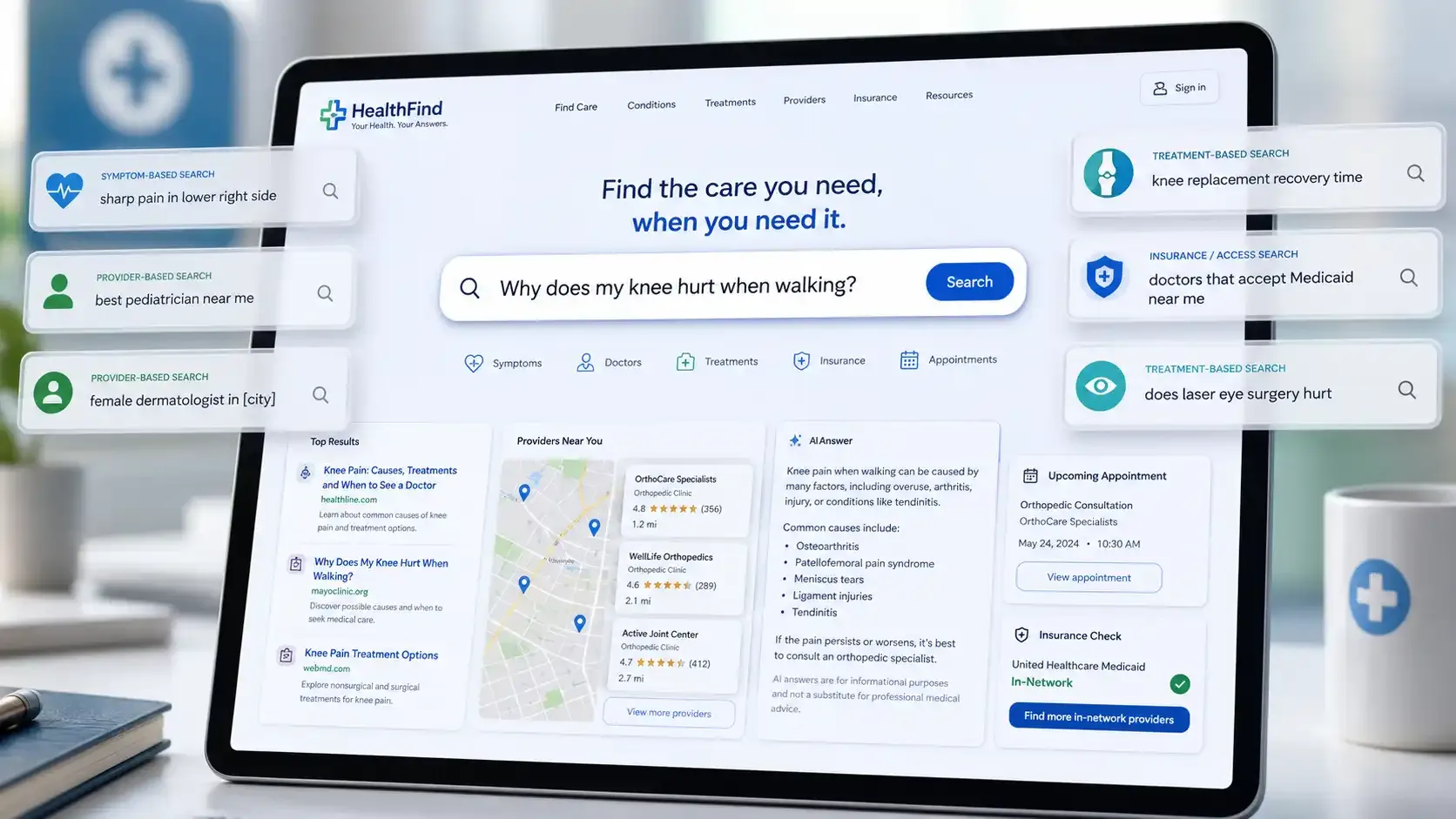
To show up where patients are searching, you first need to understand how they actually search online. In healthcare, patient search behavior has changed a lot in recent years.
The most important thing to know is that patients don’t use medical language as doctors do. Instead, they describe their symptoms in simple everyday words.
Patient searches usually fall into a few simple types:
- Symptom-based: “sharp pain in lower right side”, “rash that won’t go away.”
- Provider-based: “best pediatrician near me”, “female dermatologist in [city].”
- Treatment or procedure-based: “knee replacement recovery time”, “does laser eye surgery hurt.”
- Insurance or access-based: “doctors that accept Medicaid near me.”
These queries are also becoming longer and more conversational. As people get used to interacting with AI assistants like ChatGPT and Google's AI Overviews, they've started searching with full questions instead of short keyword phrases.
Healthcare SEO needs a more careful and expert approach. Health information can affect real patient decisions, so search engines treat it as highly important and check it more strictly than most other topics.
1. Create High-Quality, Patient-Focused Content
Your healthcare content should clearly answer what patients are actually searching for, using simple, everyday language. Most patients don’t use medical terms like “lumbar radiculopathy.” Instead, they search things like “sharp lower back pain” or “why does my back hurt.”
Each page should solve a specific patient question instead of just targeting keywords for SEO purposes. Google has also clearly stated that health-related content must be helpful, reliable, and people-first to rank well in search (Google Search Central). This means thin or generic content usually won’t perform well.
2. Strengthen E-E-A-T Signals Across Your Website
E-E-A-T means Experience, Expertise, Authoritativeness, and Trustworthiness. In simple terms, Google wants to know: Can this information be trusted for health decisions?
To show this, every healthcare page should clearly mention who wrote or reviewed the content. Add doctor or expert names, short bios, and their qualifications. Link to professional profiles when possible and highlight certifications or hospital affiliations.
3. Master Local Search and Google Business Profile
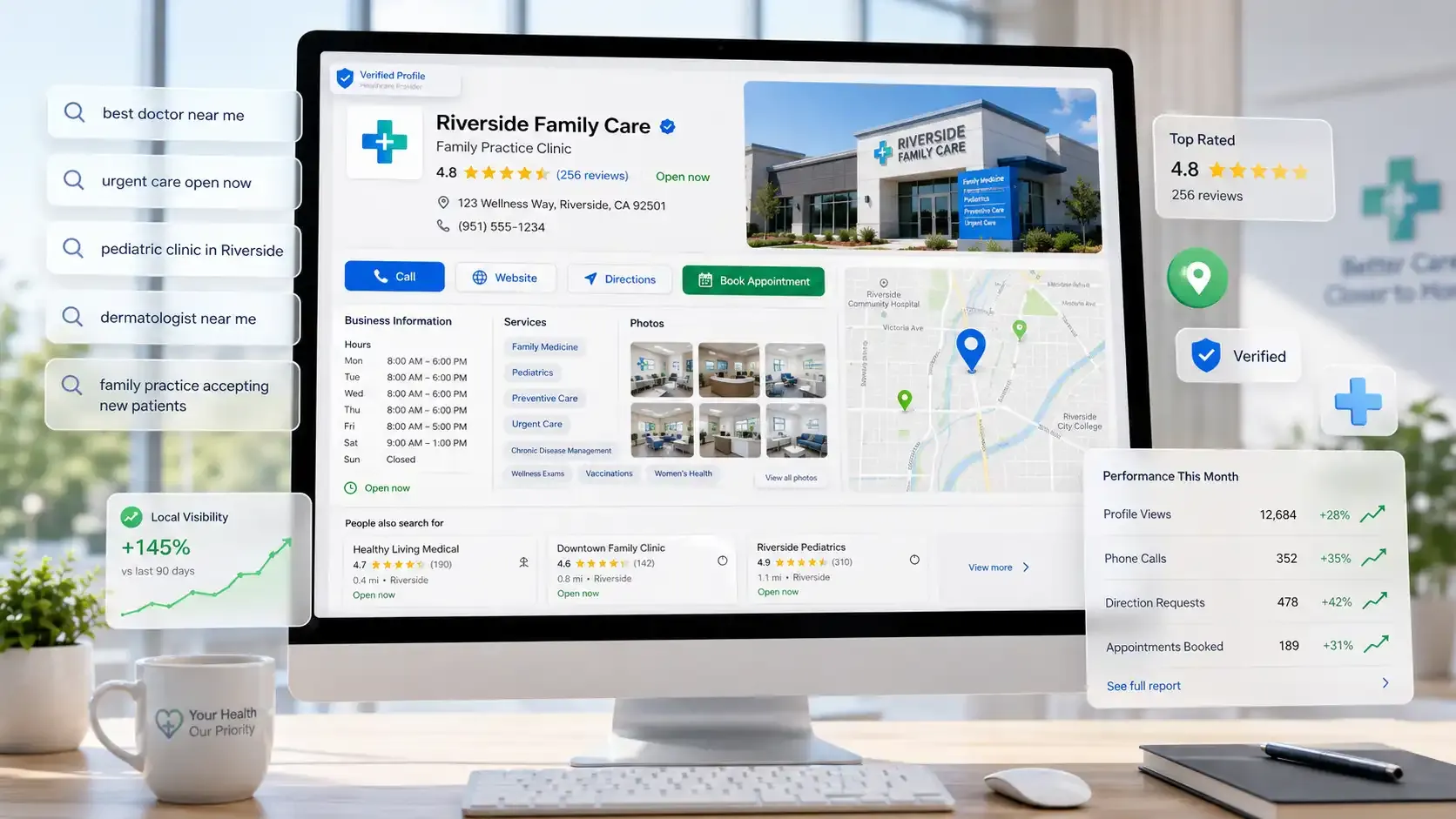
Most patients search for healthcare services based on location. Searches like “pediatrician near me” or “urgent care in [city]” are very common. Your Google Business Profile (GBP) is often the first thing patients see, before your website or reviews.
To improve visibility, claim, and fully complete your GBP. Add the correct categories, such as “Cardiologist” or “Medical Clinic,” and include important details like working hours, services, and accepted insurance. Upload clear photos of your clinic to build trust.
4. Prioritize Local SEO for Patient Acquisition
Local SEO is not just about your Google Business Profile. It includes everything that helps search engines confirm your clinic is a real, trusted, and active healthcare provider in a specific location.
Important local SEO actions include:
- Create separate location pages for each clinic
- Add unique content for every location (services, staff, directions)
- List your practice on healthcare directories like Healthgrades, Vitals, Zocdoc, and WebMD
- Also, use general platforms like Yelp and Bing Places
- Keep your Name, Address, and Phone (NAP) exactly the same everywhere
- Build local backlinks through community events, sponsorships, or partnerships
5. Build Dedicated Provider Pages
Every doctor or specialist in your healthcare team should have a separate page on your website. These pages help patients understand who they will be seeing and decide if that provider is the right choice. They also give search engines clear, detailed information about each specialist and their role.
Each provider page should include the doctor’s name, specialty, qualifications, education, certifications, and the conditions they treat.
According to Press Ganey (2025), nearly 9 in 10 healthcare consumers say accurate online information about doctors is a key factor when choosing a provider. This shows how important it is to keep provider information complete, clear, and trustworthy for both patients and search engines.
6. Ensure a Strong Technical Foundation
Even if your healthcare content is strong, your website can still perform poorly if the technical setup is weak. Technical SEO is all about making your site easy for search engines to read and easy for patients to use.
Start with the basics.
Key technical improvements include:
- Fast loading speed on all devices, including mobile phones
- Mobile-friendly design
- HTTPS security (secure connection)
- Easy navigation with clear menus
- Important pages reachable within a few clicks
7. Manage Online Reviews and Reputation
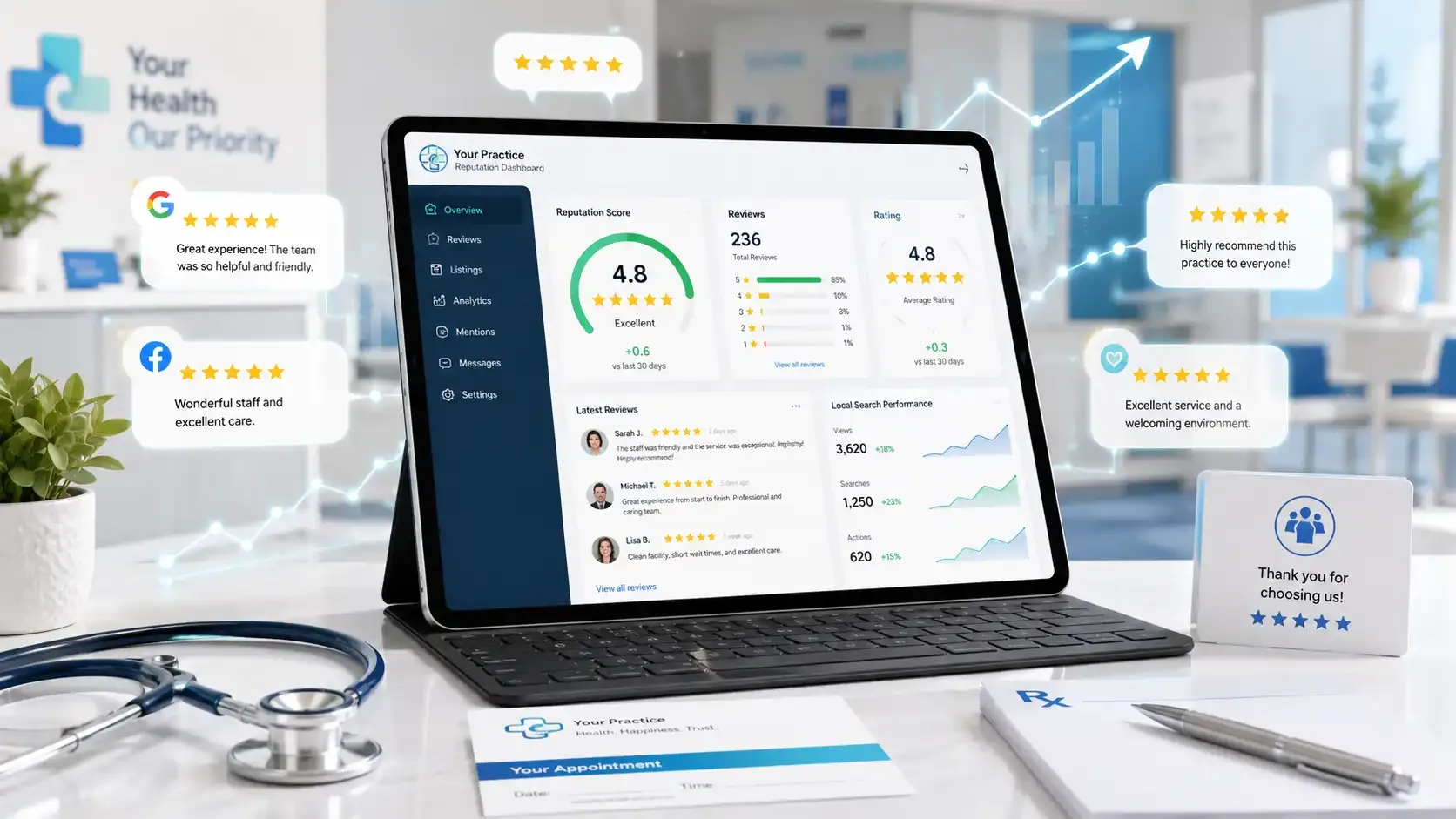
Online reviews are not only important for patient trust, but they also affect how visible your clinic is in local search results. A healthcare provider with many recent positive reviews is more likely to rank higher in Google’s local listings than one with few or outdated reviews.
To improve your reputation, create a simple HIPAA-compliant review request process after appointments, such as through email or text message. In simple terms, this means protecting patient privacy and avoiding any sharing of personal health information when asking for feedback. Make the process quick and easy so patients can comfortably leave a review about their experience.
8. Optimize for AI Search and Zero-Click Results
Google now shows AI-generated summaries (AI Overviews) that answer many health questions directly on the search page. This means patients often get answers without clicking on any website.
Google processes over a billion health-related searches every day, and a growing number now show AI-generated answers. To stay visible, your content must be easy for AI to read and extract. Use clear headings, short explanations, and a simple structure. Add FAQ sections and direct answers to common patient questions.
Your SEO brings patients in. Can your operations keep up? From dispatching nurses to tracking mobile labs, FieldServicely keeps your healthcare field operations running without the chaos. Try it free!
Traditional SEO tools help with keywords, rankings, and website performance. But healthcare organizations often deal with real-world operations like patient visits, mobile staff, and medical equipment management.
Without proper coordination, delays, missed appointments, and poor patient experience can affect both care quality and online reputation. That’s why healthcare businesses need tools that connect digital visibility with real-life service delivery.
This is where field service management (FSM) platforms like FieldServicely become useful.
These tools don’t directly “do SEO,” but they improve the operational side of healthcare. And they indirectly strengthen online performance through better patient experience. Eventually it helps businesses achieve stronger reputation signals.
Smart Nurse Dispatching: Assign the closest available nurse or therapist based on real-time location to reduce travel time and patient waiting.
Skill-Based Assignment: Match patients with professionals who have the right certifications for specific treatments, procedures, or equipment handling.
Live Staff Tracking: Monitor home care nurses and mobile technicians on a live map to improve timing, safety, and coordination.
Faster Emergency Response: Quickly redirect the nearest available healthcare worker to urgent patient cases when emergencies happen.
Automated Shift Control: Manage staff schedules, rotations, sick leaves, and working hours through a centralized dashboard without manual errors.
Common Healthcare SEO Mistakes To Avoid
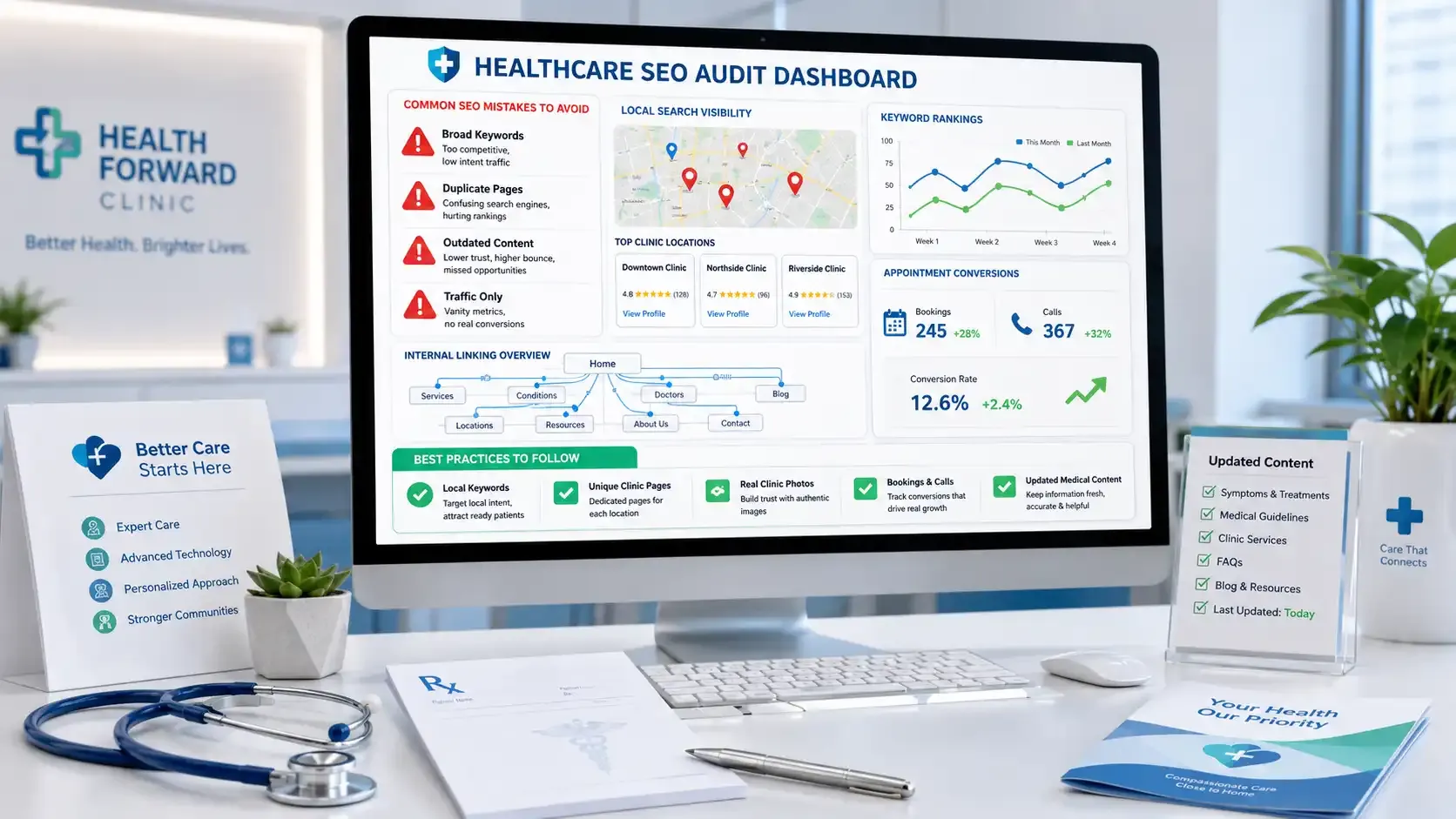
Beyond getting the core strategies right, watch out for these frequently overlooked mistakes that quietly undermine your efforts:
- Targeting broad keywords instead of local ones: Trying to rank for terms like “acne treatment” is too competitive. A better option is “acne treatment dermatologist in [city],” which brings more real patients.
- Using duplicate location pages: Copying the same content and only changing the city name doesn’t work. Each location page needs unique details like doctors, services, and local info.
- Using stock photos instead of real images: Generic images reduce trust. Real photos of your clinic and staff build credibility and help patients feel more confident.
- Tracking the wrong metrics: More website traffic is not enough. You should track real actions like calls, form submissions, and appointment bookings.
- Not updating old content: Outdated medical content reduces trust. Healthcare pages should be reviewed and updated regularly to stay accurate and reliable.
- Weak internal linking: If related pages don’t link to each other, users and Google can’t connect the content. Internal links improve SEO and user experience.
Ready to connect your online visibility with real-world service delivery? Start managing your healthcare field team with GPS tracking, smart scheduling, and automated timesheets; all in one place. Book a Demo
Wrapping Up
SEO plays a key role in helping healthcare providers connect with the right people at the right time. When you do it right, local visibility improves as well as AI recommendations. As a result, you win more patients' trust moving forward.
Remember, healthcare industry SEO profoundly depends on consistency, accuracy, and trust signals. So, try to take patient first approach that evolves with changing search behavior.
Frequently Asked Questions about Healthcare SEO
How much does healthcare seo cost?
Widely based on practice size, competition, and location. Solo practices might spend $1,500-$3,000 per month, while hospital systems or multi-location networks often invest $5,000 or more.
How long does it take for healthcare seo to show results?
Most healthcare SEO campaigns take 3-6 months to show noticeable improvements. Competitive markets or new websites may need 6-12 months for strong, stable rankings and patient growth.
How does E-E-A-T affect healthcare websites?
E-E-A-T helps Google decide if your health content is trustworthy. Websites with expert authors, medical reviews, and strong credibility signals are more likely to rank higher in search results.
How do HIPAA regulations affect healthcare seo?
HIPAA limits how you use patient information in marketing. Testimonials need proper consent, and review responses can't reference patient histories. So every health detail record must be handled securely.
Can a small clinic compete with large hospital systems in search rankings?
Yes, through local SEO. Large systems rarely dominate location-specific searches. A well-optimized small practice can outrank major hospitals for "near me" and city-specific queries.
Should healthcare websites have a blog?
Yes. A blog targeting patient questions, symptoms, treatments, and recovery expectations builds topical authority. It also attracts organic traffic and strengthens E-E-A-T signals across the digital space.
Is social media important for healthcare seo?
Social media doesn't directly affect Google rankings, but it drives brand visibility. Specially it can help you show up on AI suggestions. And it's a great way to use content marketing, distribution, and improve patient engagement. Bascially it plays a supporting role in your brand visibility.
What to read next