- Field Service Business
SEO for Plumbers: Rank Higher on Google and Get More Calls
Updated on 25 May 2026
Jump to
Summary

Google prioritizes business relevance, service territory, and local reviews to rank a plumbing company.
Set up Google My Account with necessary informations like business and service details, name, phone, email and website.
Get as many Google reviews as possible from your clients to build trust.
Find local service keywords and create helpful contents including them.
Make your plumbing website mobile friendly, optimize page speed and use proper schema markup for technical SEO.
Expert technicians and state-of-the-art equipment do not guarantee the success of your plumbing company. People need to know you provide services for their plumbing needs. All of this boils down to how well people know and talk about you.
Enters marketing. And what is better than doing this digitally?
Because whenever people need a plumber, they usually start with Google or ask ChatGPT nowadays. And SEO is going to help you show up to your target customer on these platforms.
Better visibility means more people can find your website, call your team, and book a job. Over time, strong local SEO can help you get more leads, win more repeat customers, and grow your plumbing business with steady search traffic.
What is SEO for Plumbers?
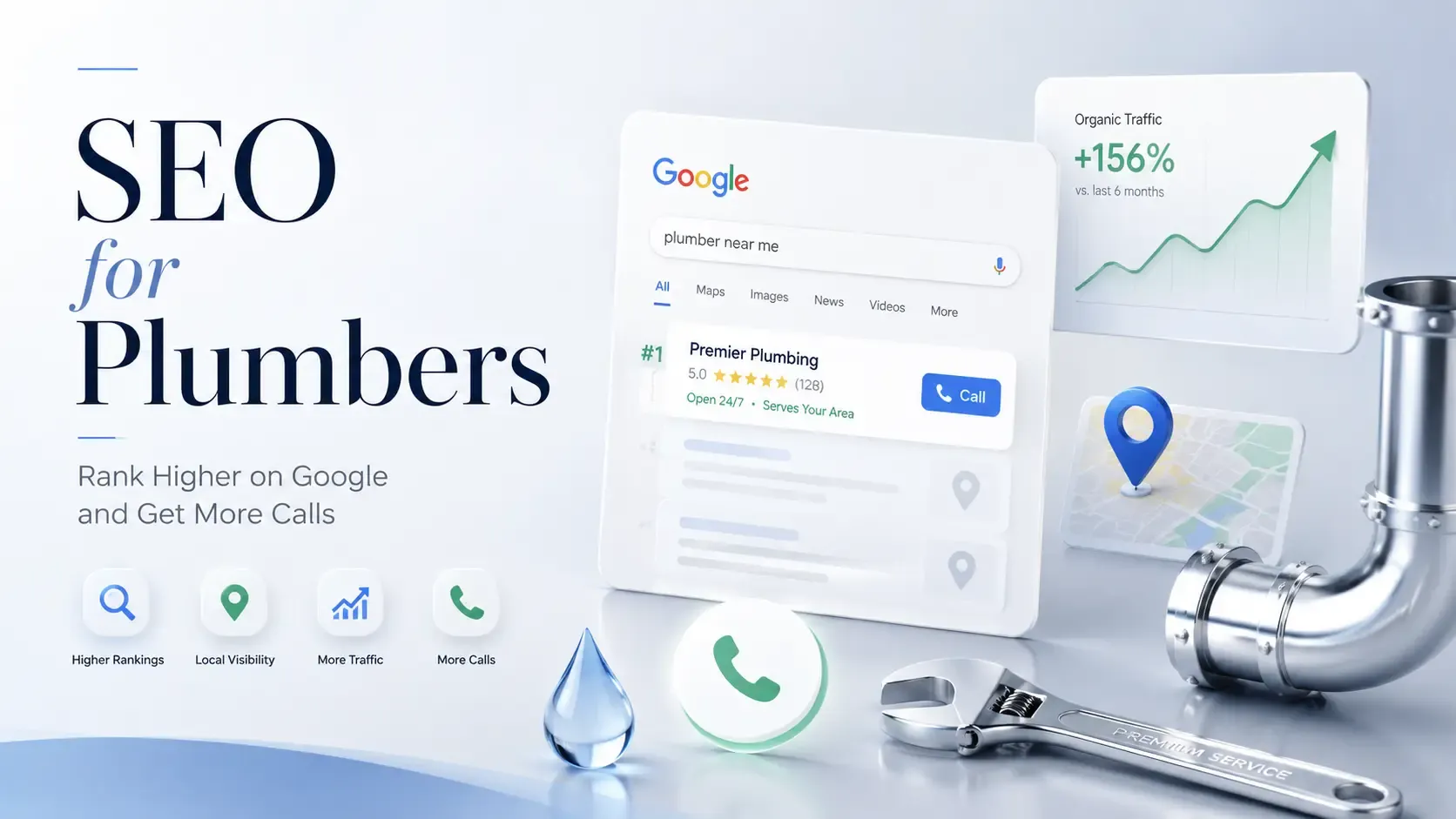
SEO for plumbers means improving your online presence so local customers can find your plumbing business on Google.
It includes your website, Google Business Profile, service pages, customer reviews, and local business listings. These parts help Google understand what services you offer and where you offer them.
When done right, plumber SEO helps your business appear higher in search results for terms like plumber near me, emergency plumbing service, drain cleaning, and water heater repair.
The goal is simple. You want your plumbing company to show up when people in your service area need help and are ready to call.
Main Types of Plumbing SEO
Plumbing SEO has several parts. Each one helps your business become easier to find, easier to trust, and easier to contact.
- Local SEO: helps your plumbing company appear in searches from people near your service area.
- On-page SEO: improves the content and structure of your website pages.
- Technical SEO: helps Google crawl and understand your website.
- Content SEO: helps you answer customer questions through helpful pages and blog posts.
- Off-page SEO: builds trust outside your website. It includes backlinks, brand mentions, directory listings, and local partnerships.
Google Maps SEO: helps your plumbing business rank better in the local map pack.
Why SEO Matters for Plumbing Businesses
SEO matters for plumbing businesses because most customers search when they need help fast.
They are not just browsing. They are ready to call a plumber, compare nearby options, and book a service.
Plumbing SEO helps your company appear in those high-intent searches. This means your business can show up when someone searches for emergency plumber near me, drain cleaning service, or water heater repair in your city.
SEO also builds trust before the customer contacts you. A strong website, good reviews, clear service pages, and a complete Google Business Profile make your company look more reliable.
How Google Ranks Local Plumbing Businesses
Google ranks local plumbing businesses based on three main factors: relevance, distance, and prominence.
Relevance:
Relevance helps Google understand what plumbing services your business offers. If your website and Google Business Profile clearly mention your services, Google can match your business with the right searches.
Distance:
Distance means how close your plumbing business is to the person searching. If someone searches for a plumber from a specific city or neighborhood, Google often shows nearby businesses first.
Prominence:
Prominence means how trusted and well-known your plumbing business looks online. Google looks at signals like customer reviews, backlinks, citations, brand mentions, and your overall online reputation.
Step 1: Start With Your Google Business Profile
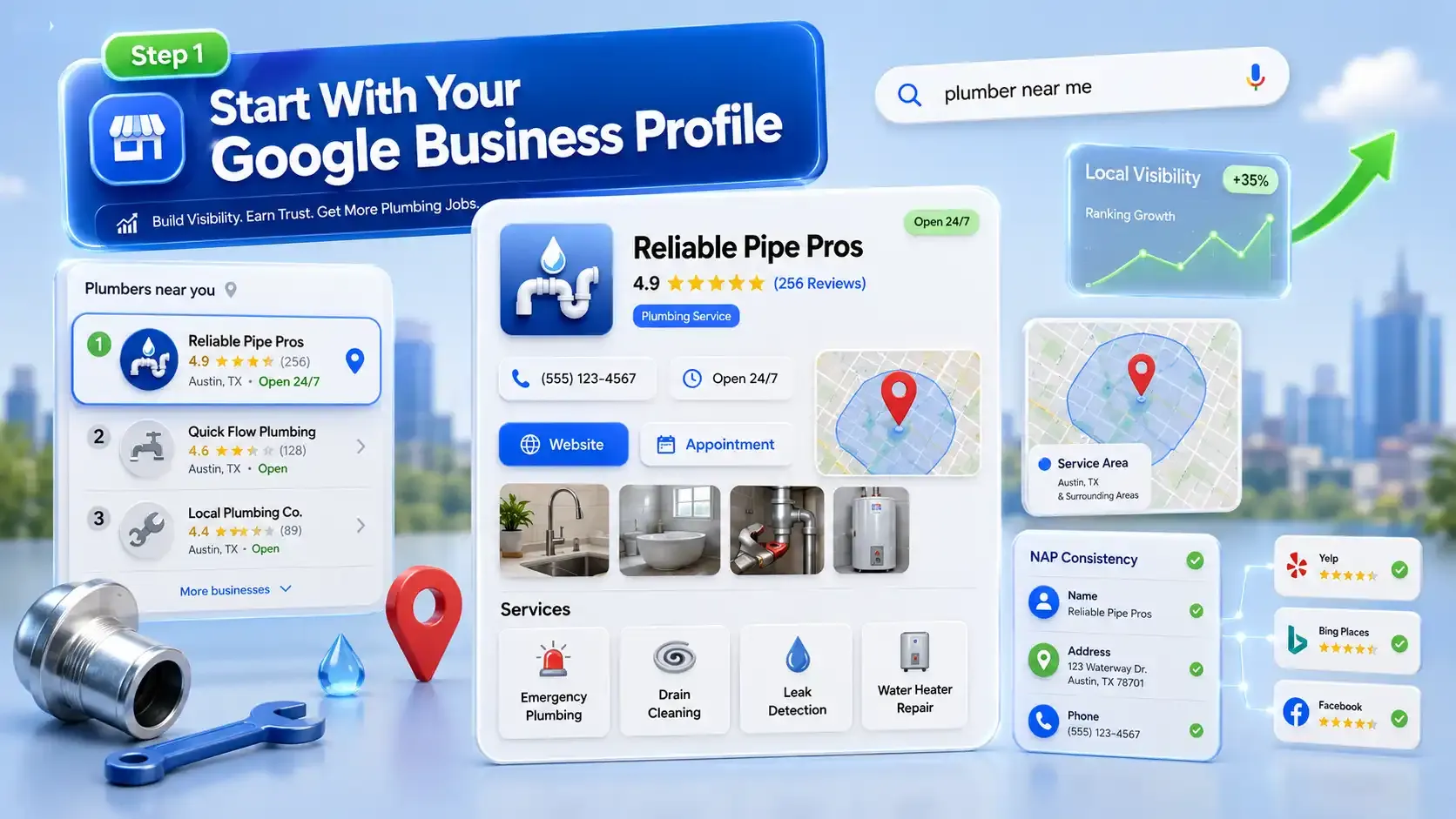
Your Google Business Profile is one of the most important parts of SEO for plumbers. It helps your plumbing business appear in Google Maps, local search results, and the local pack.
First, Complete Your Business Information
Your Google Business Profile should include all key business details. Add your business name, phone number, address or service area, business hours, website, plumbing categories, services, photos, and appointment link.
Second, Add Plumbing Services Clearly
Your services should clearly show what your plumbing company offers. This helps Google understand when to show your business in search results.
Add services like emergency plumbing, drain cleaning, leak detection, water heater repair, sewer line repair, toilet repair, pipe installation, and commercial plumbing.
Third, Keep NAP Details Consistent
NAP means name, address, and phone number. These details should stay the same everywhere your plumbing business appears online.
Use the same NAP details on your website, Google Business Profile, local directories, review sites, and social profiles. This makes your business information clear for both Google and customers.
Step 2: Get More Reviews From Plumbing Customers
Customer reviews help plumbers build trust, get more clicks, and turn local searches into real calls.
This matters because customers need to trust a plumber before letting them into their home or business.
Good reviews show that your team arrives on time, explains the problem, and does the job well. They also make your Google Business Profile look more active and reliable.
Ask happy customers for a review after the job is complete. Also, reply to reviews politely so new customers can see that your business cares. To make review collection easier, plumbers can create a QR code online that links directly to their Google review page and place it on invoices, service cards, receipts, or follow-up materials.
Step 3: Do Keyword Research for Plumbing Services
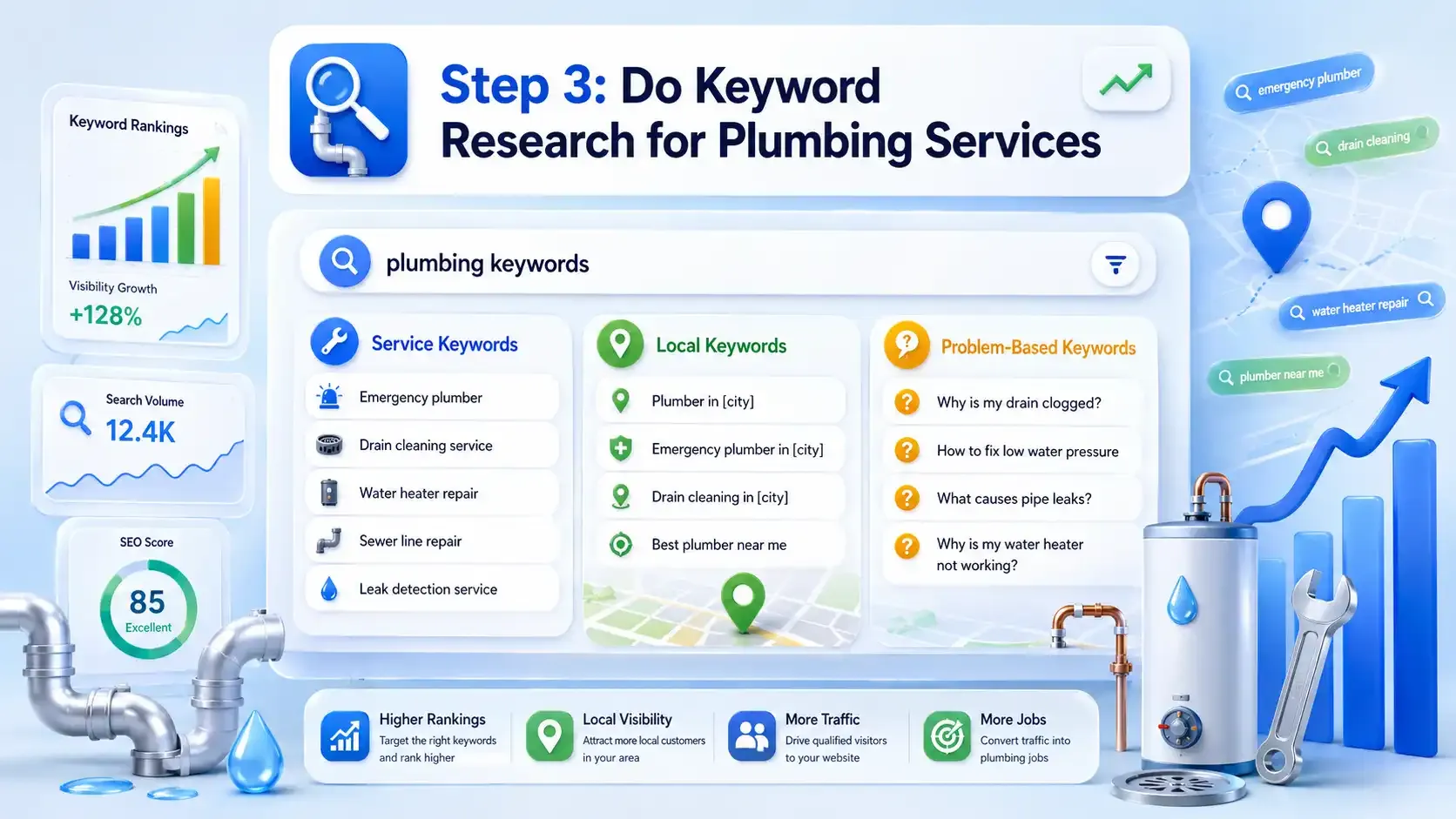
Keyword research helps plumbers understand what customers type into Google when they need plumbing help. These search terms show what services people want, what problems they have, and where they need help. Competitor terms are worth checking too. A wider keyword research strategy shows which phrases rival plumbers already rank for, and which ones nobody has claimed yet.
Target Service Keywords
Service keywords describe the exact plumbing work your company offers. These keywords help Google connect your business with customers looking for a specific service.
Common plumbing service keywords include:
- Emergency plumber
- Drain cleaning service
- Water heater repair
- Sewer line repair
- Leak detection service
- Toilet repair service
- Commercial plumbing service
Target Local Keywords
Local keywords include your service and location.
Useful local plumbing keywords include:
- Plumber in [city]
- Emergency plumber in [city]
- Drain cleaning in [city]
- Water heater repair in [city]
- Best plumber near me
Target Problem-Based Keywords
Problem-based keywords come from questions customers ask before they call a plumber.
Common problem-based keywords include:
- Why is my drain clogged
- How to fix low water pressure
- What causes pipe leaks
- Signs of a broken sewer line
- Why is my water heater not working
These keywords are great for blog posts and helpful guides. They let your plumbing business answer real customer questions and build trust before the customer calls.
Step 4: Create Separate Pages for Each Plumbing Service
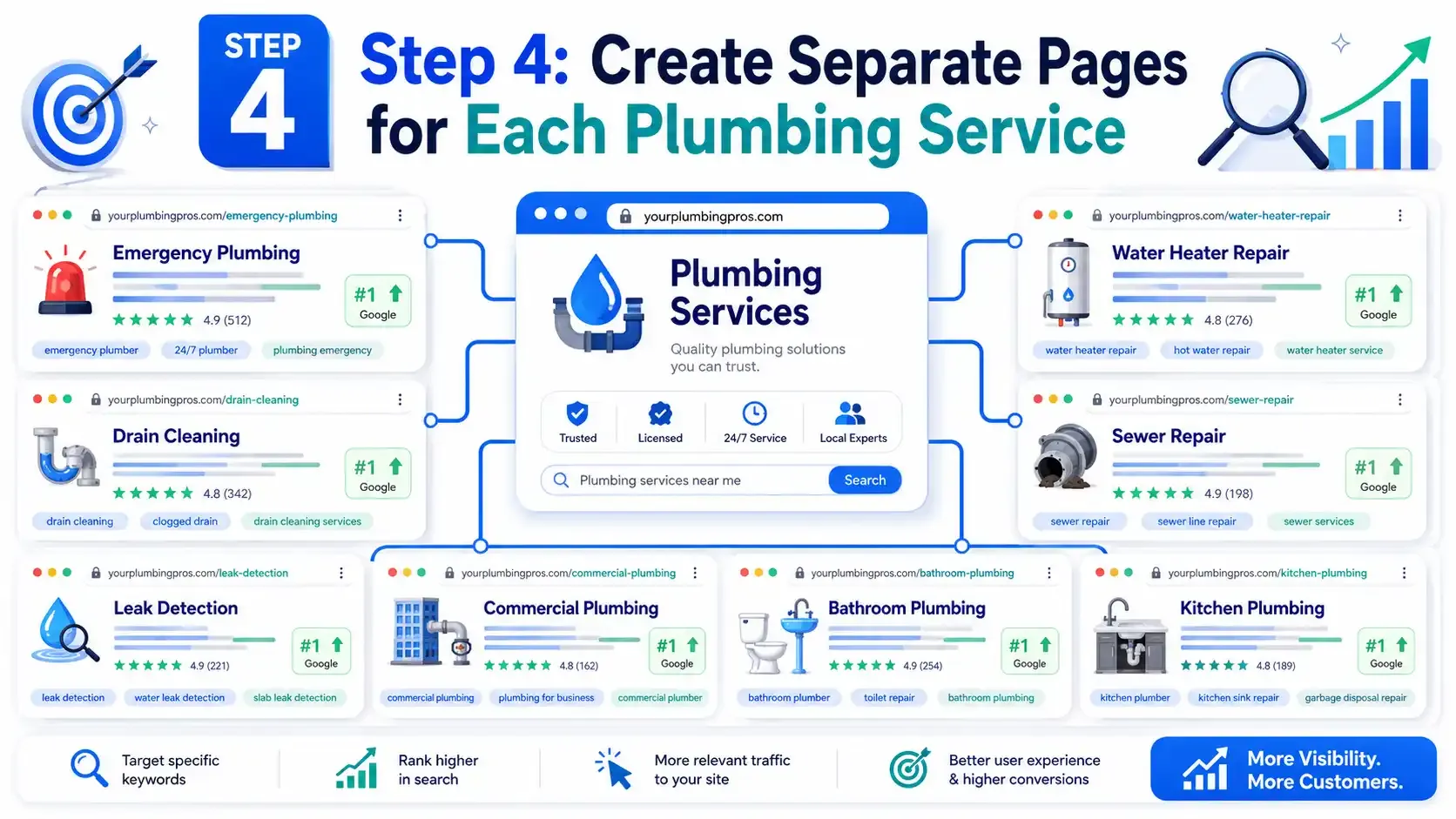
A plumbing business should not depend on one general services page. Each main plumbing service needs its own page, so Google and customers can understand the offer clearly.
Build Pages for High-Value Services
High-value services deserve their own dedicated pages.
Create separate pages for services like:
- Emergency plumbing
- Drain cleaning
- Water heater repair
- Sewer repair
- Leak detection
- Commercial plumbing
- Bathroom plumbing
- Kitchen plumbing
Add Clear Service Page Details
Each plumbing service page should answer the customer’s main questions. It should explain what the service includes, when the customer needs it, and how they can book the job.
Step 5: Optimize Plumbing Website Pages for SEO
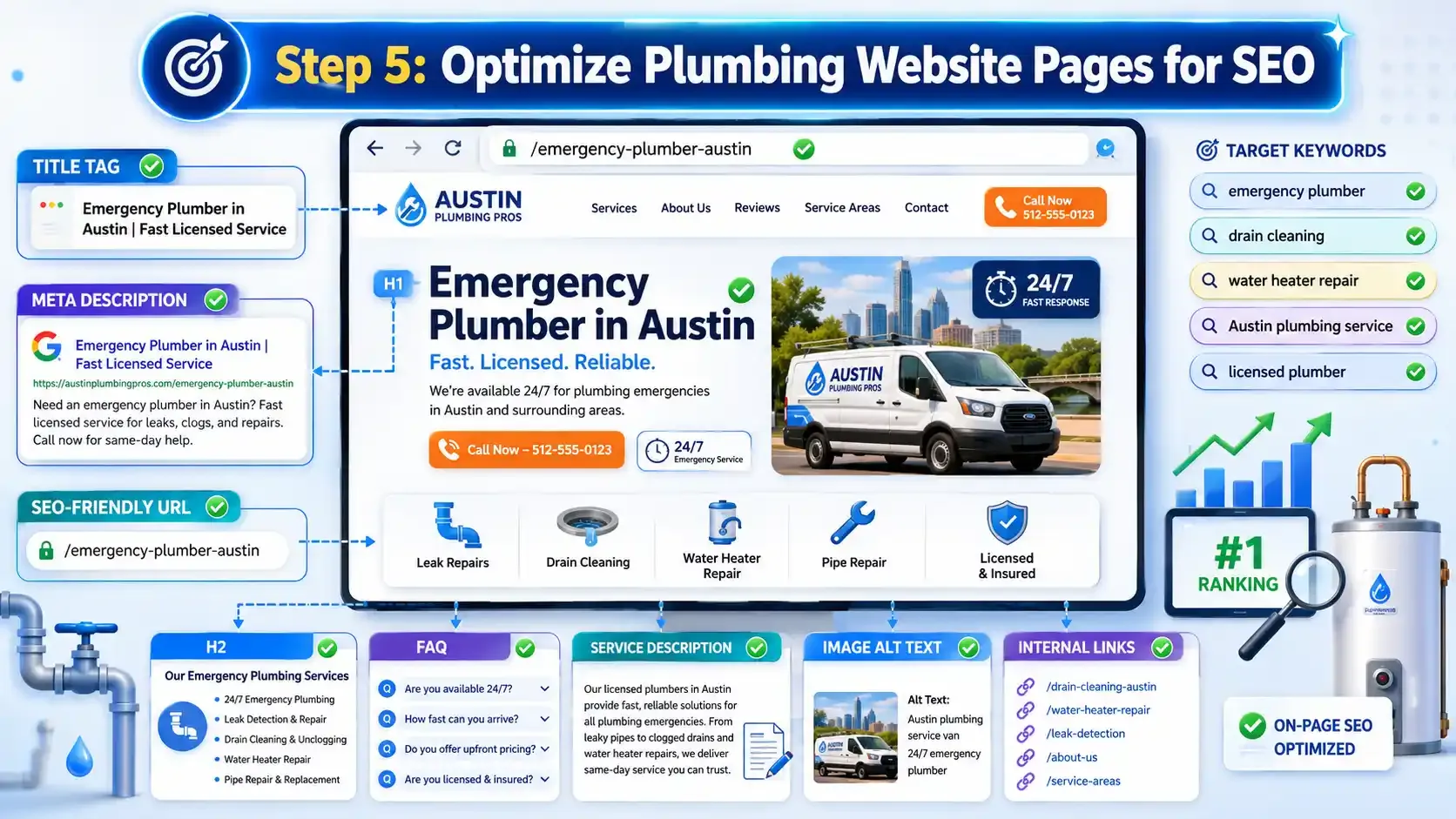
On-page SEO helps Google understand each page on your plumbing website.
Write Clear Title Tags
A title tag tells Google and searchers what your page is about. It should include the main service, location, and a clear reason to click.
Write Helpful Meta Descriptions
A meta description gives a short summary of your page in search results. It should explain the service and encourage the customer to take action.
For example:
Need an emergency plumber in Austin? Call our licensed plumbing team for fast leak repair, drain cleaning, and water heater service.
Use SEO-Friendly URLs
SEO-friendly URLs help Google and customers understand the page topic. Keep them short, clear, and focused on the service and location.
For example:
- /emergency-plumber-austin
- /drain-cleaning-austin
- /water-heater-repair-austin
Add Keywords Naturally
Keywords should appear in the right places on the page. This helps Google connect your page with the searches your customers use.
Add your main plumbing keyword naturally in the H1, H2s, first paragraph, image alt text, service descriptions, FAQs, and internal links. Original visuals can also make service pages and blog posts more engaging. If you use an Higgsfield AI image generator to create plumbing illustrations, ensure each image accurately represents the service and add clear, descriptive alt text.
Step 6: Use Local SEO to Rank in Nearby Areas
Local SEO helps plumbers show up in the cities, towns, and neighborhoods they serve. This matters because many plumbing companies do not work in one location only.
Create City Pages
City pages help your plumbing business target searches in specific locations. Each page should focus on one city or service area.
For example, you can create pages like:
- Plumbing services in Dallas
- Emergency plumber in Plano
- Drain cleaning in Fort Worth
Add Real Local Context
You should not copy the same page for every city. Duplicate city pages can feel thin, lazy, and unhelpful to customers.
Step 7: Create Helpful Plumbing Blog Content
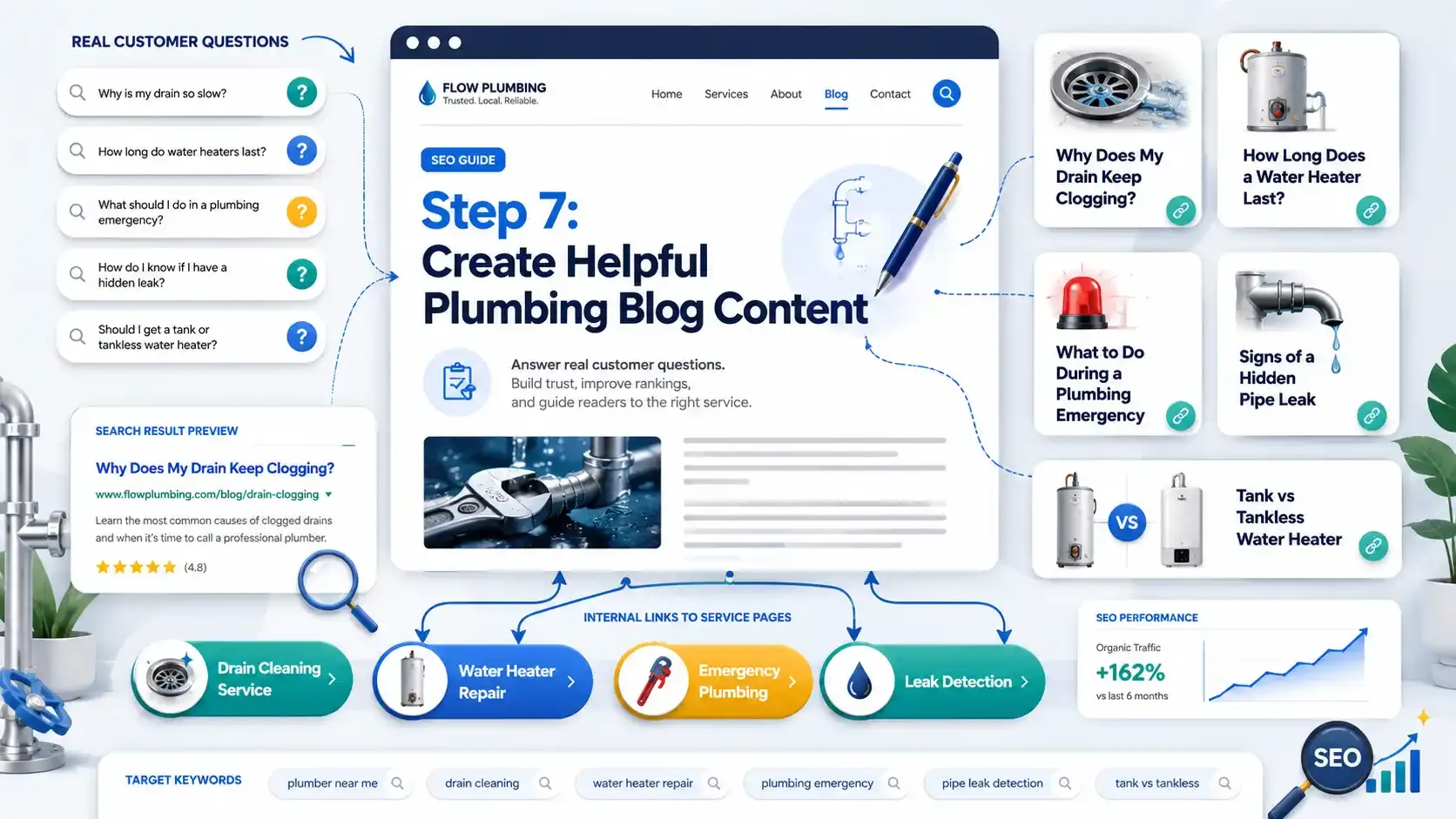
Blog content helps plumbing businesses rank for informational searches. It also builds trust before customers are ready to book a service.
Write Blogs Around Customer Problems
The best plumbing blog topics come from real customer problems. These topics should answer the questions people ask when something goes wrong at home or at work. If plumbers use AI to draft blog posts, an AI humanizer can help make the content sound more natural, useful, and customer-friendly before publishing.
Write blogs around topics like:
- Why does my drain keep clogging?
- How long does a water heater last?
- What should I do during a plumbing emergency?
- How to tell if you have a hidden pipe leak
- Tank vs tankless water heater: Which is better?
Link Blog Posts to Service Pages
Every plumbing blog should guide readers toward the next useful step. If a blog explains a problem, it should link to the service page that solves that problem.
Step 8: Improve Technical SEO for Your Plumbing Website
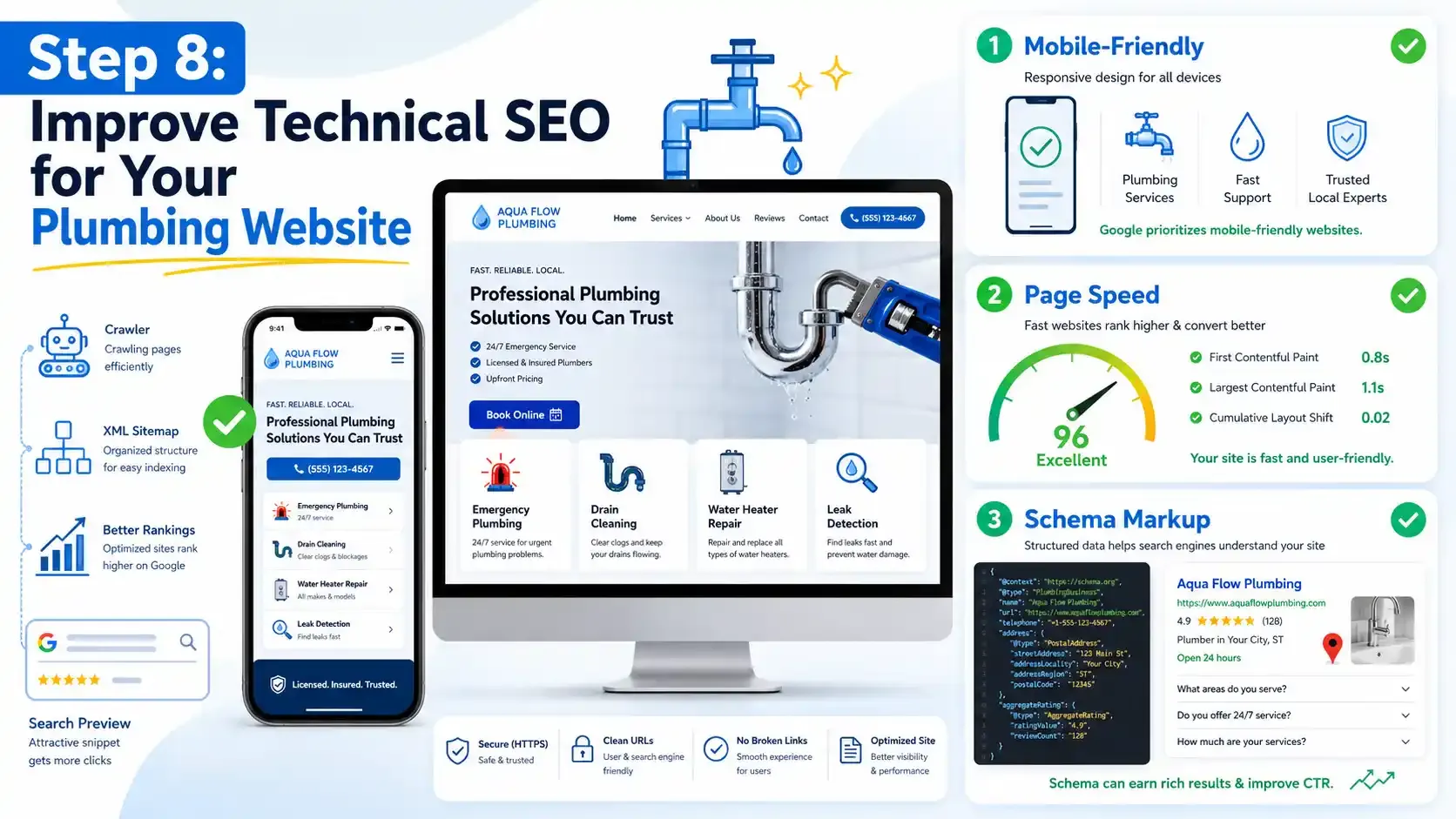
Technical SEO helps Google crawl, read, and index your plumbing website. It also helps customers use your site without slow pages, broken links, or confusing layouts.
1. Make the Website Mobile-Friendly
Most local customers search for plumbers from their phones. They may be dealing with a leak, clogged drain, broken water heater, or emergency plumbing issue.
6. Improve Page Speed
Page speed affects both SEO and customer experience. A slow plumbing website can lose visitors before they even read your service details.
7. Add Schema Markup
Schema markup helps search engines understand your plumbing business better. It gives Google clear details about your services, location, reviews, and customer questions.
Step 9: Build Local Citations and Backlinks
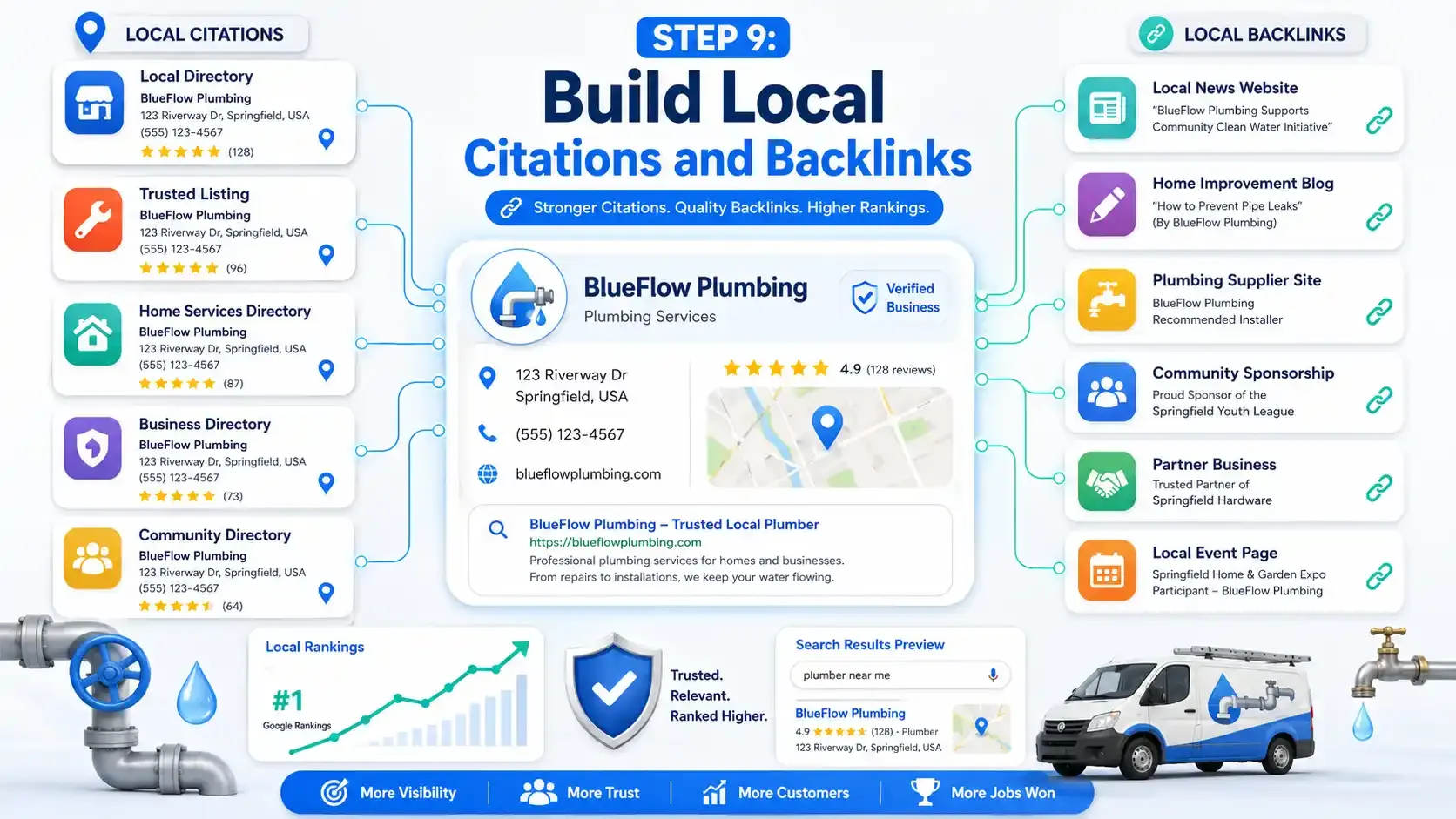
Off-page SEO helps your plumbing business build trust outside your website. It shows Google that your company is real, active, and trusted in the local market. Backlinks and citations are two important parts of off-page SEO.
A citation lists your business name, address, and phone number on another website. A backlink is a link from another website to your plumbing website.
These signals can help Google feel more confident about your business. They can also help local customers find you in more places online.
List the Business in Local Directories
Local directories help customers and search engines confirm your business details. They also give your plumbing company more local visibility.
You can list your business on sites like:
- Yelp
- Angi
- HomeAdvisor
- BBB
- Chamber of Commerce
- Local business directories
Earn Links From Local Websites
Local backlinks can help your plumbing website build more authority. They show that other trusted websites in your area know and mention your business.
Earn links from local news sites, home improvement blogs, supplier websites, community sponsorship pages, partner businesses, and local event pages. Plumbing businesses can also partner with local home-improvement creators and use an influencer marketing platform to manage outreach, coordinate content, and track campaign results.
Step 10: Track SEO Results and Plumbing Leads
SEO does not stop after your plumbing business starts ranking. You also need to know which searches bring calls, bookings, jobs, and repeat customers.
Track Website and Search Performance
Tracking helps you understand what is working in your SEO strategy.
Use tools like Google Search Console, Google Analytics, Google Business Profile insights, rank tracking tools, and call tracking tools.
Track Booked Jobs From SEO Leads
Ranking is only useful if your leads turn into real plumbing jobs. A keyword may bring traffic, but the real goal is more calls, more bookings, and more completed services.
Connect SEO With Scheduling and Dispatching
More SEO leads can create more pressure on your operations. If your plumbing company gets more calls but cannot schedule jobs fast, customers may call another plumber.
This is where field service scheduling and dispatching become important. Your team needs a simple way to assign jobs, send technicians, update schedules, and respond to urgent requests faster.
A tool like FieldServicely can help plumbing teams organize jobs, dispatch available technicians, and track progress in real time. So when SEO brings more leads, your team can handle them without losing customers to slower follow-up.
Common Plumbing SEO Mistakes to Avoid
Here are the main mistakes plumbing businesses should avoid.
1# Ignoring Google Business Profile
Keep your profile updated with accurate details, services, photos, hours, and contact options.
2# Using the Same Content on Every City Page
Using the same content on every city page makes your local SEO weaker. Duplicate pages look thin, generic, and unhelpful to both Google and customers.
3# Stuffing Keywords Into Every Sentence
Keyword stuffing makes your content hard to read. It also makes your plumbing business look less trustworthy.
4# Not Asking for Reviews
Ask happy customers for a review after the job is complete. Fresh and honest reviews can help your business earn more trust, clicks, and local calls.
5# Not Tracking Calls and Booked Jobs
Track phone calls, form submissions, booked jobs, and repeat customers from SEO. This helps you understand which keywords, pages, and local searches bring real business results.
Best SEO Tools for Plumbers
Start with free tools first. Then, use paid tools when you need deeper keyword research, competitor analysis, citation tracking, or backlink data. Sometimes, you can use web scraping tools to perform in-depth analysis.
Free Tools
Useful free SEO tools include:
- Google Search Console
- Google Analytics
- Google Business Profile
- Google Keyword Planner
- PageSpeed Insights
These tools help you track search clicks, website visits, local profile actions, keyword ideas, and page speed issues.
Paid Tools
Useful paid SEO tools include:
- Ahrefs
- Semrush
- BrightLocal
- Moz Local
- Whitespark
These tools can save time if your plumbing business works in multiple cities or competes in a busy local market.
How FieldServicely Helps Plumbing Businesses Handle More SEO Leads
SEO brings more leads, but your team still needs to respond fast. FieldServicely helps plumbing teams manage jobs, schedules, technicians, and field updates from one place.
Schedule Plumbing Jobs Faster
FieldServicely helps teams create and schedule plumbing jobs, and assign available technicians faster. This makes it easier to turn SEO leads into booked jobs.
Dispatch the Right Technician
FieldServicely helps managers assign technicians based on job needs, location, and availability. This helps your team send the right person without guessing.
Track Job Progress in Real Time
FieldServicely helps teams track job progress from start to finish. Once a job is complete, your team can follow up and request a review.
Improve Service Quality After SEO Brings the Lead
SEO helps customers find your plumbing business, but good service keeps them coming back. FieldServicely helps your team stay organized and deliver a smoother service experience.
SEO for Plumbers Checklist
Use this checklist to keep your plumbing SEO work organized. It covers the main steps that help your business rank higher, get more calls, and turn search traffic into booked jobs.
- Claim and optimize your Google Business Profile
- Add all plumbing services to your profile
- Keep your NAP details consistent everywhere
- Ask for reviews after every completed job
- Create separate pages for each main plumbing service
- Create city pages for important service areas
- Write helpful blogs around customer plumbing problems
- Optimize title tags and meta descriptions
- Use SEO-friendly URLs for service and city pages
- Add keywords naturally in headings, copy, FAQs, and image alt text
- Improve website speed and mobile experience
- Add LocalBusiness, Service, Review, and FAQ schema markup
- Build local citations on trusted directories
- Earn backlinks from local websites and partners
- Track calls, bookings, completed jobs, and repeat customers
Final Thoughts
SEO helps plumbers get found when local customers need fast help. It improves visibility for searches like plumber near me, emergency plumber, drain cleaning near me, and water heater repair in [city].
It also helps your plumbing business earn trust before the first call. A strong Google Business Profile, clear service pages, helpful content, local citations, and customer reviews can make your company look more reliable.
But real growth happens after the lead comes in. Those leads need to turn into scheduled jobs, completed work, positive reviews, and repeat customers.
That is why plumbing businesses need both SEO and strong field service operations. SEO brings the customer to your business, but your team still needs to respond fast, assign the right technician, and complete the job well.
FAQs About SEO for Plumbers
What is SEO for plumbers?
SEO for plumbers means improving your website, Google Business Profile, reviews, and local listings so your plumbing business ranks higher on Google and gets more local leads.
How long does plumbing SEO take?
Plumbing SEO usually takes a few months to show steady results. The timeline depends on your local competition, website quality, reviews, backlinks, and content.
Do plumbers need local SEO?
Yes, plumbers need local SEO because most customers search for nearby plumbing services before they call.
How can plumbers get more Google reviews?
Plumbers can ask happy customers for reviews after a successful job. They can also send review links by email or SMS to make the process easy.
Is SEO better than paid ads for plumbers?
SEO builds long-term visibility, while paid ads can bring faster leads. Many plumbing businesses use both to get steady growth.
What to read next
