- Field Service Business
Cleaning Checklist for Business: Tasks, Schedule & Tips
Updated on 7 May 2026
Jump to
Summary

A business cleaning checklist works best as a system that organizes daily, weekly, and monthly tasks for consistent hygiene
Cleaning problems grow when teams skip structure and rely on memory instead of a defined process
Different business types need customized cleaning routines based on traffic, usage, and risk level
Cleaning breaks down when teams lack clear roles, tracking, timing, and responsibility
A structured schedule with best practices keeps operations clean, safe, and easy to manage
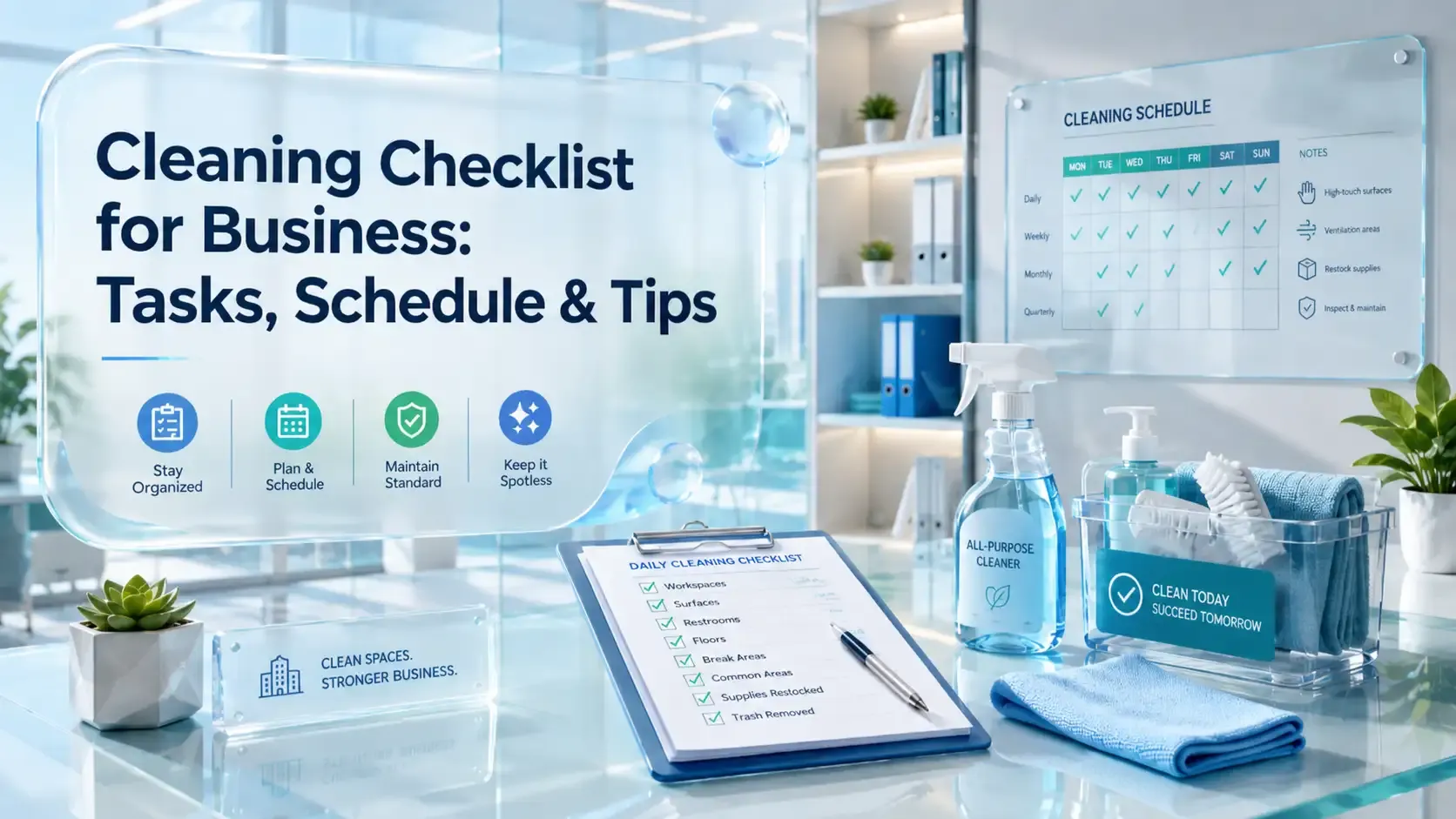
A cleaning checklist for business is a structured system that organizes tasks into daily, weekly, and monthly routines to ensure consistent hygiene and safety. It gives clear direction so teams clean the right areas at the right time.
Many businesses face missed tasks, uneven cleaning, and rising health risks. These problems grow when teams rely on memory instead of a system. In this blog, we will discuss how to build and use a proper cleaning checklist for a business. So let’s start!
What is a Cleaning Checklist for Business?
A cleaning business checklist is a clear plan that tells you what to clean, when to clean it, and who should handle it. It organizes daily, weekly, and monthly tasks so your team does not rely on memory or guesswork.
Businesses need structured cleaning because random cleaning always creates gaps over time. According to the CDC, regular cleaning of high-touch surfaces lowers the spread of germs in shared environments.
Now, there is one common confusion. People often confuse a checklist with a system.
A checklist tells you what to clean, but a system makes sure it actually gets done. In practice, it adds task assignment, tracking, and accountability, which turns simple cleaning into a repeatable process that works every day.
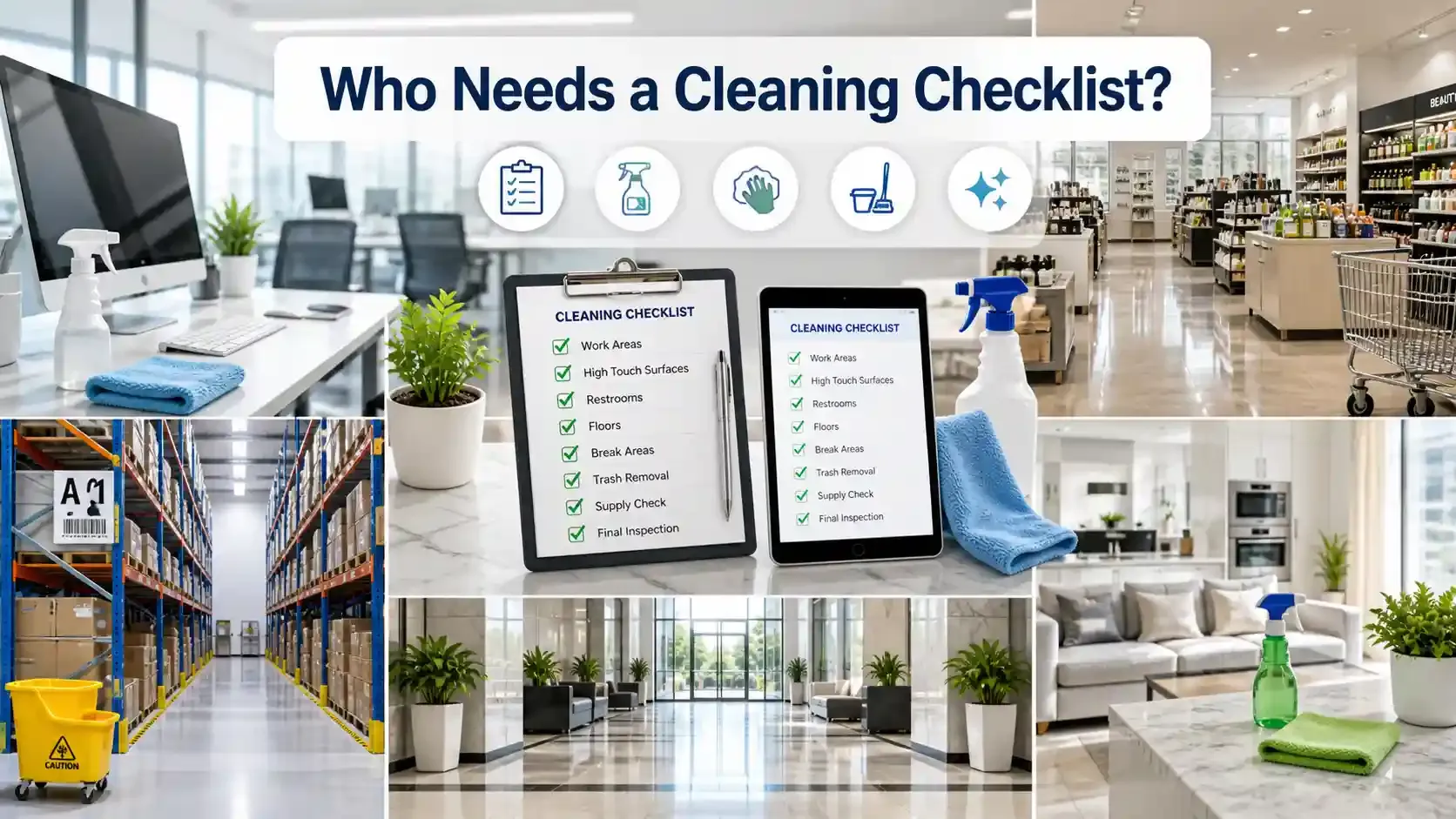
Who Needs a Cleaning Checklist?
Cleaning Companies
Cleaning companies need a structured system to deliver consistent results across multiple client locations. In real operations, teams handle tight schedules, and without a clear task flow, service quality drops quickly.
Offices
Offices need structured cleaning to manage shared environments and employee health. Employees interact with desks, devices, and common areas throughout the day, increasing contamination risk. According to the CDC, cleaning and disinfecting surfaces is fundamental in reducing infections.
Retail Stores
Retail stores rely on cleanliness to shape customer perception and buying behavior. Customers judge a store within seconds, and poor hygiene instantly erodes trust. The study found that store atmosphere had a significant effect on customer satisfaction.
Warehouses
Warehouses require organized cleaning to maintain safety and operational flow. Dust, spills, and debris can quickly turn into safety hazards in high-traffic zones. According to OSHA, cluttered work areas can lead to accidents and worker injuries from slips, trips, and falls.
Property Managers
Property managers need organized cleaning processes to maintain multiple locations efficiently. They oversee shared spaces like lobbies and hallways where cleanliness affects tenant experience. Without a clear process, maintenance quality becomes inconsistent across properties.
Residential Cleaning Services
Residential cleaning services depend on consistency to meet client expectations. Each home has different needs, but service quality must stay the same every time.
According to research, demand for home cleaning continues to grow due to busy lifestyles. And clients notice small details instantly. Missed spots in kitchens or bathrooms lead to quick dissatisfaction.
Manage multiple cleaning jobs with one system
Assign tasks, track teams, and ensure consistent service across all locations
Why Do Most Cleaning Checklists Fail?
These are the reasons most cleaning checklists fail:
- No Task Assignment: Most cleaning checklists fail because no one assigns tasks clearly. In real workplaces, teams assume “someone else will do it,” and that’s where things break.
- No Tracking System: Most cleaning checklists fail because no one tracks what gets done. Teams may complete tasks, but without verification, mistakes stay hidden. If no one checks completion, teams rush or skip steps without consequence.
- No Frequency Clarity: Most cleaning teams don’t define when tasks should happen. Some tasks need daily attention, while others require weekly or monthly focus. Without a clear frequency, teams delay tasks until problems appear.
- No Accountability: Most cleaning checklists fail because no one takes responsibility for the results. Teams follow instructions loosely when no one checks performance or outcomes. Without accountability, cleaning becomes optional instead of essential.
Fix missed tasks with a structured cleaning system
Assign, track, and manage cleaning work in one place
Daily Cleaning Checklist for Business
Office Areas / Workstations
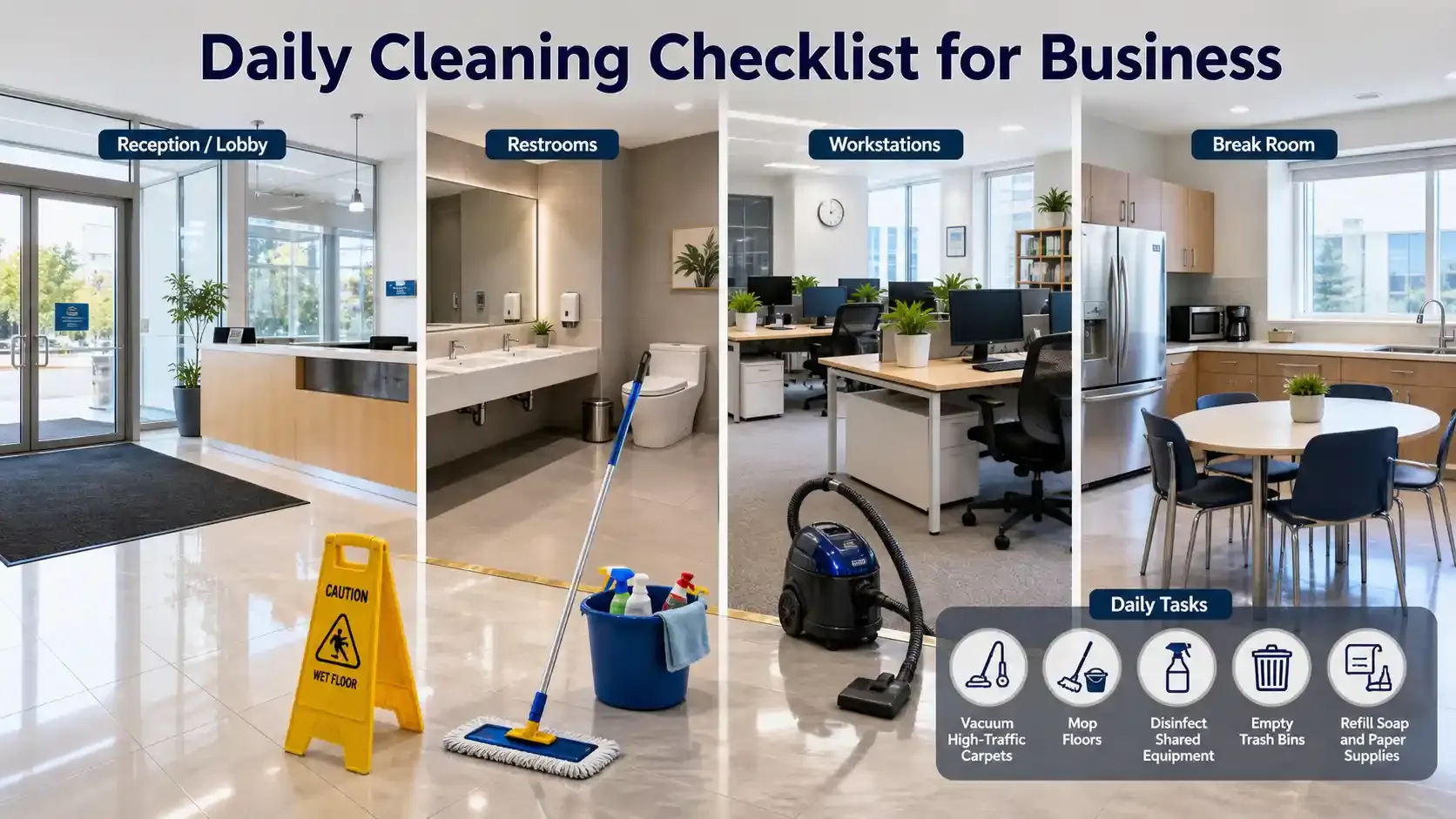
Workstations need daily cleaning because employees use them throughout the day. Disinfect high-touch items like keyboards, phones, switches, and desk surfaces to reduce contamination.
Then empty trash bins and remove dust to keep the space clean and productive. Once desks stay clean, shared areas need equal attention.
Reception / Lobby
Reception areas need daily cleaning because they handle the highest foot traffic.
Start by sweeping and mopping floors, then clean the entry glass and vacuum mats to remove dirt from outside. Next, disinfect door handles, counters, and touchpoints since visitors interact with them constantly.
Restrooms
Restrooms need strict daily cleaning to prevent germs and odor buildup.
Clean and sanitize toilets, sinks, and counters, then refill soap and paper supplies to maintain usability. After that, mop floors with disinfectant and remove trash to stop bacterial growth.
Break Room / Kitchen
Kitchen spaces need daily cleaning due to food handling and shared use.
Clean sinks, countertops, tables, and appliance surfaces to prevent cross-contamination. After that, remove food waste and empty bins to avoid odor and pest issues.
Overall Daily Tasks
General cleaning keeps the entire facility consistent. Vacuum high-traffic carpets and mop floors to remove dirt from daily movement. Finally, disinfect shared equipment like vending machines and water coolers to reduce contact-based risks.
Turn daily cleaning tasks into a tracked workflow
Monitor task completion and reduce missed duties
Weekly Cleaning Checklist for Business
Floors & Carpets
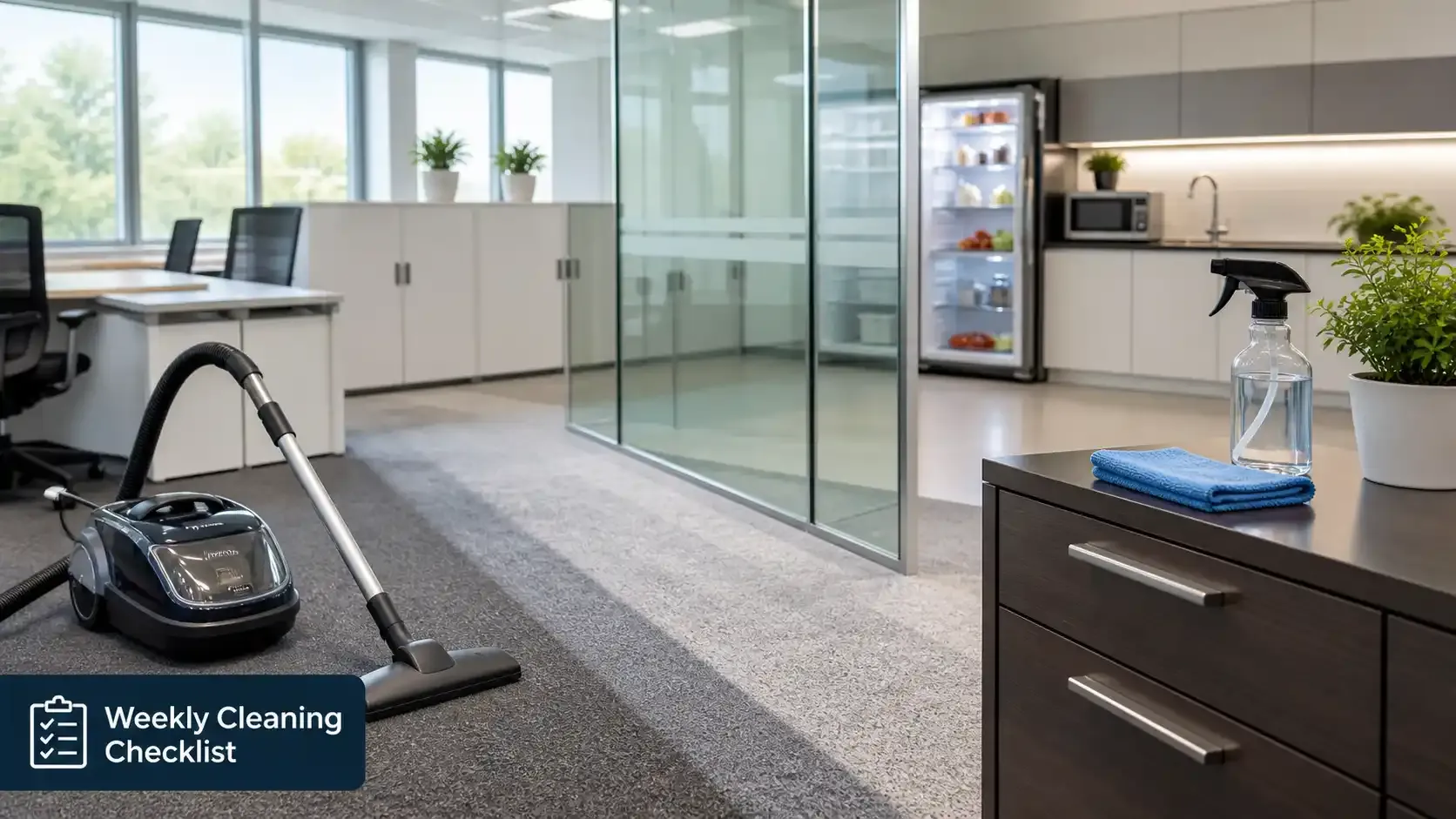
Floors and carpets need weekly cleaning to remove embedded dirt and debris.
Daily sweeping removes visible dust, but deeper particles stay trapped in fibers and corners.
Use vacuuming and spot cleaning to maintain surface quality and prevent long-term wear. This step also protects flooring materials.
Dusting & Surfaces
Surfaces need weekly dusting because particles build up slowly in less visible areas. Dust collects on desks, cabinets, and window sills even when spaces look clean. Removing it weekly improves air quality and reduces allergens in the workspace.
Glass & Partitions
Glass and partitions need weekly cleaning to maintain clarity and appearance.
Fingerprints, smudges, and dust reduce visibility and create an unclean look.
Wiping these surfaces restores transparency and keeps the space professional.
This also impacts customer perception. Clear glass surfaces reflect better maintenance standards.
Kitchen / Break Room Deep Cleaning
Break rooms need deeper weekly cleaning because daily cleaning focuses only on visible areas. Clean inside appliances like refrigerators and microwaves to remove hidden residue. Scrub sinks and surfaces thoroughly to prevent bacteria buildup.
Automate your cleaning schedule and stay consistent
Manage recurring cleaning tasks without confusion
Monthly Cleaning Checklist for Business
High & Low Cleaning
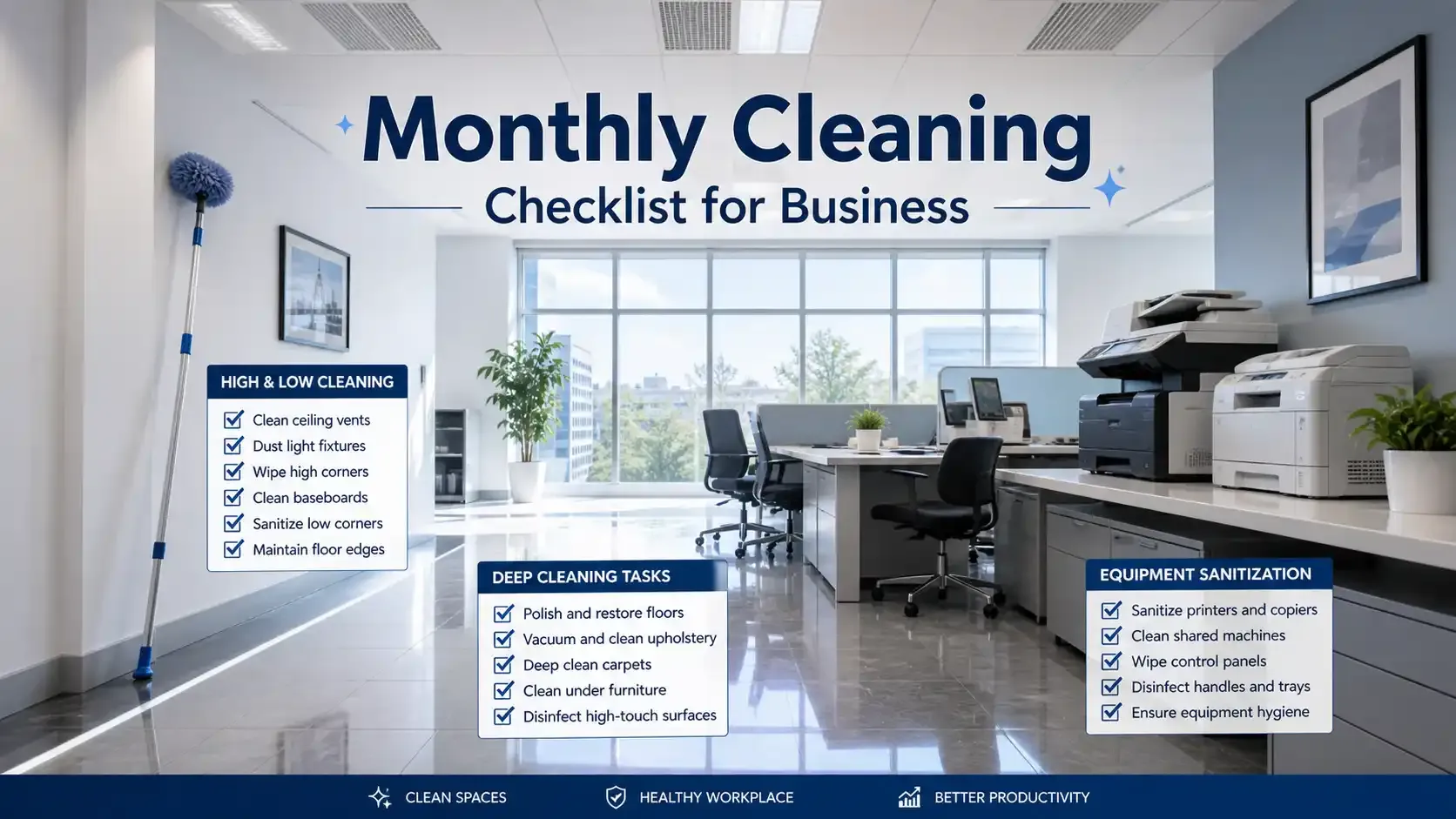
High and low areas need monthly attention because teams rarely touch them daily. Dust collects on vents, ceilings, light fixtures, and lower corners without notice. Cleaning these areas removes buildup that affects air circulation and overall cleanliness.
Deep Cleaning Tasks
Deep cleaning focuses on areas that collect long-term dirt and wear.
Floor polishing restores surface quality and removes stains that regular mopping cannot fix. Upholstery cleaning removes trapped dust and allergens from chairs and furniture.
Equipment Sanitization
Shared equipment needs monthly sanitization to prevent contamination buildup. Printers, copiers, and machines collect dust and bacteria through constant use. Cleaning these items improves hygiene and keeps equipment working properly.
Stay on top of monthly deep cleaning tasks
Schedule and track deep cleaning for floors, vents, and furniture
High-Touch Areas in Business Cleaning
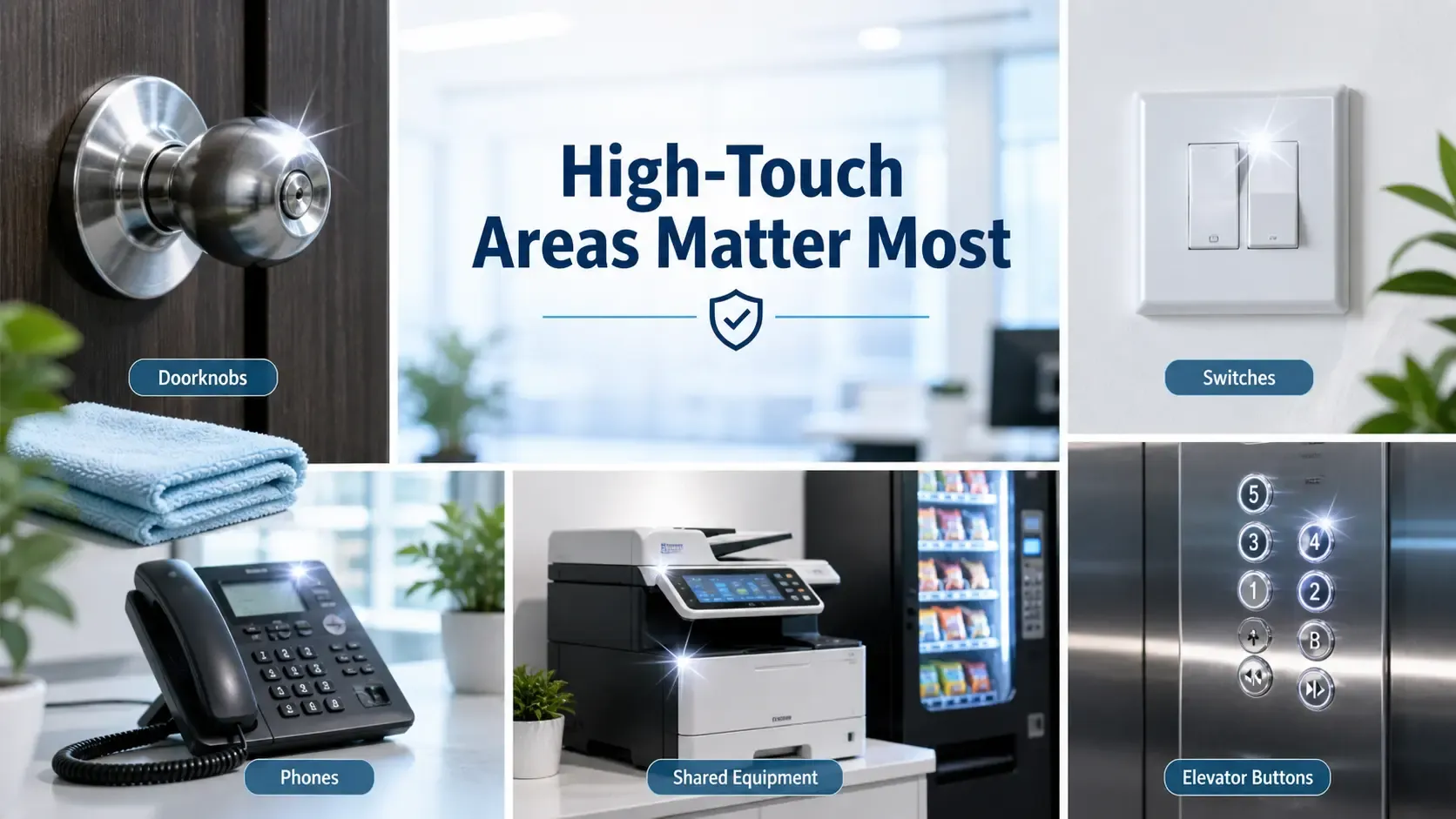
High-touch areas carry the highest risk in any workplace. People touch these surfaces repeatedly throughout the day, which increases contamination quickly.
Doorknobs
Doorknobs spread germs because every person entering or leaving touches them. Hands carry bacteria from outside, and the surface transfers it to the next person. Regular disinfection reduces this transfer and keeps entry points safer.
Light Switches
Light switches collect germs because people touch them without thinking. Employees switch lights on and off throughout the day, often without clean hands. This repeated contact turns switches into hidden contamination points.
Phones
Phones carry bacteria because users handle them constantly during work. This makes phones a direct transfer point between hands and faces. Cleaning phones lowers that risk significantly.
Shared Equipment
Shared equipment spreads contamination because multiple people use it continuously. Printers, vending machines, and water dispensers collect germs through repeated contact. Each interaction adds another layer of exposure.
Elevators
Elevator buttons carry germs because they serve many users in a short time. People from different areas press the same buttons throughout the day. This creates a high-contact surface with constant exposure.
Control high-touch contamination with structured cleaning
Track disinfection tasks and reduce hygiene risks across your workplace
How to Create a Cleaning Schedule for Your Business
List All Areas
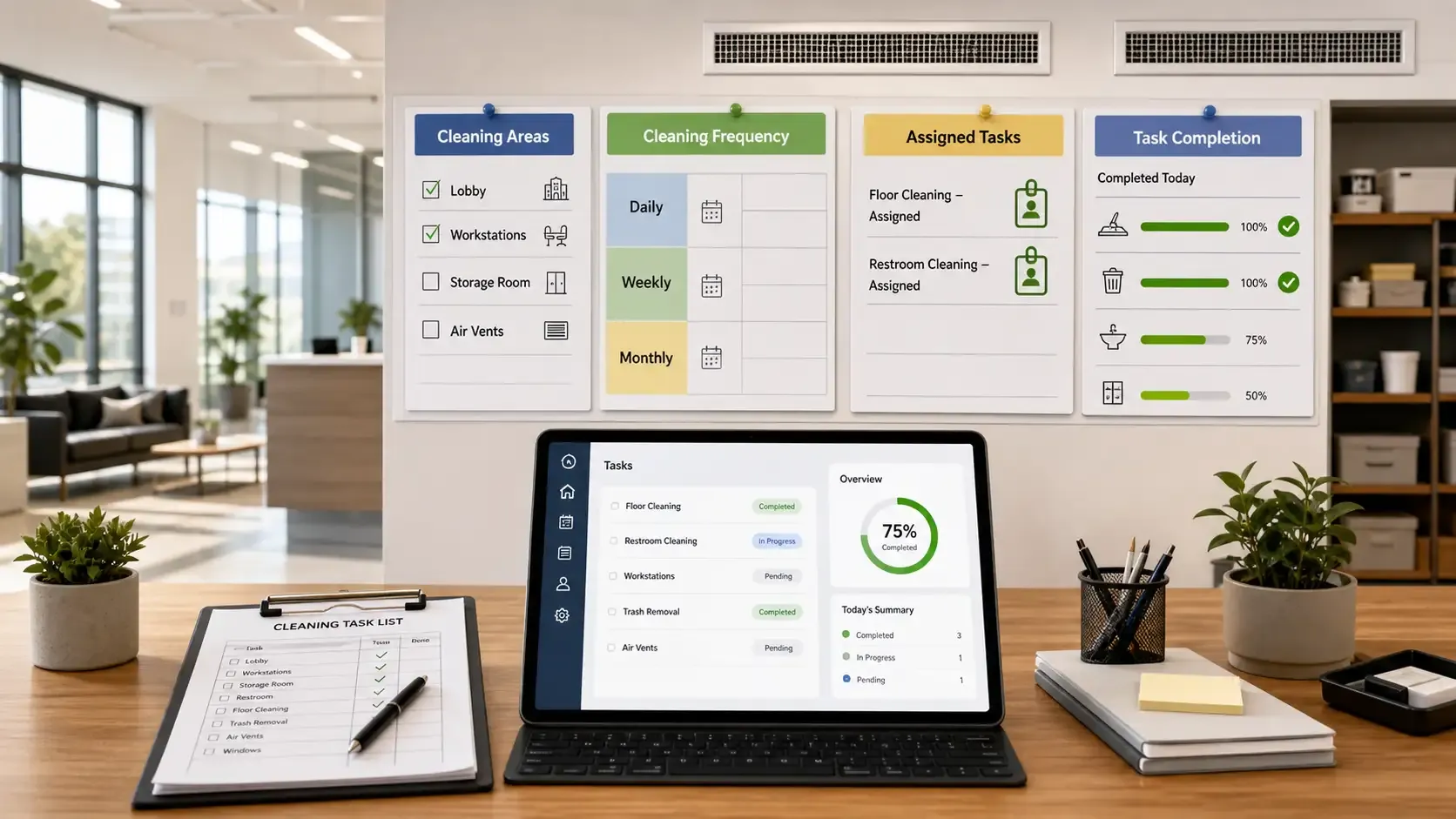
Start by listing every area that needs cleaning. Include visible spaces like lobbies and workstations, then add hidden zones like storage rooms and vents. This step ensures no location gets ignored during routine cleaning.
Assign Frequency
Next, assign how often each area needs cleaning. High-traffic zones require daily attention, while others need weekly or monthly care. This separation prevents both over-cleaning and missed tasks.
Assign Staff
Then, assign specific tasks to specific people. Clear responsibility ensures every task has an owner. Assigned roles improve execution. People complete tasks faster when they know their responsibilities.
Track Completion
Finally, track what gets completed every day. Use checklists, logs, or digital tools to confirm tasks. Tracking reveals gaps before they turn into problems, whereas visibility improves accountability.
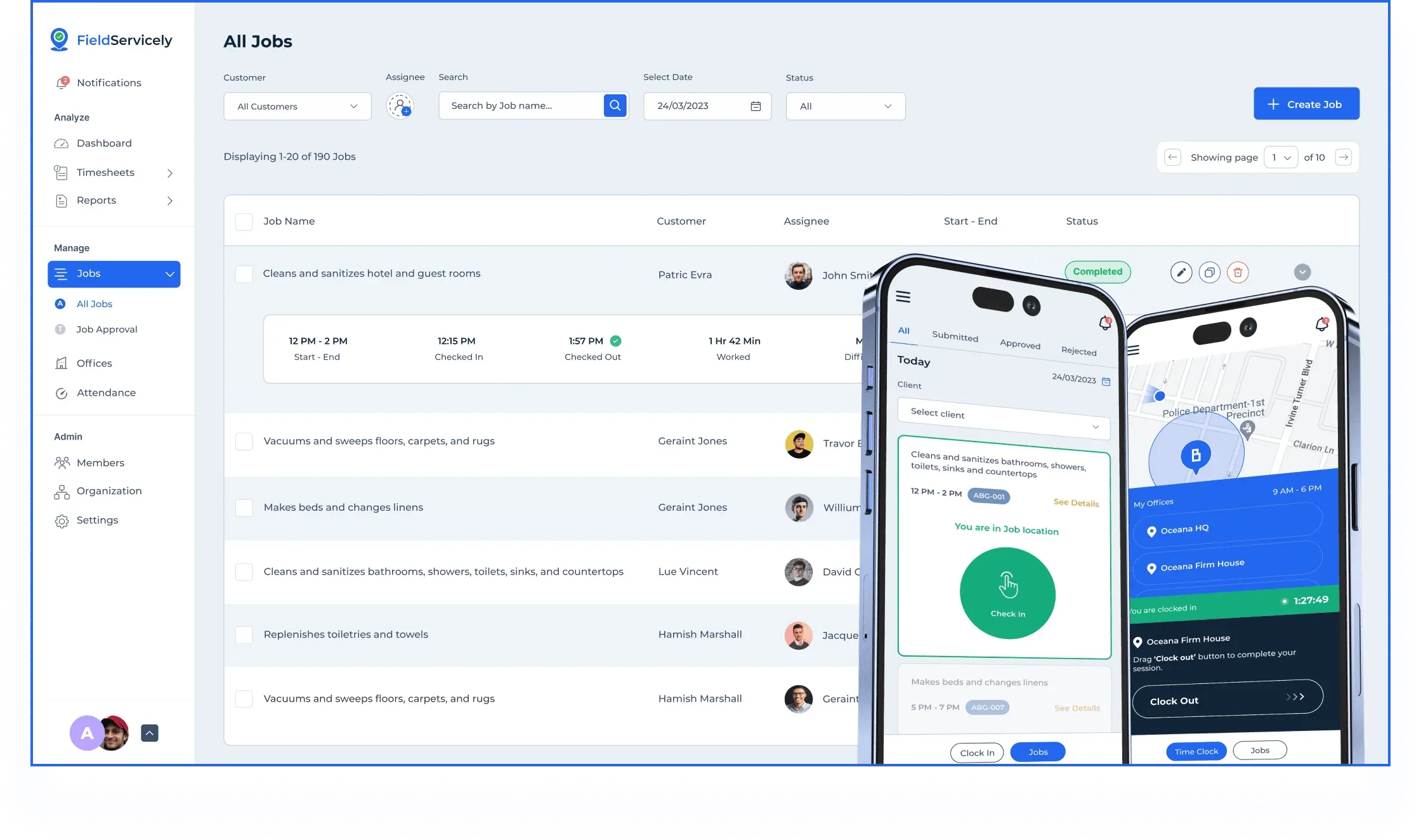
FieldServicely cleaning business software can help turn these best practices into consistent action. Organizing tasks, assigning clear roles, and tracking cleaning schedules support better hygiene compliance across teams. The tool also reduces missed duties and improves accountability without adding extra manual work.
Build and manage your cleaning schedule in one platform
Assign tasks, set frequency, and track progress easily
Best Practices for Business Cleaning
The following is a list of best practices for cleaning businesses:
- Use microfiber cloths to capture more dirt and bacteria effectively.
- Clean from top to bottom to prevent recontamination of surfaces.
- Use color-coded tools to avoid cross-contamination between areas.
- Apply proper disinfectants based on surface type for better results.
- Follow a consistent cleaning routine to maintain hygiene standards.
Conclusion
A cleaning checklist for business brings structure to daily operations. It connects tasks, timing, and responsibility so nothing gets missed. That connection keeps cleaning consistently across every area.
Without structure, gaps appear, and standards drop over time. Missed tasks lead to uneven cleaning and higher health risks. A clear system prevents those issues before they grow.
Frequently Asked Questions
How long should a business cleaning routine take each day?
Daily cleaning usually takes 30 minutes to a few hours, depending on the size and traffic of the space. Smaller offices need less time, while large facilities require more structured effort.
What tools are essential for an effective cleaning checklist?
Basic tools include microfiber cloths, mops, vacuum cleaners, disinfectants, and gloves. Using the right tools improves cleaning speed and results.
How often should cleaning checklists be updated?
Review and update the checklist every 3–6 months based on changes in usage or workspace layout. Regular updates keep the system relevant and effective.
Can automation improve business cleaning management?
Yes, digital tools help assign tasks, track progress, and reduce missed duties. Automation improves consistency and saves time in daily operations.
What is the biggest mistake businesses make in cleaning?
The biggest mistake is treating cleaning as a one-time task instead of an ongoing system. Consistency matters more than occasional deep cleaning.