- GPS Tracking for Field Service
What is the Cost of GPS Tracking in 2026? [Hardware & Software]
Updated on 12 Mar 2026
Jump to
Summary

The cost of GPS tracking ranges from $5 to $50+ per month per vehicle.
Total cost includes hardware and monthly subscription fees.
Most plans come in basic, mid-range, and advanced tiers.
Price changes based on fleet size, hardware, and tracking updates.
Popular tools include FieldServicely, Samsara, Geotab, Azuga, Linxup, and Life360.
The cost of GPS tracking usually ranges from $5 to $50+ per vehicle per month, depending on the device, tracking features, and subscription plan. In this blog, we will discuss GPS tracking pricing tiers, hardware costs, and monthly subscription fees. We will also discuss factors that affect pricing and the top tracking software options available for fleets, businesses, and personal use.
What is the Average Cost of GPS Tracking
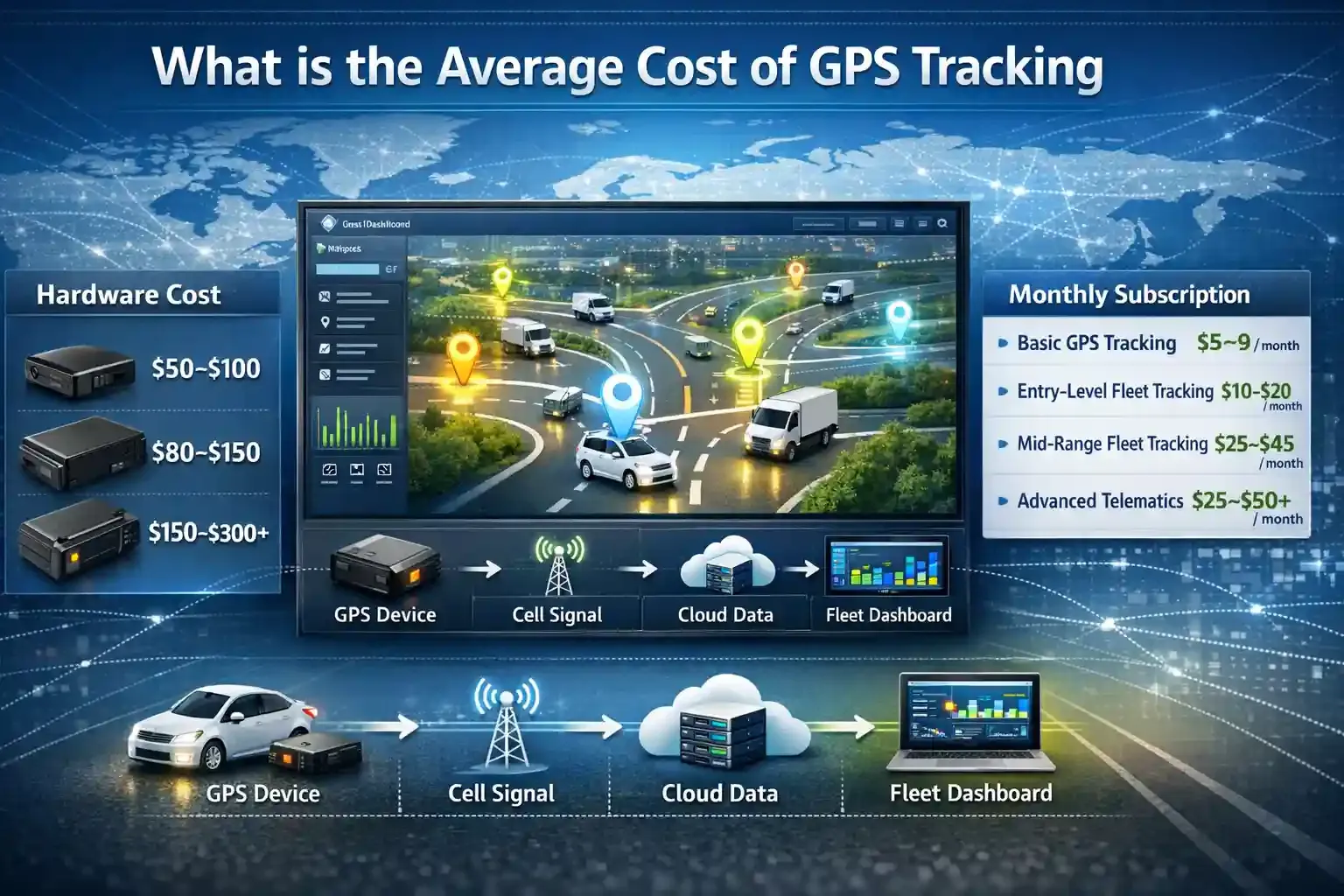
GPS tracking usually costs $10 to $30 per vehicle per month for standard fleet software. However, if you only need basic tracking, you can find plans starting at $5–$9 per month.
On the other hand, advanced fleet systems with diagnostics and compliance tools can reach $25–$50+ monthly per vehicle.
Now, when you calculate the real cost, you need to look at two parts: the hardware and the monthly subscription. Hardware is usually a one-time purchase, while the monthly fee pays for cellular data, cloud dashboards, and support.
Here is the typical price range across common GPS tracking setups:
| GPS Tracking Type | Hardware Cost | Monthly Cost |
|---|---|---|
Basic GPS tracking | Often included | $5–$9 |
Entry-level fleet tracking | $50–$100 | $10–$20 |
Mid-range fleet tracking | $80–$150 | $25–$45 |
Advanced telematics | $150–$300+ | $25–$50+ |
Personal GPS trackers | $20–$50 | Around $25 |
Manual vehicle tracking leads to higher fuel and routing costs
Use GPS tracking to monitor vehicles and reduce unnecessary mileage
GPS Tracking Monthly Pricing Tiers
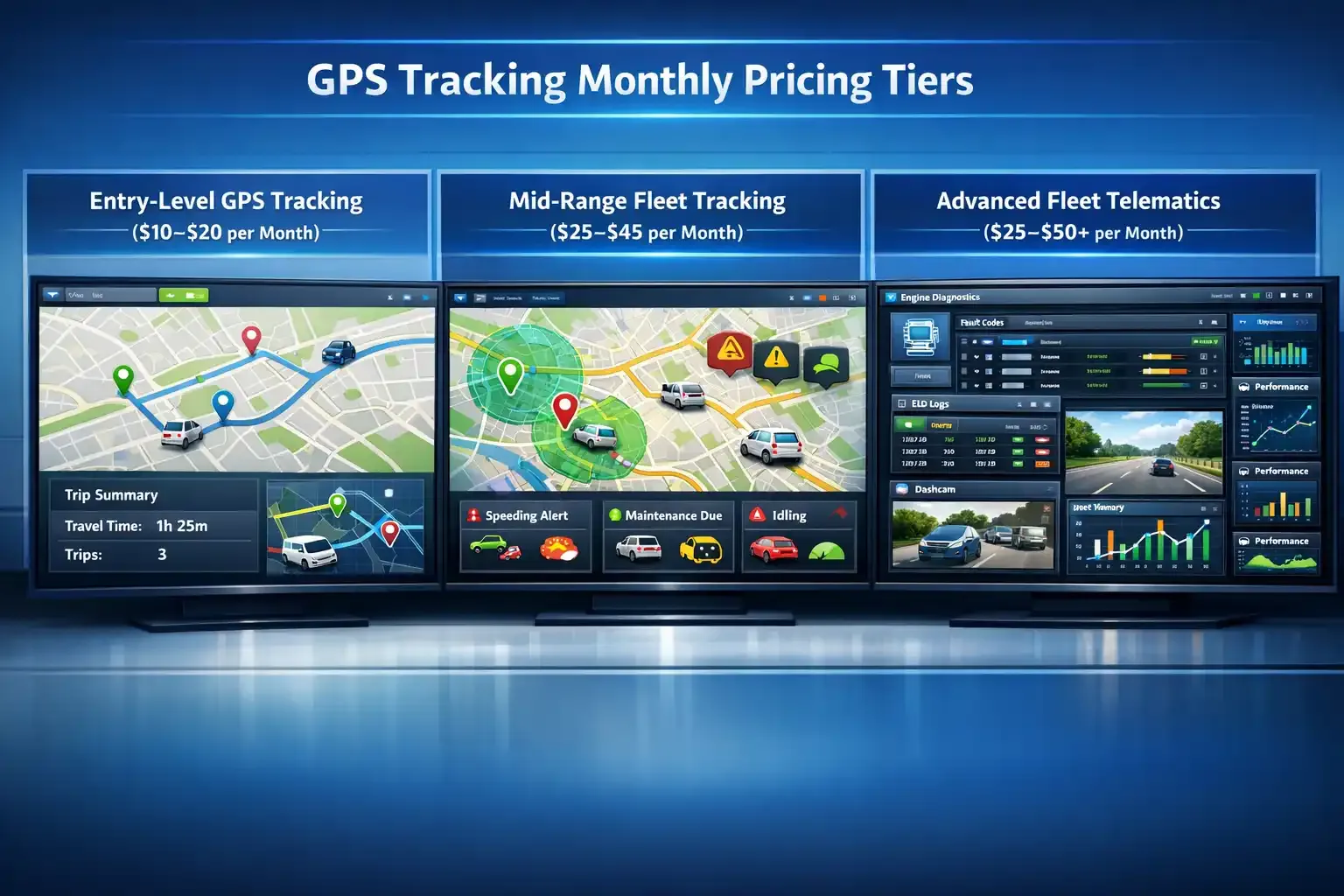
Entry-Level GPS Tracking ($10–$20 per Month)
Low-cost enterprise GPS tracking usually costs $10–$20 per vehicle per month. I often recommend this tier if you only need basic vehicle visibility without advanced analytics or compliance tools. Software like this also works great for tracking employee locations.
Key Features
- Real-time vehicle location tracking
- Trip history with route playback
- Basic reports for vehicle activity and travel time
Best for: Small fleets, startups, and businesses that only need simple vehicle tracking.
Mid-Range Fleet Tracking ($25–$45 per Month)
Mid-range GPS fleet tracking usually costs $25–$45 per vehicle per month. Most businesses choose this tier because it combines real-time tracking with driver and vehicle analytics.
Key Features
- Geofencing alerts that notify you when vehicles enter or leave specific locations
- Driver behavior monitoring to track speeding, harsh braking, and excessive idling
- Maintenance alerts based on mileage or engine hours
- Route history with playback to analyze travel paths and stops
Best for: Small and mid-size businesses that want safety monitoring, efficiency insights, and better fleet management without enterprise-level costs.
Advanced Fleet Telematics ($25–$50+ per Month)
Advanced fleet telematics usually costs $25–$50+ per vehicle each month. Logistics companies adopt this tier because it combines vehicle diagnostics, compliance tools, and video safety systems into a single platform.
Studies show that fleet telematics systems have been linked to around a 20% reduction in preventable accidents.
Key Features
- Engine diagnostics that track fault codes and vehicle performance
- ELD compliance to record driver hours and meet transportation regulations
- AI dashcams that detect distracted driving and safety risks
- Fuel monitoring that measures consumption, idling, and fuel efficiency
Best for: Large fleets, trucking companies, and regulated industries that need compliance tracking, vehicle diagnostics, and advanced safety monitoring.
Basic tracking tools limit fleet visibility and driver insights
Upgrade to smart GPS tracking with real-time analytics and alerts
GPS Tracking Software Cost
| Software | Starting Cost | Pricing Model | Key Features |
|---|---|---|---|
FieldServicely | $9–$12 per user/month | Per user | GPS tracking, geofencing, route optimization, scheduling, time tracking |
Samsara | $27–$33 per vehicle/month | Per vehicle | Real-time tracking, AI safety alerts, driver analytics, fuel monitoring |
Salesforce Field Service | $175 per user/month | Per user | GPS workforce tracking, AI scheduling, CRM integration |
Traccar | $5.95–$29.95/month | Account/server | Real-time GPS tracking, open-source customization, device integration |
HAPN | $25–$30 per asset/month | Per asset | Asset tracking, location alerts, fleet monitoring dashboard |
- FieldServicely: Starts at $9–$12 per user/month, offering GPS tracking, geofencing, scheduling, and route optimization for field teams.
- Samsara: Costs about $27–$33 per vehicle/month, commonly used by fleets for real-time vehicle tracking and driver safety monitoring.
- Salesforce Field Service: Starts around $175 per user/month, built for enterprises that need advanced scheduling and CRM integration.
- Traccar: Starts from $5.95/month, making it a low-cost option for companies that want open-source GPS tracking.
- HAPN: Costs $25–$30 per asset/month, which works well for tracking vehicles, trailers, and equipment.
Consumer GPS Tracking Costs
Consumer GPS tracking usually costs $20–$50 for the device and about $25 per month for the service. Many people choose these trackers because they provide simple location monitoring without expensive fleet analytics.
People commonly use them for:
- Tracking personal vehicles
- Family safety and location sharing
- Child tracking and school commute monitoring
In practice, these affordable trackers help families quickly locate vehicles or loved ones without installing complex fleet management systems.
Factors That Affect GPS Tracking Costs
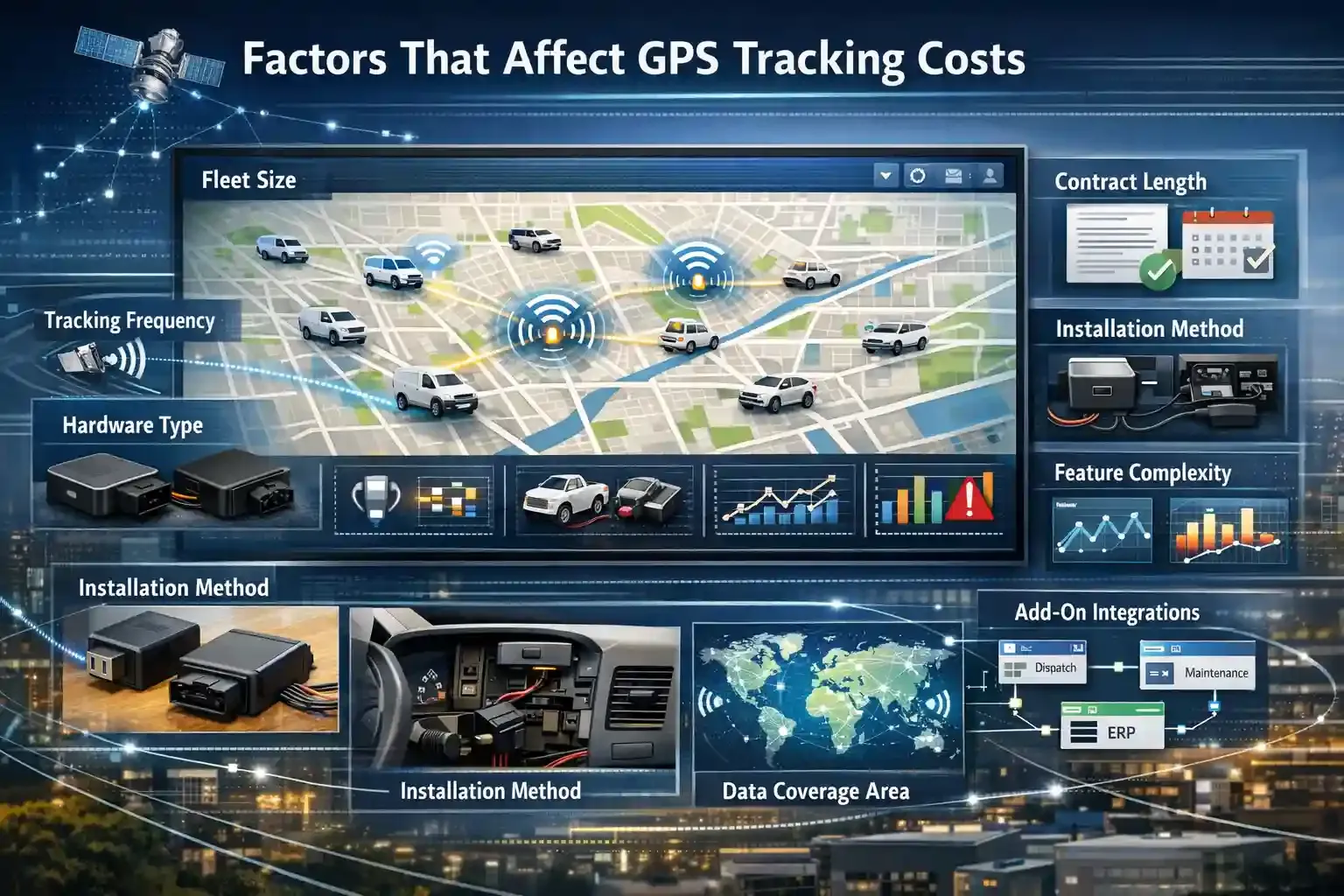
Fleet Size
Fleet size directly affects pricing because most vendors offer volume discounts for larger deployments. For example, fleets with more than 25 vehicles often receive lower per-vehicle rates than small fleets.
Tracking Frequency
Tracking frequency affects price because faster location updates use more cellular data. For instance, systems that update every 30 seconds cost more than those reporting every 5–10 minutes.
Hardware Type
Hardware type changes the device price and system capability. Simple plug-in trackers cost less, while hardwired telematics units with sensors or cameras increase the overall system cost.
Contract Length
Contract length influences monthly pricing because longer agreements usually lower the subscription rate.
Installation Method
The installation method affects upfront costs because plug-and-play devices install instantly, while hardwired trackers may require professional installation.
Feature Complexity
Feature complexity increases pricing because advanced systems include analytics, driver safety monitoring, and compliance tools beyond simple location tracking.
Data Coverage Area
Coverage area impacts pricing because international tracking or multi-network connectivity requires more data infrastructure than local tracking systems.
Add-On Integrations
Integrations raise the total price because companies often connect GPS platforms with dispatch systems, maintenance software, or ERP tools for automation.
Poor visibility into fleet operations raises fuel and maintenance costs
Use GPS tracking to monitor vehicles and control operational spending
What GPS Tracking Monthly Fees Include?
- Cloud-based tracking software: You access a web dashboard that shows live vehicle locations, routes, and trip history from any browser.
- Cellular connectivity: The tracker uses 4G LTE or similar networks to send location data to the cloud every few seconds or minutes.
- Mobile apps: Most providers include Android and iOS apps so you can monitor vehicles and receive alerts directly on your phone.
- Reporting dashboards: The system generates reports for routes, idle time, driver behavior, and fleet activity.
- Technical support: Vendors usually include customer support and software updates to keep the tracking platform running smoothly.
Top GPS Tracking Software Options
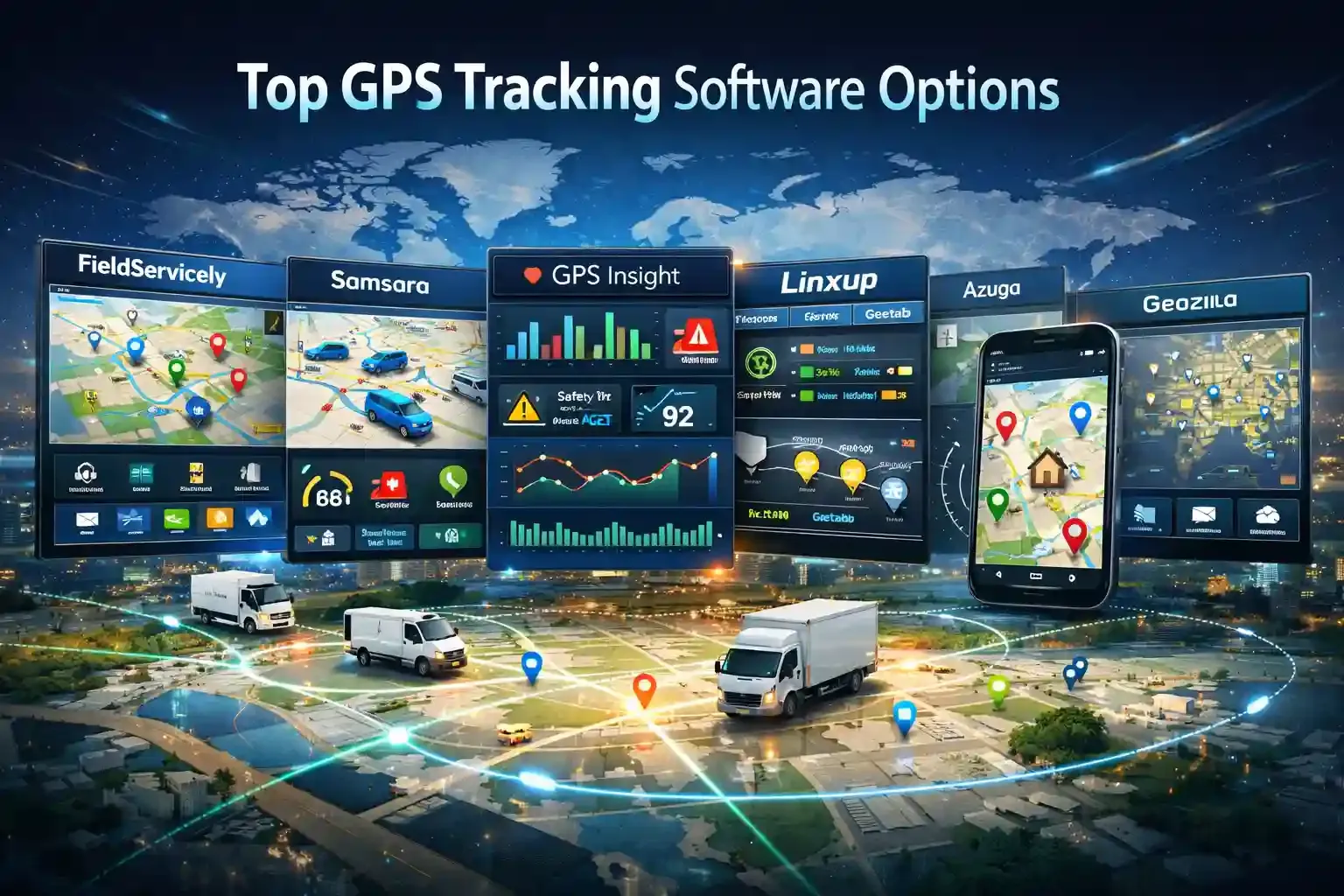
Below are some widely used GPS tracking solutions for fleets and service businesses
Field Service, Fleet, and Business Solutions
- FieldServicely: FieldServicely helps you track technicians, assign jobs, and manage field service teams. It also provides a robust GPS time clock.
- Samsara: Samsara provides advanced fleet tracking, driver safety tools, and compliance monitoring.
- GPS Insight: GPS Insight focuses on fleet analytics, route tracking, and performance reporting.
- Linxup: Linxup offers affordable GPS tracking with easy plug-and-play devices.
- Azuga: Azuga focuses on driver safety monitoring and AI-based telematics.
- Geotab: Geotab delivers full fleet tracking with diagnostics and advanced analytics.
Personal and Family Tracking Apps
- mSpy: mSpy helps parents track a child’s phone location and activity.
- FamiSafe: FamiSafe offers real-time location tracking and geofence alerts for child safety.
- Life360: Life360 lets families share live locations and receive driving alerts.
- Geozilla: Geozilla provides simple family location sharing with safety notifications.
Open Source Option
- Traccar: Traccar is a free open-source GPS tracking platform for monitoring vehicles and assets.
Manual fleet monitoring wastes time and resources
Automate vehicle tracking, reporting, and driver management
Conclusion
The cost of GPS tracking becomes easier to manage once you understand what affects the price. By comparing providers and pricing tiers, you can choose a GPS tracking solution that delivers real operational value without unnecessary spending.
Frequently Asked Questions
Is GPS tracking legal for vehicles and employees?
Yes, GPS tracking is legal in most regions if you own the vehicle or have proper consent. Businesses commonly track company vehicles to improve safety, monitor routes, and manage operations.
Do GPS trackers work without cellular service?
Most GPS trackers need cellular networks to send location data to the cloud. However, some devices store location data offline and upload it once the connection returns.
Can GPS tracking reduce fleet operating costs?
Yes, GPS tracking helps reduce fuel waste, idle time, and inefficient routes. Many businesses use fleet tracking to improve driver behavior and lower maintenance costs.
How accurate is GPS tracking for vehicles?
Most modern GPS trackers provide location accuracy within 3–10 meters under normal conditions. Accuracy may change slightly in tunnels, dense cities, or underground parking areas.
Do GPS trackers drain a vehicle’s battery?
Most trackers use very little power and do not noticeably drain a vehicle battery. Many plug-in or hardwired trackers also include sleep modes to reduce energy use when the vehicle is parked.
What to read next