- Field Service Business
Door to Door Canvassing Techniques: Practical Tips To Make Every Door Count
Updated on 10 Jul 2026
Jump to
Summary

Door-to-door canvassing can outperform many digital outreach methods. Studies show it can increase engagement by up to 6%.
Preparation matters. Work in pairs, carry the right tools, and follow a clear plan.
The first 10 seconds at the door are critical.
Rejection is normal. Focus on the people who do answer.
The right tools make canvassing easier to manage and track.
To get better results from door-to-door canvassing, focus on safety, preparation, and good conversations. Work with a partner, follow a clear route, and carry visible identification. When someone answers the door, take a step back, smile, and listen carefully instead of jumping into a sales pitch.
These simple habits can make a big difference. A peer-reviewed study found that door-to-door canvassing increased engagement by about 6%, outperforming several other outreach methods.
People often respond better when you speak with them face-to-face.
In this guide, you'll learn practical canvassing tips, from preparing before you leave to making a strong first impression, handling rejection, and using the right tools. Whether you want to grow a business, support a campaign, or promote a cause, these tips will help you make every conversation count.
What Does Canvassing Mean?
Canvassing, meaning in business, is going door-to-door and talking directly with people. You share information, answer questions, and encourage a specific action, such as making a purchase, signing up, donating, or voting.
You can use canvassing in many situations.
- Political campaigns use it to connect with voters and increase turnout.
- Local service businesses use it to find new customers and generate leads.
- Nonprofits use it to raise awareness, collect donations, and gather signatures.
In business, canvassing gives you a direct way to reach potential customers in a specific area. Instead of waiting for someone to respond to an ad or email, you can have a real conversation and learn right away whether they're interested.
Today, canvassing is much easier to manage. You can use digital maps, route planning tools, GPS tracking, and mobile apps to organize your work. The face-to-face conversation stays the same, but the tools help you work faster and track results more accurately.
How to Prepare Before You Start Knocking
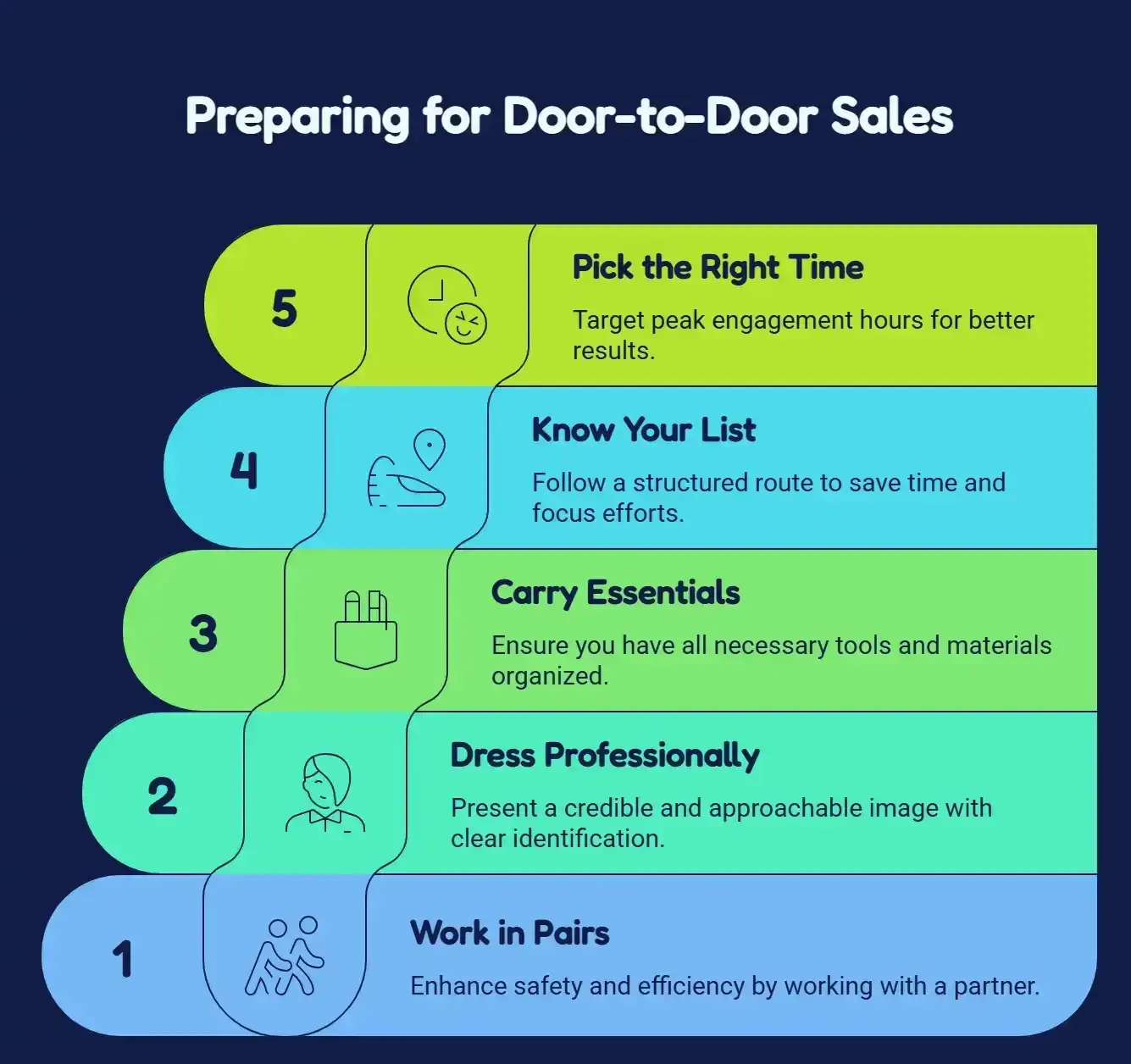
Good preparation makes the difference between a productive shift and a frustrating one. These tips for door to door sales and canvassing help you whether you’re selling solar panels or collecting petition signatures.
Work in Pairs
You stay safer and work more efficiently when you go in pairs. You can cover both sides of a street while still staying in sight of each other. If something feels off, you always have backup nearby.
Dress the Part
Wear clear identification like a company shirt, campaign badge, or ID lanyard. You should look professional and approachable, not like someone randomly walking around the neighborhood.
Carry Your Essentials
Bring a fully charged phone, a portable charger, your walk list (digital or printed), a clipboard or folio, pens, and any materials you need to leave behind. Keep everything organized so you don’t waste time searching for the door.
Know Your Walk List
Don’t knock randomly. Stick to your assigned route and visit every address on your list. A clear structure helps you save time and focus on areas that actually bring results.
Pick the Right Time
Go out when people are most likely to answer. Weekends and weekday evenings work best. Aim for around 10 am–8 pm on weekends and 5 pm–8:30 pm on weekdays. Try to avoid going out after dark, as it can feel uncomfortable for residents.
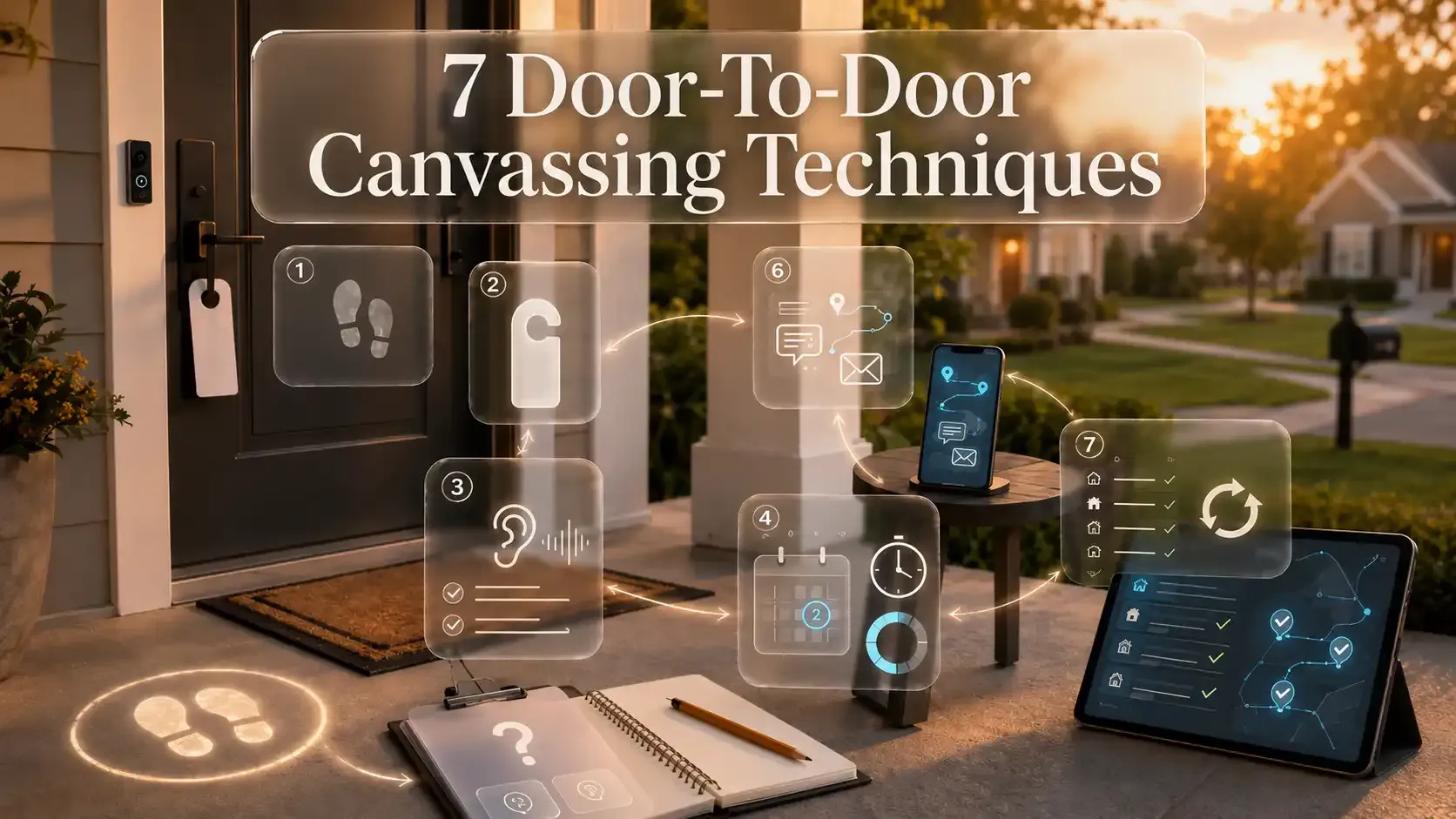
7 Door-To-Door Canvassing Techniques That Never Fail
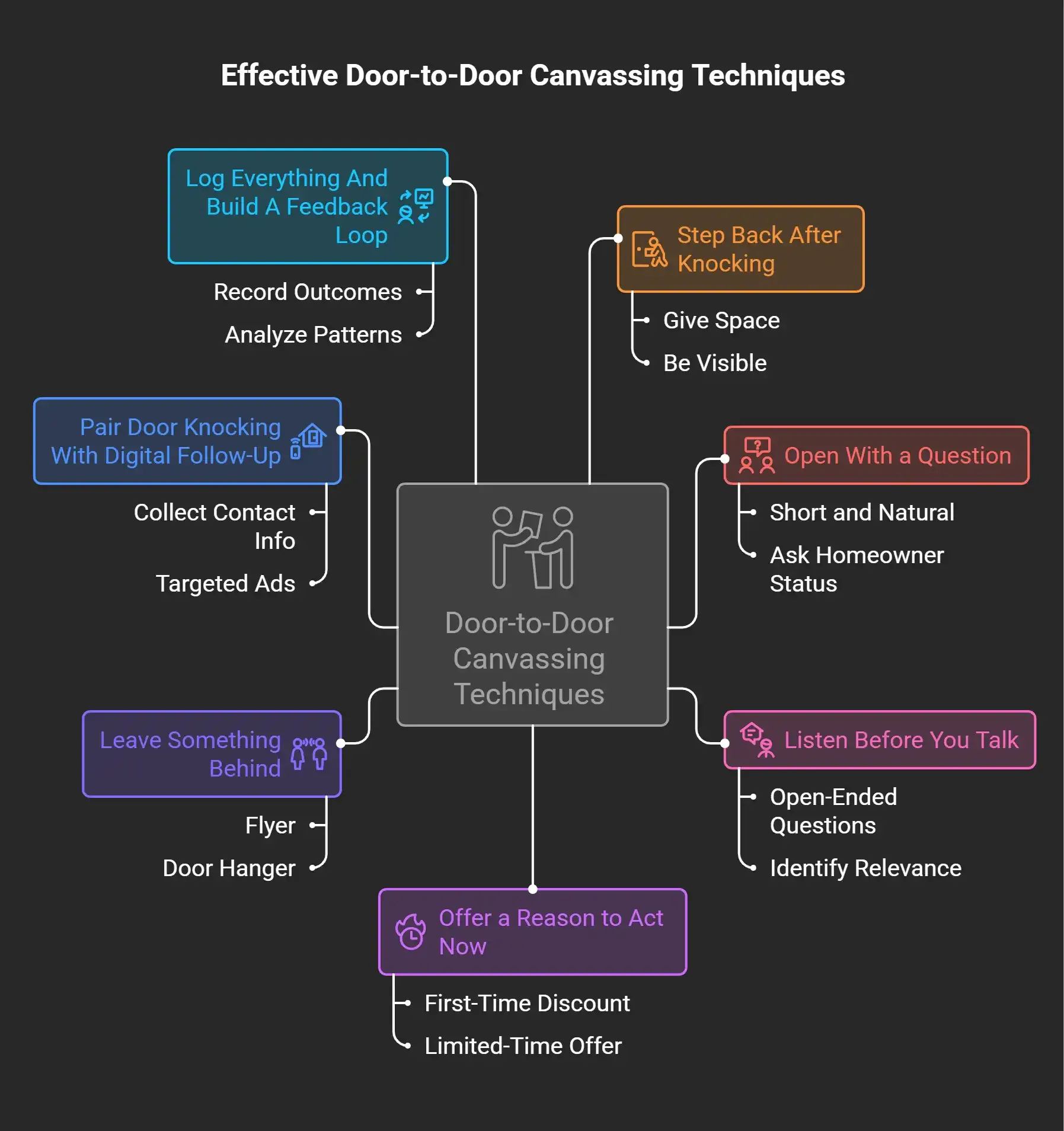
Knowing what to say and how to say it is what separates a productive canvasser from someone who just walks a lot. Here are seven canvassing tips that consistently produce results.
1. Step Back After Knocking
After you knock or ring the bell, take one or two steps back and stand at a slight angle. This gives the resident space to open the door comfortably, makes you clearly visible, and signals that you're not a threat. It's a small adjustment that immediately changes how people react to you.
2. Open With a Question, Not a Pitch
The first 10 seconds matter most. Research from Psychological Science shows people decide how trustworthy someone seems in about 100 milliseconds.
At the door, this means your first impression matters more than anything you say later.
Don’t start with a long, rehearsed pitch. Instead, keep it short and natural. For example:
“Hi, I’m [name] from [organization]. Are you the homeowner?”
This helps you start a real conversation instead of giving a one-way speech.
3. Listen Before You Talk
Ask open-ended questions early. Find out what the person cares about, what their situation is, or whether your message is even relevant to them. The best canvassers spend more time listening than talking. If the person isn't a fit, thank them and move on; you've saved both of you time.
4. Offer a Reason to Act Now
People hesitate at the door because they don’t feel urgency. You need to create it.
Give them a reason to act now. This could be a first-time discount, a limited-time offer, a free sample, or a small gift for signing up. It turns “maybe later” into “okay, let’s do it.”
If you’re working with a business, your flyer can also work as a coupon. If you’re in a campaign or nonprofit, focus on timing, like an upcoming deadline or an event happening soon.
Don’t forget your existing contacts either. A simple referral reward can turn one happy customer into a way to reach new people in the same neighborhood.
5. Leave Something Behind
Most doors won’t open, but that doesn’t mean your visit is wasted.
Always leave something behind: a flyer, door hanger, postcard, or brochure. Make sure it’s placed securely on the door. Don’t put anything inside a USPS mailbox; that’s not allowed in the U.S.
If you’re in apartments or shared spaces, ask if you can post your material on a community board at places like a library, community center, or grocery store.
According to Nielsen’s Global Trust in Advertising report, 92% of people trust recommendations from people they know. That’s why a simple flyer mentioning local results or neighbors can still influence people even after you leave.
6. Pair Door Knocking With Digital Follow-Up
This is one of the most effective canvassing tips and tricks. Canvassing doesn’t end when you leave the door. The best results come when you follow up online.
If someone is interested but not ready, collect their email or phone number. Then follow up with a message, newsletter, or targeted ad. This works because the door visit starts the relationship, and digital contact keeps it going until they decide.
7. Log Everything and Build a Feedback Loop
Write down every outcome: yes, no, or no response. Record what the person said, their attitude, and what you should do next on your walk sheet or canvassing app.
Good records don’t just help with follow-ups. They help the whole team improve.
When managers look at the data, they can see patterns. They notice which opening lines work, which objections come up again and again, and which streets perform best.
As a team grows, this becomes even more important. Canvassers focus on conversations, team leads coach in the field, and managers use real results to improve strategy.
In the end, it becomes a simple cycle: knock, record, review, improve, repeat.
Turn every door into trackable data.
FieldServicely logs field activity in real time, so your team's results feed straight into your next move.
Tools That Make Canvassing More Efficient
Paper walk lists and hand-drawn maps still work, but they slow you down and make it harder to track results.
Digital tools fix that and make canvassing more organized.
A canvassing or field tracking app replaces paper lists, tracks which doors have been visited, and logs responses in real time. Instead of messy notes after your shift, you see clear data in real time.
- Route optimization helps you walk smarter. It plans better paths so you waste less time moving between doors and cover more houses in less time.
- GPS tracking helps managers see where teams are and how much area they’ve covered. It keeps work transparent without feeling like micromanagement.
- Scheduling and dispatch tools also help assign the right areas to the right teams and prevent overlap.
Platforms like FieldServicely combine all of this: GPS tracking, route planning, crew scheduling, and digital timesheets in one system. It’s designed for field teams who are always on the move.
Read more: Want to track your team without hovering over them? See our guide on how to track field employees without micromanaging →
How to Handle Rejection and Keep Moving
Rejection is part of the job. How you handle it decides whether you stay productive or burn out early.
Respect “no” Right Away
If someone isn’t interested, thank them and leave. If you see a “no soliciting” sign, skip the door completely. Don’t argue, don’t stay, and don’t try to change their mind.
Keep a Steady Pace
Spend about 1–3 minutes per door. That’s around 15–20 doors per hour. Long talks can feel productive, but they slow you down and reduce how many people you reach.
Don’t Take it Personally
Most people won’t answer, and many who do will say no. That’s normal. Your goal isn’t to win every door, it’s to find the ones open to talk and make those count.
Wrapping Up
Door-to-door canvassing isn't glamorous. It's walking, knocking, getting told "no," and doing it again. But it works because a real conversation at someone's door builds trust that no ad, email, or automated message can match.
The teams that canvass effectively don't rely on charm alone. They prepare, follow a system, use the right tools, and treat every door as data that feeds their next move.
If you're building or managing a canvassing team and need GPS tracking, route optimization, and crew scheduling in one platform, FieldServicely is built for exactly that!
Frequently Asked Questions
How Do I Start a Canvassing Script?
Keep it simple and natural. Say your name, your organization, and ask one short question. Don’t read a full script as it sounds robotic.
Is Door-To-Door Canvassing Legal?
Yes, in most places. Just follow local rules, respect “no soliciting” signs, and don’t put anything inside USPS mailboxes.
Is Door-To-Door Canvassing Safe?
Door-to-door canvassing is usually safe, but you may still face some risks. Some people may react with anger or be rude. Serious violence is rare, but you can still run into things like aggressive dogs or unfamiliar property layouts that require caution.
How to Canvass Effectively?
Give canvassers clear walk lists, structured scripts, and basic safety training so they know exactly where to go and what to say. Listen carefully to people. Keep everything simple: go door to door, track what happens, review results, and adjust your approach.
How do I Track Canvassing Results Effectively?
Use a field app to log each door, whether it’s a contact, no answer, or refusal. Digital tracking is faster and easier than paper.
Can Canvassing Work for Small Businesses?
Yes. Many small businesses, like solar, pest control, real estate, and home services, use canvassing to get local leads that online ads often miss.
What to read next