- Scheduling and Dispatch
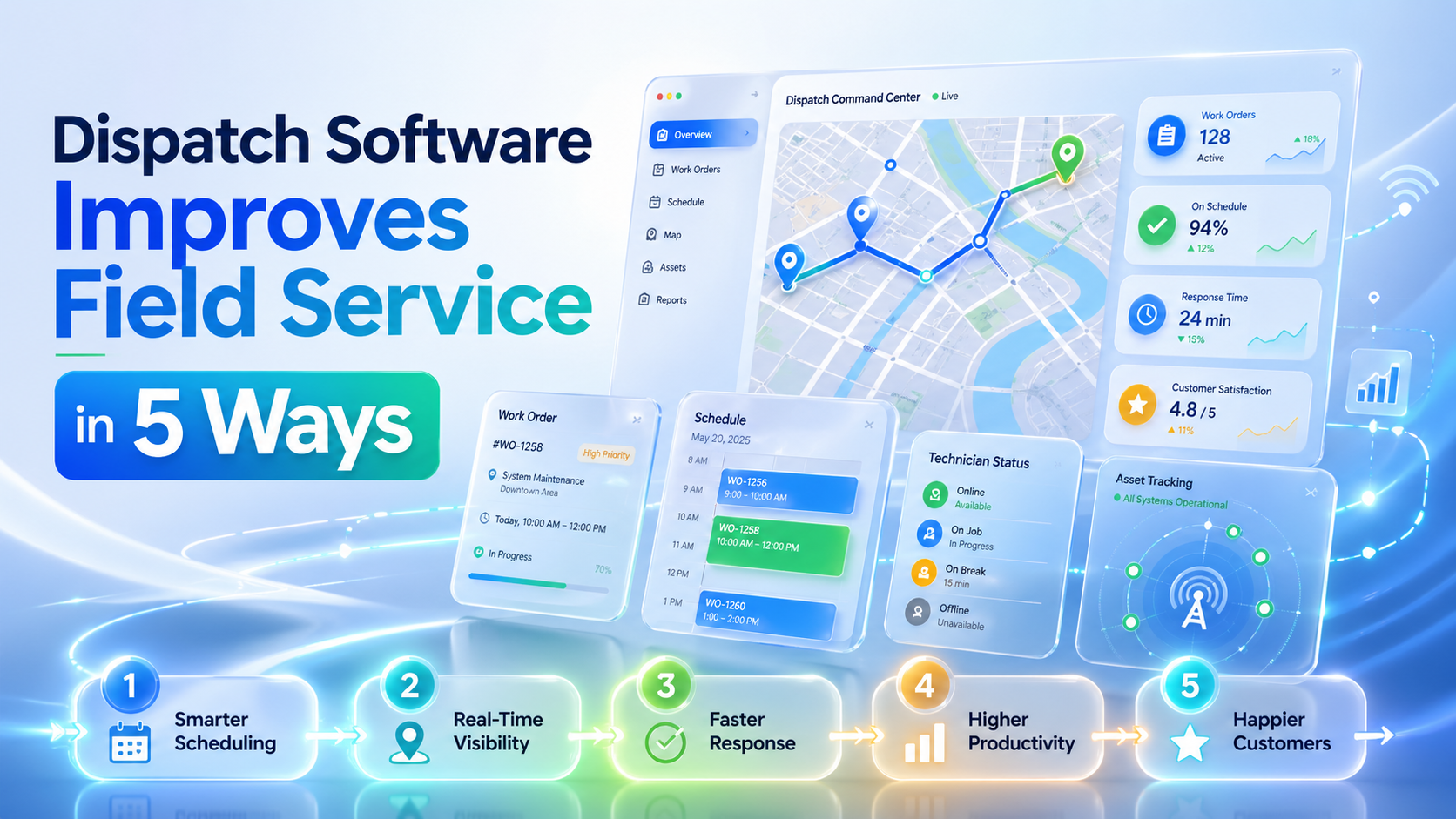
How Dispatch Software Improves Field Service in 5 Ways
Updated on 30 Apr 2026
Jump to
Summary

Dispatch software automates scheduling, reducing human error and speeding up task assignments.
Real-time GPS routing optimizes travel time and ensures technicians reach jobs faster.
Mobile integration provides technicians with real-time updates, boosting productivity and efficiency.
Cloud-based systems streamline operations by keeping field teams and the office connected in real time.
Dispatch software helps improve customer satisfaction by ensuring faster service and higher first-time fix rates.
Field service businesses face increasing pressure to deliver fast, reliable service. By automating job scheduling, optimizing routes, and enabling real-time communication, dispatch software ensures faster response times, fewer delays, and improved customer satisfaction.
In industries like HVAC, plumbing, and electrical services, dispatch software has become essential for staying competitive. It allows technicians to reach jobs quickly, equipped with all the necessary information.
In this blog, we will discuss how dispatch software can enhance operational efficiency. We will also discuss how it improves customer service, making it an essential tool for field service businesses.
5 Ways Dispatch Software Enhances Response Time
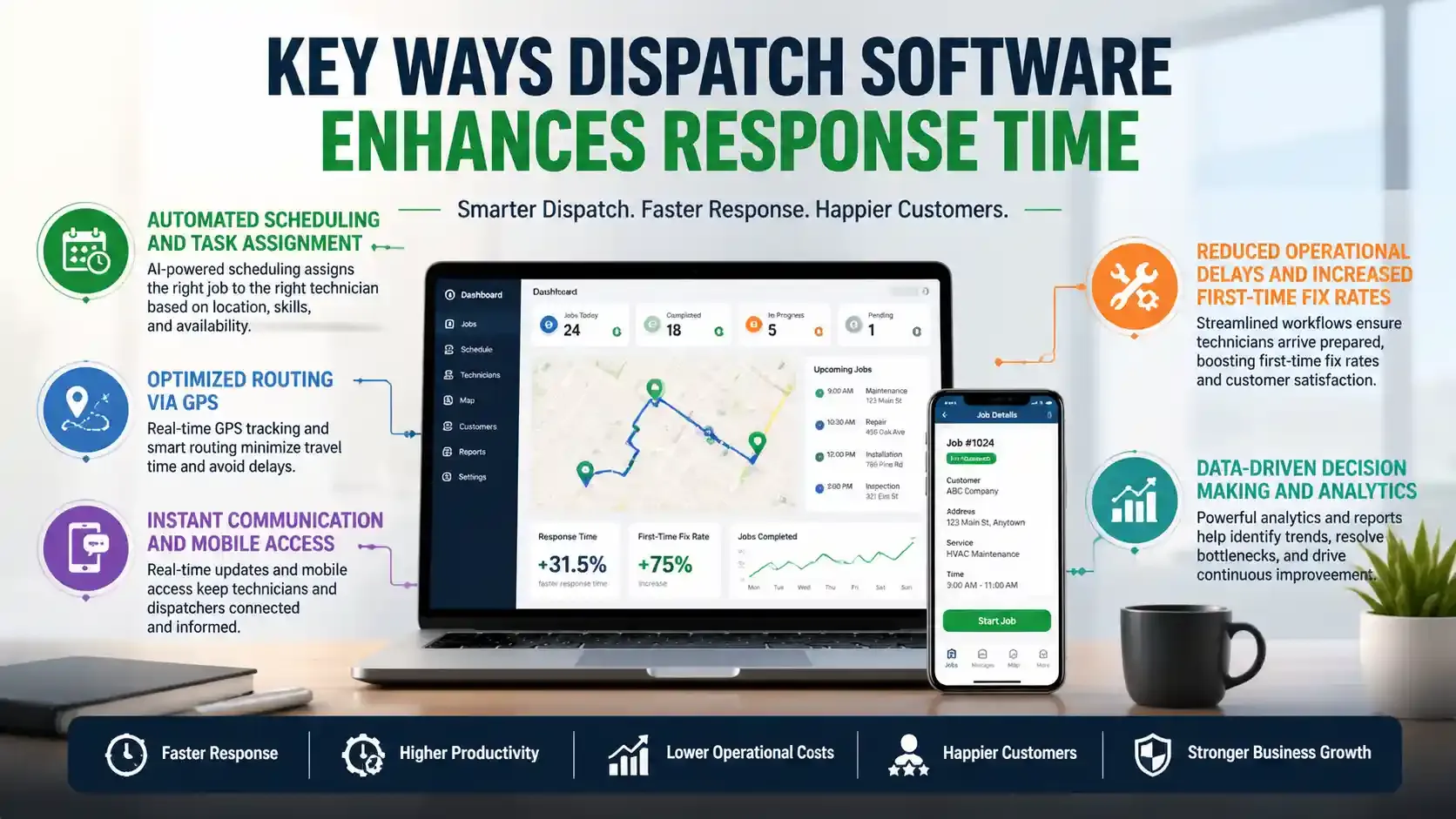
Automated Scheduling and Task Assignment
One of the primary benefits of dispatch software is automated scheduling. Traditional methods, such as manual assignment of tasks, often lead to errors, inefficiencies, and delays.
Dispatch software eliminates this by using AI-powered systems to automatically assign jobs based on a technician’s location, skill set, and availability. Automated scheduling can also reduce travel time by around 10%.
This automation significantly reduces human error, making it faster and easier for dispatchers to allocate tasks.
Optimized Routing via GPS
Dispatch software doesn’t just automate scheduling; it also optimizes routing.
With real-time GPS tracking, dispatchers can monitor the locations of technicians. They can also adjust their routes to avoid delays caused by traffic or road closures.
By calculating the fastest routes for each technician, dispatch software ensures that travel times are minimized. This also enables technicians to complete more jobs each day.
Instant Communication and Mobile Access
Gone are the days when field technicians were out of the loop, waiting for a call back or missing critical updates. Dispatch software now makes real-time communication possible, connecting dispatchers and technicians instantly through mobile apps.
This mobile integration keeps everyone in the know. Technicians get job information straight to their mobile devices, meaning no more missed calls or messages that slow down the workflow.
Even businesses using mobile-enabled dispatch systems report a 31.5% faster response time. With instant updates, field teams stay productive and efficient, ensuring service delivery happens without a hitch.
Reduced Operational Delays and Increased First-Time Fix Rates
Dispatch software streamlines the entire process from job assignment to completion. With automated workflows, managers can assign the right task to the right technician.
On the other hand, technicians can be fully prepared with the right tools, parts, and job details before they even arrive.
In fact, optimized dispatch software can boost first-time fix rates by up to 75%. Thus, it also increases customer retention by ensuring a higher quality of service on the first visit.
Data-Driven Decision Making and Analytics
What if you could make better decisions based on actual data? Well, with dispatch software, you can.
The software collects data points and breaks them down into easy-to-read reports. This means you can spot trends, identify bottlenecks, and make data-driven decisions that improve future performance.
Thus, it helps you make smarter business decisions.
Maximize your field service efficiency
See how dispatch software improves response times and reduces operational delays.
Technologies Driving Efficiency in Dispatch Software
AI-Powered Scheduling
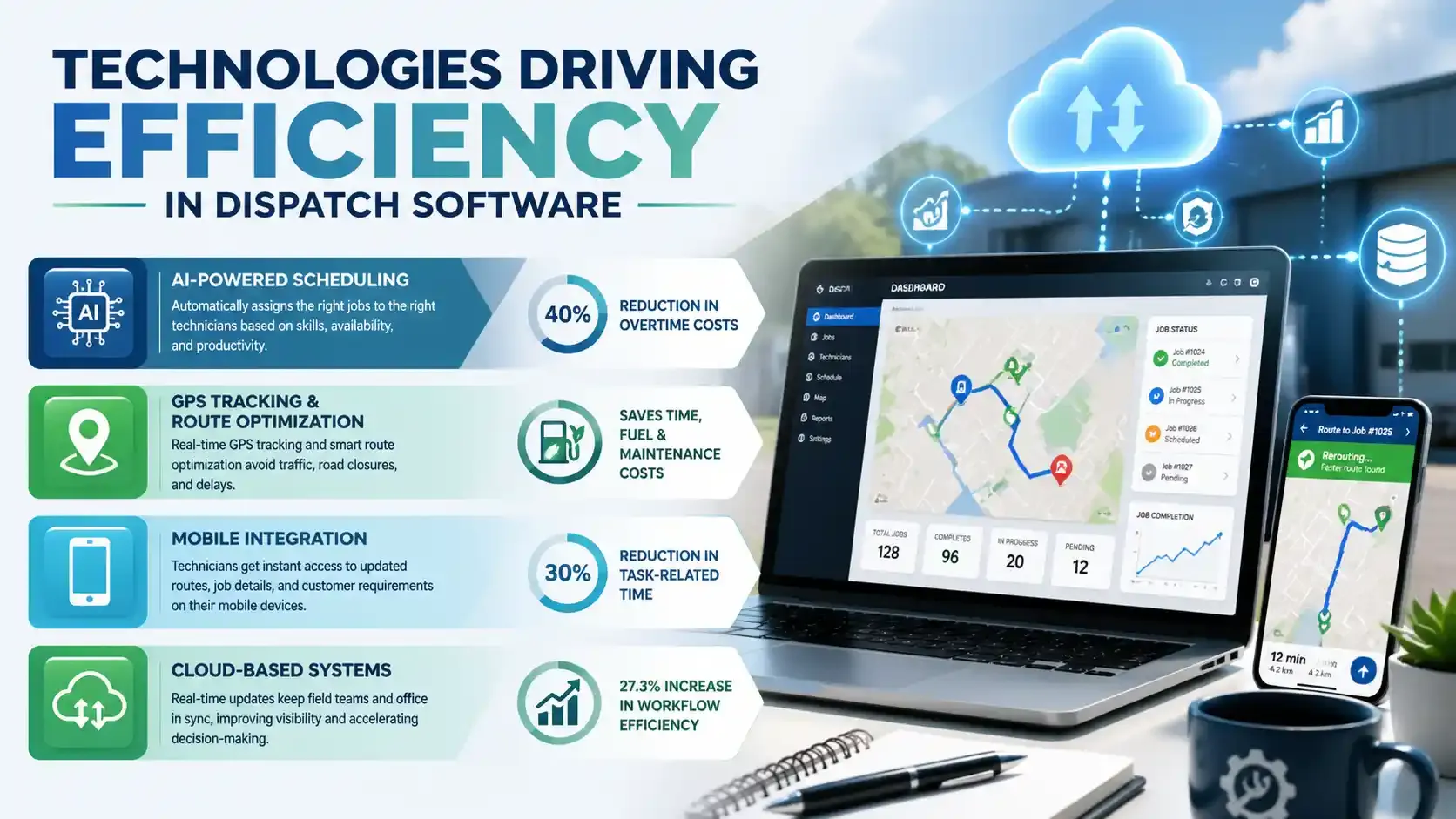
Dispatch software uses artificial intelligence to automatically assign jobs based on factors like technician productivity, skills, and availability. This reduces human errors and speeds up the whole job assignment process.
In real-world scenarios, AI scheduling works wonders.
For instance, instead of manually going through a list of technicians, the system makes quick decisions about who should go where. This allows dispatchers to focus on higher-priority tasks. According to research, businesses that use AI-powered scheduling have cut overtime costs by 40%.
GPS Tracking and Route Optimization
Suppose your technician is on the way to a job, but suddenly, traffic hits. Instead of wasting time stuck behind a jam, dispatch software uses real-time GPS tracking to find the fastest route.
The software knows when to avoid traffic, road closures, and even accidents. It adjusts routes on the fly, getting your technician to the job faster.
This saves not only time but also fuel and reduces maintenance costs. And most importantly, it ensures that your team arrives on time for every job.
Mobile Integration
Let’s say a technician heads to a job and needs to change the route at the last minute. With mobile integration, they can instantly access the updated directions and customer requirements on their phone.
This saves valuable time and prevents the technician from having to call in for updates. Organizations using digital FSM with mobile and real‑time integration experienced up to a 30% reduction in task‑related time.
Cloud-Based Systems
One of the biggest challenges in field service is keeping field operations and office management in sync. Cloud-based dispatch systems make this easy by providing real-time updates to both field teams and the office.
For example, when a technician completes a job, they can immediately update their progress in the system. This minimizes delays in updating records and helps keep operations running smoothly.
Businesses that use cloud-based dispatch software experience a 27.3% increase in workflow efficiency when transitioning from traditional to cloud platforms.
Optimize technician routes with real-time GPS tracking.
Try for free - No credit card required!
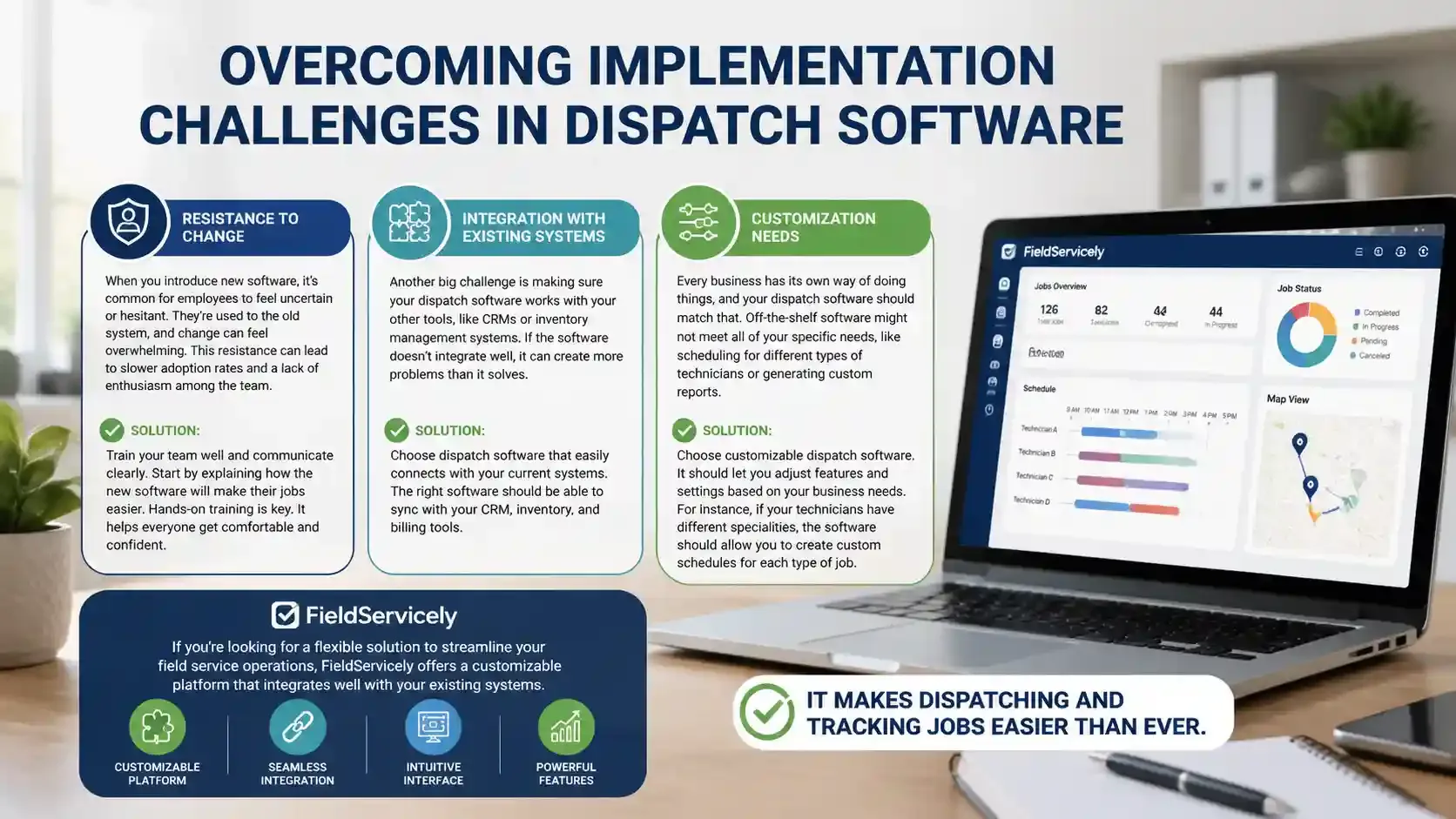
Dispatch software offers significant benefits, but implementing it isn’t always easy. Let’s look at the key challenges and the solutions that can help you tackle them.
Resistance to Change
When you introduce new software, it’s common for employees to feel uncertain or hesitant. They’re used to the old system, and change can feel overwhelming. This resistance can lead to slower adoption rates and a lack of enthusiasm among the team.
Solution: Train your team well and communicate clearly. Start by explaining how the new software will make their jobs easier. Hands-on training is key. It helps everyone get comfortable and confident.
Integration with Existing Systems
Another big challenge is making sure your dispatch software works with your other tools, like CRMs or inventory management systems. If the software doesn’t integrate well, it can create more problems than it solves.
Solution: Choose dispatch software that easily connects with your current systems. The right software should be able to sync with your CRM, inventory, and billing tools.
Customization Needs
Every business has its own way of doing things, and your dispatch software should match that. Off-the-shelf software might not meet all of your specific needs, like scheduling for different types of technicians or generating custom reports.
Solution: Choose customizable dispatch software. It should let you adjust features and settings based on your business needs. For instance, if your technicians have different specialties, the software should allow you to create custom schedules for each type of job.
If you're looking for a flexible solution to streamline your field service operations, FieldServicely is the platform that integrates well with your existing systems. With its intuitive interface and powerful features, it makes dispatching and tracking jobs easier than ever.
Make dispatch software easier for your team to adopt.
FieldServicely helps teams move from manual dispatching to an organized workflow.
Conclusion
Dispatch software has proven to be a powerful tool for improving efficiency, response times, and customer satisfaction. Automating key tasks and providing real-time updates, it helps teams stay on top of their game. For companies looking to stay ahead of the competition, adopting this technology is a must.
Frequently Asked Questions
How does dispatch software help with managing multiple jobs at once?
Dispatch software allows for automated scheduling, which assigns jobs to the nearest available technician, ensuring that multiple jobs are handled efficiently without any overlapping issues or delays.
Can dispatch software be used for emergency service requests?
Yes, dispatch software can handle emergency service requests by immediately assigning the nearest technician and providing real-time updates for quick response times, even during high-demand situations.
How can dispatch software improve technician accountability?
With features like real-time GPS tracking and job status updates, dispatch software ensures that technicians stay on track and report job progress, leading to better accountability and performance.
What type of businesses benefit the most from dispatch software?
Businesses in industries like HVAC, plumbing, electrical services, and field repair can especially benefit from dispatch software, as it streamlines service delivery and optimizes technician workflows.
How secure is the data shared through dispatch software?
Most dispatch software solutions use cloud-based encryption to protect customer and operational data, ensuring secure communication between field teams and office management, and minimizing the risk of data breaches.
What to read next