- Scheduling and Dispatch
Dispatch Management: Process, Benefits, and How It Works
Updated on 8 Apr 2026
Jump to
Summary

Dispatch management ensures the right resource handles the right job, improving efficiency and reducing delays.
Structured dispatch systems replace manual coordination, leading to faster decisions and fewer errors.
Real-time tracking and smart assignment improve customer experience through accurate updates and faster service.
Poor dispatch leads to delays, miscommunication, and scaling issues as operations grow.
Using automation, data, and optimized routing helps businesses reduce costs and improve performance over time.
Dispatch management is the process of planning, assigning, and tracking resources like technicians, drivers, and vehicles to complete jobs efficiently. It ensures the right person reaches the right place at the right time, which reduces delays and improves service quality.
However, managing dispatch is not always easy. Teams often struggle with traffic delays, wrong assignments, communication gaps, and rising customer expectations. These issues make operations unpredictable and harder to scale.
In this blog, we will break down how dispatch management works in real operations. We will also explore its key components, benefits, challenges, and ways to improve it effectively.
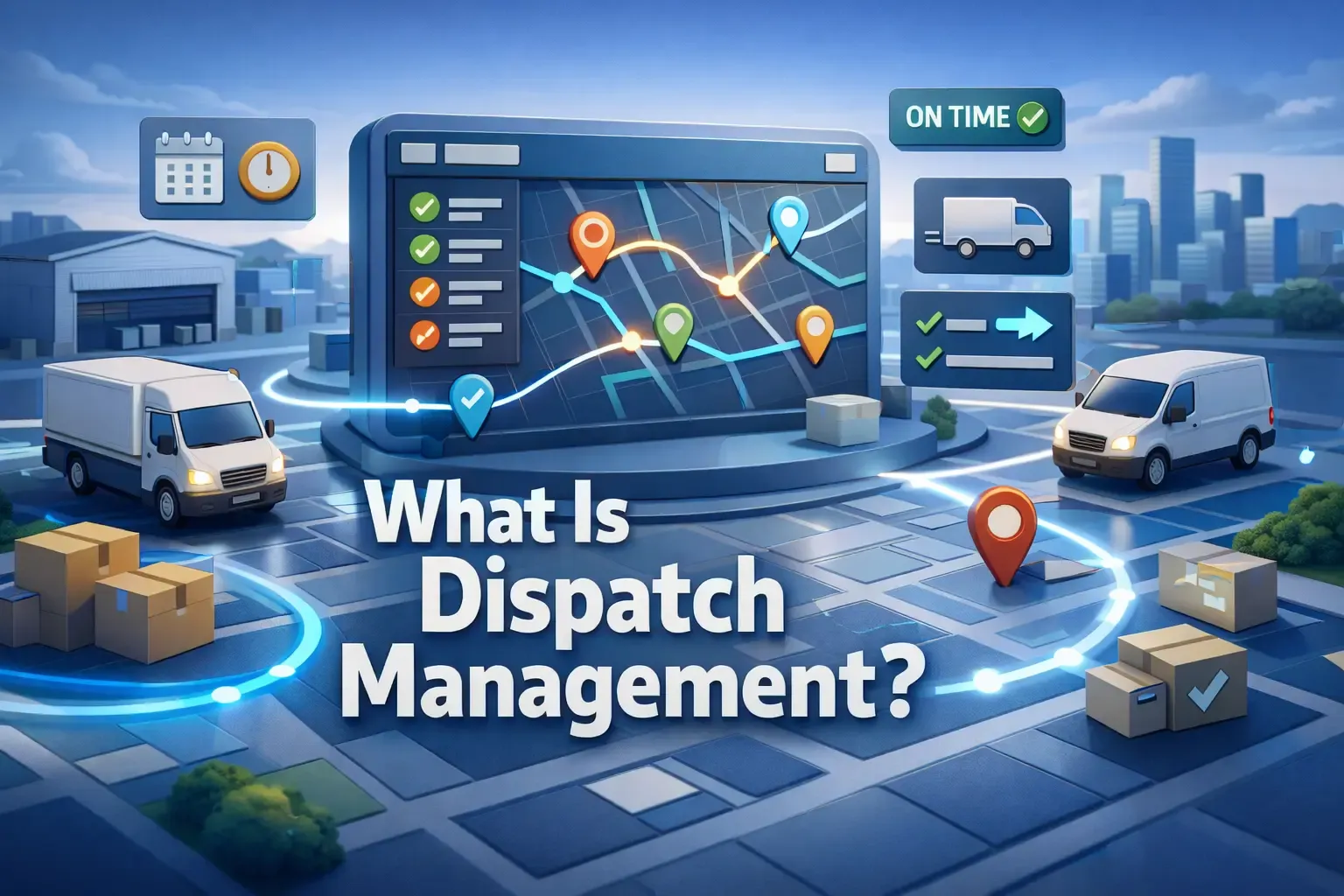
What Is Dispatch Management?
Dispatch management is the structured way of planning, scheduling, and tracking resources to complete work on time. These resources include technicians, drivers, vehicles, tools, and supplies. In simple terms, it ensures the right person handles the right job without delays.
Now, here’s the reality. Many teams start with calls, spreadsheets, or manual notes. It works in the beginning. However, as demand grows, delays and confusion start creeping in.
So, how do teams stay in control when operations scale?
This is where dispatch management becomes critical. Instead of reacting randomly, it creates a central system that receives requests, checks urgency, and assigns tasks based on skill and availability.
At the same time, it keeps everything updated as situations change.
For example, consider a repair team handling multiple service calls in one area. Sending any available technician may seem fine. But assigning the closest qualified person saves time and improves service quality. And if traffic or delays occur, schedules adjust instantly.
More importantly, this approach is proven too. According to research, real-time coordination systems can reduce delays by up to 20% while improving operational efficiency.
So, at its core, dispatch management works like a control center. It connects planning, scheduling, and tracking into one continuous flow. As a result, businesses gain better control, faster decisions, and clear visibility across every job.
Key Components of Dispatch Management
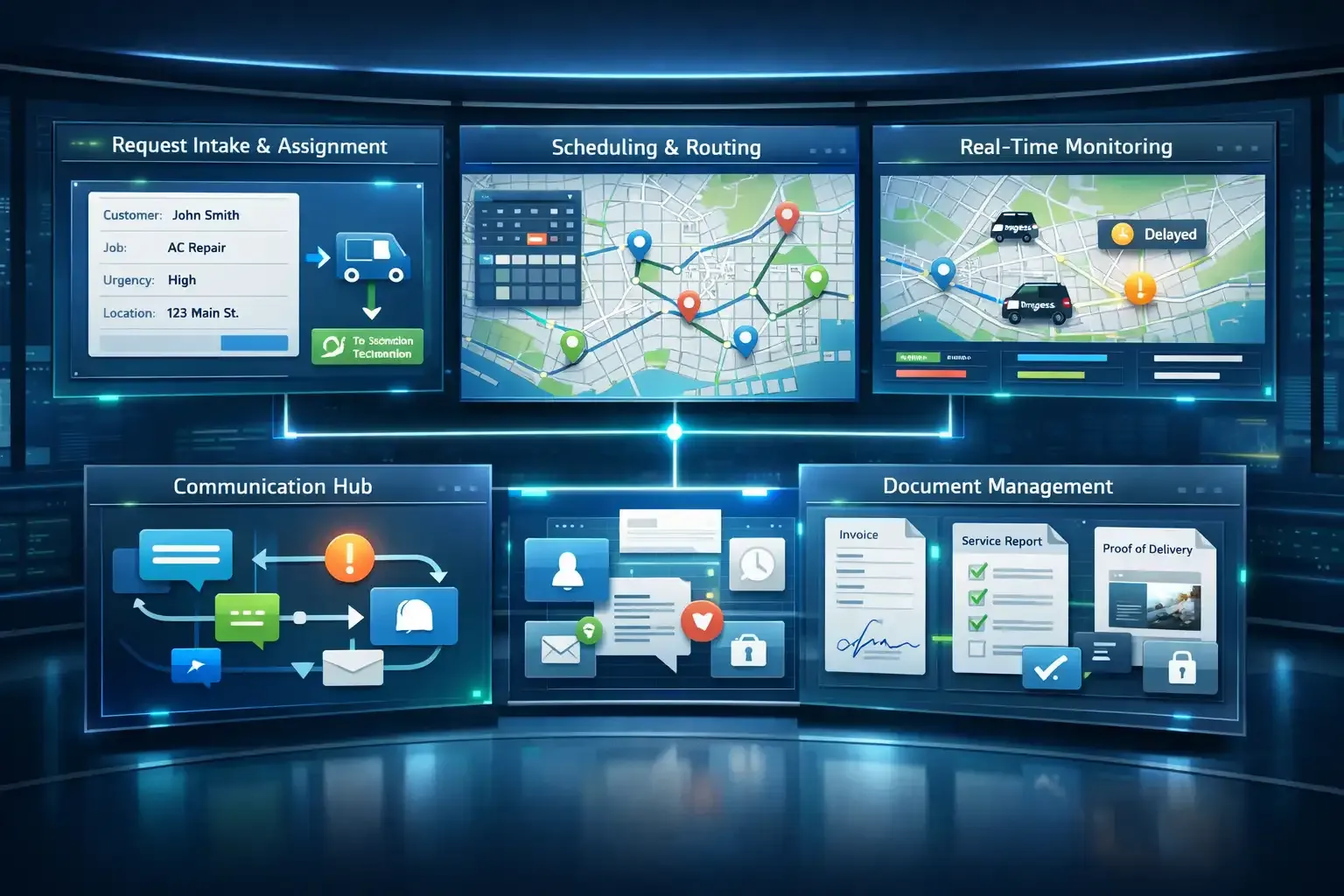
Request Intake and Assignment
Every dispatch operation begins with capturing service requests accurately. This includes customer details, job type, urgency level, and location. Based on this information, tasks are assigned to the most suitable resource instead of random allocation.
In real operations, poor intake leads to incorrect assignments and repeated work. For example, sending a general technician for a specialized repair often results in delays. According to IBM, FTFR increases when technicians are dispatched with the right skills and resources.
Scheduling and Routing
Scheduling defines when tasks should be completed, while routing determines how teams reach those locations efficiently. Both work together to reduce delays and balance workloads across teams.
Without proper planning, resources remain underutilized while others face overload.
For instance, logistics companies group nearby jobs to minimize travel distance. This reduces fuel consumption and increases the number of jobs completed per shift. Optimized routing can reduce fuel usage by up to 15% to 30% in urban operations.
Real-Time Monitoring
Real-time monitoring provides visibility into ongoing operations. It tracks the location of vehicles and technicians and shows job progress as it happens. This allows teams to respond quickly to delays or unexpected changes.
In practice, this means reassigning tasks or adjusting schedules before issues escalate. For example, if a technician faces a delay, the next job can be reassigned instantly.
Communication Hub
Dispatch management functions as a central communication layer between dispatchers, field staff, and customers. It ensures that updates, delays, and changes are shared instantly across all stakeholders. This reduces confusion and improves coordination.
For example, when a service delay occurs, customers receive updated arrival times without manual follow-ups. At the same time, technicians receive revised instructions immediately.
Recent studies show that over 73% of consumers expect real-time updates during their shopping and delivery experience.
Document Management
Every dispatch operation generates records such as invoices, service reports, compliance logs, and proof of delivery. Managing these documents accurately ensures accountability and smooth operations.
Without proper systems, errors and disputes become more frequent.
Digital documentation allows teams to capture signatures, upload images, and store job details instantly. This improves traceability and reduces manual errors.
Stop losing time on poor job assignments
Use a structured system to match the right technician.
How Dispatch Operations Work in Field Service
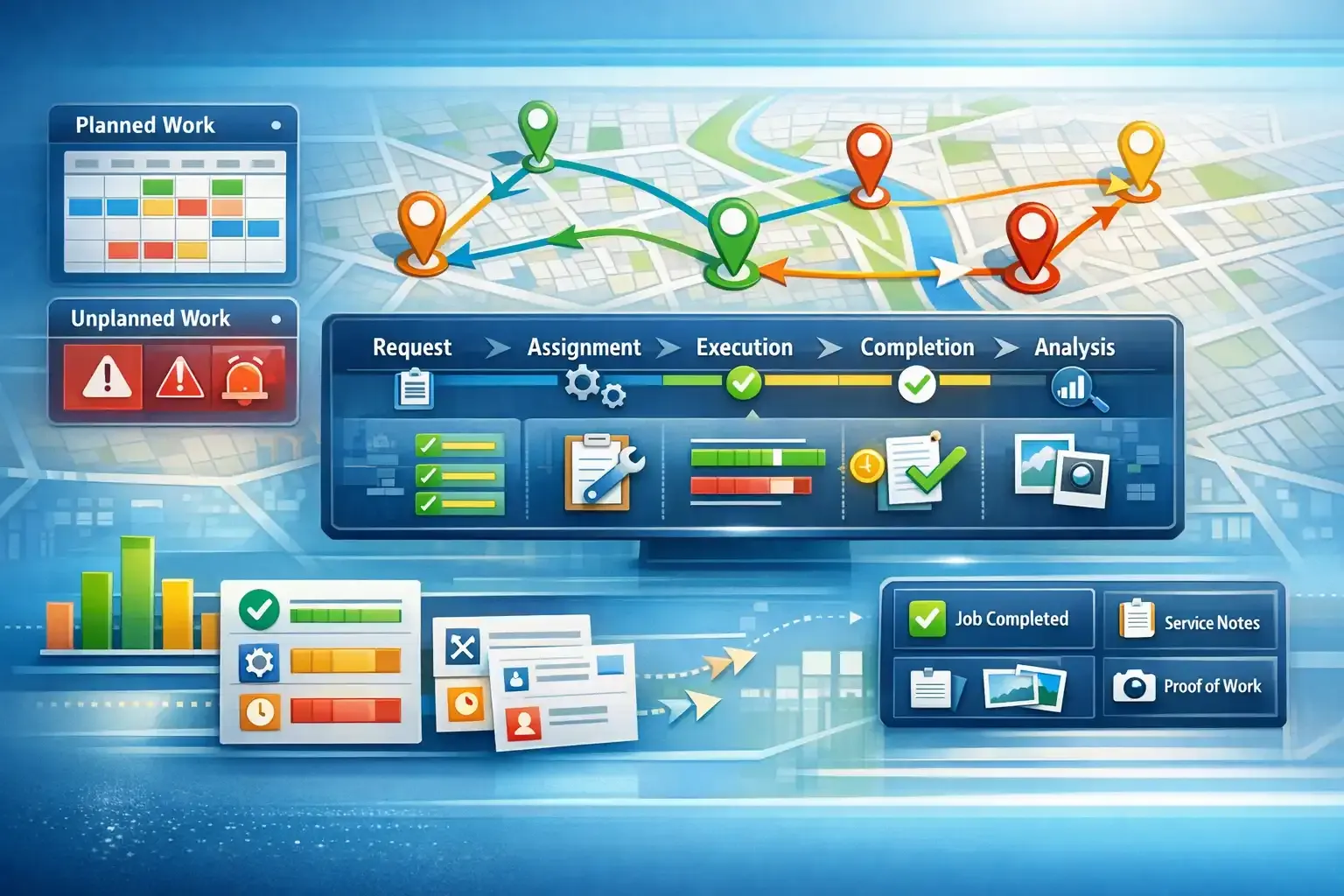
Dispatch operations in field service follow a structured flow from request to resolution. Each step connects directly to the next, so even small gaps can slow down operations.
Field service dispatch varies by industry, but the model stays consistent. HVAC teams handle urgent breakdowns during peak seasons. Maintenance teams focus on scheduled inspections, while repair services deal with unexpected issues.
No matter what the industry is. Dispatchers match jobs based on three factors:
- Skill fit: The technician must handle the specific issue
- Workload: The technician must have capacity
- Proximity: The technician should reach the site quickly
Sending the wrong technician increases repeat visits and delays. Even organizations with poor service execution experience up to 30%+ more repeat service visits compared to top performers.
After the assignment, job handling becomes the focus. Field service teams manage two types of work:
- Planned work: Maintenance, inspections, installations
- Unplanned work: Breakdowns, urgent repairs, disruptions
These require different handling. Planned work follows a schedule, while unplanned work needs immediate response. So, dispatch systems constantly rebalance priorities.
Dynamic adjustment keeps operations stable. Teams shift jobs based on urgency and availability instead of following fixed plans.
During execution, tracking tools monitor progress in real time. If delays occur, schedules update automatically, and customers receive updates. This keeps operations stable.
After completion, the system records:
- Job completion time
- Service notes
- Proof of work, such as images or signatures
This data improves future decisions. Teams analyze response time, resolution speed, and workload distribution to optimize performance.
Keep every job moving from request to completion
Track progress, update schedules, and manage field teams with full visibility.
Benefits of Dispatch Management for Modern Businesses
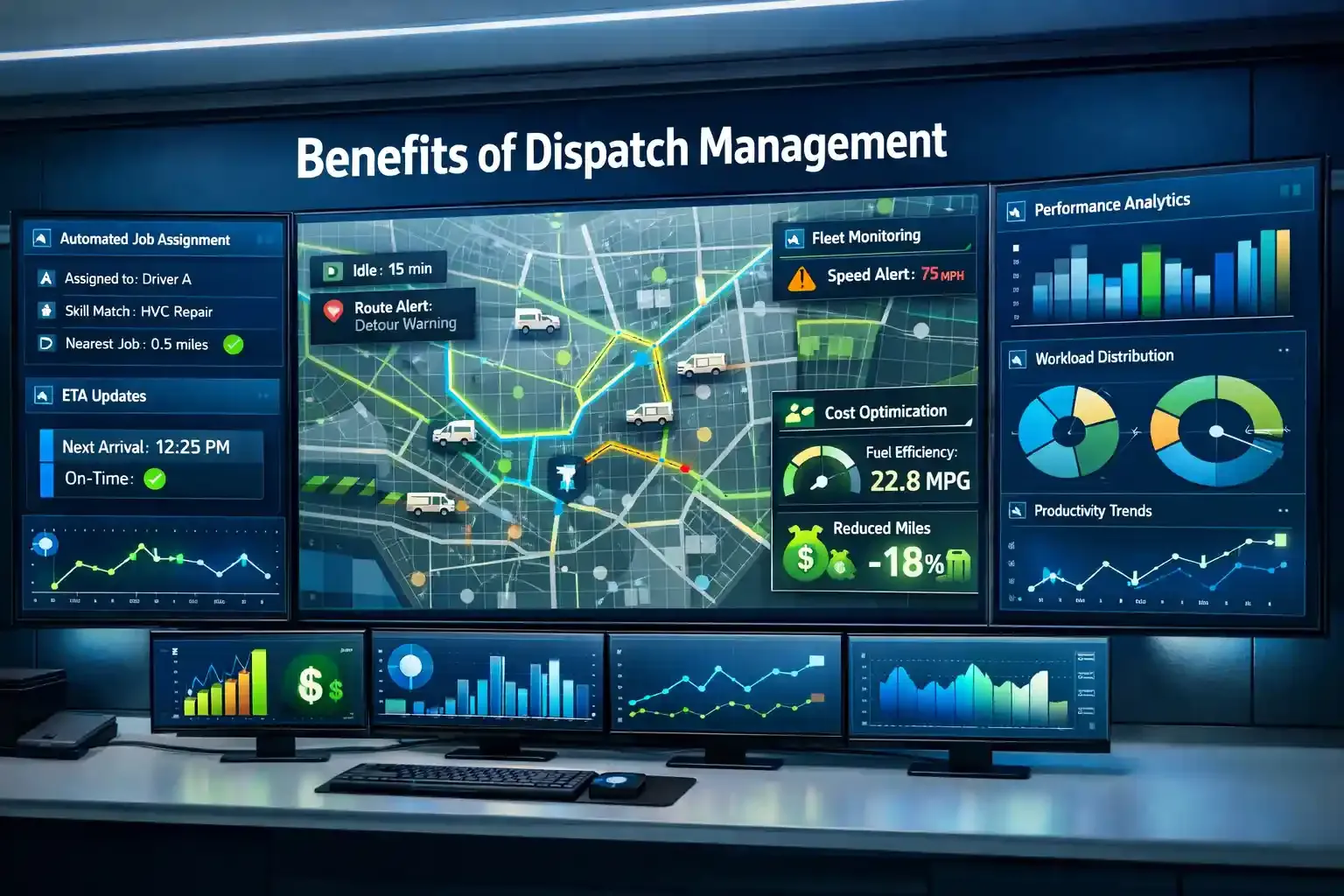
Dispatch management changes how decisions are made, how resources are used, and how customers experience your service. Most teams notice this only after switching from manual processes to structured systems.
Let’s break down what actually improves when dispatch management is done right.
Improved Operational Efficiency
The first thing I noticed was how much time was spent on small decisions. Who should take the next job? Who is available? Who is closest? These questions kept repeating all day.
Once dispatch was structured, those decisions became automated. The system already knew the answers based on rules like skill, availability, and location. That alone removed a huge amount of back-and-forth.
According to research, automation can reduce manual errors by up to 25%. And honestly, that lines up with what I saw.
Enhanced Customer Experience
Customer experience is where the impact becomes obvious. Before structured dispatch, we used to give rough timelines. “We’ll be there soon,” or “maybe in an hour.” And when things changed, customers had no idea.
You can guess what happened next. Calls, complaints, frustration. According to the report, 73% of customers will switch to your competitors after multiple bad experiences.
With dispatch systems, that changed completely. Customers started getting clear ETAs. If something got delayed, they already knew.
Fleet Safety and Security
Safety was something I didn’t think much about in the beginning. As long as jobs were getting done, everything seemed fine.
But once dispatch systems started tracking movement, you could see route deviations, long idle times, or risky driving behavior. So instead of reacting after a problem, you start catching issues early.
That changes how you manage your team.
According to a paper, real-time driver monitoring can reduce accident risks by up to 15%. That kind of visibility makes a real difference, especially when operations scale.
Cost Reduction and Resource Optimization
Cost savings came from small improvements happening consistently.
Routes became more efficient. Technicians stopped crossing paths unnecessarily. Idle time is reduced without forcing anyone to work harder.
Before that, we often sent multiple people to nearby jobs without realizing it. With dispatch systems, that stopped. Everything became more intentional.
And that’s not surprising when you think about how much waste exists in manual coordination. Fuel, time, effort, everything gets used better.
Data-Driven Decision Making
Before, decisions were based on what we thought was happening. We assumed where the delays were coming from. We guessed which areas needed improvement.
But once dispatch data came in, those assumptions didn’t hold up.
You could see exactly what was happening. Which jobs took longer? Which technicians were overloaded? Where were the delays actually coming from?
That changes how you think.
According to research, companies using operational data improve decision accuracy by up to 35%. And that makes sense. When you see the full picture, decisions become clearer.
Turn daily dispatch decisions into a competitive advantage.
Automate assignments, improve response time without manual effort.
Challenges in Dispatch Management (And Why Most Teams Struggle)
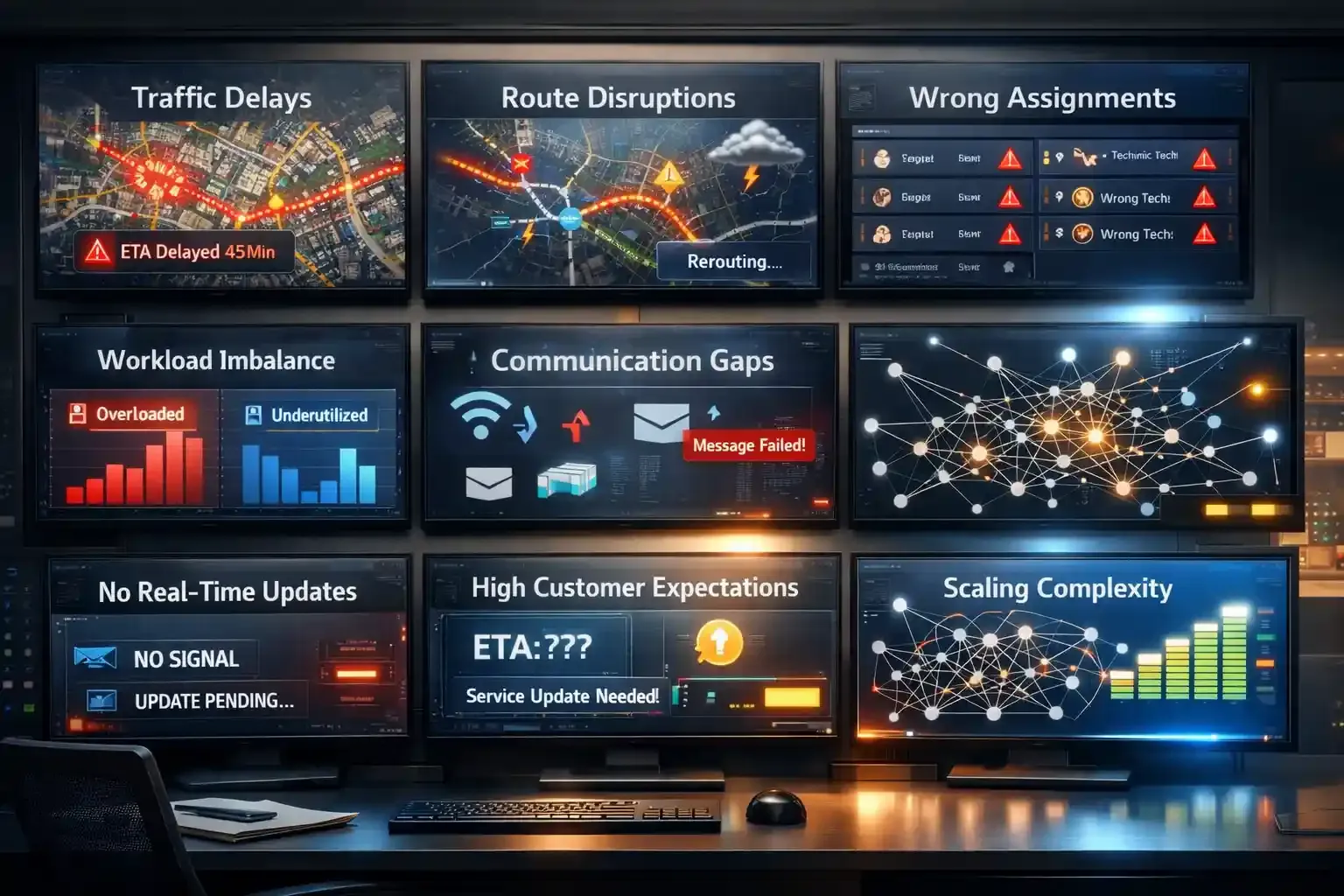
- Traffic delays disrupt schedules because real conditions rarely match planned routes, causing frequent delays.
- Unexpected disruptions break planning as accidents or weather force last-minute changes.
- Wrong resource assignment reduces efficiency because sending the wrong technician leads to repeat work.
- Uneven workload slows operations when some technicians stay overloaded while others remain idle.
- Communication gaps create confusion since teams rely on calls or messages instead of a single system.
- Lack of real-time updates delays decisions because teams cannot adjust quickly when conditions change.
- High customer expectations increase pressure as customers expect accurate ETAs and instant updates.
- Operations become harder to manage at scale as more jobs and teams increase coordination complexity.
Tips for Efficient Dispatch Management
- Automate task assignment so jobs go to the right technician based on skill, availability, and location without manual effort.
- Optimize routes daily to reduce travel time and fuel usage while increasing the number of jobs completed per shift.
- Use real-time tracking to monitor team movement and adjust schedules instantly when delays happen.
- Keep communication centralized so dispatchers, technicians, and customers stay aligned without confusion.
- Prioritize urgent jobs clearly to handle emergencies without disrupting all scheduled work.
- Train your team regularly so everyone understands tools, workflows, and how to handle changes efficiently.
- Track performance metrics like response time and job completion rate to identify delays and improve operations.
- Ensure proper tools and equipment so technicians can complete jobs in one visit without unnecessary returns.
How Dispatch Software Simplifies Field Operations
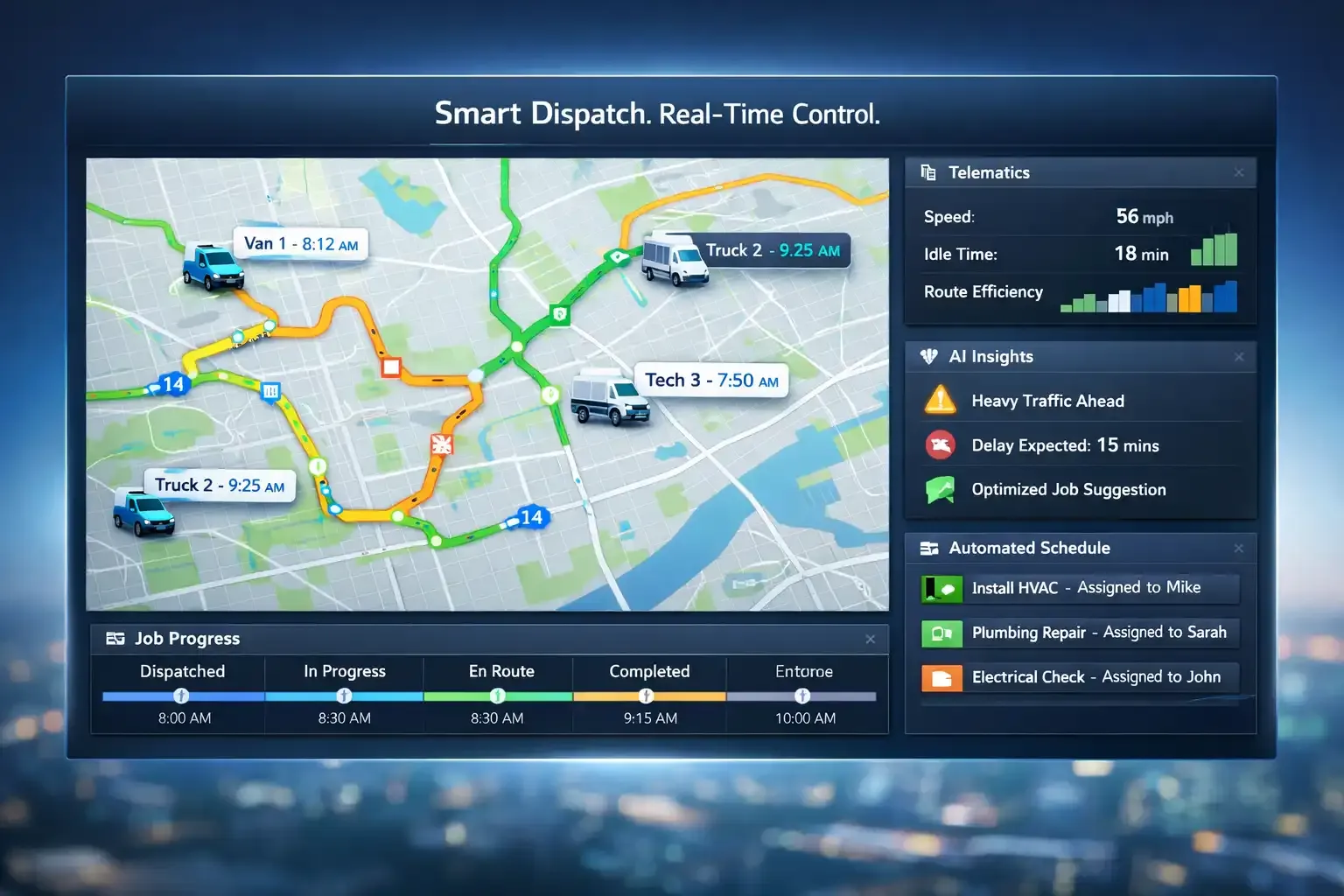
When I first moved from manual dispatch to software, the biggest change was visibility. Earlier, I had to call drivers, check locations, and guess timelines. With software, everything showed up in one place.
GPS Tracking and Real-Time Visibility
Dispatch software shows exactly where your technicians or drivers are at any moment. GPS tracking updates locations live, so you don’t rely on calls or assumptions. This makes it easier to adjust schedules when delays happen.
You also get accurate ETAs without manual calculation. Customers know when to expect service, and teams stay aligned.
Telematics for Better Control
Telematics adds another layer beyond location tracking. It shows how vehicles are being used, including speed, idle time, and route behavior. This helps you spot inefficiencies that are not visible otherwise.
For example, you can identify drivers who take longer routes or spend too much time idling. According to a study, reducing idle time alone can cut fuel costs by up to 20%. That directly impacts daily operations.
AI and Predictive Planning
Dispatch software uses AI to improve decision-making. Instead of static plans, it predicts traffic, workload, and delays before they happen. This helps you assign jobs more accurately.
It also improves planning over time. The system learns from past jobs and suggests better schedules. According to a study, predictive systems can improve delivery accuracy by up to 40%.
Automation of Scheduling, Routing, and Tracking
Automation removes repetitive work from dispatch operations. Instead of manually assigning jobs, the system matches tasks based on rules like skill, availability, and location. This reduces human error and speeds up the assignment.
Routing also becomes automatic. The system creates the most efficient path instead of relying on manual planning. Tracking updates automatically as jobs progress, so no one needs to follow up constantly.
This reduces the workload for dispatchers significantly. They focus on exceptions instead of routine coordination.
Reduced Dispatcher Workload
Dispatchers spend less time managing small tasks. They don’t need to call drivers, check locations, or update schedules manually. The system handles most of it in the background.
This changes the role of the dispatcher. Instead of reacting to problems, they focus on improving operations.
When all these features work together, operations become more stable. Jobs move faster, delays are handled early, and teams stay aligned without constant intervention.
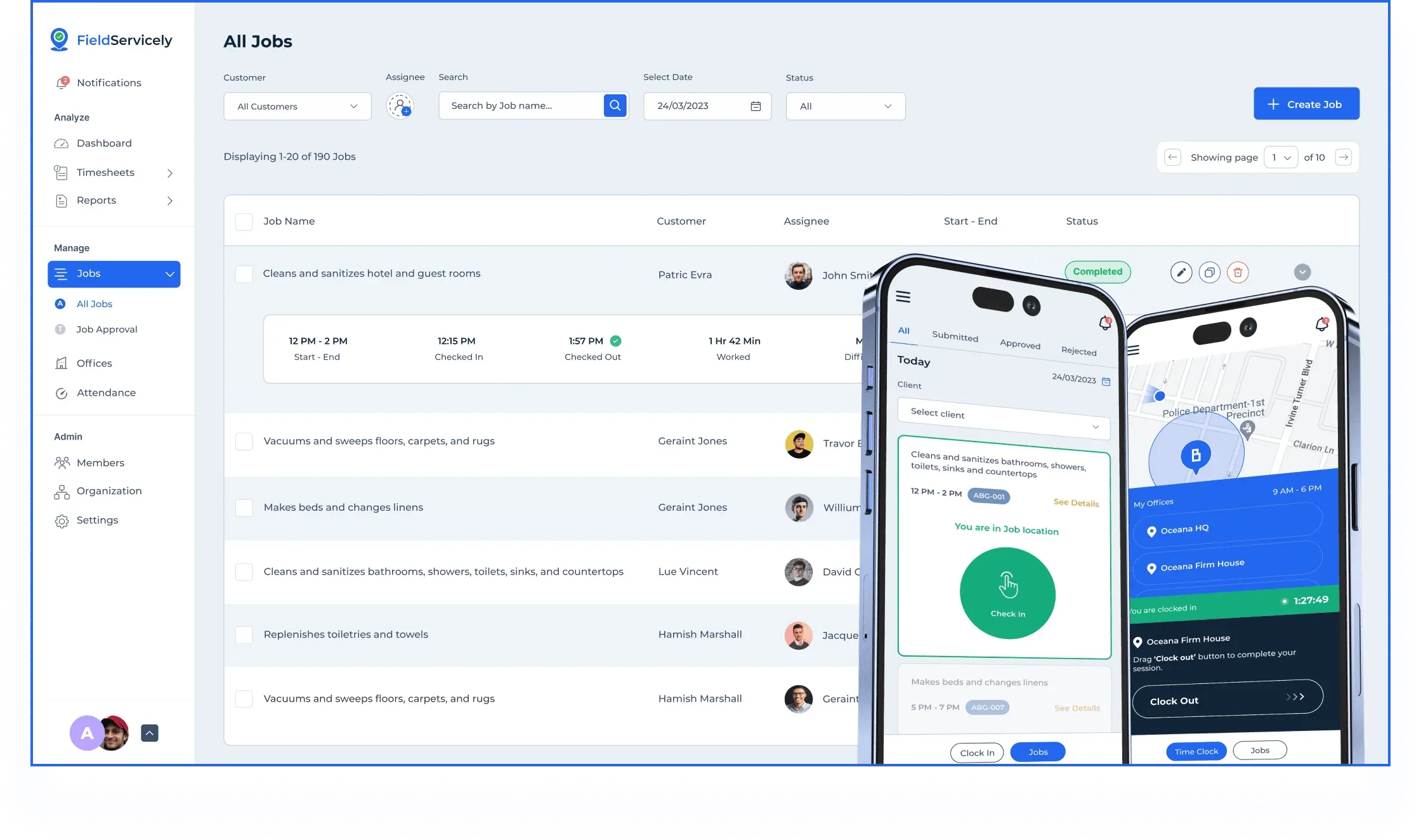
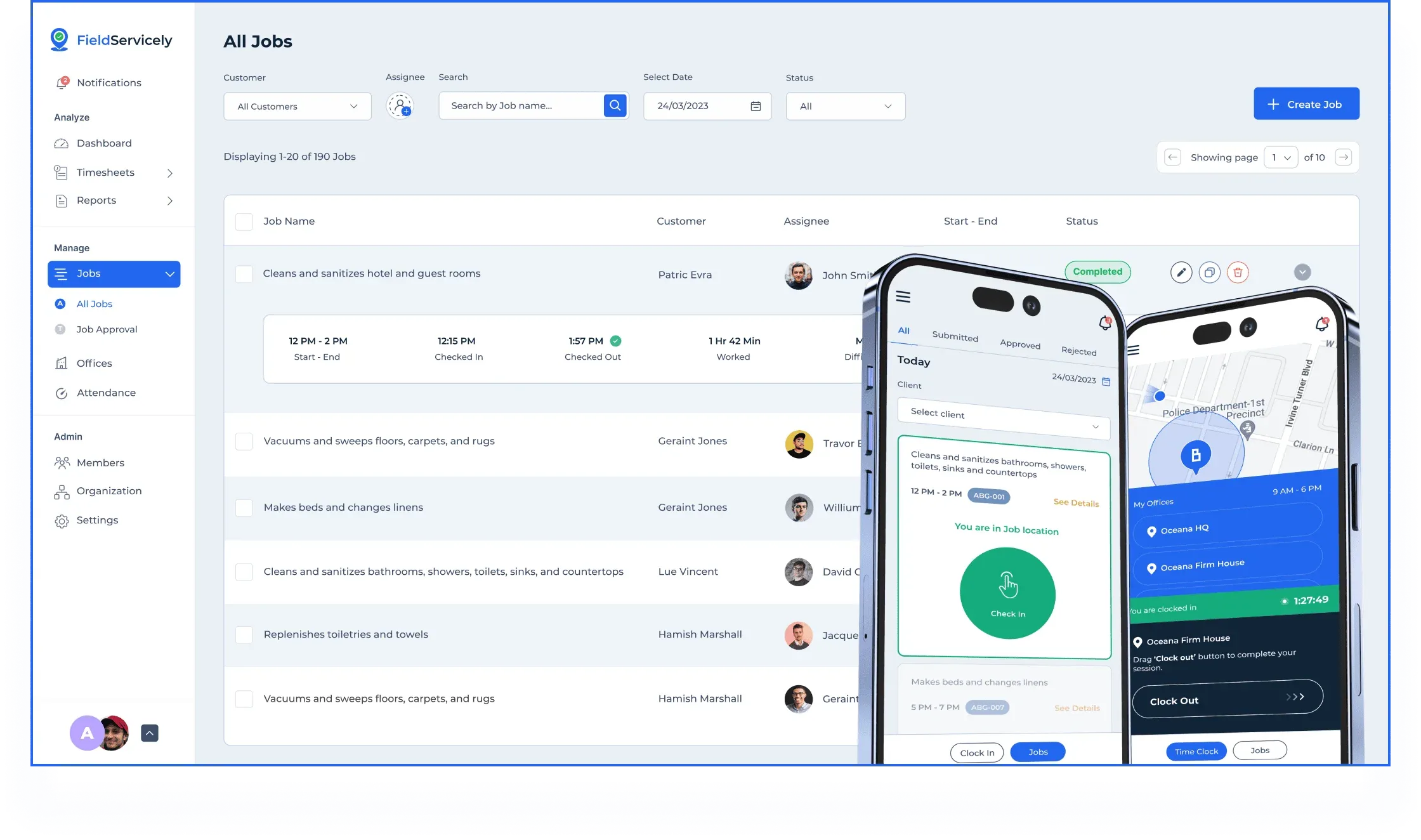
FieldServicely brings these capabilities into one platform. It combines scheduling, routing, employee tracking, and communication in a single system.
Plus, it simplifies day-to-day coordination without adding complexity. Teams get visibility, control, and faster execution without relying on multiple tools.
Let automation handle your daily dispatch workload.
Assign jobs, optimize routes, and track progress with FieldServicely
Conclusion
Dispatch management controls how work flows across your entire operation. When everything connects properly, jobs move faster, teams stay aligned, and customers stop chasing updates.
But this only works when the system is structured. Without it, small issues turn into delays, missed jobs, and rising costs.
The difference becomes clear over time. Businesses that manage dispatch well scale smoothly, while others keep reacting instead of improving.
Frequently Asked Questions
Is dispatch management only useful for large businesses?
No, small businesses benefit as well. Even with a few technicians or drivers, structured dispatch reduces confusion, saves time, and improves service consistency.
Can dispatch management work without software?
Yes, but only at a small scale. Manual methods like calls or spreadsheets become inefficient as job volume increases, leading to more errors and delays.
How does dispatch management handle last-minute job changes?
It adjusts schedules in real time by reassigning jobs, updating routes, and notifying teams instantly. This helps maintain workflow without major disruptions.
What skills does a good dispatcher need?
A good dispatcher needs strong decision-making, communication, and problem-solving skills. They must quickly match jobs with resources while handling changes.
How long does it take to implement a dispatch system?
It depends on business size and tools used. Small teams can implement basic systems in days, while larger operations may take a few weeks to fully adapt.