- Scheduling and Dispatch
How Scheduling Software Helps Dispatchers Improve Efficiency
Updated on 10 Apr 2026
Jump to
Summary

Scheduling software automates dispatch workflows, reducing manual errors and improving decision speed.
Real-time tracking and routing help dispatchers assign jobs and reduce travel time.
Intelligent job matching improves first-time fix rates and reduces repeat visits.
Instant communication and mobile apps keep technicians and dispatchers aligned in real time.
Centralized systems improve efficiency, customer experience, and operational control.
Dispatching becomes difficult when schedules change, technicians move, and customers expect quick updates. Scheduling software helps dispatchers manage complex tasks. It automates job assignments and tracks field teams in real time.
However, many teams still rely on spreadsheets or calls. It leads to delays, errors, and poor coordination. These gaps make it harder to handle last-minute changes and maintain service quality.
In this blog, we will discuss how scheduling software helps dispatchers in real life. We will also break down the key benefits, features, and factors to consider.
Key Challenges Dispatchers Face Without Scheduling Software
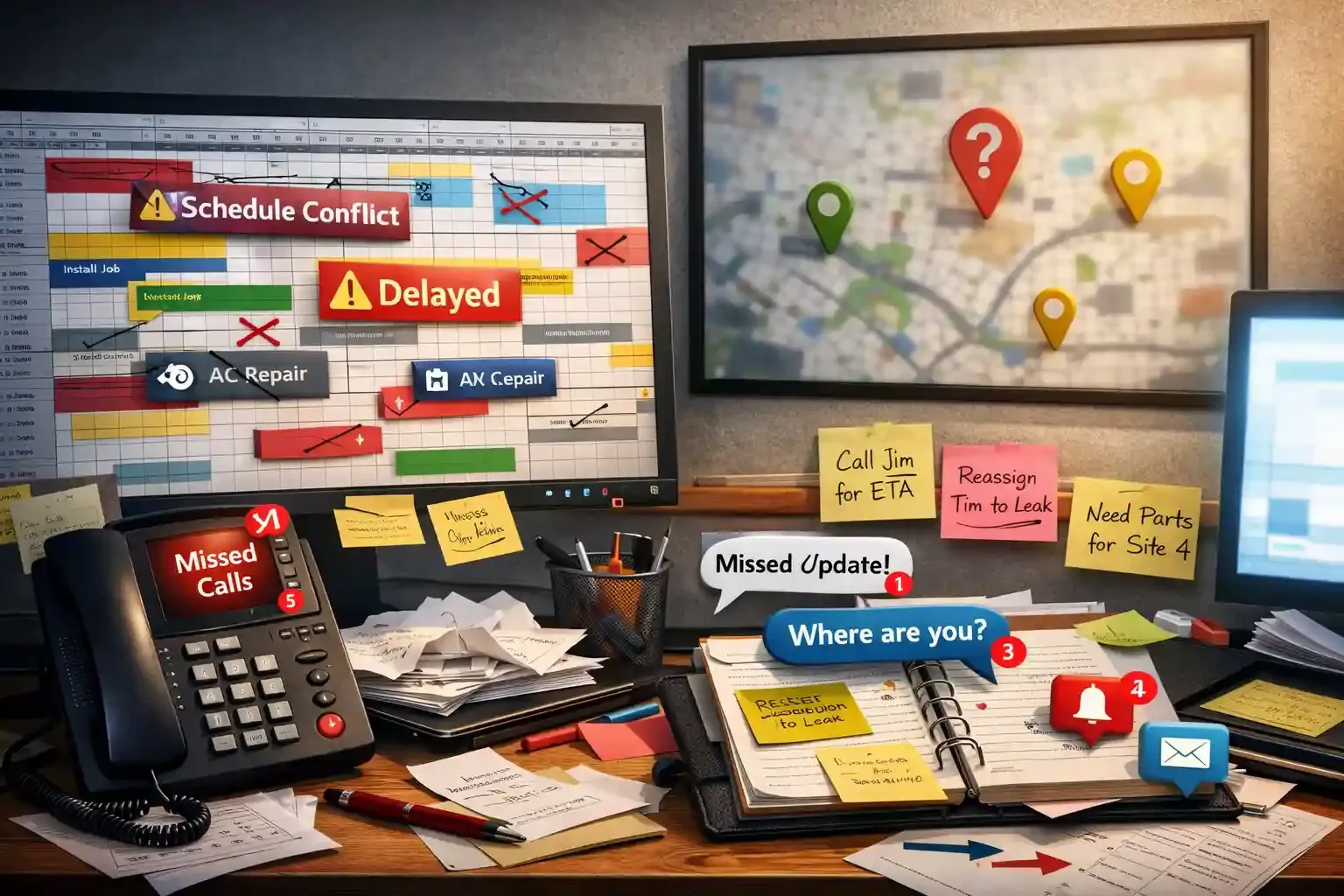
Limited Visibility
Dispatchers lack real-time visibility when they rely on calls or spreadsheets. They often need to contact technicians to know their location or job status. This lack of visibility slows down decisions.
They cannot see who is free or nearby, which delays job assignments. Over time, this leads to missed opportunities and slower response times.
Inefficient Scheduling And Rescheduling Processes
Dispatchers struggle with manual scheduling because it takes too much time. They update spreadsheets, adjust timelines, and reassign jobs one by one. Even manual scheduling increases task completion time by up to 30%.
Rescheduling becomes even harder when plans change. A single delay forces dispatchers to reorganize the entire schedule. This creates a chain reaction that affects the whole day.
Incorrect Technician Assignment And Skill Mismatch
Dispatchers often assign the wrong technician when they lack proper data. They depend on memory or incomplete records instead of real-time insights.
This mismatch leads to repeat visits and wasted time. Technicians arrive unprepared, and customers experience delays. As a result, both productivity and customer trust take a hit.
Communication Delays
Dispatchers rely on phone calls when they do not have digital communication tools. They call technicians, wait for responses, and repeat instructions.
These delays create confusion across teams. Technicians may miss updates or receive incorrect information. In fast-moving environments, this leads to errors, missed appointments, and frustrated customers.
Still struggling with limited visibility and delayed decisions?
Get real-time tracking and full control over your field operations.
How Scheduling Software Helps Dispatchers
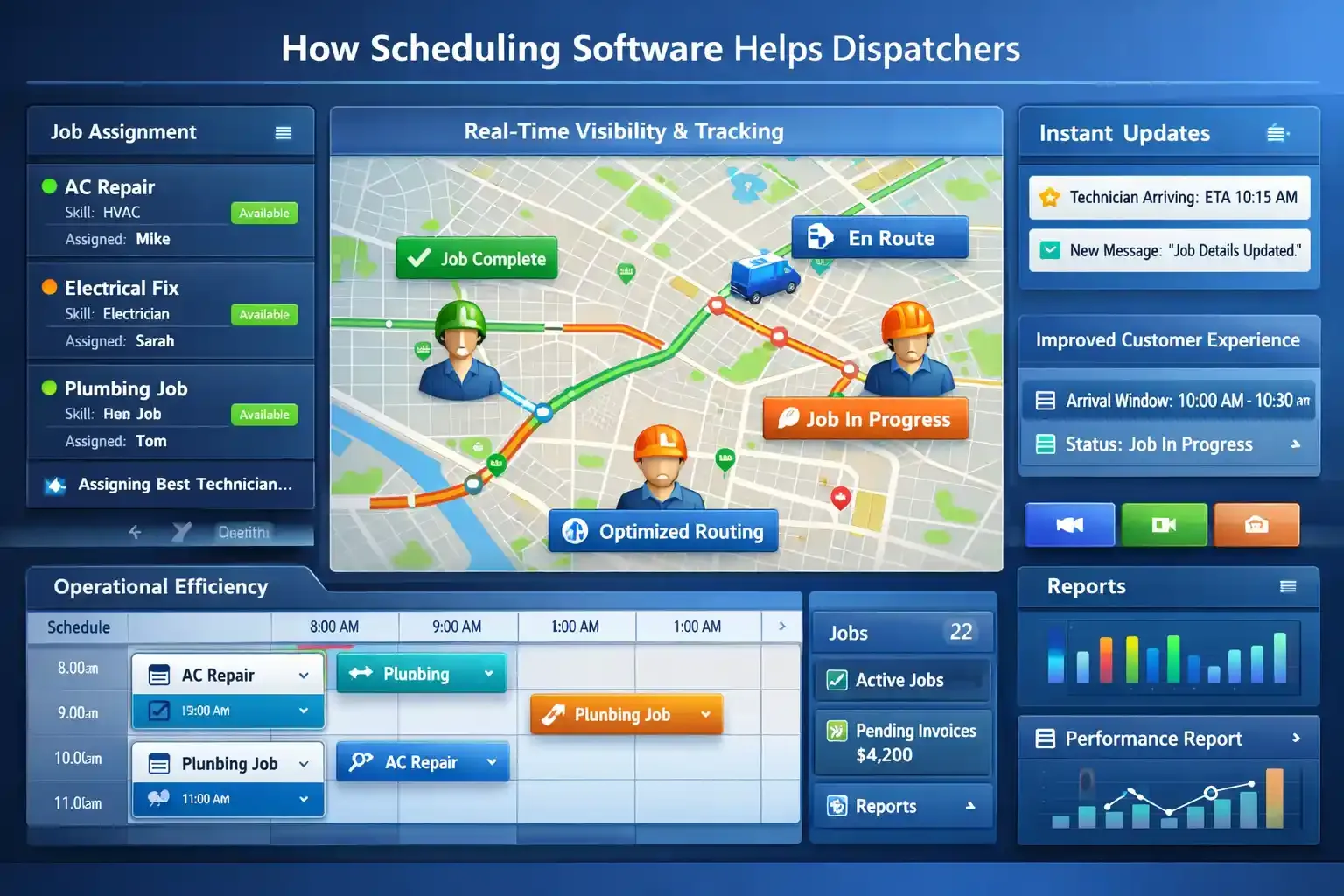
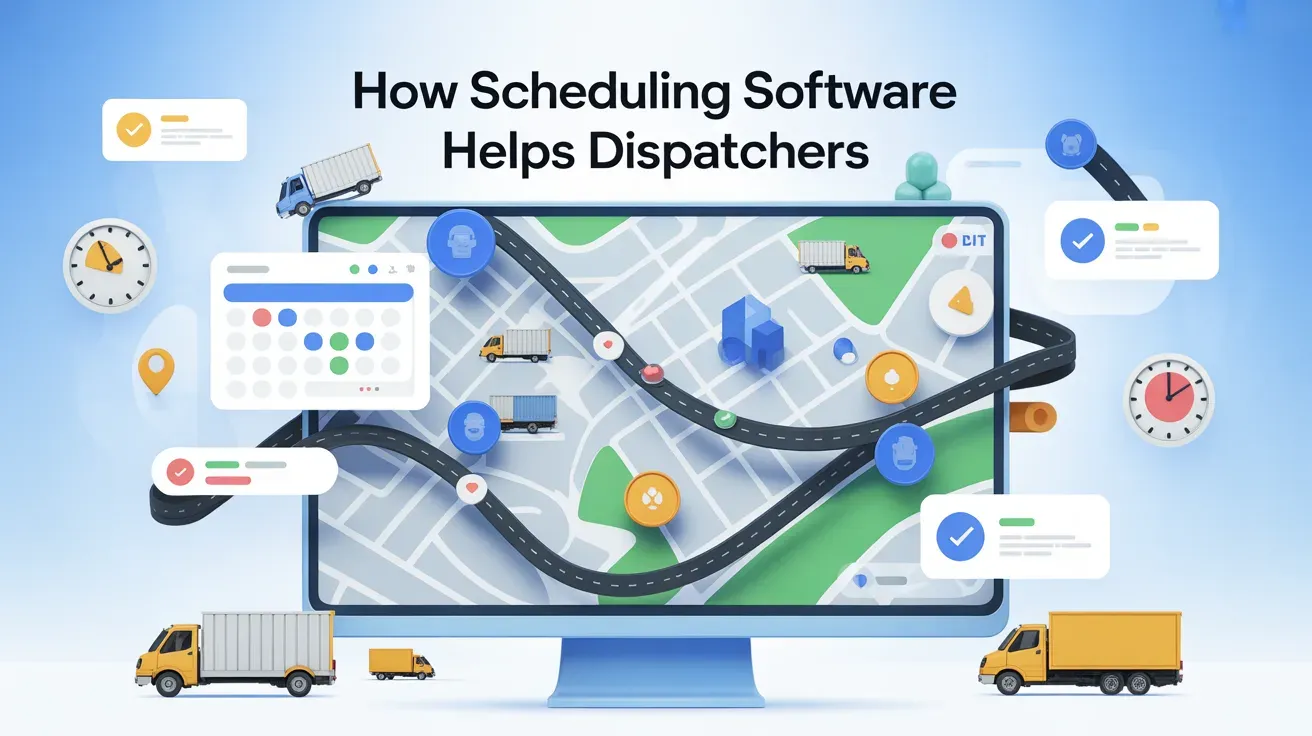
Scheduling software removes manual friction and replaces it with structured, real-time workflows. That’s why teams move faster, make fewer mistakes, and handle more jobs without chaos.
Real-Time Visibility & Tracking
Dispatchers can see everything in one place. The software shows where technicians are in real time. It also shows how each job is progressing on a single dashboard.
They no longer depend on calls or assumptions to track field activity.
According to research, real-time tracking monitors and tracks the delivery of goods.
This visibility changes decision-making. Dispatchers can see who is available and assign jobs without delay. As a result, idle time drops and service speed improves.
Optimized Routing & Scheduling
Dispatchers reduce travel inefficiencies because scheduling software uses route optimization algorithms. It calculates the fastest paths based on traffic, job priority, and technician location.
An analysis shows route optimization can lower fuel and travel costs by up to 15%-30%.
This optimization increases job completion rates. Technicians spend less time driving and more time working. Over time, this leads to higher output without increasing operational costs.
Intelligent Job Assignment
Field service scheduling software assigns jobs based on real data. It matches technicians using skill sets, proximity, and availability in real time.
Not only that. Advanced scheduling systems can improve first-time fix rates by up to 10% to 30%.
This reduces repeat visits and delays. Technicians arrive prepared and complete tasks faster. As a result, both efficiency and service quality improve.
Instant Communication & Updates
Dispatch management eliminates delays. Because scheduling software sends updates to technicians' mobile apps. So, they no longer rely on repeated calls or manual coordination. When schedules change, the system updates everything.
This reduces miscommunication. Technicians receive clear instructions without waiting. As a result, operations stay aligned even during last-minute changes.
Improved Customer Experience
Dispatchers improve customer satisfaction because scheduling software provides real-time updates and accurate ETAs. Customers receive notifications about technician arrival and job progress.
According to a report, 93% of customers expect real-time communication during service delivery.
This builds trust and transparency. Customers feel informed instead of uncertain. Over time, this leads to higher retention and fewer complaints.
Operational Efficiency
Dispatchers increase efficiency by automating scheduling, tracking, and reporting tasks with scheduling software. They no longer manage multiple tools or manually enter data.
Everything stays centralized, from job details to invoices.
This reduces errors and saves time. Drag-and-drop scheduling and automated alerts simplify daily operations. As a result, dispatchers focus on decisions instead of repetitive tasks.
Want faster job assignments and fewer scheduling mistakes?
Let smart automation handle routing, tracking, and technician matching for you.
Scheduling Software Features Dispatchers Rely On Daily
- Drag-and-drop scheduling lets dispatchers move jobs and fix conflicts fast.
- Real-time GPS tracking shows the technician's location. So dispatchers can assign the nearest one.
- Automated alerts send updates so technicians get changes without calls or delays.
- Mobile apps let technicians update jobs and receive tasks anywhere in real time.
- Service history shows past work, so dispatchers pick the right technician.
- Centralized data lets dispatchers access job details and contacts in one place.
- Dashboards show schedules and performance so dispatchers make faster decisions.
Key Factors To Consider When Choosing Scheduling Software
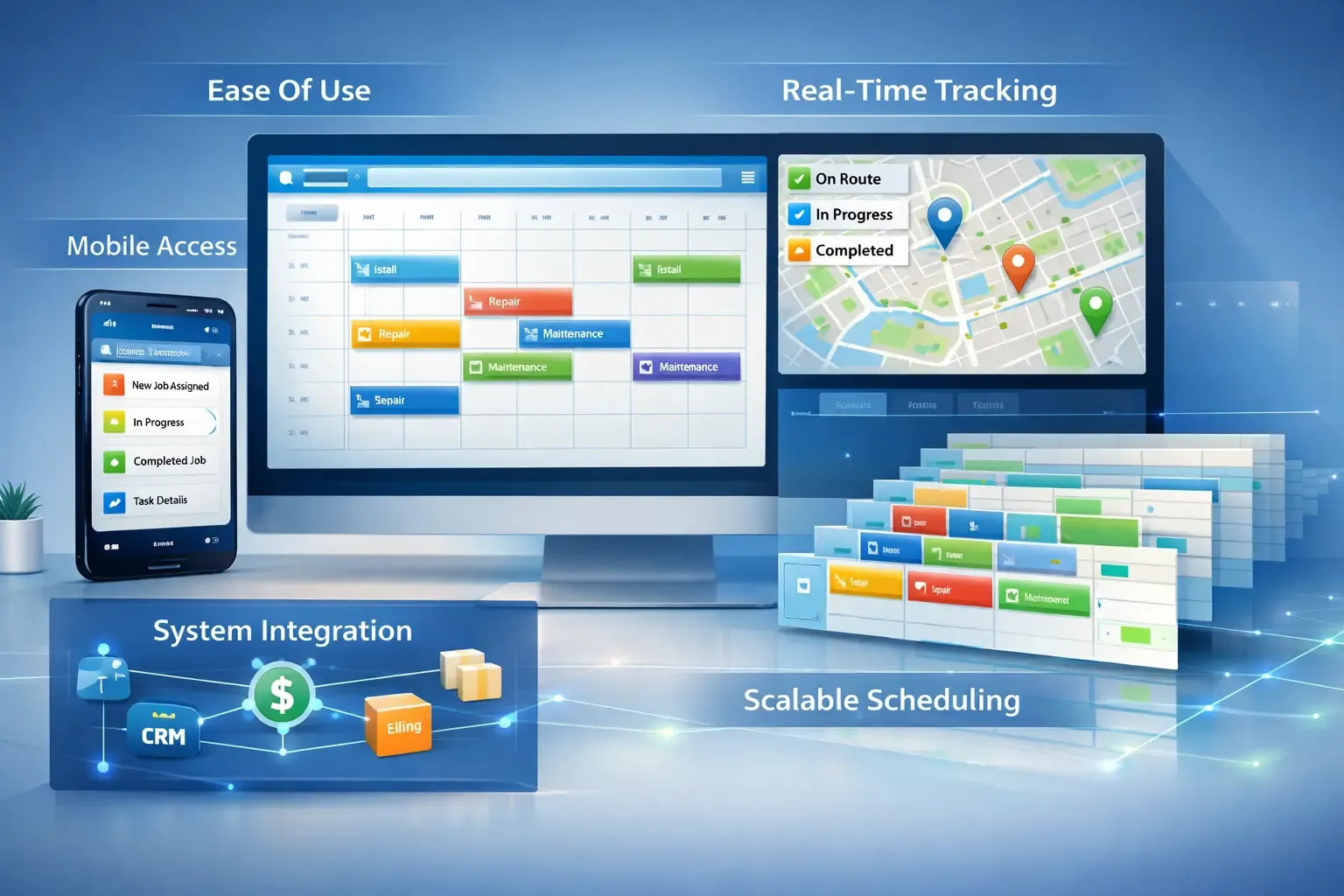
Choosing scheduling software feels simple at first. But once you start using it daily, small gaps become big problems. That’s why I always focus on a few key factors before deciding.
Ease Of Use And Interface Simplicity
Dispatchers need easy tools because they work under pressure. They cannot waste time learning complex systems.
A simple interface helps them assign jobs and adjust schedules fast. It also helps them find information without confusion.
Plus, a simple system reduces errors. Dispatchers can act faster without second-guessing actions.
Real-Time Tracking And Accuracy
Real-time tracking matters because dispatchers need accurate field data to make quick decisions. A system that updates technician location and job status removes guesswork.
Accuracy also prevents scheduling mistakes. Dispatchers avoid assigning already busy technicians or overlapping jobs. This keeps the workflow stable and predictable.
Mobile Accessibility For Field Teams
Mobile access matters because technicians spend most of their time outside the office. They need to receive updates, change job status, and access details without delay.
Mobile apps also reduce communication gaps. Dispatchers send updates, and technicians respond in real time. This keeps both sides aligned throughout the day.
Integration With Existing Systems
Dispatchers rely on tools like CRM, billing, and inventory systems. A good scheduling tool prevents data silos and repeated manual entry.
According to a report, businesses using integrated systems reduce data errors by up to 30%.
This also improves workflow speed. Dispatchers access customer data, job details, and inventory from one place. As a result, decisions become faster and more accurate.
Scalability And Long-Term Flexibility
A system that works for a small team may fail when job volume increases. 85% of firms say processes face operational slowdowns due to tools that cannot scale.
Flexible software adapts to changing needs. Dispatchers can handle more technicians, more jobs, and more complexity without switching systems. This ensures long-term stability and growth.
Choosing the right scheduling software depends on how it supports daily dispatch work. It helps with real-time tracking, scheduling, and mobile access without slowing things down.
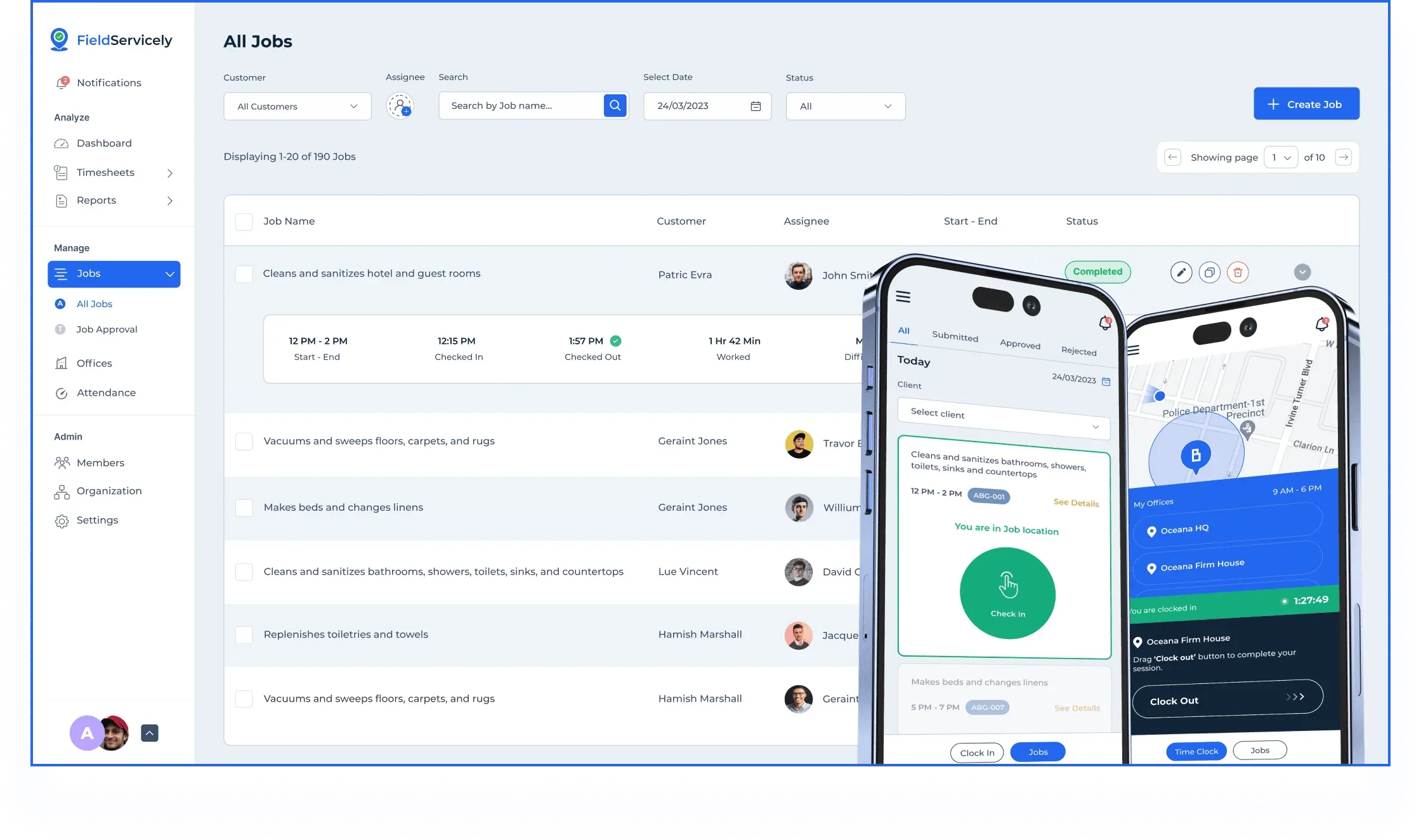
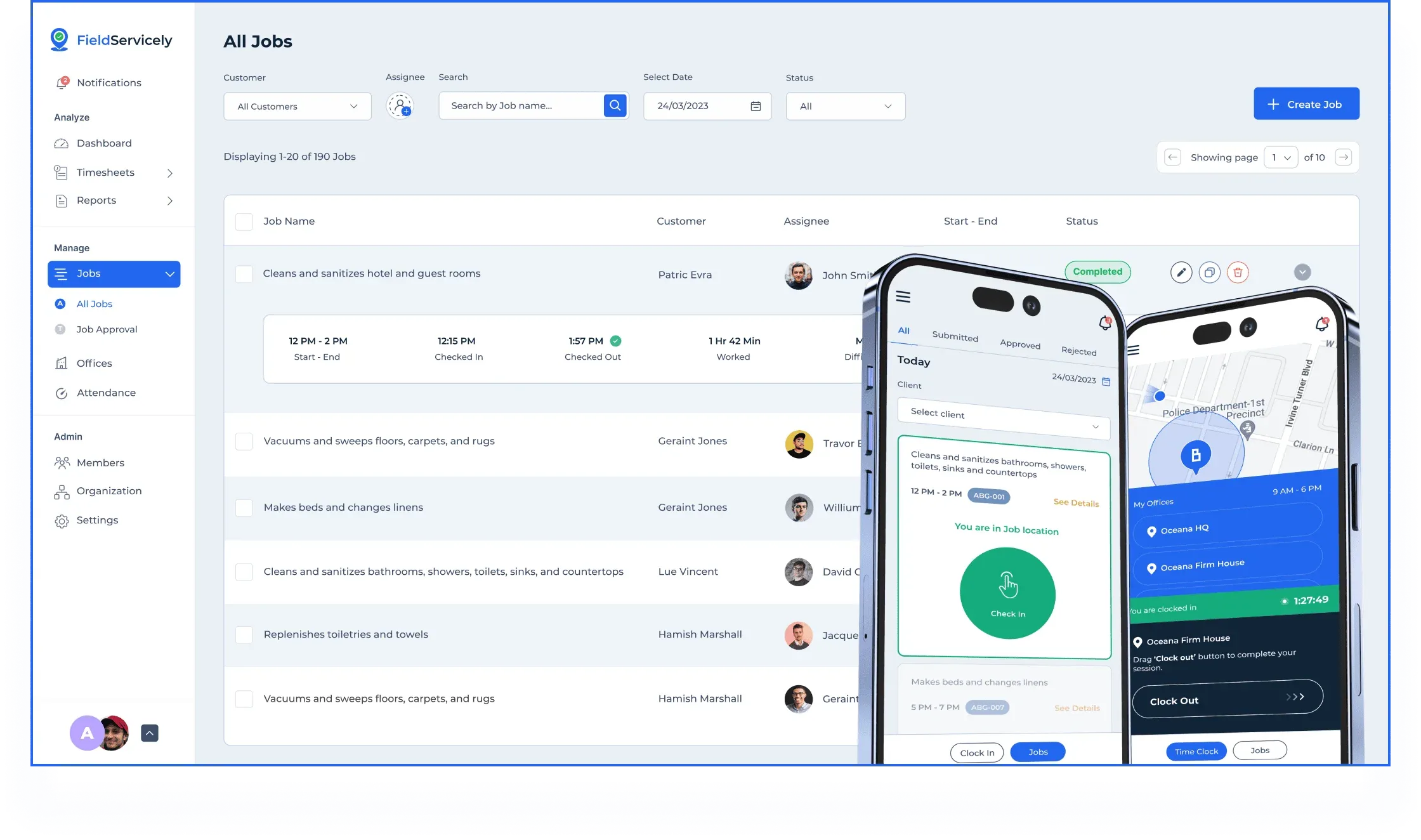
FieldServicely focuses on this balance. It gives dispatchers better control while keeping operations simple and efficient.
Looking for better tracking, integration, and mobile access?
FieldServicely connects your tools and keeps your team aligned in real time.
Conclusion
Scheduling software changes how dispatchers manage daily operations. It replaces manual coordination with real-time visibility. As a result, teams handle more jobs with fewer errors and less stress.
However, the real impact depends on how you choose a system. The tool must fit your workflow and scale with your needs. Thus, it helps dispatchers stay ahead of changes instead of reacting to them.
Frequently Asked Questions
How does scheduling software handle emergency or last-minute jobs?
Scheduling software handles urgent requests fast. It finds available technicians. Then it assigns the closest one based on location and workload. This allows dispatchers to respond faster without disrupting the entire schedule.
Can scheduling software help reduce dispatcher workload?
Scheduling software reduces workload. It automates repetitive tasks like job assignment, updates, and tracking. This allows dispatchers to focus more on decision-making instead of manual coordination.
Is scheduling software suitable for small service teams?
Scheduling software benefits small teams by improving organization and reducing manual errors. It helps them scale operations without needing staff for coordination.
How does scheduling software improve technician productivity?
Scheduling software improves productivity. It reduces idle time, optimizes routes, and provides clear job instructions. Technicians spend more time completing jobs instead of waiting or traveling.
Does scheduling software require training for dispatchers?
Most modern scheduling tools offer simple interfaces. So dispatchers can learn with minimal training. Basic onboarding helps teams use advanced features fast.