- Scheduling and Dispatch
Scheduling and Dispatching: Key Differences & Best Practices
Updated on 28 Apr 2026
Jump to
Summary

Scheduling plans jobs, while dispatching executes them in real time for smooth operations
Both work together to reduce delays, improve productivity, and ensure better service delivery
Poor planning or a lack of real-time updates leads to missed appointments and inefficiency
Modern tools automate scheduling and dispatching to improve visibility and decision-making
The best businesses combine both to balance structure and flexibility in field service operations
Scheduling and dispatching explain how service businesses plan and execute jobs in the field.
Scheduling decides when, where, and who will handle each task, while dispatching ensures technicians reach the site and complete the job in real time. They improve productivity, reduce delays, and help deliver better customer service.
However, many teams struggle with poor planning, missed appointments, and a lack of real-time visibility. I’ve seen schedules fall apart due to traffic, emergencies, or an unbalanced workload, which leads to delays and unhappy customers.
In this blog, we will break down the key differences, real-world use, and best practices. We will also show how to use both effectively to improve your operations.
Quick Overview of Scheduling and Dispatching
Scheduling decides when, where, and who will handle a job before the day starts.
Many service coordinators use a schedule board to assign a field technician based on skills, availability, and location. That’s because scheduling improves technician utilization by up to 25%.
Now, dispatching takes over when the workday begins, and things start changing. It focuses on sending technicians out, sharing directions on a mobile device, and managing delays or emergency calls in real time.
Both processes work together to keep field service operations running smoothly.
Without scheduling, your day starts with confusion and missed appointments. Without dispatching, even the best plan fails when real-world issues like traffic or cancellations appear.
Key Differences Between Scheduling and Dispatching
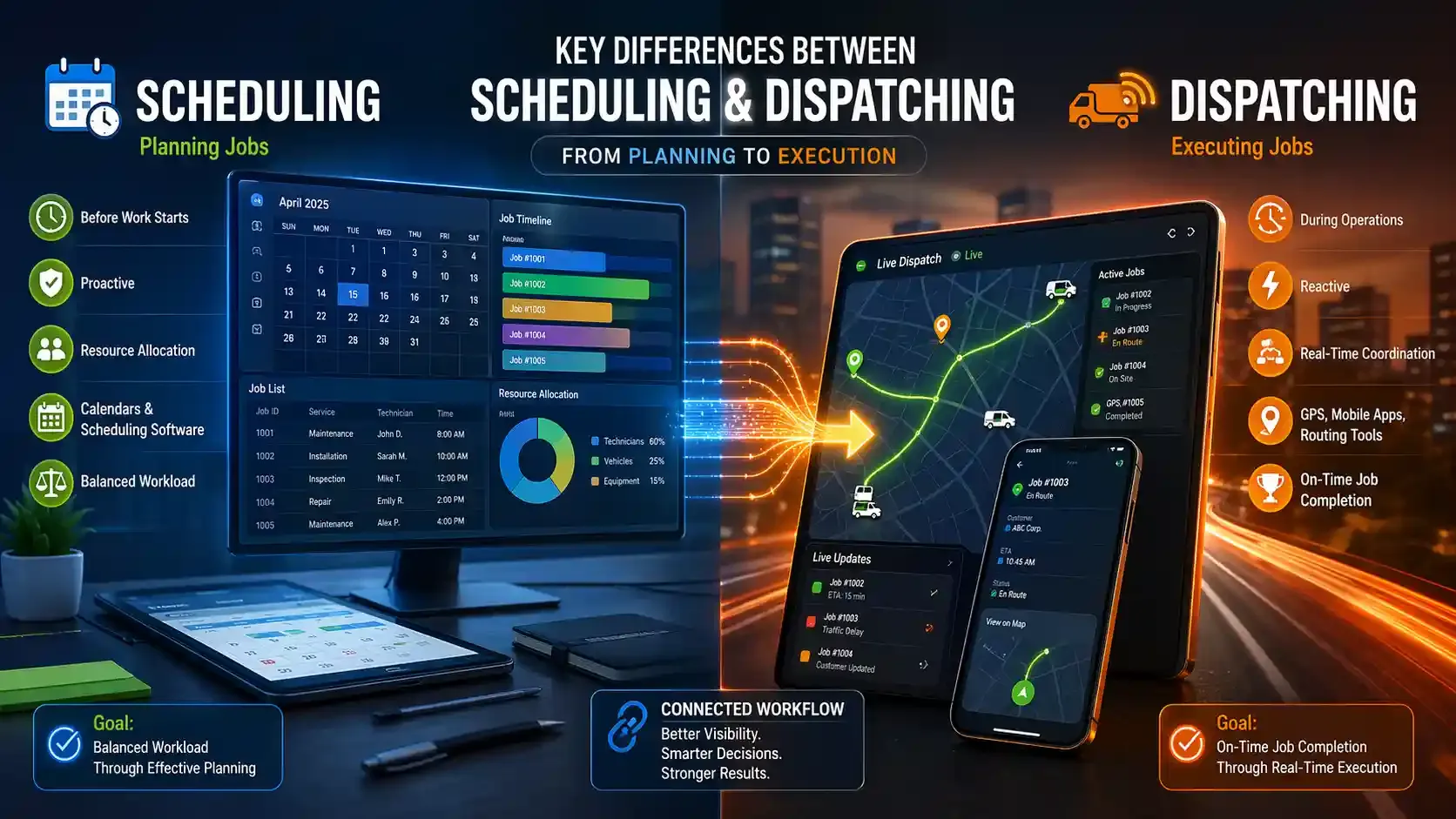
| Feature | Scheduling | Dispatching |
|---|---|---|
Purpose | Planning jobs | Executing jobs |
Timing | Before work starts | During operations |
Approach | Proactive | Reactive |
Focus | Resource allocation | Real-time coordination |
Tools | Calendars, scheduling software | GPS, mobile apps, routing tools |
Goal | Balanced workload |
Purpose: Planning vs Execution
Scheduling answers how jobs get planned before the day begins, while dispatching answers how jobs get done in real time.
I’ve seen many service businesses assign work orders early, but dispatchers still control the outcome by sending the right technician at the right moment. That’s because better execution in the field directly impacts performance.
If service teams performed at the level of top performers, organizations could reduce service costs by as much as 23%.
Timing: Before vs During Operations
Scheduling works before operations start, while dispatching works during live job execution.
For example, a scheduler may block time slots for a contractor, but a dispatcher adjusts those slots when delays or urgent bookings appear.
47% of field service appointments do not go as planned. It links missed appointments to poor coordination, schedule disruption, and weak visibility between teams.
Approach: Proactive vs Reactive
Scheduling focuses on proactive planning, while dispatching responds to real-world conditions such as traffic or cancellations. This difference becomes clear when emergency calls disrupt a fixed schedule. Dispatching keeps the workflow moving even when plans fail.
Focus: Allocation vs Coordination
Scheduling focuses on resource allocation, such as technician skills, availability, and job priority. Dispatching focuses on real-time coordination between the field technician and back office staff. This ensures smooth communication and better job handling.
Tools: Planning vs Real-Time Tech
Scheduling uses calendars and scheduling software to organize tasks. Dispatching uses GPS, mobile apps, and routing tools to guide technicians in the field.
Goal: Balance vs Completion
Scheduling aims to balance workloads across crews and improve resource use. Dispatching ensures each job reaches completion on time despite disruptions. Thus, they improve productivity and overall customer experience.
Turn planning and execution into one smooth system
Manage scheduling and dispatching together so your jobs don’t fall apart in real-time
What is Field Service Scheduling? (The Plan)
.webp?2026-04-28T09%3A22%3A10.536Z=&w=3840&q=100)
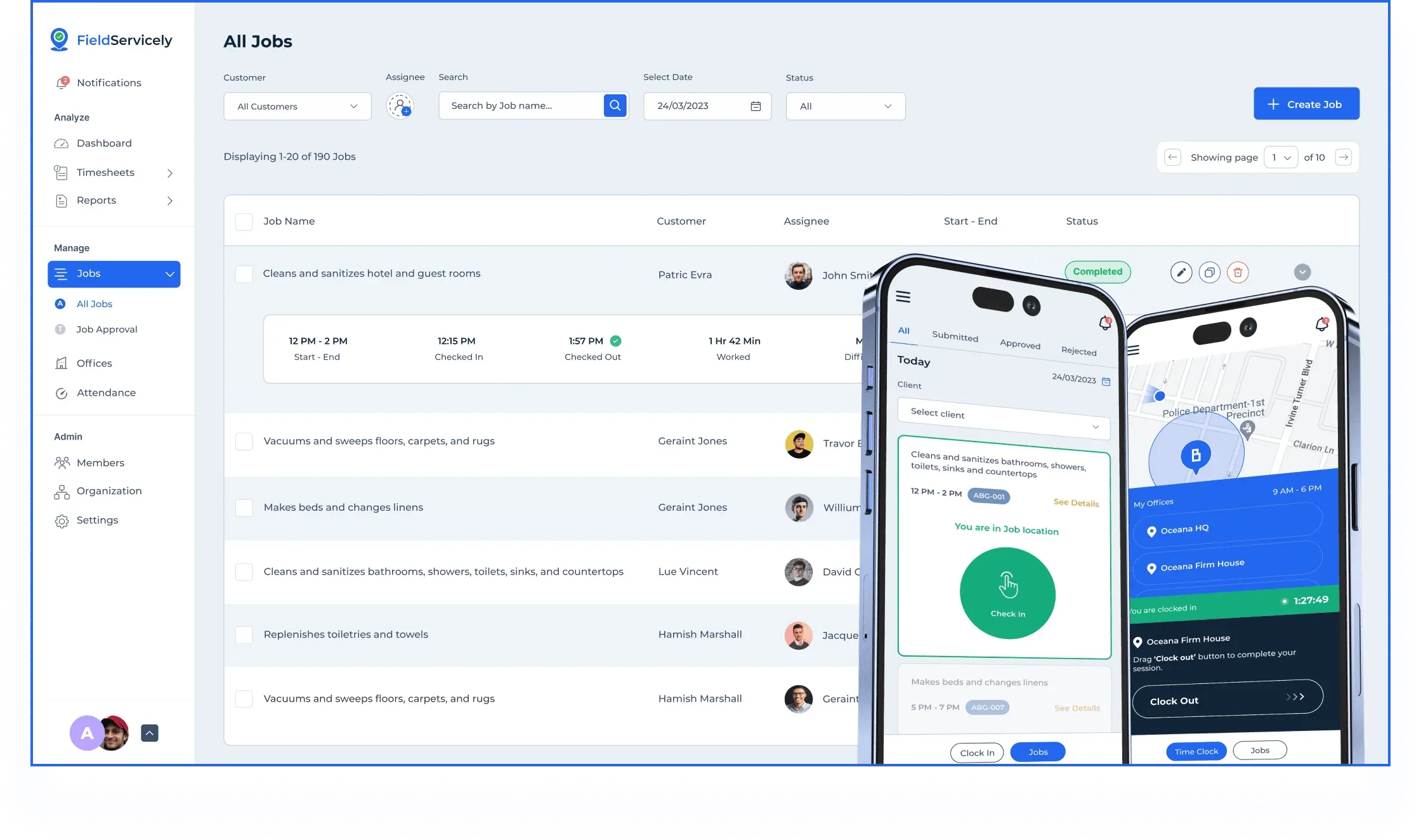
Field service scheduling answers how you plan jobs before anything starts. It focuses on matching the right technician to the right job.
Moreover, scheduling checks, certifications, tools, and job requirements so the technician can finish the task without repeat visits. At the same time, it plans routes and sets clear time slots to keep the day organized.
Next, scheduling helps manage workload across the crew. I’ve seen teams struggle when one technician takes on too many jobs while others remain free, which slows everything down.
Optimized workforce planning and scheduling can reduce operational costs by 15–20%.
Then, scheduling prevents common issues like overlapping appointments or idle time. It builds a clean service schedule where each job has a clear place.
However, most teams still rely on calendar scheduling systems. While others use drag-and-drop boards or automated scheduling software like FieldServicely to manage tasks easily.
So, scheduling is like setting up the entire day in advance. For example, a service business may plan 8–12 jobs for tomorrow based on technician availability and job priority. This planning step decides how smoothly the day will run.
Struggling with messy schedules and missed jobs?
Organize your workload and assign the right technician every time with ease
.webp?2026-04-28T09%3A31%3A54.589Z=&w=3840&q=100)
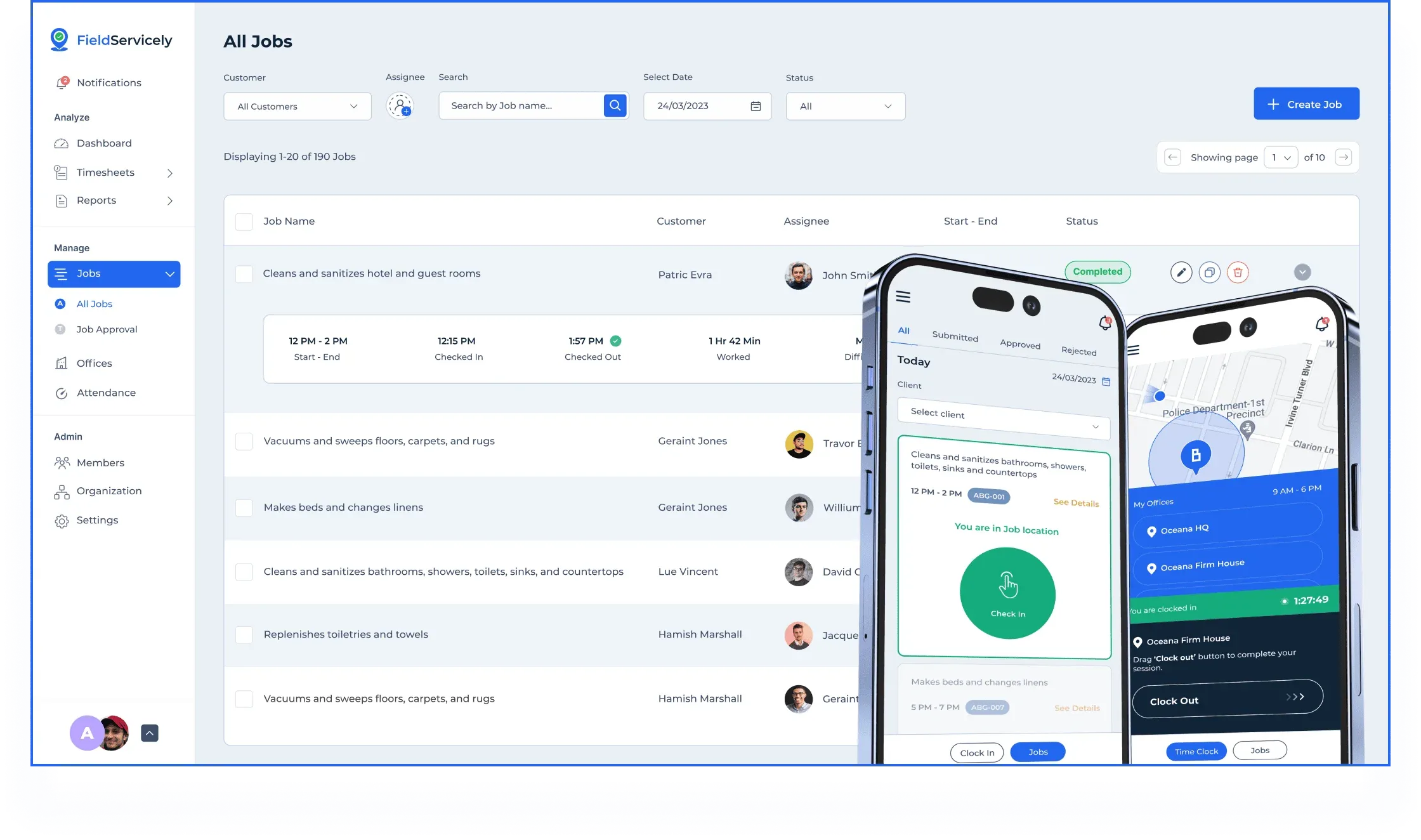
Field service dispatching is how you manage jobs in real time once the day starts.
Dispatching focuses on assigning jobs instantly, communicating updates, and adjusting schedules when things change. I’ve seen situations where one delay can break the entire plan, so dispatching steps in to fix it on the spot.
Coming to the core action, I always match the job with the best available technician based on location and current workload. Then I track movement using GPS and adjust routes to reduce travel time.
Real-time dispatching and coordination can drive 10–30% productivity gains while enabling faster technician response in field operations.
That said, dispatching mainly aims to reduce downtime and handle urgent jobs quickly. It also helps respond to emergency calls, cancellations, or traffic issues without slowing down the rest of the schedule.
Now, tools make this process much easier. Managers mostly rely on GPS tracking systems, real-time routing software, and technician mobile apps to stay updated. These tools give full visibility and help me make quick decisions.
So, dispatching is making the plan work in real life. For example, if one technician gets stuck in traffic, you can reassign the job instantly and update the customer without delay.
Respond faster to every job and emergency
Assign the nearest technician, optimize routes, and reduce downtime with real-time dispatch tools
How Scheduling and Dispatching Work Together
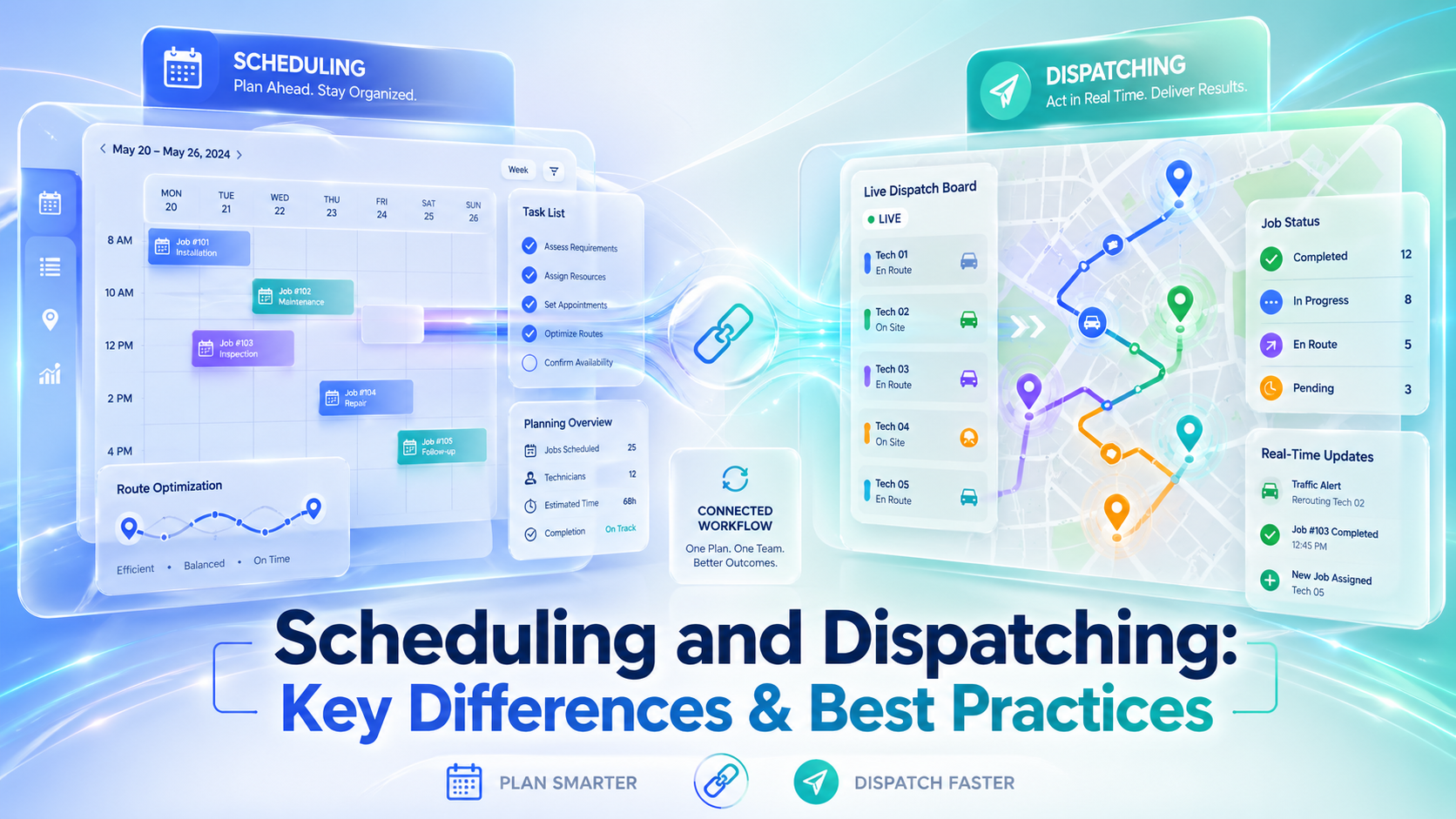
Let’s make this clear. Field service scheduling and dispatching are not separate systems. They work as one connected workflow in field service management.
Scheduling sets everything up before the day begins. It assigns jobs, plans routes, and organizes technician availability so the workflow starts clean. Then, dispatching during operations handles delays, cancellations, or emergency calls without breaking the schedule.
The interesting part is that modern FSM systems combine both functions, so updates happen instantly across the system.
For example, a job runs longer than expected. The system adjusts the next appointment automatically, and dispatch updates the technician and customer right away.
This integration keeps operations stable even when things go wrong. So, dispatching and scheduling work together to keep things stable.
Connect your scheduling and dispatching in one system
Plan jobs and manage real-time changes without breaking your workflow
When to Use Scheduling vs Dispatching
Use Scheduling When:
- Planning jobs in advance
- Managing multiple technicians
- Organizing daily or weekly workload
- Assigning jobs based on skills and availability
- Setting time slots and appointments
Use Dispatching When:
- Handling real-time operations
- Managing delays, cancellations, or emergencies
- Communicating with field staff
- Assigning jobs instantly to available technicians
- Updating job status in real time
Benefits of Effective Scheduling and Dispatching
1. Increased Productivity
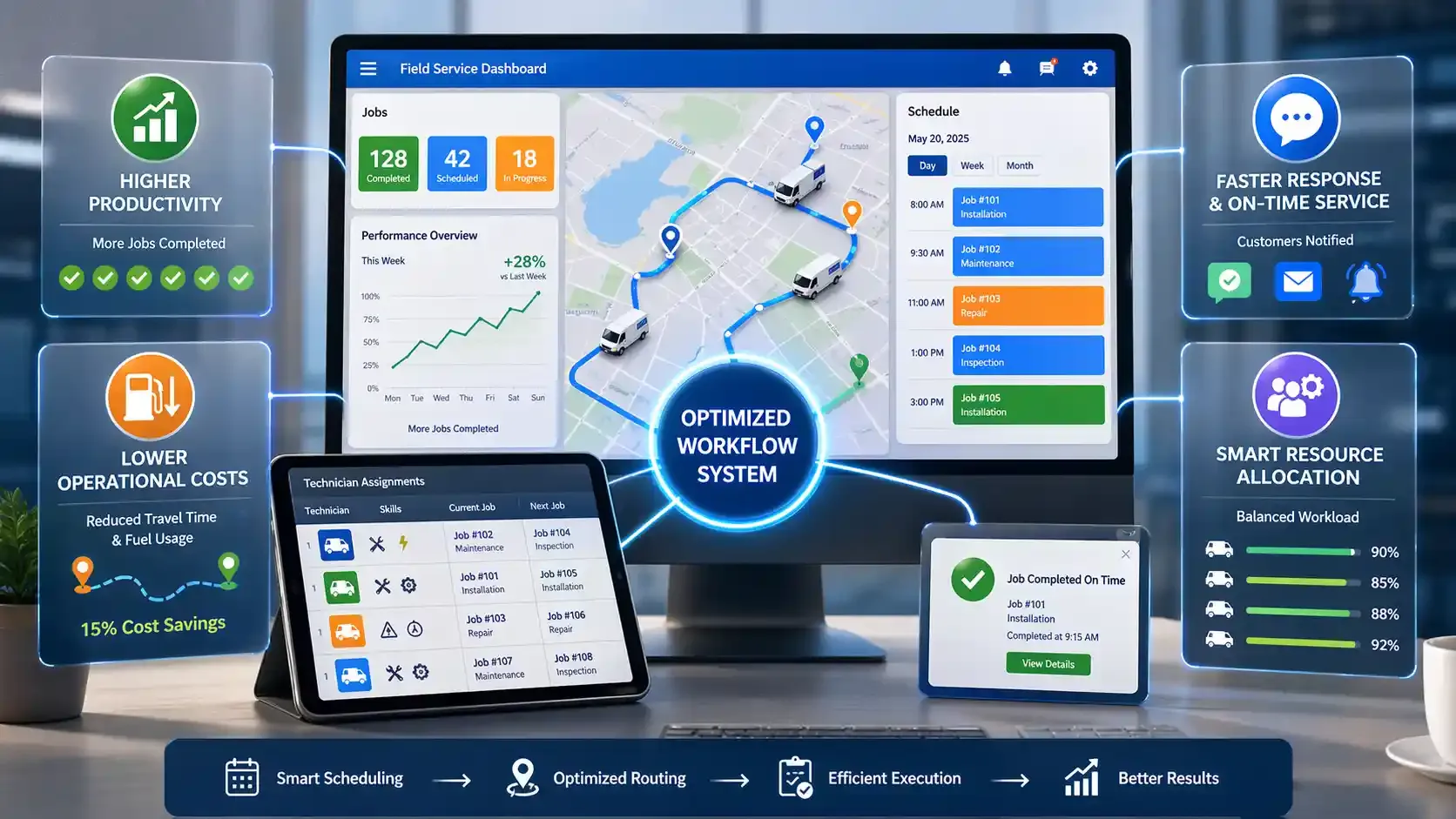
Increased productivity comes from better planning and faster execution. I’ve seen teams complete more jobs in a day when routes stay optimized and workloads stay balanced.
Organizations using AI in field service report at least moderate improvement in technician utilization (88%) and dispatcher productivity (85%). [Source: Salesforce]
2. Reduced Costs
Reduced costs happen when travel time drops, and routes stay efficient. I’ve noticed that fewer unnecessary trips directly lower fuel usage and reduce vehicle wear over time. According to a report, optimized routing can cut operational expenses by around 15%.
3. Improved Customer Satisfaction
Improved customer satisfaction comes from better timing and communication. When technicians arrive on time and updates reach customers quickly, trust increases. Zendesk highlights first response time as a core service metric because speed and communication directly shape how customers judge support quality.
4. Better Resource Utilization
Better resource use happens when the right technician handles the right job. I always assign work based on skills, availability, and location to avoid repeat visits
Matching the right technician to each job improves efficiency, and it also strengthens the first-time fix rate. Thus, it reduces repeat visits and extra truck rolls.
Deliver faster and more reliable service
Improve response time, communication, and on-time arrivals for better customer satisfaction
How Modern Software Improves Scheduling & Dispatching
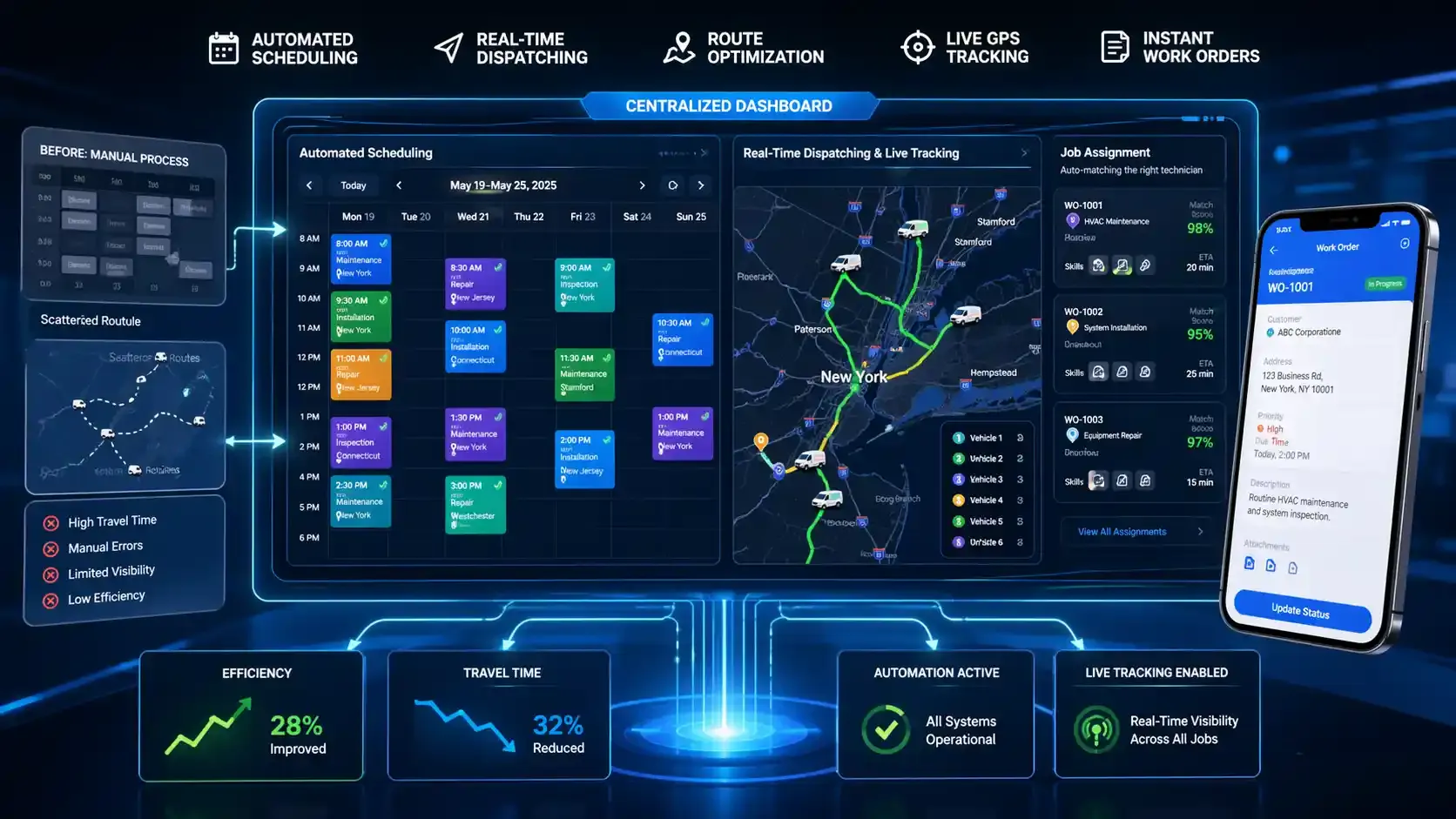
Modern software makes scheduling and dispatching faster and more accurate. I’ve seen teams move from manual planning to automated systems, and the difference is clear in daily operations.
Now, these tools automate job assignments based on technician skills, availability, and location. They also track technicians in real time and optimize routes to reduce delays and travel time. At the same time, mobile apps give field technicians instant access to work orders and updates.
Then, these features lead to faster decisions and fewer manual errors. They also give managers full visibility into jobs, technicians, and service progress.
That’s why platforms like FieldServicely fit naturally into this workflow. They help teams manage scheduling and dispatching in one place without adding complexity.
Make faster decisions with FieldServicely
Access real-time job data and update schedules instantly without delays
Which is Better: Scheduling or Dispatching?
This is a common question, and the answer is simple. Neither scheduling nor dispatching works well alone. So you need both to run smooth operations.
Scheduling gives structure by organizing jobs, resources, and time slots before the day starts. Dispatching adds flexibility by handling real-time changes like delays, cancellations, or urgent requests.
If you only rely on scheduling, your plan may look perfect but fail when real conditions change. If you only rely on dispatching, you keep reacting without a clear system.
So, the best-performing businesses combine both to stay efficient, reduce errors, and deliver consistent service every day.
Frequently Asked Questions
Is dispatching part of scheduling?
Dispatching is closely related but not the same. Scheduling builds the plan first, and dispatching comes after to execute that plan in real time.
Can you dispatch without scheduling?
Yes, you can, but it usually creates confusion and inefficiency. Scheduling gives structure, while dispatching keeps things flexible during real operations.
What is the main difference between scheduling and dispatching?
Scheduling plans jobs by assigning time, resources, and technicians. Dispatching manages those jobs live by sending technicians and handling updates.
Which industries use scheduling and dispatching?
Industries like logistics, construction, HVAC, delivery, and maintenance rely on both. These sectors depend on planning and real-time execution to run daily operations smoothly.