
Point System for Employees: How it Works, Examples, and How to Build One
Updated on 17 Jul 2026
Jump to
Summary

A point system gives points for attendance problems, such as lateness, leaving early, or no-shows.
Each violation has a set point value, and reaching a limit leads to disciplinary action.
Points usually expire after a set period, giving employees a chance to improve.
This system works especially well for shift-based, hourly, and field teams.
It helps keep discipline consistent and reduces guesswork or bias.
Combining rules with rewards encourages good attendance and a more positive workplace.
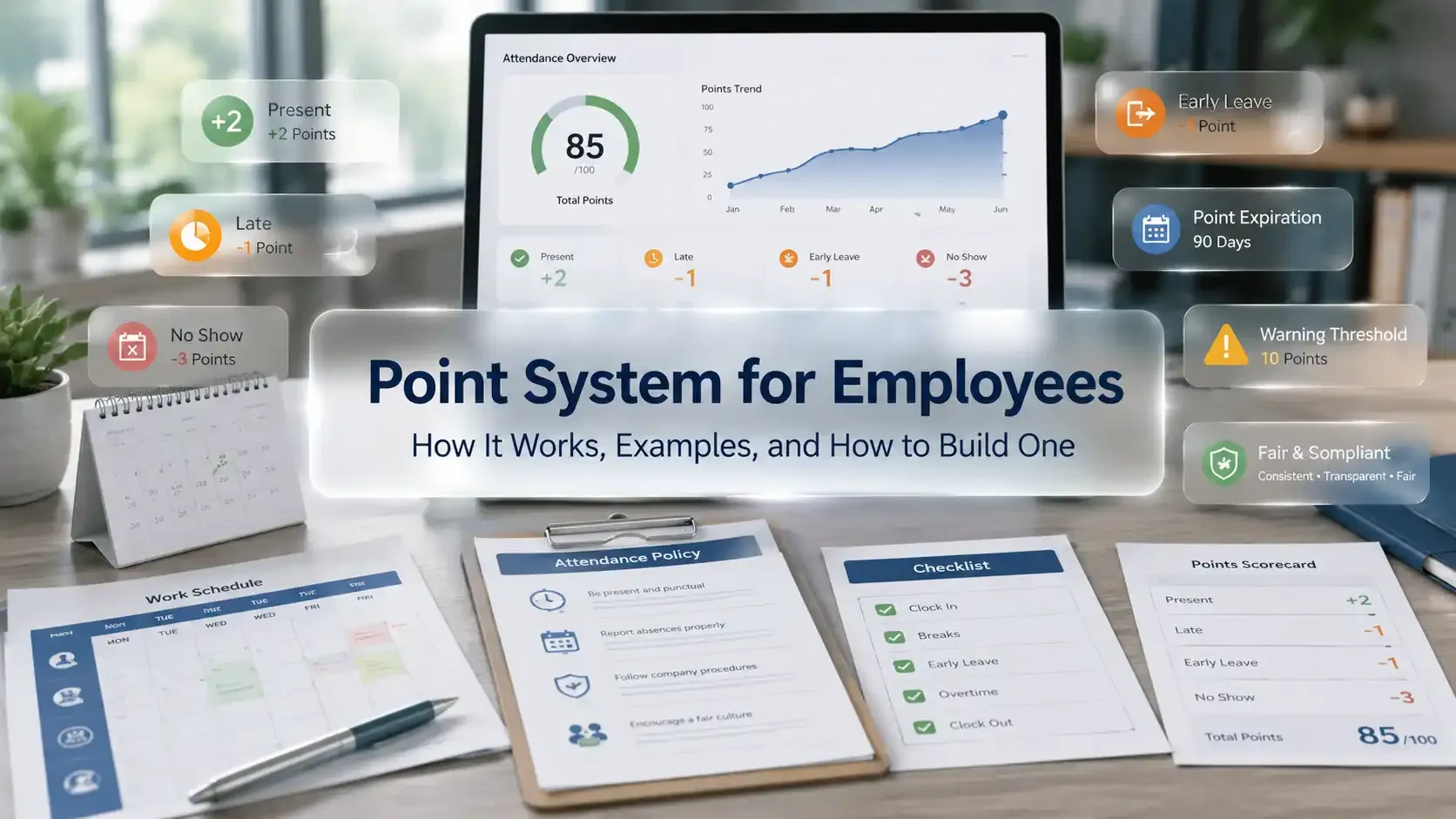
A point system for employees is a simple way to track attendance problems. You assign points for each issue, such as being late, leaving early, or missing a shift. When someone reaches a set point limit, you follow the next disciplinary step. This helps you make fair, consistent decisions.
Attendance can cost your business more than you may think. According to the U.S. Bureau of Labor Statistics, 3.2% of full-time workers were absent on a typical workday in 2024. This was up from 3.1% the year before. Even a small increase can create scheduling problems for your team.
The financial impact is also significant. The CDC Foundation found that productivity losses from absenteeism cost U.S. employers $225.8 billion each year. The amount is about $1,685 per employee. If you manage hourly or field crews, one no-show can delay an entire job.
A structured attendance point system gives you a clear written standard. Instead of making case-by-case decisions, you can rely on the same rules for everyone. This reduces bias, avoids confusion, and makes attendance expectations easier to understand.
In this guide, you will learn how an attendance point system works, see a ready-to-use template, and understand the pros and cons. We will also share practical ways to track attendance without relying on complicated spreadsheets.
What is a Point System for Employees?
An employee point system works by assigning a specific number of points to different attendance violations. For example, an employee may receive points for being late, leaving before the end of a shift, or missing work without approval.
As points build up over time, they trigger the next step in your attendance policy, such as a warning or other disciplinary action. This creates a clear process that helps managers handle attendance fairly and consistently.
Most people mean the attendance version when they talk about a point system. It is often called a disciplinary point system because points can lead to progressive discipline. The main goal is to reduce unplanned absences and apply the same rules to everyone.
A written point system helps you apply attendance rules consistently for everyone. If one employee is excused and another is disciplined for the same issue, employees may feel the process is unfair. A clear employee attendance policy helps you make fair decisions and explain the rules more clearly.
How Does an Employee Point System Work?
An employee point system has three main parts:
- Point values for each attendance problem
- Point limits that trigger consequences
- And a rule for when points expire.
Together, these parts give you a simple score you can track and act on.
First, you assign points to each type of attendance issue…
Smaller problems receive fewer points, while more serious problems receive more points. For example, being a few minutes late may earn fewer points than missing a shift without notice.
Here is a common attendance point system chart you can adjust for your workplace:
| Attendance issue | Points |
|---|---|
Clocking in 1–15 minutes late | 0.5 point |
Clocking in 16+ minutes late | 1 point |
Leaving early without approval | 1 point |
Absence with proper notice | 1 point |
No-call, no-show | 3 points |
Missing a scheduled shift entirely | 2 points |
Second, you set thresholds that trigger action
As points stack up, the response gets firmer. This is the progressive discipline ladder, and a simple point system for employees, for example, looks like this:
- 4 points: verbal warning
- 6 points: written warning
- 8 points: final written warning
- 10–12 points: termination review
Third, you let points expire
Points should not follow someone forever. Most systems use a rolling 6- or 12-month window, so old points drop off. Some employers even remove a point for a stretch of perfect attendance.
That rollover rule is what keeps the system fair rather than purely punishing. It gives people a real path to recovery. An employee who slips once in January is still paying for it a year later.
Accurate data makes the whole thing run. If your clock-in records are wrong, your points are wrong. Attendance ties directly to hours worked and pay, and reliable time and attendance software captures every punch automatically. For this, points reflect what actually happened.
Which Industries Need to Use an Employee Point System?
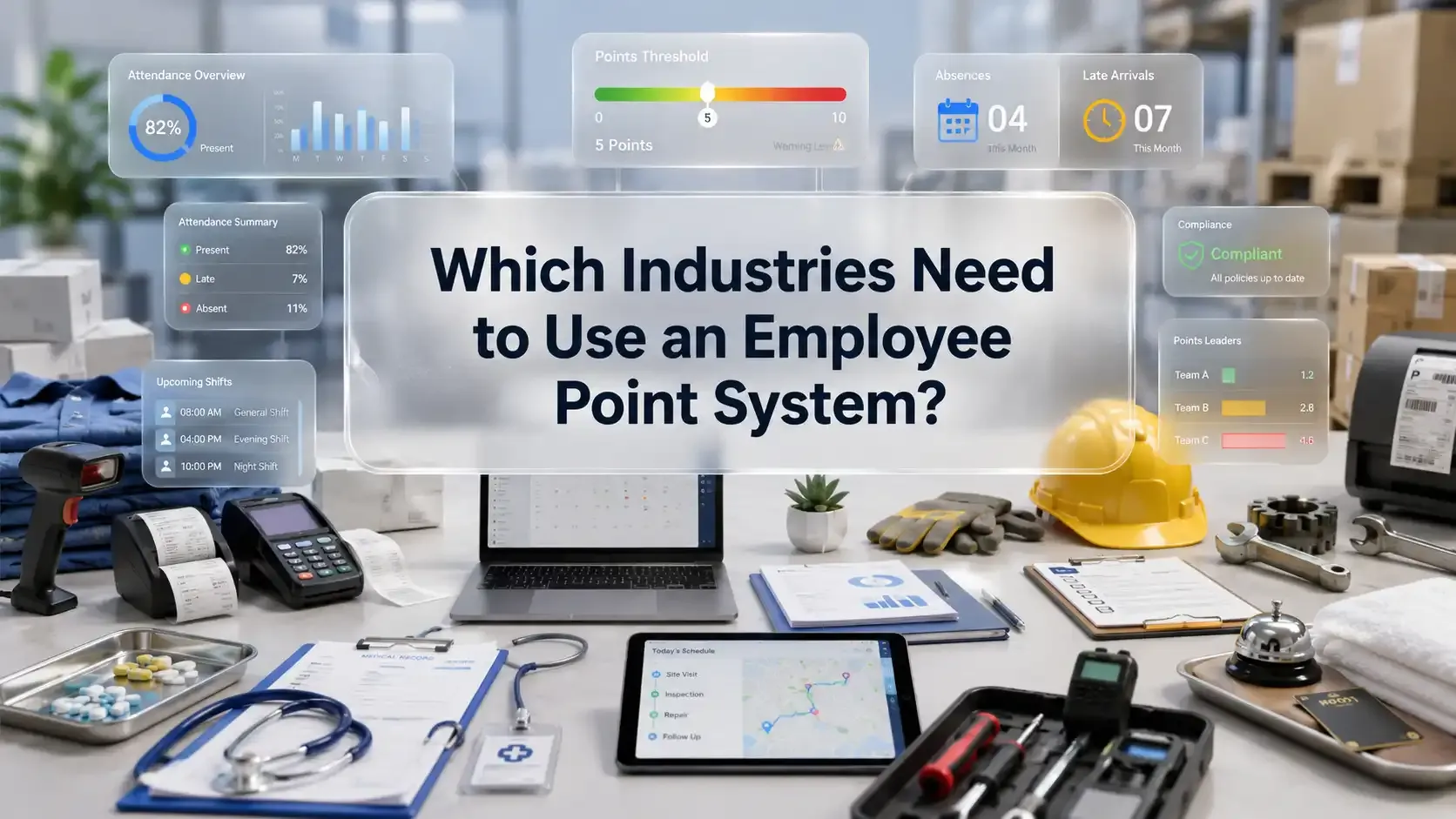
Here are the types of businesses that benefit most from a point system:
- Healthcare and senior care: Reliable staffing is essential for patient safety and quality care.
- Cleaning and janitorial services: Clients expect crews to arrive on schedule. A point system can work well with cleaning business software to help you track attendance and keep teams accountable.
- Construction and skilled trades: One missing worker can delay a project. Clear attendance rules support better scheduling and construction crew management.
- HVAC, plumbing, and field services: Missed appointments can lead to lost revenue and unhappy customers. A structured system helps you keep field workers reliable.
- Retail, warehousing, and manufacturing: These high-volume, shift-based environments rely on full staffing during busy periods.
Employee Attendance Point System Template
A point system template gives you a ready-made chart for tracking attendance problems. It shows each type of attendance violation and the number of points assigned to it. It also shows the consequences that apply when an employee reaches a certain total point.
Using a template saves you time because you do not have to create the system from scratch. You can start with the chart and then adjust the point values and disciplinary steps to fit your business, schedule, and workforce.
Here is a complete template you can copy and customize for your attendance policy:
| Section | Details |
|---|---|
Late (1–15 min) | 0.5 point |
Late (16+ min) | 1 point |
Left early, no approval | 1 point |
Absent, with notice | 1 point |
Absent, no notice | 2 points |
No-call, no-show | 3 points |
Point expiration | Rolling 12 months |
Threshold: verbal warning | 4 points |
Threshold: written warning | 6 points |
Threshold: final warning | 8 points |
Threshold: termination review | 10 points |
How to Build and Customize Your Employee Point System Template
When you set up your point system, make the rules fit your business and make them easy for everyone to understand.
- Match points to the impact. If a no-show causes major disruption at a client site or job site, give it a higher point value. Assign more points to the attendance problems that affect your operations the most.
- Choose realistic thresholds. Set point limits that your managers can apply consistently every time. Avoid exceptions that could make the system seem unfair.
- Decide when points expire. A shorter expiration period can feel more forgiving, while a longer period can encourage stronger attendance habits. Choose a timeframe that matches your workplace culture.
- Include protected absences. Clearly state which absences do not earn points, such as jury duty or legally protected leave. This helps keep your policy fair and legally compliant.
- Reward improvement. Consider removing a point after 30 or 60 days of perfect attendance. This gives employees a clear incentive to improve their attendance record.
After you create your chart, connect it to your time-tracking data so points can be calculated automatically. A live clock-in and out app can send employee punches directly into your tracker, so you do not have to update the spreadsheet manually every week.
How to Track an Employee Attendance Point System
Tracking attendance is often the hardest part of a point system. A spreadsheet may work for a small team, but as your team grows, late edits, missed punches, and manual mistakes can make the records inaccurate. When the data is wrong, employees may feel the system is unfair.
Automation can make tracking much easier. When your clock-in system sends attendance data directly into your records, points can be calculated automatically. Accurate GPS time clock data can also help prevent buddy punching, where one employee clocks in for another.
For field or mobile teams, geofencing helps confirm that employees have arrived at the job site before their shift is recorded.
This is where a platform can be more reliable than a spreadsheet. FieldServicely can capture real-time attendance data, flag late arrivals, and maintain a clear record you can review when applying points. This helps you spend less time checking timesheets and more time managing your team.
Key Benefits of an Employee Point System

The biggest benefit of an employee point system is fairness. You use the same chart for everyone, so attendance decisions do not depend on which manager is involved or how much someone is liked. This helps protect employee morale and reduces the risk of inconsistent treatment.
A well-managed point system can help you:
- Apply discipline consistently: You follow the written chart instead of relying on personal judgment.
- Reduce absenteeism: Clear consequences can discourage unnecessary call-outs.
- Reduce manager stress: Your supervisors can refer to the policy instead of debating each case individually.
- Improve coverage and productivity: Better attendance helps keep shifts staffed and jobs on schedule, thereby supporting technician productivity.
- Create clear documentation: Each point provides a record that can support your decisions if questions arise later.
There is also a connection between employee engagement and attendance. Gallup reports that highly engaged teams have 78% lower absenteeism than disengaged teams. When employees trust that your attendance rules are fair, the system can support engagement instead of reducing it.
Is There Any Drawback to an Employee Attendance Point System?
Yes. The biggest drawback of an employee attendance point system is that it can feel unfair if it treats all absences the same. A strict point chart may not distinguish between an unexcused no-show and a legitimate medical or family emergency. If employees feel the system is unfair, trust can suffer.
Below are the most common concerns:
Protected leave
Some absences are protected by law. Giving points for these absences can create legal problems for your business.
Lack of flexibility
A parent caring for a sick child and an employee with repeated unexcused absences may receive the same points, which can feel unfair.
Reduced communication
If employees receive points even when they call ahead, they may be less likely to report absences promptly.
Negative workplace culture
If the system focuses too heavily on penalties, employees may feel monitored rather than supported.
You should pay close attention to legal requirements. Absences protected under the Family and Medical Leave Act should not be counted as attendance points. The same care applies to accommodations covered by the Americans with Disabilities Act, which is enforced by the Equal Employment Opportunity Commission.
You can make the system fairer by excluding protected absences and giving employees a reasonable time to report an absence. A point system works best when it holds employees accountable while still allowing reasonable flexibility.
Point-Based Reward Systems: A Great Alternative
A point-based reward system for employees flips the model: instead of docking points for problems, you award points for good behavior. Perfect attendance, picking up shifts, or hitting goals earns points that convert into rewards. It drives the same reliability, but through motivation rather than fear.
This is worth pairing with your discipline policy. Penalties set a floor. Rewards raise the ceiling. Together, they tell your team you notice both the misses and the wins.
The payoff is real. Gallup and Workhuman research found that employees who get high-quality recognition are 45% less likely to leave their jobs. In tight labor markets, that kind of retention is a serious edge.
Here is how a point reward system for employees can work:
- Award points for reliability. Give points for perfect weekly attendance or for covering an open shift.
- Let points build toward rewards. Workers redeem points for gift cards, extra PTO, or small bonuses.
- Recognize consistency, not just heroics. Steady, dependable people should win, not only the flashy ones.
- Keep it visible. A public leaderboard or shout-out makes the wins feel meaningful.
Conclusion
A point system for employees makes attendance rules clear and fair. It helps reduce absenteeism, supports employees who show up consistently, and gives you records to support your decisions.
To make the system work well, write fair rules, allow legal exceptions, and balance consequences with recognition for good attendance.
The chart itself is usually the easy part. Tracking attendance accurately is the bigger challenge. Manual spreadsheets can become difficult to manage as your team grows, and inaccurate records can make even a fair policy seem unfair.
The right tool can make tracking much easier. FieldServicely captures accurate, GPS-verified clock-in data and keeps your attendance records organized. Try it free and give your team a system they can trust.
Frequently Asked Questions
How many attendance points before termination?
Many attendance policies set termination at 10 to 12 points within a rolling year. However, the exact threshold depends on your company’s written policy. For this, you should check your employee handbook for the specific number.
Is an attendance point system legal?
Generally, yes. An attendance point system is legal if it is applied consistently and does not penalize legally protected absences. Points should not be assigned for FMLA leave or approved ADA accommodations.
What is the difference between an attendance point system and a disciplinary point system?
In this context, the two terms usually mean the same thing. An attendance point system tracks issues such as lateness and absences, and the points are used to decide the next disciplinary step, from warnings to termination.
Should employees be able to see their point totals?
Yes. Transparency is important for a fair system. When employees can see their current point totals, they know where they stand and can improve their attendance before reaching a warning level.
Should salaried employees be included in a point system?
Usually not. Point systems are most commonly used for hourly, non-exempt employees, especially in roles where shift coverage is critical. Salaried employees are often managed based on overall performance and results.
How should you introduce a new point system?
Introduce the system before it takes effect. Explain why you are using it, share the full point chart, give employees time to adjust if needed, and ask them to acknowledge the updated attendance policy.
What to read next