- Field Service Business
Construction Soft Costs: How to Keep Them Under Control
Updated on 26 Jun 2026
Jump to
Summary

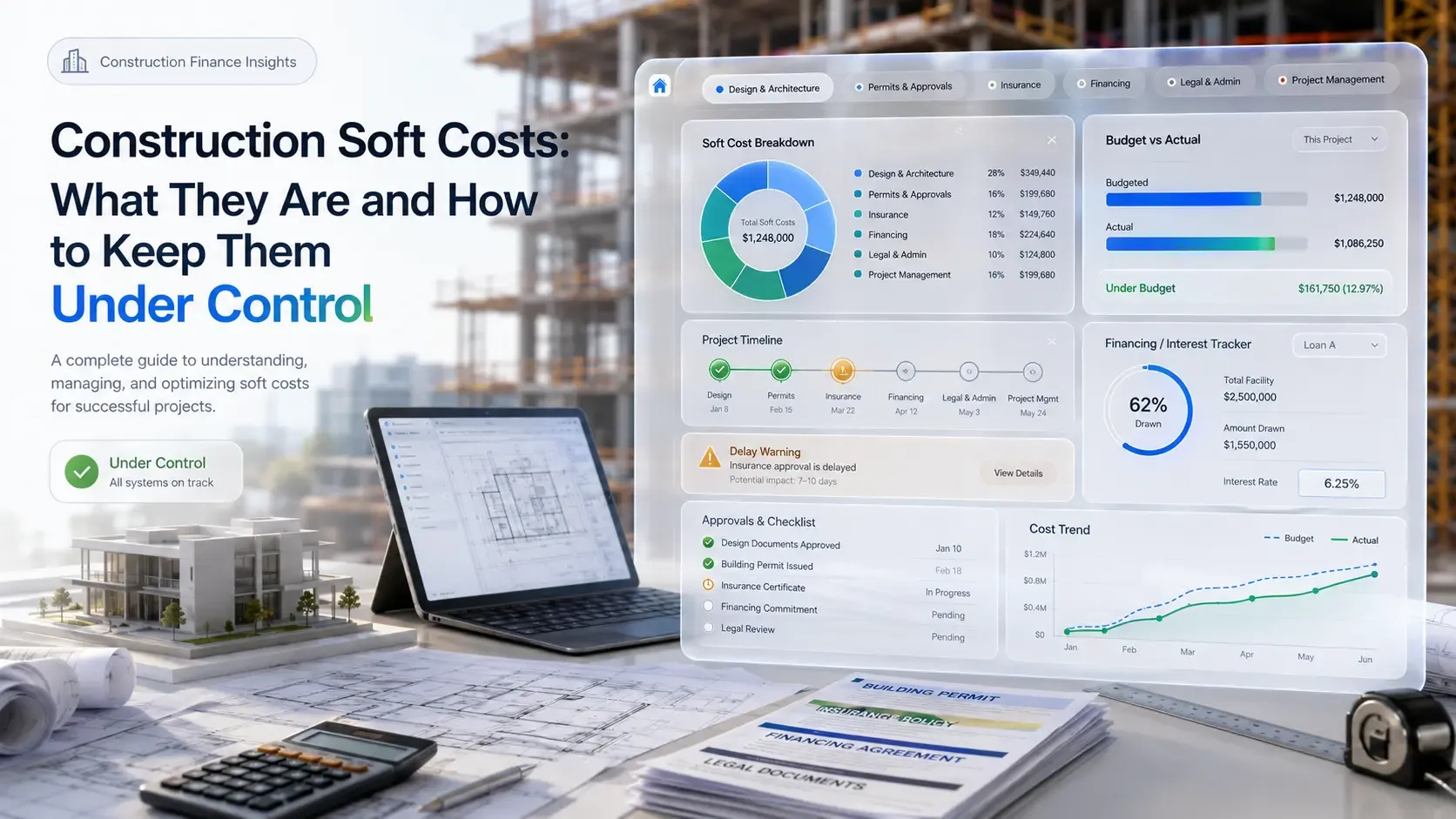
Soft costs include design, permits, insurance, financing, and project management
Teams often underestimate them in early budgets
Delays increase costs like loan interest, insurance, and management fees
Knowing when soft costs happen improves overall planning
Better tools help reduce administrative and management costs
Every construction project has costs you can see: the concrete, the lumber, the crew on-site, and costs you can't. Those invisible expenses are called soft costs, and they cover everything from architect fees and building permits to construction loan interest and project management.
They don't physically build anything, but without them, nothing gets built.
A study by McKinsey & Company found that, more than 500 large construction projects exceeded their original budgets by an average of 79%. One common reason is that indirect expenses, such as permits, design fees, and insurance, are not tracked carefully.
In this guide, we break down what soft costs include, how they differ from hard costs, when they occur during a project's lifecycle, and practical ways to manage them before they eat into your margins.
What Are Soft Costs in Construction?
Soft costs are the indirect expenses needed to plan, finance, manage, and approve a construction project. These costs support the project but do not become part of the physical building.
To put it simply, hard costs cover what you see on the job site, such as concrete, steel, plumbing materials, and labor. Soft costs cover everything behind the scenes that makes construction possible, including architectural design, permits, insurance, legal fees, and financing.
Soft costs usually start long before construction begins and often continue after the project ends, while hard costs mostly stop once construction finishes. For example, developers may still pay marketing expenses, tenant improvements, and property taxes during and after construction, and these all fall under soft costs.
Soft costs often create budget problems because they are harder to track than materials or labor. Without clear visibility, small issues can quickly grow into bigger financial overruns.
Cost tracking tools help construction teams stay in control by improving financial clarity and decision-making in real time.
Key reasons soft costs stay hard to control:
- Permit approval times can be fast or very slow, depending on the area
- Interest rates can change during the project
- Design changes can add extra fees that were not planned
A bigger problem happens when delays increase multiple costs at the same time. If a project gets delayed:
- Loan interest increases
- Insurance costs continue for longer
- Project management and admin costs also rise
Simple example:
- Project budget: $5 million
- Planned soft costs: 20% = $1 million
But a 3-month delay can increase costs because:
- Higher loan interest adds extra cost
- Insurance runs longer
- Management fees extend
A study found that nearly 90% of construction projects go over budget, with costs increasing by an average of 28%. Soft costs matter here because expenses like permits, insurance, and loan fees can add up quickly if you don't track them closely.
Common Categories of Soft Costs (With Examples)
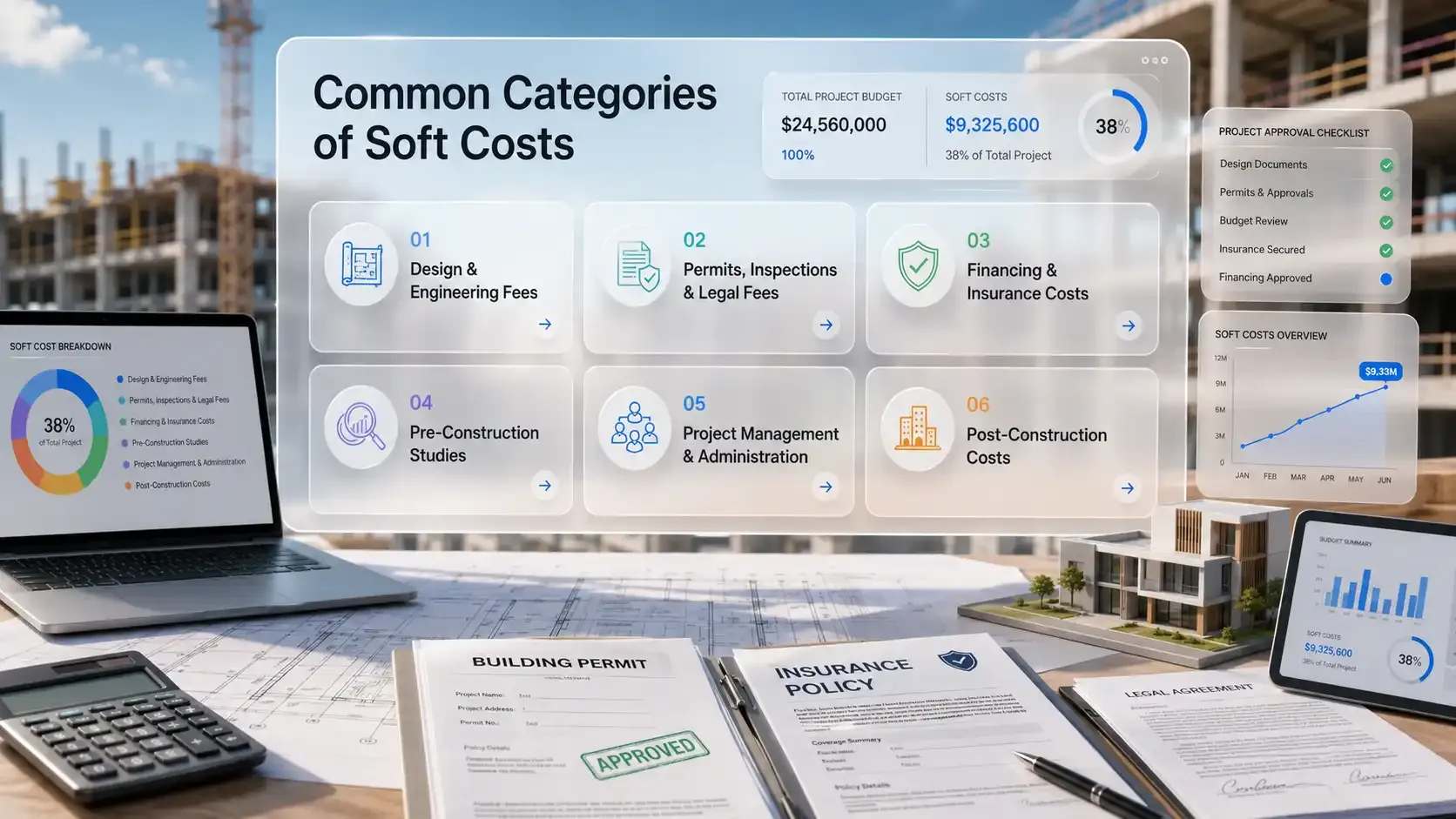
Soft costs cover everything from planning a project to finishing and handing it over. These costs do not include physical materials or labor, but they still affect the total budget a lot.
1. Design and Engineering Fees
A project starts with design work before any construction begins. This includes architect fees, structural and civil engineering, and interior or landscape design.
According to AIA benchmarks, architect fees for commercial projects are usually 7% to 10% of your total construction cost. For example, on a $1 million project, you may pay about $70,000 to $100,000 in design fees alone.
These costs can become a large part of the soft cost budget, especially for complex projects. If the design changes during the process, these costs can increase quickly.
2. Permits, Inspections, and Legal Fees
Every construction project needs approval before work can start. This includes building permits, zoning approval, environmental clearance, and inspection fees.
Legal costs also come in for contracts, advice, or disputes. If permits take longer than expected, the project also pays extra for things like loan interest and site expenses.
According to NAHB data, site work costs like permits, impact fees, water and sewer fees, and inspections make up about 7.6% of your total construction cost.
3. Financing and Insurance Costs
Most projects need borrowed money, which adds extra costs over time. These include construction loan interest, loan processing fees, and appraisal fees. Insurance, like builders’ risk and liability coverage, also adds to the budget. If the project takes longer to finish, these costs increase even more.
4. Pre-Construction Studies
Before starting construction, developers study the site to avoid problems later. This includes land surveys, soil tests, environmental studies, and feasibility checks. These steps help confirm if the project is safe and practical. Skipping them can lead to bigger and more expensive issues during construction.
5. Project Management and Administration
Every project needs people to manage work, timelines, and communication. This includes project manager fees, consultant costs, and office administration expenses. Good planning and useful construction scheduling tools can help reduce time and control these costs more effectively.
6. Post-Construction Costs
Soft costs also continue after construction ends. These include marketing and leasing, tenant setup, final inspections, and occupancy certificates.
Property taxes during construction and warranty-related costs also fall in this group. Many projects forget to include these costs at the beginning, which can affect the final budget.
Project management costs adding up?
FieldServicely automates crew scheduling, time tracking, and dispatching, helping you reduce admin work and control one of your highest soft costs.
Hard costs are the physical costs of construction. These include materials, labor, and equipment used to build the structure. Soft costs are the non-physical costs that support the project. These include services, fees, and other administrative or financial expenses.
Here’s a side-by-side comparison between them:
| Factor | Hard Costs | Soft Costs |
|---|---|---|
Nature | Tangible, physical | Intangible, service-based |
Examples | Lumber, concrete, plumbing, labor | Architect fees, permits, loan interest, insurance |
Budget Share | 70-85% | 15-30% |
When They Occur | During construction | Before, during, and after construction |
Predictability | Generally easier to estimate | More variable and harder to predict |
Sensitivity to Delays | Moderate (labor overtime) | High (loan interest, insurance, and management fees compound monthly) |
Hard costs are easier to estimate because they depend on clear quantities. For example, you can calculate how much steel, drywall, or roofing a project needs based on the design and specifications.
Soft costs are harder to estimate because they depend on things like project timelines, approvals, and market conditions, such as interest rates or economic changes. These factors can shift while the project is still running.
When Do Soft Costs Occur: Phase-by-Phase Breakdown
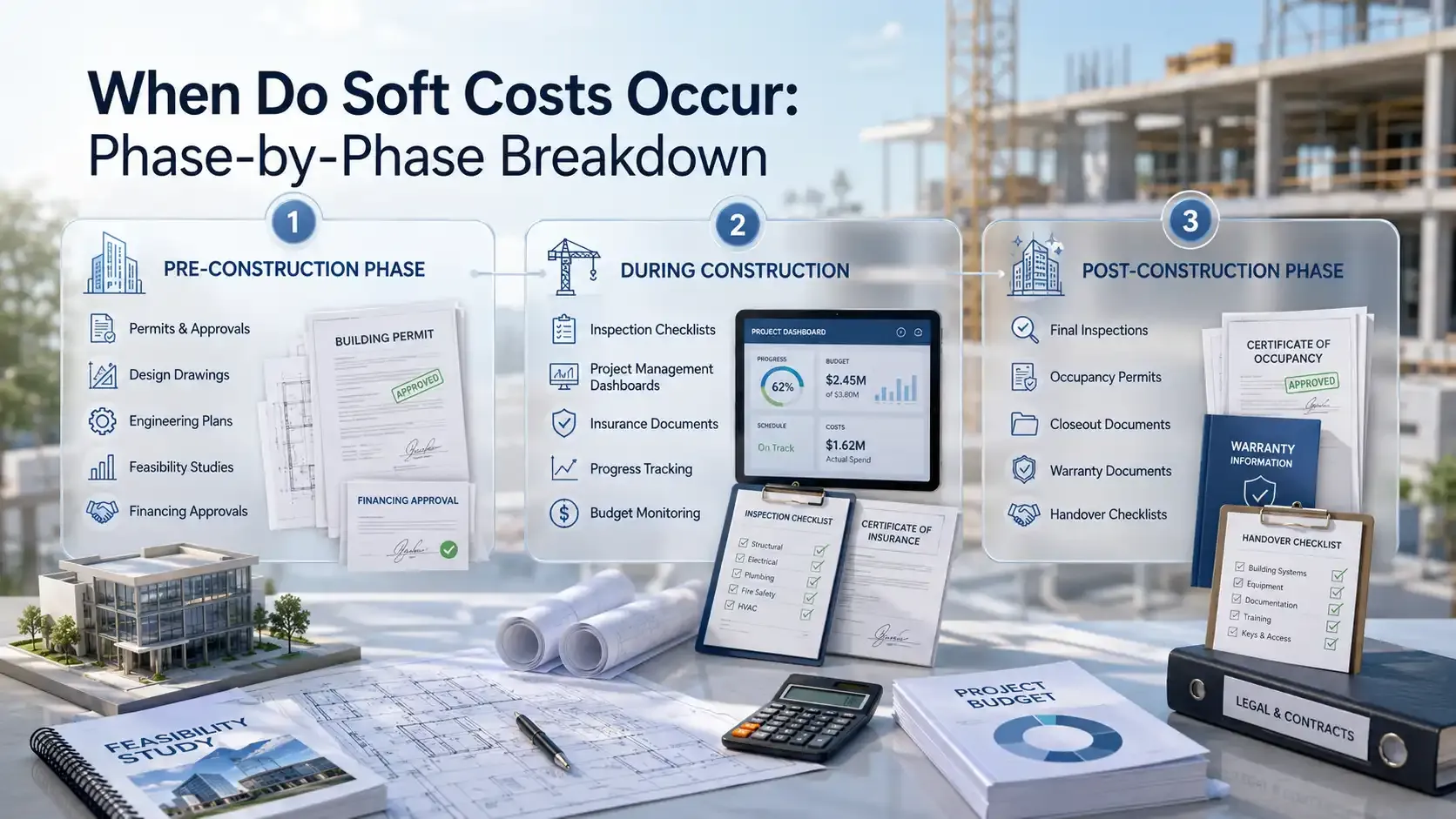
Understanding when soft costs happen helps you plan better instead of reacting to unexpected expenses later. These costs appear in different stages of a project.
Pre-Construction Phase
Most soft costs start before construction begins. This stage includes feasibility studies, site checks, design work, permits, zoning approvals, legal reviews, loan setup fees, and insurance setup.
A project can already spend a lot of money in this phase before any physical work starts. Good pre-construction planning here helps reduce surprises later.
During Construction
Soft costs continue while construction is going on. The project keeps paying construction loan interest, insurance premiums, and project management fees. Inspections also add extra costs at different stages. If the project gets delayed, these costs increase even more because they depend on time, not just work done.
Post-Construction Phase
Soft costs do not stop when construction ends. The project may still pay for final inspections, occupancy certificates, property taxes, marketing, leasing, tenant setup, furniture, IT setup, and warranty work. Many teams forget these costs early, which can make the final budget look lower than what they actually spend.
How to Manage and Control Soft Costs
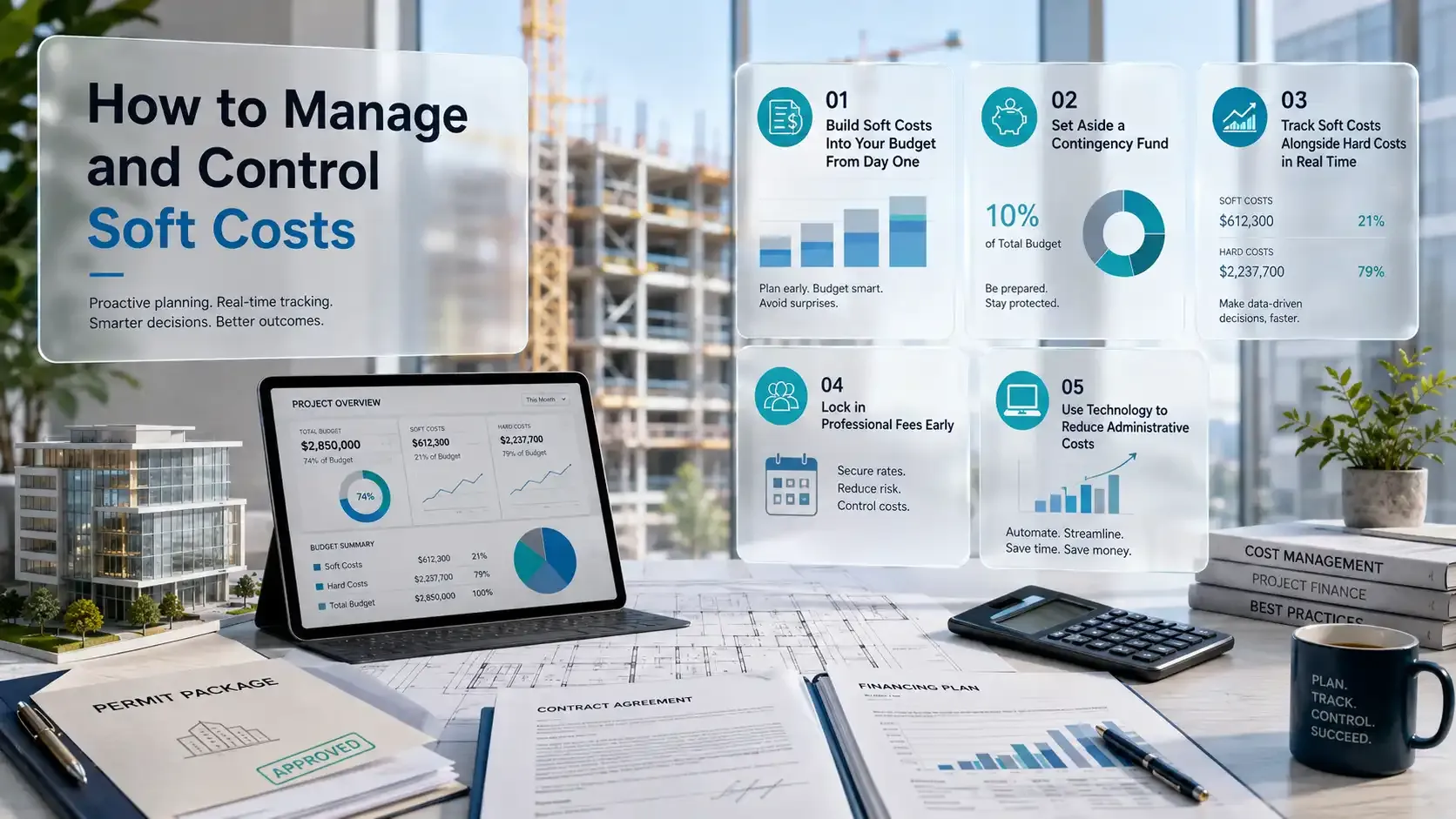
Soft costs are hard to remove because every project needs things like permits, insurance, design work, and project management. But you can still control them with good planning and tracking.
Build Soft Costs Into Your Budget From Day One
Treat soft costs as part of the main budget, not something extra. Include all key areas like design, permits, legal work, financing, insurance, management, and post-construction costs from the start. Don’t rely only on general estimates.
Costs can change a lot depending on location. For example, a permit that costs $5,000 in one place may cost $50,000 in another.
Set Aside a Contingency Fund
Always keep extra money for unexpected changes. Delays in permits, design updates, or changes in interest rates can increase soft costs beyond your plan. A contingency budget helps you handle these changes without affecting other parts of your project budget.
Track Soft Costs Alongside Hard Costs in Real Time
Many teams track materials and labor closely but ignore soft costs until later. This leads to surprises. Track both together using proper tools so you can see spending early and fix problems before they grow.
Lock in Professional Fees Early
Try to fix prices with architects, engineers, and consultants at the start. Fixed-fee agreements help avoid rising costs from extra revisions or delays. This gives more control over the design budget.
Use Technology to Reduce Administrative Costs
Project management work can become one of the highest soft costs if it is handled manually. Tools that automate scheduling, tracking, and reporting can reduce this burden and save both time and money.
A tool like FieldServicely helps construction teams control administrative soft costs by automating crew scheduling, tracking work in real time, and using digital timesheets that connect directly to payroll.
Construction Soft Costs Checklist
You can use this as a reference when building your project budget. Every item listed below is a soft cost category that should have an assigned estimate before construction begins.
Design & Engineering
- Architect fees
- Structural engineer
- Civil engineer
- Interior designer
- Landscape architect
Permits & Legal
- Building permits
- Zoning applications
- Environmental permits
- Inspection fees
- Attorney retainers
- Accounting and audit fees
Financing & Insurance
- Construction loan interest
- Loan origination fees
- Appraisal fees
- Builders' risk insurance
- General liability insurance
- Performance bonds
Pre-Construction
- Land survey
- Soil and geotechnical testing
- Environmental impact assessment
- Feasibility study
- Title search
Administration & Management
- Project manager fees
- Developer fees
- Consultant fees
- Office overhead
- Field crew coordination and scheduling
Post-Construction
- Marketing and leasing expenses
- Property taxes during construction
- Furniture and IT setup
- Warranty administration
- Final inspections
- Certificate of occupancy fees
Wrapping Up
Soft costs don’t appear on the job site, but they still have a big impact on the total project cost. Projects stay on budget when teams plan soft costs early, track them regularly, and manage them properly.
If you manage construction crews and want to reduce project management and coordination costs, FieldServicely can help. It uses automated scheduling, GPS time tracking, and digital timesheets to reduce manual work and control administrative expenses.
Start free with FieldServicely! No base fee, no credit card, no commitment.
Frequently Asked Questions
What Are Soft Costs In Construction?
Soft costs are non-physical project expenses like design, permits, insurance, financing, legal, and project management services.
What Is The Difference Between Hard Costs And Soft Costs?
Hard costs include materials, labor, and equipment. Soft costs include services, fees, and financing that support construction.
Why Are Soft Costs Hard To Estimate?
They change with timelines, permits, design updates, and market conditions like interest rates, making them less predictable.
Can Soft Costs Be Reduced?
Yes. You can reduce them with fixed contracts, real-time tracking, good scheduling, contingency planning, and efficient project tools.
Do Soft Costs Continue After Construction Is Finished?
Yes. They include leasing, marketing, warranties, final inspections, taxes, and setup costs after construction ends.
Do Soft Costs Continue After Construction Is Finished?Are Permit Fees Considered Soft Costs?
Yes. Permit, zoning, inspection, and environmental fees are soft costs because they are regulatory service expenses, not physical work.