- Field Service Business
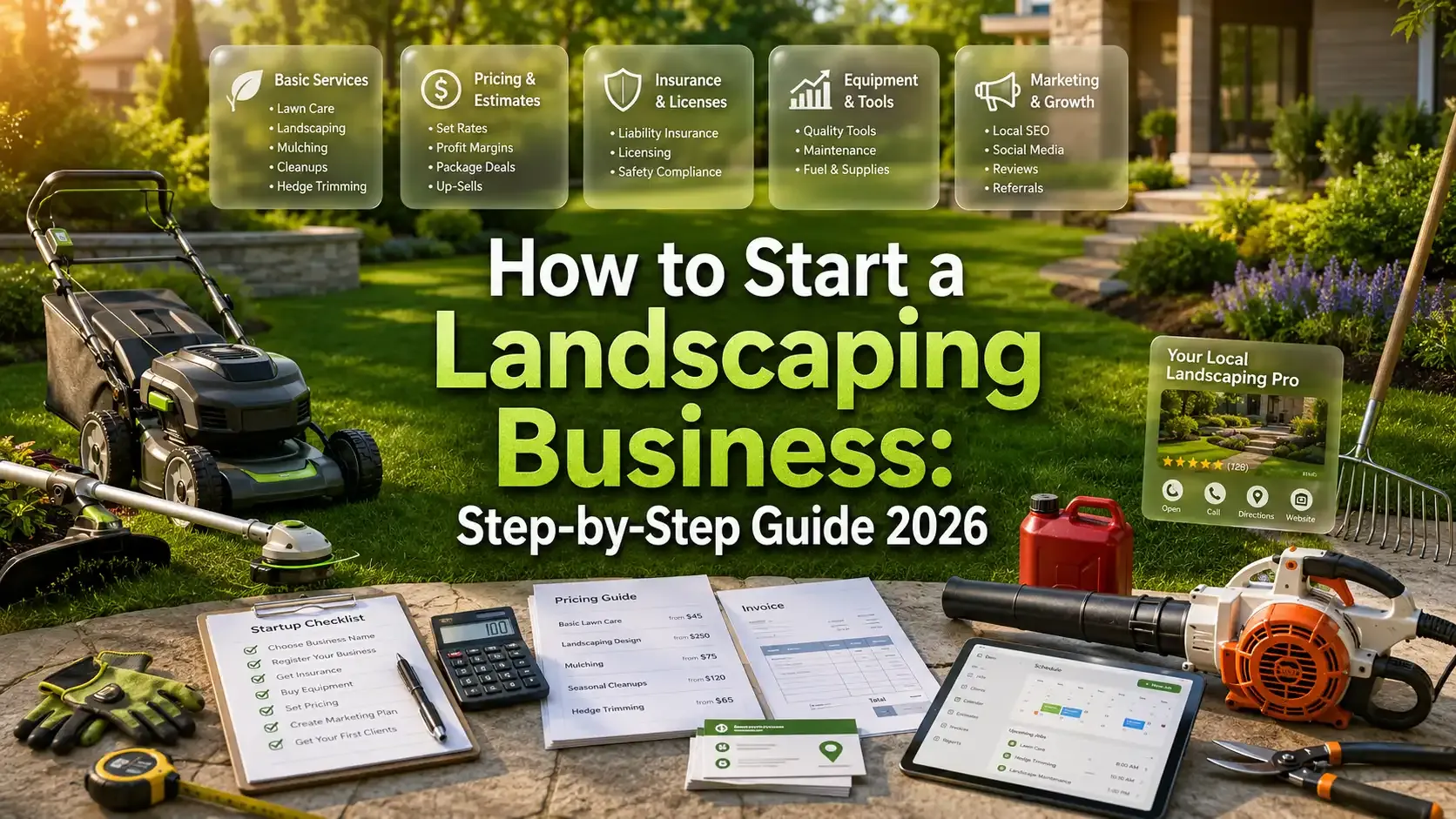
How to Start a Landscaping Business: Step-by-Step Guide 2026
Updated on 30 Jun 2026
Jump to
Summary

Build your basics like services, pricing, insurance, and gear before you chase clients.
Start simple with mowing, edging, and cleanups before moving into hardscaping.
Smart pricing means adding up fuel, labor, gear costs, and what others charge nearby.
Grow your client base with a Google Business Profile, referrals, flyers, and local networking.
Stay organized with a schedule, timely invoices, and separate business finances.
Starting a landscaping business means setting up the right foundation, not just buying tools, then hoping clients come. You can begin with basic lawn care services, register your business, and obtain insurance. Then start pricing jobs based on real costs like fuel, labor, and equipment use.
But the new owners often struggle with unsteady clients, along with tight cash flow. Many charge too little or feel stuck even after landing jobs. That is why most smart landscapers start with simple services before growing into bigger work like hardscaping.
In this blog, I will show you how to start a landscaping business step by step. You will learn about startup costs, finding clients, and real tips to build a profitable business.
Is Starting a Landscaping Business Worth It?
Yes, starting a landscaping business can be profitable. Because homeowners plus businesses need lawn care, seasonal cleanups, and property maintenance all year long.
The demand backs this up. The U.S. landscaping industry makes more than $184 billion a year. Not only that! It keeps growing as homeowners spend more on outdoor spaces concurrently with curb appeal.
On top of that, landscaping is not a one-time job. Services like mowing, fertilization, and seasonal work bring in repeat income. A client who hires you for weekly mowing pays you month after month, not just once.
This is also why residential clients are a great place to start. They are easier to land when you are new, as the profit potential is strong.
So if you pair quality work with smart operations, your landscaping business can grow into a steady, profitable company, with room to scale over time.
How To Start Your Own Landscaping Business: Step-by-Step Guide
Step 1: Choose the Right Landscaping Services Before You Start
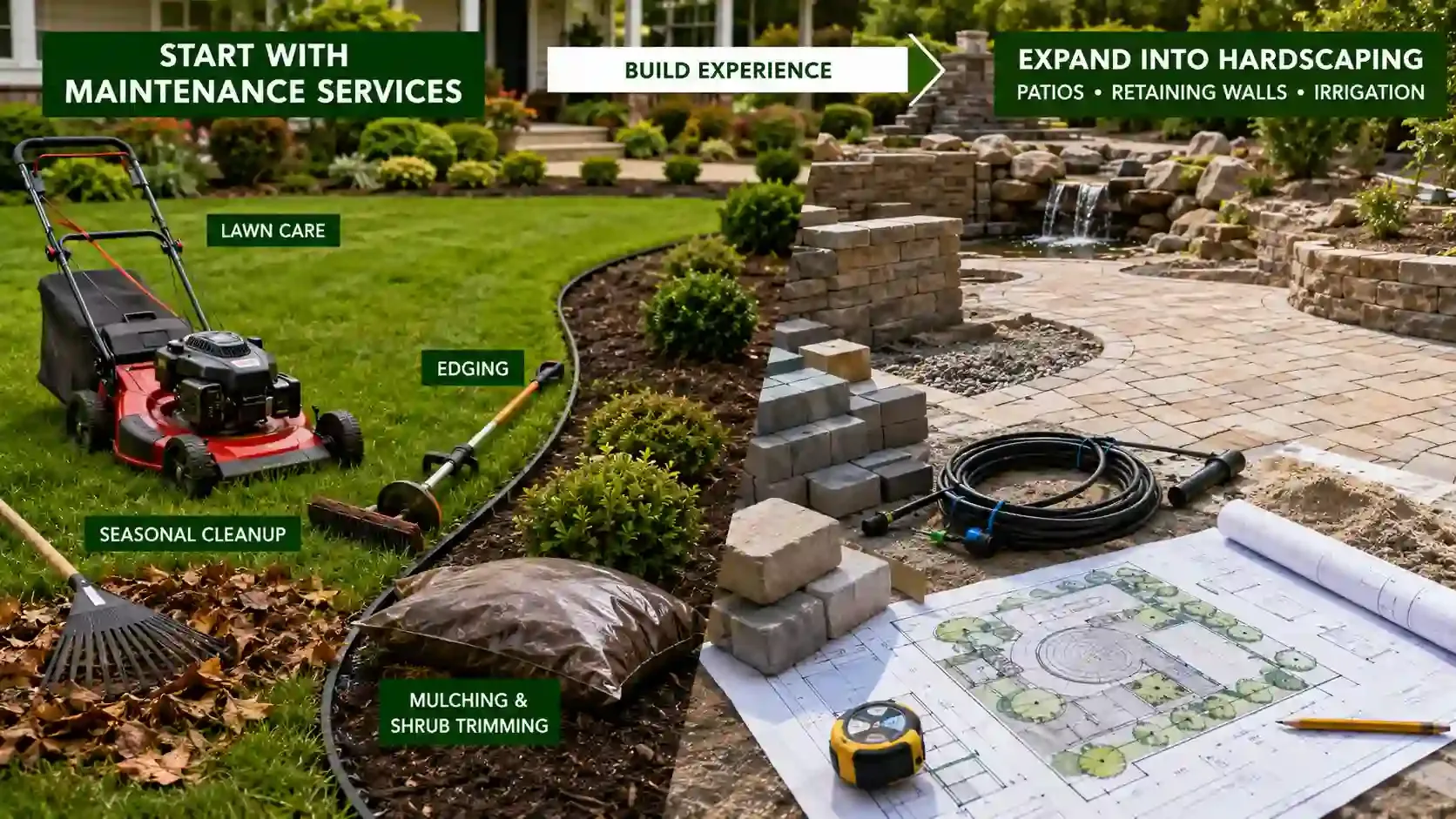
The best answer to how to start a small landscaping business is by focusing on maintenance services first. Skip hardscaping or construction work for now. This keeps your startup costs low, helps you gain real experience, and lets you build a reliable customer base before taking on bigger projects.
Landscape Maintenance Services
Start with maintenance services because homeowners need them all year long. This gives you repeat income instead of always chasing new clients.
Lawn mowing is the most common starting point since demand stays strong during the growing season. Once you are already on a property, you can add edging to each visit. It gives lawns a cleaner look and brings in more per job.
From there, seasonal cleanups open up more work in spring and fall. As you build trust with clients, mulching and shrub trimming become easy add-ons that boost your revenue even further.
Hardscaping and Landscape Construction
Once you have solid experience, you can move into hardscaping as well as construction work. Projects like patios, retaining walls, irrigation systems, and water features bring in bigger invoices with better margins.
But these jobs also carry more risk. You need accurate measurements, clear material costs, good drainage plans, and strong labor management to stay profitable.
That is why most successful landscapers start with maintenance clients first. Once you understand scheduling, estimating, customer service, and job costing, moving into larger projects feels much easier. It also pays off long-term.
Ready to manage more landscaping jobs?
Keep recurring maintenance visits organized with smarter scheduling.
Step 2: How to Start a Landscaping Business With No Experience
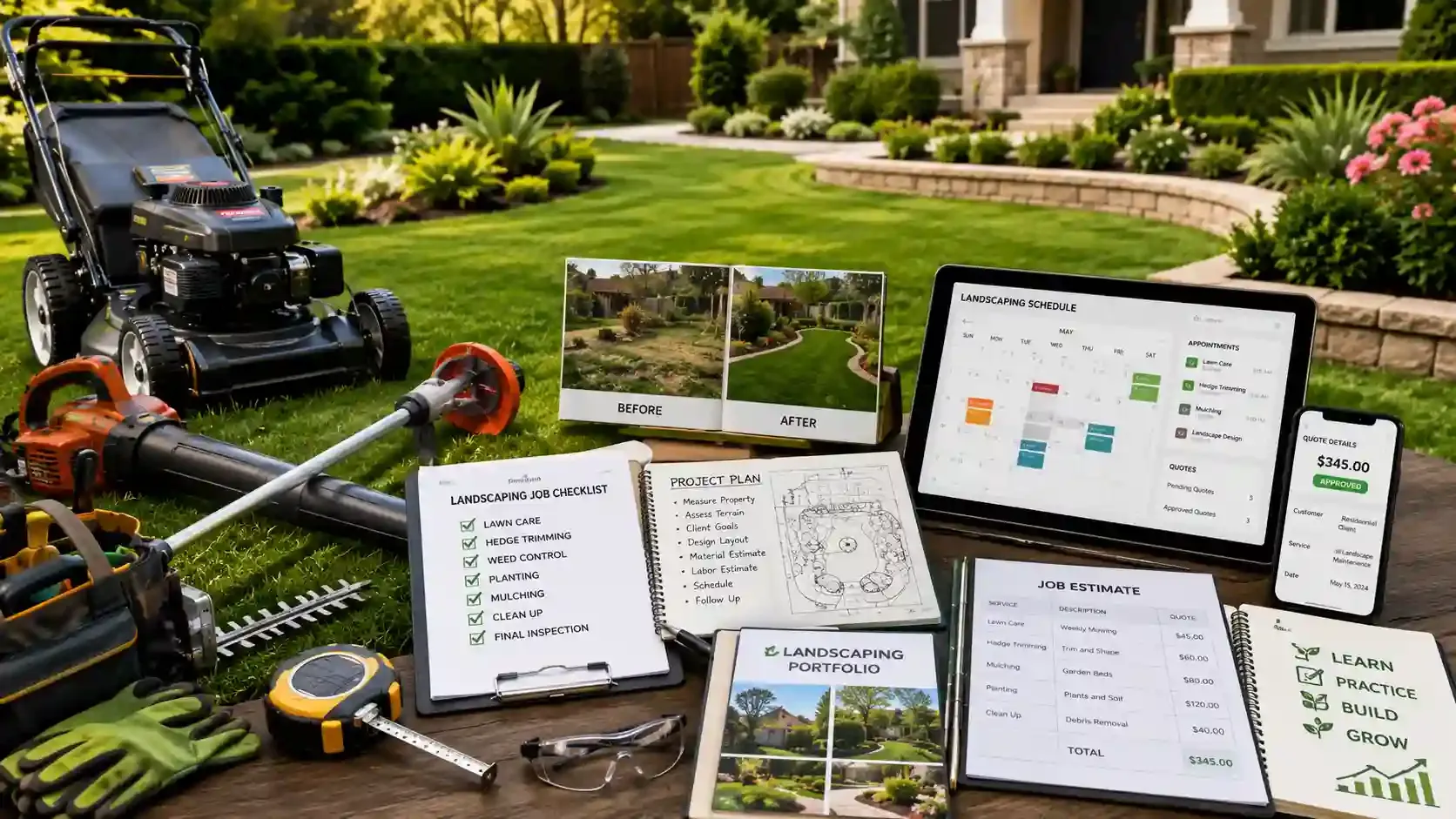
You can start a landscaping business with no experience. Learn basic lawn care skills, work alongside experienced landscapers, then pick up small residential jobs. Many successful owners started with little knowledge yet grew their skills through hands-on work.
Start by learning how to use key tools like a commercial mower, string trimmer, or leaf blower. Once you know how to operate and maintain your equipment, your work gets faster plus more professional.
If possible, spend some time working under an experienced landscaper. You will pick up useful skills like estimating jobs, talking to customers, and keeping properties in great shape.
Before you take on paying clients, practice in your own yard or help out family or friends. This builds real experience while giving you confidence at the same time.
As you finish projects, start building a portfolio.
- Take before-and-after photos.
- Collect customer reviews.
- Show your best work online.
Most competitors miss one key step: learning the business side. Knowing how to schedule jobs, send quotes, and manage customers matters just as much as your landscaping skills.
Build your landscaping business the organized way.
Simplify scheduling, customer management, and daily operations.
Step 3: Register Your Business and Get Proper Insurance
Before taking clients, register your business.
Sole Proprietorship vs LLC
The simplest way to start is as a sole proprietorship. This structure requires less paperwork, but it doesn't separate your personal assets from your business liabilities.
An LLC (Limited Liability Company) provides an extra layer of protection. If your business faces a lawsuit or debt, your personal savings, home, and other assets typically remain separate from the business.
That protection is one reason many landscapers choose an LLC. According to the IRS, LLCs remain one of the most popular business structures for small service-based businesses. Why? Because they combine liability protection with operational flexibility.
Protect your growing business with better organization.
Keep job records, customer details, and invoices easy to manage.
Step 4: Acquire Essential Landscaping Equipment
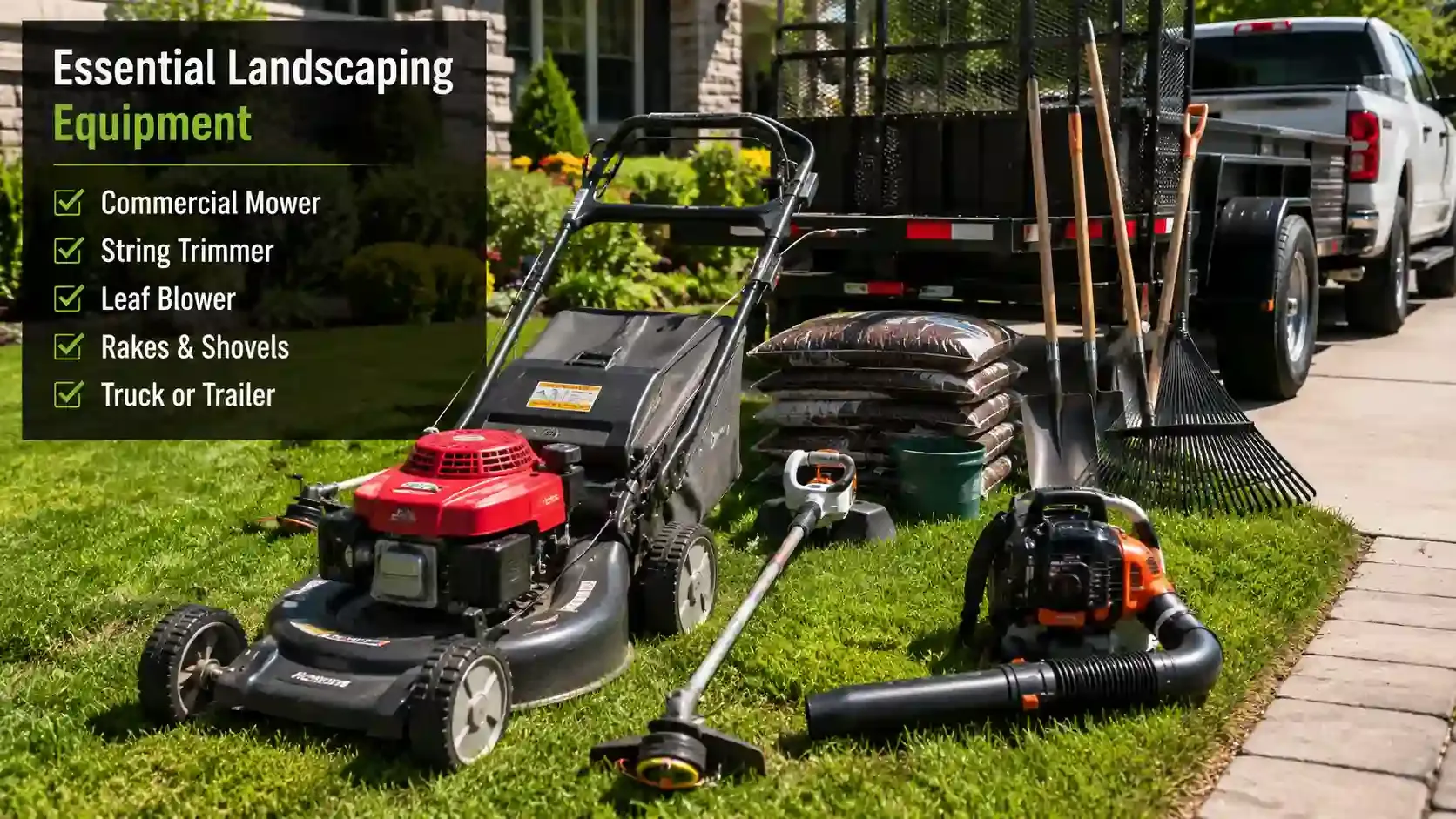
You do not need expensive machinery to start your own landscaping business. Most new landscapers begin with a few core tools and upgrade their equipment as revenue grows.
The goal is to buy what you need to complete jobs efficiently. Many beginners overspend on equipment before landing enough clients to justify the investment.
Essential Equipment Checklist
A basic landscaping equipment setup should include:
- Commercial mower
- String trimmer
- Leaf blower
- Rakes
- Shovels
- Truck or trailer
These tools are enough to handle common landscape maintenance services such as mowing, edging, cleanups, and mulching. As your customer base expands, you can add specialized equipment for larger projects.
New vs. Used Equipment
Used equipment can significantly reduce your startup costs. Many landscapers recommend checking Craigslist, pawn shops, or local dealers that sell used commercial-grade equipment.
That advice makes financial sense. Commercial mowers plus trailers often retain their functionality for years when properly maintained, allowing new business owners to save thousands of dollars upfront.
At the same time, inspect any used equipment carefully before buying. Repair costs can quickly erase the savings if a machine has major mechanical issues.
According to a report, small businesses continue to prioritize used and financed equipment purchases to preserve cash flow during the early stages of growth.
Spend less time managing tools and more time growing.
Track jobs and field activity without the paperwork.
Step 5: Set Profitable Landscaping Prices
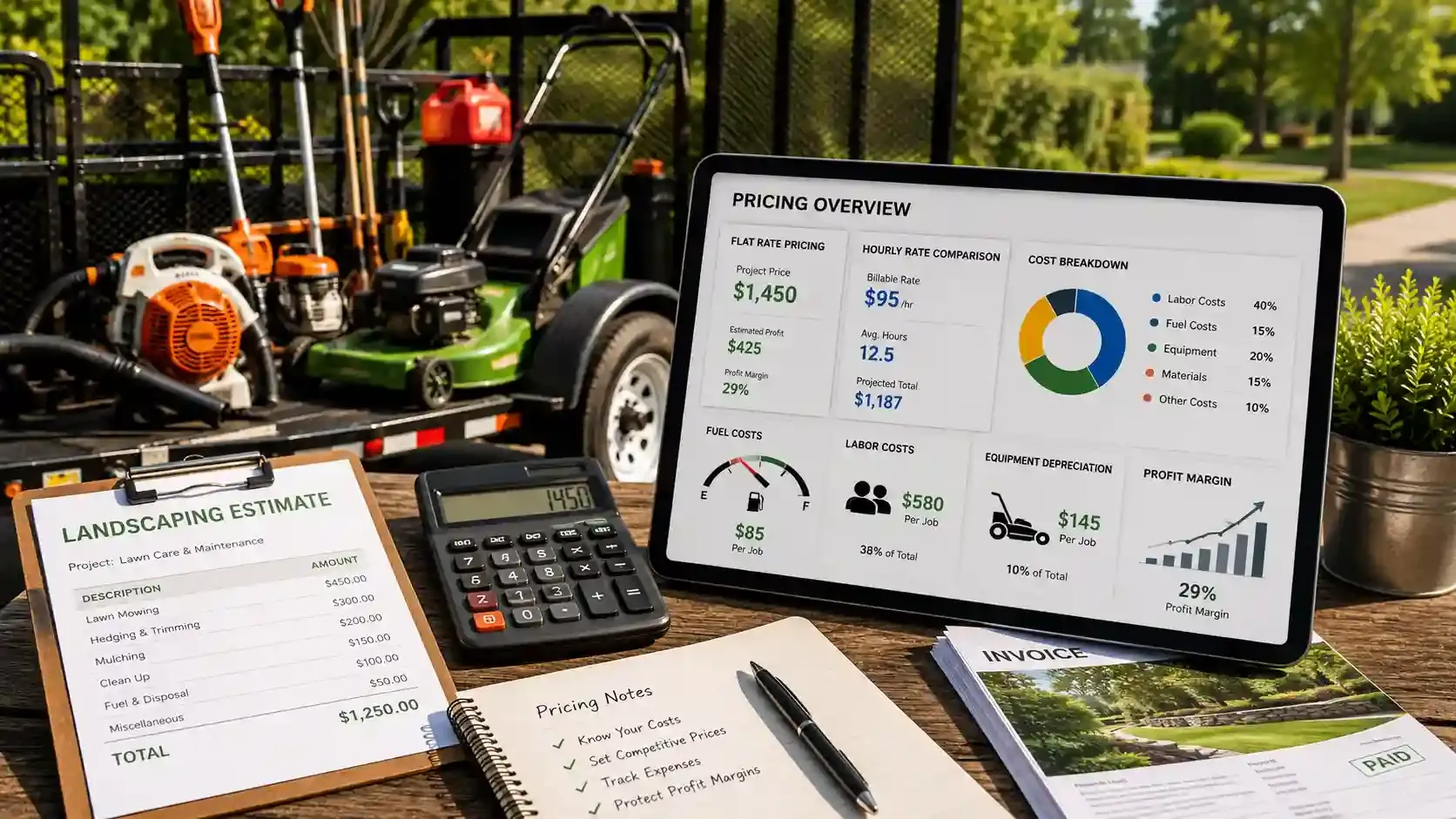
Most new landscapers choose flat-rate pricing because it feels simpler for customers and helps protect profit margins. It also reduces confusion during billing since clients know the total cost before the job starts.
That clarity matters in how to start a landscaping business because pricing mistakes often lead to lost profit in the first few months.
Hourly vs Flat Rate
Hourly pricing charges clients based on the time spent on a job. It works well for unpredictable tasks, but it can limit earnings if work takes longer than expected.
Flat-rate pricing sets a fixed price for the entire project. Most beginners prefer this model because it rewards efficiency and gives customers a clear upfront cost.
According to a report, service businesses often improve conversion rates when pricing feels predictable for customers.
Fuel Costs
Fuel becomes a hidden pressure point in landscape maintenance services. Trucks, mowers, and blowers all consume fuel, especially during peak season when multiple jobs happen daily.
Smart landscapers factor fuel into every quote instead of treating it as an afterthought. This prevents small jobs from turning unprofitable when travel distances increase.
Labor Costs
Labor directly impacts profit when starting your own landscaping business. Even if you begin solo, you must price your time correctly, or your earnings will stay low.
As you grow and hire help, wages must fit into each job's budget. Otherwise, an increased workload can reduce margins instead of improving income.
Equipment Depreciation
Equipment wears down over time, even with proper care. Mowers, trimmers, and trailers all lose value as usage increases.
That depreciation should appear in your pricing strategy. Many beginners ignore it, then struggle to replace tools later without financial strain.
Competitor Pricing Research
Competitor research helps you avoid underpricing your services. Checking local landscapers gives you a realistic range for how to start landscaping business pricing in your area.
However, copying prices directly does not work well. Strong pricing comes from understanding your own costs first, then positioning slightly above or within the market range based on service quality.
Know your jobs. Know your profits.
Track work hours, job details, and billing in one place.
Step 6: Market Your Landscaping Business and Get Your First Clients
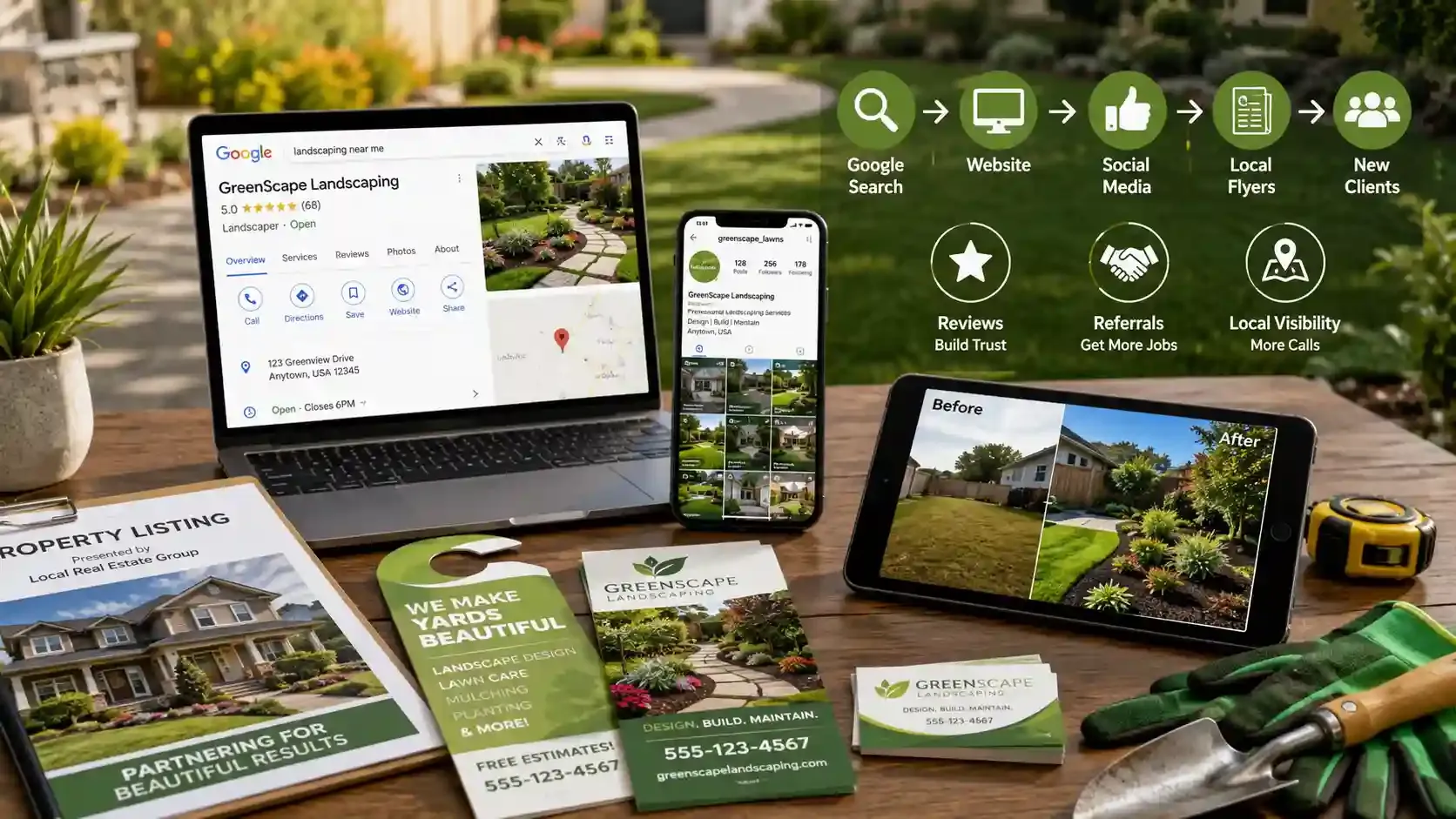
The fastest way to get clients for a landscaping business is through a mix of Google Business Profile, referrals, flyers, and local networking. These channels work together because they combine online visibility with direct local reach, which helps you get your first paying jobs quickly.
Create a Google Business Profile
Set up a Google Business Profile. This puts your business on Google Maps. When people search for lawn care nearby, your name shows up. Most customers pick from the top results they see on the map.
Ask happy clients to leave reviews too. Even a few good ones build trust. More reviews mean more calls from local homeowners.
Build a Simple Website
A website does not need to be anything fancy. List your services, drop in some photos of your work, and add your contact info. That is enough to look professional when someone looks you up.
It also helps turn curious visitors into real leads. Forbes highlights that most people check a business website before making a hiring decision.
Use Social Media
Facebook and Instagram are great for landscaping because the work is visual. Post photos of your projects, share quick videos, and throw in seasonal tips once in a while. Just stay consistent. Over time, people in your area start recognizing your name.
Local Offline Marketing
Offline marketing still works strongly in local service businesses. Simple flyers, door hangers, and business cards help you reach homeowners who may not search online immediately.
Many beginners also share flyers in targeted neighborhoods to build early awareness. This direct approach often leads to fast first jobs, especially in residential areas where word-of-mouth spreads quickly.
Partner With Real Estate Agents
Real estate agents often need quick yard cleanups before selling homes. Partnering with them creates a steady flow of early clients for a new landscaping business.
These partnerships work because agents want properties to look presentable fast. In return, landscapers get repeat work and referrals without heavy advertising costs.
Thus, it helps stabilize income during the early stages of starting your own landscaping business.
Turn new leads into completed landscaping jobs.
Stay organized from customer request to job completion.
Step 7: Manage Scheduling, Invoicing, and Customer Records
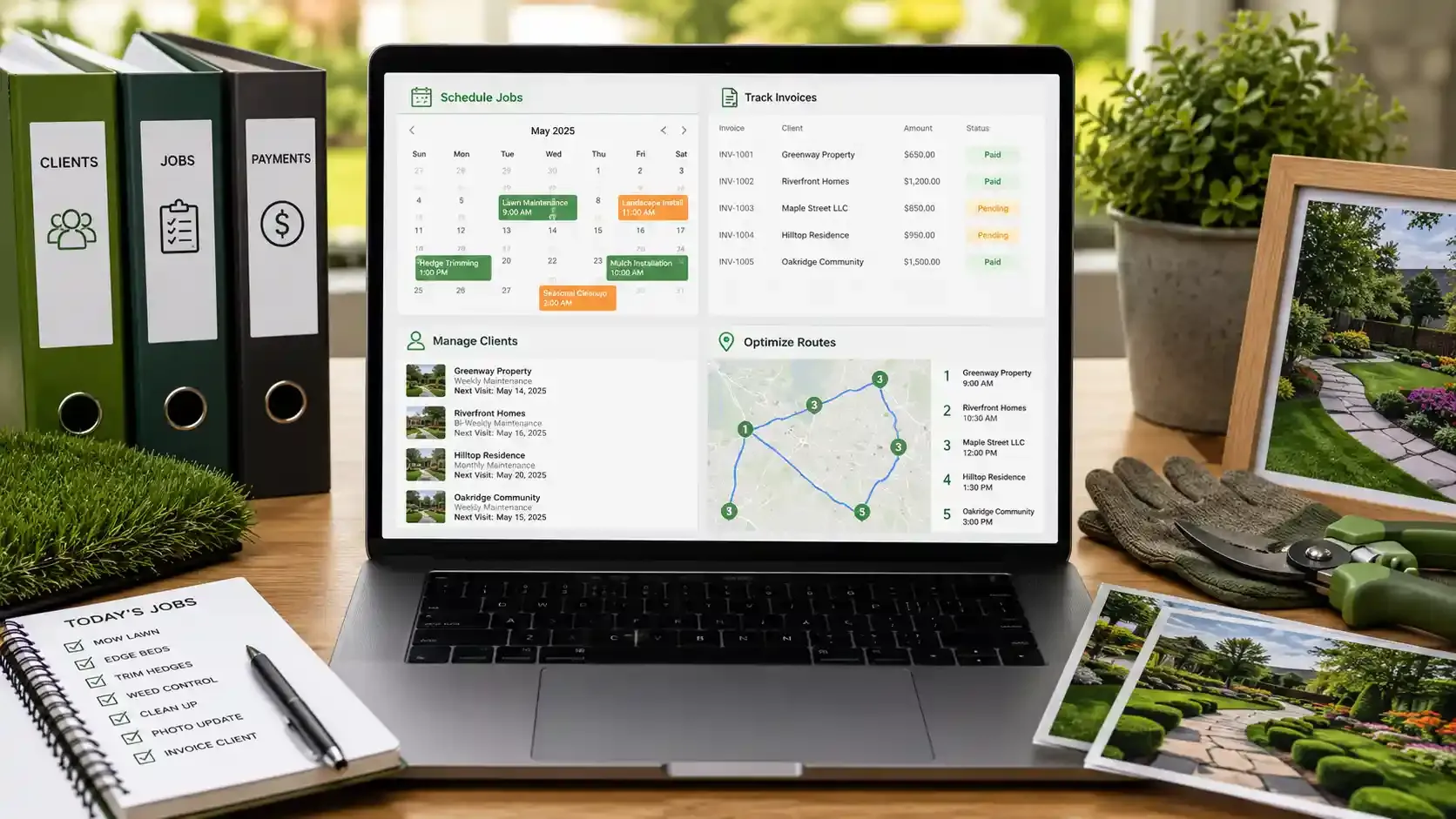
Managing operations efficiently becomes essential once you start serving multiple clients in your landscaping business. At this stage, your success depends not only on doing the work but also on staying organized with jobs, payments, and customer details.
This is where many beginners struggle. They often focus on getting clients but forget that poor scheduling and missed invoices can quietly reduce profits even when the work quality is strong.
Separate Business Bank Account
A separate business bank account helps you track income and expenses clearly. It also makes tax filing easier and prevents confusion between personal spending and business cash flow.
This step matters in starting your own landscaping business because clean financial records help you understand which jobs are actually profitable.
Scheduling Jobs
Scheduling jobs correctly prevents delays or double bookings. It also helps you plan your day based on location, job size, and travel time.
Strong scheduling becomes even more important when you handle landscape maintenance services because recurring clients need consistent visits. Without structure, missed appointments can damage trust, which reduces repeat business.
Route Optimization
Route planning reduces fuel costs and saves time between jobs. Instead of driving randomly across town, you group nearby clients into the same schedule block.
This small adjustment improves efficiency and directly increases profit margins. Many landscaping businesses lose money early simply because travel time is not managed properly.
Invoicing
Invoicing keeps your cash flow stable and ensures you get paid on time. Clear invoices also reduce confusion about pricing, services, and job scope.
Digital invoicing tools make this process faster as well as more professional, especially when you handle multiple clients each week.
To simplify operations further, tools like FieldServicely help landscapers manage schedules, dispatch jobs, track recurring maintenance visits, and send professional invoices from one platform. This reduces manual tracking and helps new business owners stay organized as they scale.
Run your landscaping operations from one place.
Schedule jobs, dispatch crews, and send invoices faster.
How Much Does It Cost to Start a Landscaping Business?
The cost to start a landscaping business typically ranges from $4,000 to $20,000, depending on equipment, transportation, insurance, and early marketing setup. The variation comes from whether you start part-time with basic tools or go full-time with a truck, trailer, and commercial-grade equipment.
Budget Startup vs Full-Time Startup
A budget startup usually costs between $ 4,000 and $ 8,000. This version focuses on essential tools such as a mower, trimmer, and blower, as well as a used trailer. It works well for small residential jobs where you build income slowly.
A full-time setup often reaches $10,000 to $20,000. This includes a reliable truck, commercial equipment, branding, insurance, and basic advertising. It supports faster growth because you can take on more clients and larger properties from day one.
Hidden Costs Most Beginners Miss
Many beginners underestimate hidden costs when learning how to start a landscaping business. Fuel becomes a constant expense because equipment and travel run daily during peak season.
Equipment maintenance also adds ongoing pressure. Blades, oil changes, repairs, and replacements can quietly reduce profit margins if not tracked properly.
Licensing and registration fees vary by location but still add early financial weight. Some cities also require permits for certain landscape maintenance services, especially when operating commercially.
Common Mistakes New Landscaping Business Owners Make
- Buying too much equipment before steady income
- Underpricing services and ignoring real costs
- Skipping insurance and risking claims
- Not setting up a Google Business Profile
- Mixing personal and business money
- Taking every job without filtering the profit potential
Conclusion
Starting a landscaping business gets much easier when you follow the right steps from day one. Pick your services first. Register your business. Get proper insurance to protect your work. From there, buy essential equipment, set profitable pricing, then focus on local marketing to land your first clients.
As your work grows, stay on top of operations like scheduling and invoicing so things run smoothly. Stick with these steps consistently. You can build a stable, profitable business over time.
Frequently Asked Questions
Do I Need a License to Start a Landscaping Business?
Yes, most areas require a basic business license before you start. Some locations may also need special permits for pesticide use or commercial landscaping work. Always check local city or state rules before taking clients.
How Long Does It Take To Become Profitable in Landscaping?
Most new landscaping businesses take 3 to 12 months to become profitable. It depends on pricing, client flow, and how well you control costs like fuel, labor, and equipment maintenance.
Can I Start a Landscaping Business Part-time?
Yes, many beginners start part-time using basic tools and weekend jobs. This helps you build experience and clients slowly without risking full-time income pressure.
What Skills are Most Important in Landscaping?
Key skills include basic lawn care, time management, customer communication, and equipment handling. Strong scheduling and pricing skills also help you stay profitable long-term.
How do I Handle Slow Seasons in Landscaping?
Many landscapers shift to seasonal services like leaf cleanup, snow removal, or garden preparation. Others focus on maintenance contracts to keep a steady income during off-peak months.
What to read next