
- Field Service Business
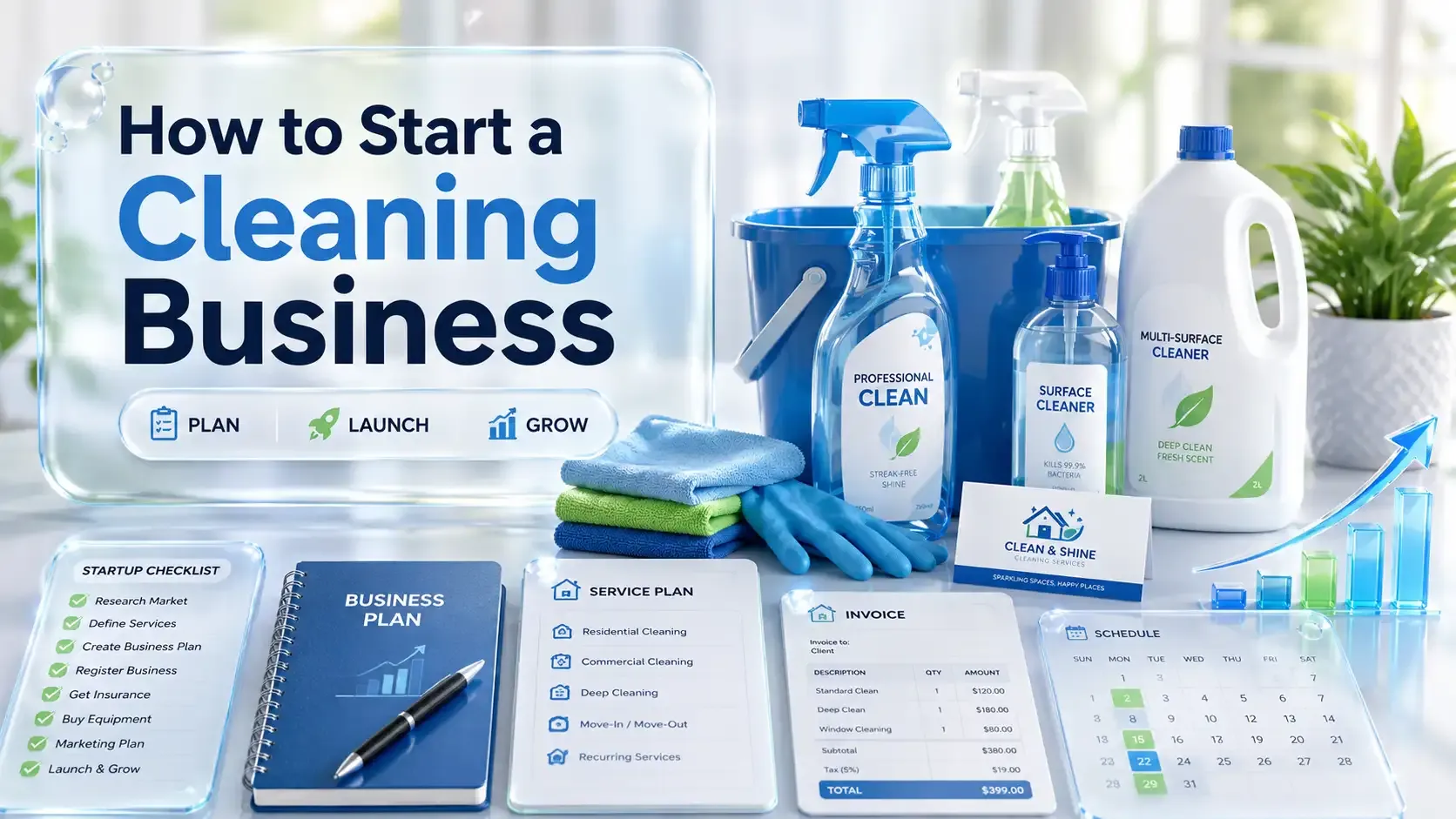
How to Start a Cleaning Business [Step-by-Step Guide]
Updated on 6 May 2026
Jump to
Summary

The right niche and services, from residential to specialized cleaning, create a strong foundation for success.
Proper registration, insurance, and licenses protect your business and build client trust.
Quality supplies, a dedicated business account, and organized scheduling ensure smooth operations.
Building clients through personal networks, online presence, and consistent follow-up drives growth.
Awareness of startup costs and avoiding common mistakes keeps the business profitable and scalable.
Starting a cleaning business is one of the simplest ways to turn skills and hard work into a profitable venture. Many people are drawn to it because the startup costs are relatively low. Yet the demand is steady, and it can scale from a solo operation to a full team.
However, beginners often face challenges like setting the right prices, finding clients, staying organized, and managing legal requirements. Mistakes in these areas can slow growth or create costly problems.
In this blog, we will guide you step by step on how to start a cleaning business. We will cover setup, marketing, costs, and common mistakes to avoid.
Why Start Your Own Cleaning Business in 2026?
Most people overlook the cleaning business because it sounds old school, and that is exactly why it is worth paying attention to.
The industry is projected to grow from USD 481.75 billion in 2026 to USD 859.20 billion by 2034. This growth offers a chance to tap into an industry that’s not just profitable, but also crucial.
Did you know nearly 41% of households now use regular cleaning services? This provides a steady stream of income for business owners. Also, the predictable cash flow makes it easier to grow your business over time.
Commercial cleaning is another lucrative niche. Offices, medical facilities, and schools are outsourcing cleaning services, offering long-term contracts that pay well.
The trend of businesses moving away from in-house staff means opportunities are abundant for reliable, professional cleaners.
What makes this business even more appealing is the low startup cost. You need almost nothing to start. Just buy some basic cleaning equipment and a solid online presence, without the need for huge investments in inventory.
Step 1: Plan and Define Your Niche

Decide Services
Before you start cleaning, you need to figure out exactly what kind of work you want to do. Residential cleaning is the easiest way to get started if you’re on your own or have a small team.
People these days are so busy. In fact, full‑time employed people work about 8.1 hours per day on days they work, leaving little time for deep cleaning.
This creates steady demand for professional services such as weekly house cleanings. That’s why many beginners search for how to start a house cleaning business.
Commercial cleaning is different, but it can make you a lot more money.
Offices, retail stores, and medical spaces need reliable cleaners who can follow schedules and handle larger areas. One contract alone can bring in $2,000–$5,000 a month for a small team.
Specialized services can make your business stand out. Think window cleaning, pool cleaning, move-in/move-out cleaning, or green cleaning. These niches let you charge a premium while facing less competition in your local area.
Identify Your Target Market
Once you know your services, it’s time to figure out who will hire you.
For residential work, your clients are usually busy professionals, families with kids, or landlords with multiple properties. They want someone reliable, thorough, and punctual. If you deliver that, they’ll stick with you for months or even years.
For commercial work, start small. Dental offices, boutique shops, or local law firms are easier to land than big corporations. Many prefer evening or weekend cleaning, which keeps you ahead of the competition.
And if you’re thinking about how to start a cleaning business in Florida, targeting small offices and seasonal rentals in tourist-heavy cities can be especially lucrative.
Specialized cleaning niches demand a very specific audience. Window cleaning clients are usually commercial properties or high-rise apartments. While pool cleaning targets homeowners in suburban neighborhoods or apartment complexes with private pools.
Set Pricing
Pricing is where a lot of new cleaners struggle. For residential cleaning, you can charge hourly, flat, or per square foot.
Professional house cleaning services commonly charge about $25 to $90 per hour, depending on location and scope of work. Airbnb or short-term rental cleanings can command higher fees, especially when quick turnovers are required.
Commercial cleaning usually requires a contract, with prices often calculated per square foot or per visit. Smaller offices may pay $150–$500 per month, while larger spaces like retail or medical facilities can reach $1,500–$3,000 monthly for consistent service.
Specialized services often allow premium pricing. Many companies list minimum job fees of about $100 – 250, and overall household clean costs averaging roughly $150 – 450+.
The best way to get pricing right is to check your local market, calculate your costs, and add a fair margin.
You may also offer tiered packages such as basic, premium, and specialized. This helps clients choose according to their budget while boosting your average revenue per job.
Decide your niche and services clearly
Organize your workflow and client focus from day one.
Step 2: Fulfill Cleaning Business Legal Requirements
Choose a Name & Register
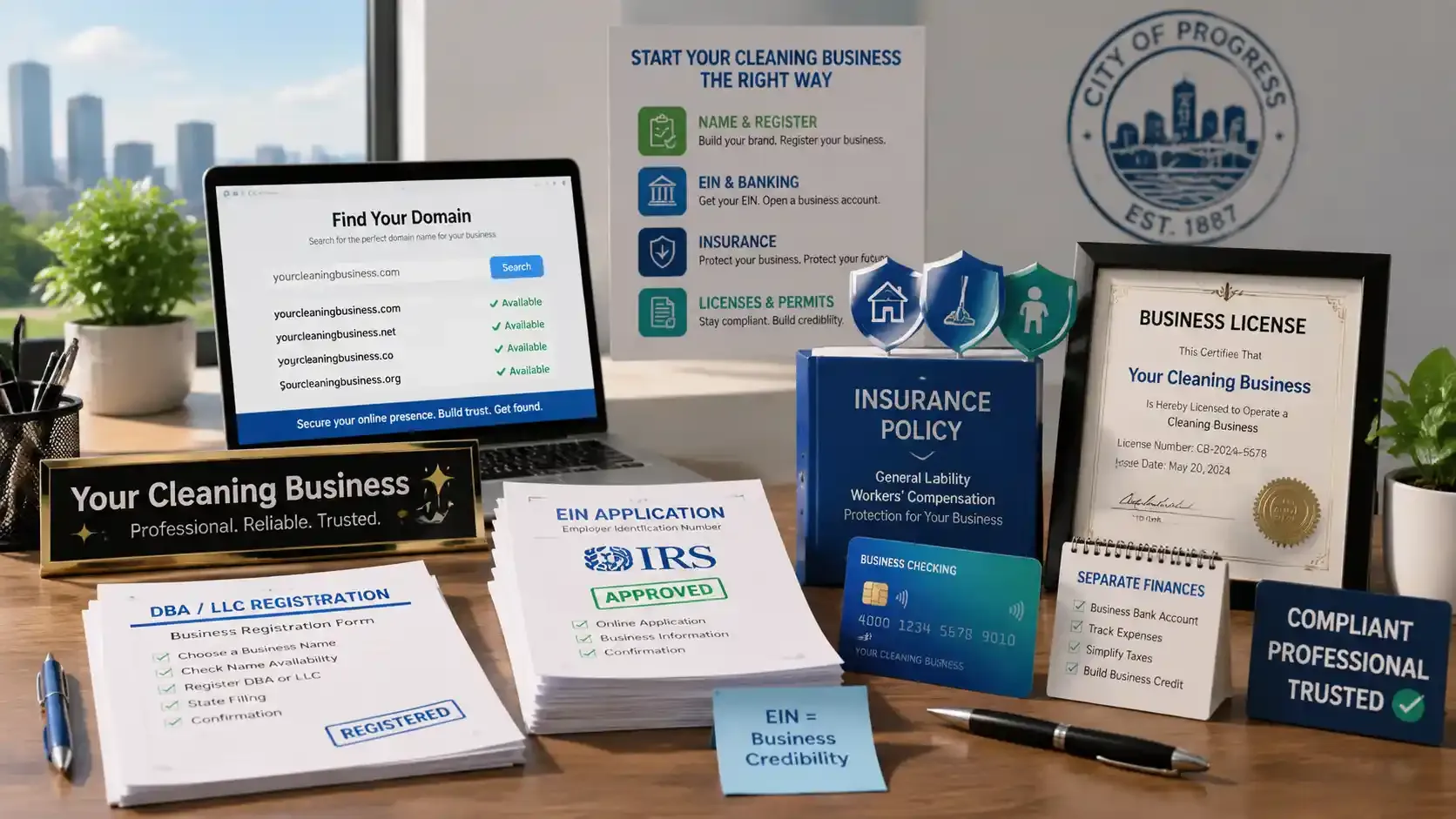
The first thing to do is pick a business name that’s professional and memorable. Your name should clearly tell people what you do and be easy to spell.
Once you settle on a name, register it as a DBA (Doing Business As) or consider an LLC if you want personal liability protection. Many entrepreneurs who search for how to start a commercial cleaning business choose an LLC to protect themselves while pursuing larger clients.
While registering, check the domain and social media handles. About 80% of U.S. consumers search weekly for local businesses online, and 32% search daily.
So, consistency online can make a big difference when targeting both residential and commercial clients.
Get an EIN
Every registered cleaning business needs an Employer Identification Number (EIN). It’s free from the IRS and is required for opening a business bank account, paying taxes, and hiring employees legally.
Even if you start solo, an EIN separates personal and business finances, making bookkeeping easier and your business appear professional.
The application process is simple and online. Once you have it, you can immediately use it for banking, payroll, and state tax registration.
Get Insurance
Insurance is essential when starting a cleaning business. General liability insurance ($1M–$2M) protects against accidents like property damage or injuries while working.
The median small cleaning business insurance general liability premium is about $580 per year, which is minimal compared to potential legal costs.
If you hire employees, workers’ compensation insurance is usually required. It covers medical expenses and lost wages if someone is injured on the job. Even solo cleaners benefit from insurance, because clients feel more confident hiring a protected professional.
Obtain Licenses
Check local city or county regulations before starting. Nearly every area requires a business license. Some states, like Florida, may require additional permits for services like janitorial, pool cleaning, or sanitation.
Licenses also build credibility. Display your license on invoices, your website, and social media. This makes a huge difference when competing for both residential and commercial clients.
Keep your business compliant and organized.
Track licenses, registration, and documents efficiently.
Step 3: Setup and Supplies
Essential Cleaning Supplies
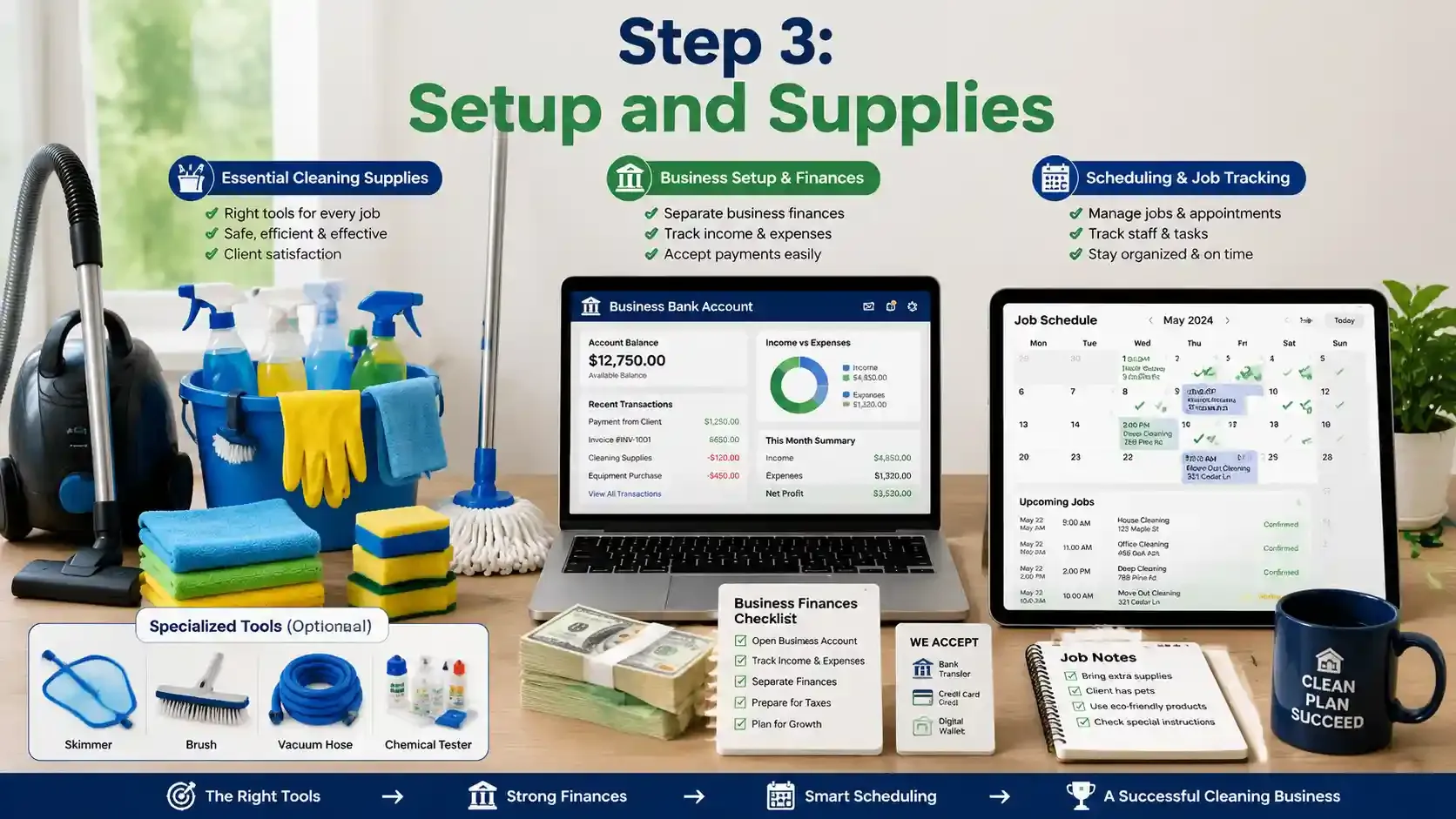
The first thing to focus on is having the right tools for your cleaning business. A vacuum, mop, microfiber cloths, sponges, and standard cleaning solutions handle most residential and small commercial jobs.
However, some services require specialized tools. For example, if you’re exploring how to start a pool cleaning business, you’ll need skimmers, brushes, vacuum hoses, and chemical testers to maintain pools safely and properly.
It’s important to match your tools to the services you plan to offer. You must have the right tools to ensure safety, efficiency, and client satisfaction.
Open a Business Bank Account
A dedicated business account makes it easier to track income, manage expenses, and prepare for taxes. Separating personal and business finances leads to clearer, more accurate bookkeeping and financial reporting. [Source: Lightheart Sanders]
Linking the account to bookkeeping software simplifies record-keeping. You can monitor cash flow, revenue, and expenses in real time. Organized finances also make it easier to plan for growth and invest in tools or staff when needed.
Additionally, a business account also makes accepting payments smoother. Clients can pay via bank transfer, credit card, or digital wallets, which increases convenience and trust.
Set Up Scheduling & Job Tracking
Managing multiple clients, locations, and staff becomes challenging without a system. Many cleaning businesses use software to keep track of appointments, client notes, and job history in one place.
FieldServicely is one example of how these tasks can be organized in real operations. It allows you to see upcoming jobs, manage staff availability, and keep detailed client notes without confusion.
Other tools, like Google Calendar or Trello, can work, but they require more manual effort. Having a central system reduces missed jobs, double-bookings, and communication errors.
Scheduling software also helps when you hire staff. You can assign tasks, track completion, and maintain invoices all in one place.
Manage your jobs and schedules seamlessly.
FieldServicely helps you track clients, appointments, and invoices in one place.
Step 4: Acquire Clients and Market Your Business
Find Your First Clients
The first clients usually come from people who already know and trust you. Start by reaching out to friends, family, and neighbors. They are more likely to give you a chance, provide honest feedback, and recommend you to others.
Local online communities are another way to get your first clients.
Facebook groups, Nextdoor, and community boards in your area are full of people looking for cleaning help. Post clear descriptions of your services, pricing, and availability, and respond quickly to inquiries.
After completing your first few jobs, ask clients if they know anyone else who needs cleaning. Satisfied clients can become your most reliable marketing channel!
Build an Online Presence
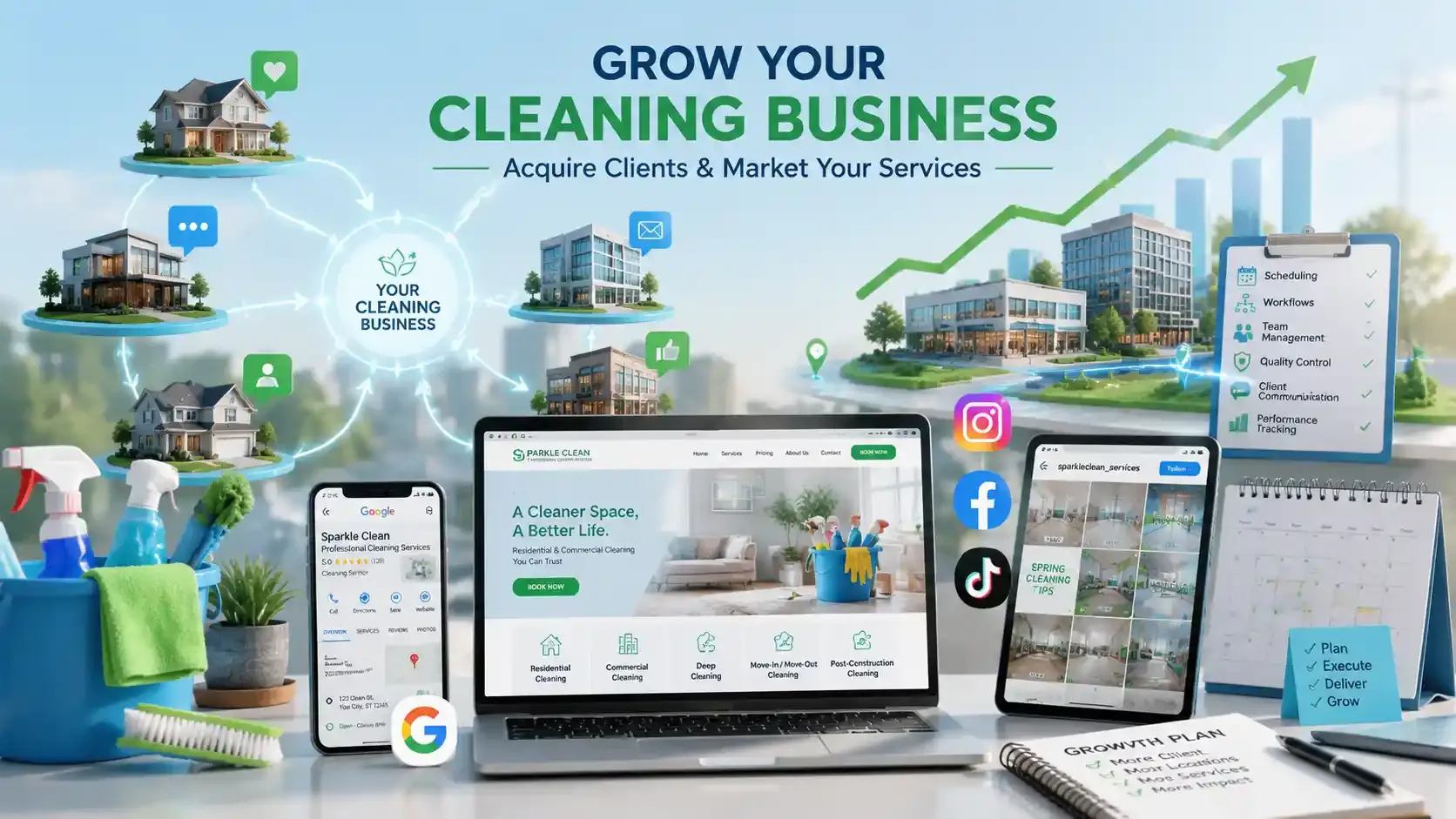
An online presence is critical for modern cleaning businesses. Most people search for local services online, and having a Google Business Profile makes you visible in searches for nearby clients.
Profiles with up-to-date contact information, service details, and photos receive up to 70% more engagement from potential clients.
A simple website enhances credibility and makes it easier for clients to book services. Include your services, pricing, contact form, and client testimonials.
Besides, social media accounts help you stay connected with your audience. Instagram, TikTok, or Facebook can showcase before-and-after cleaning photos, seasonal tips, or behind-the-scenes work.
For businesses exploring virtual or remote operations, knowing how to start a remote cleaning business is essential. You can manage schedules, coordinate teams, and communicate with clients entirely online, which broadens your reach beyond local neighborhoods.
Grow and Scale
Once you have steady clients, it’s time to think about growth.
Hiring employees or subcontractors lets you take on more jobs without burning out. Carefully train staff to meet your standards, and you can handle multiple clients simultaneously, including larger commercial or specialized accounts.
Expanding into commercial cleaning or specialized niches increases revenue potential. Offices, medical facilities, or high-end homes often pay more for consistent, high-quality service.
Specialized services like pool cleaning or post-construction cleaning can bring in premium rates and attract repeat clients who rely on expertise.
Scaling also means smarter operations. Using structured scheduling, clear workflows, and online tracking helps you coordinate teams and manage multiple locations.
Never miss a booking or client request.
Coordinate jobs and communicate with clients efficiently using FieldServicely.
Step 5: Common Startup Costs
Before you start taking clients, it’s important to know what it costs to get your cleaning business off the ground. These costs include legal requirements, insurance, supplies, and marketing.
A clear budget upfront helps you plan pricing, manage cash flow, and avoid surprises in the first few months:
| Item | Estimated Cost | Notes |
|---|---|---|
Licenses / DBA | $20–$50 | State-dependent; LLC higher, offers protection |
Liability Insurance | $400–$800 / year | Covers accidents, property damage, and lawsuits |
Basic Supplies & Equipment | $500–$1,000 | Vacuums, mops, cloths, cleaners; optional specialized tools |
Marketing | $100–$500 | Flyers, local ads, and Google Business Profile setup |
The total estimated startup cost is between $500–$5,000 depending on business size and services.
Track your spending without stress.
Keep your startup costs and budget in check from the start.
Mistakes to Avoid When Starting a Cleaning Business
- Prices that are too low block profits and make growth difficult.
- Operating without insurance or proper registration creates legal risks.
- Poor marketing or no online presence keeps clients from finding your business.
- Manual scheduling without a tool like FieldServicely leads to missed jobs and confusion.
- Ignoring client feedback hurts your reputation and repeat business.
Conclusion
Starting a cleaning business takes planning, effort, and attention to detail, but it can be rewarding both financially and professionally. By choosing the right niche, managing legal requirements, investing in proper tools, and marketing effectively, you set yourself up for long-term success. With the steps in this guide, you now have a clear roadmap to launch, manage, and expand a cleaning business confidently.
Frequently Asked Questions
Do I need special training to start a cleaning business?
You don’t need formal training for basic residential cleaning. However, certifications help if you plan to offer specialized services like pool or commercial cleaning. Training also builds credibility with clients and ensures safety.
Can I start a cleaning business part-time?
Yes, starting part-time is a smart way to test the market and build a client base. You can schedule jobs around your existing commitments and scale up as demand grows. Many successful cleaners start this way.
What licenses are needed for commercial cleaning in Florida?
Florida requires a standard business license to operate legally. Depending on the county, additional permits may be needed for specialized services like janitorial or pool cleaning. Checking local regulations avoids fines and keeps your business compliant.
How long does it take to get the first clients?
With proper networking, online listings, and referrals, most cleaning businesses land their first clients within a few weeks. Consistency and clear communication increase your chances of early bookings. Maintaining quality service helps secure repeat business.
What are some cost-effective ways to market a cleaning business?
Social media posts, Google Business Profile, and local flyers are affordable ways to reach clients. Referral programs and word-of-mouth from satisfied customers also drive bookings. A small investment in these channels can generate consistent leads.