- Route optimization and planning
What is Route Management: Complete Efficiency Guide
Updated on 6 Mar 2026
Jump to
Summary

Route management plans, assigns, tracks, and improves delivery or service routes across multiple stops.
It reduces travel distance, fuel costs, and daily operational inefficiencies.
Key elements include demand forecasting, capacity planning, dynamic routing, and driver communication.
Many industries rely on it, including e-commerce, grocery delivery, field services, and FMCG distribution.
However, traffic, driver shortages, data errors, and fuel volatility make route management challenging.
Route management is the process of planning, assigning, tracking, and improving delivery or service routes across multiple stops. Businesses use route management to organize drivers, reduce travel distance, control fuel costs, and complete deliveries within promised time windows.
As delivery networks grow larger, efficient routing becomes critical. However, managing routes in real operations is rarely simple.
Traffic congestion, driver shortages, inaccurate address data, last-minute order changes, and fuel price volatility constantly disrupt planned routes.
In this blog, we will explain how route management works in real business operations and the industries that rely on it. We will also discuss the challenges companies face when trying to manage routes efficiently.
What Is Route Management?
Route management is the process of planning, assigning, executing, tracking, and improving how vehicles move to deliver goods or services. It starts with creating smart routes, assigning the right jobs to the right drivers, and watching vehicles in real time.
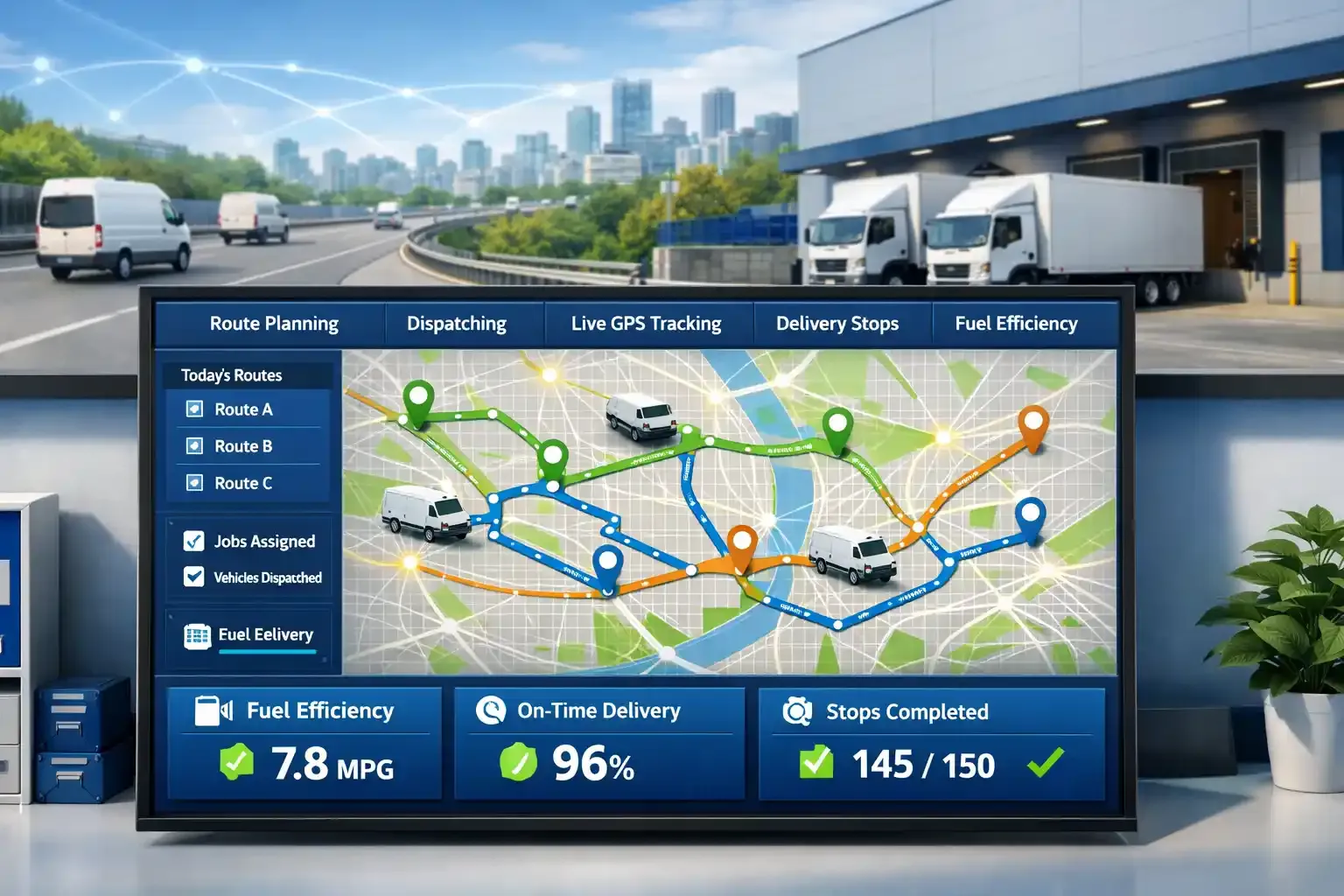
In practice, it combines planning, dispatch, live GPS tracking, and performance review into one connected system. This means you don’t just decide where to go. You also check if drivers arrive on time, measure fuel use, and adjust plans when conditions change.
For example, a grocery delivery company with 200 daily stops and 15 drivers must manage traffic, tight delivery windows, fuel cost, and legal working hours all at once. Without route management, missed slots and higher costs quickly add up.
Route management is important because transport costs are a huge part of business expenses. U.S. logistics costs rose 5.4 percent in 2024 to a total of $2.58 trillion, about 8.8 percent of national GDP. It shows how much companies spend on moving goods and coordinating fleets.
Manual routing slows deliveries and wastes driver hours
Automate route planning, dispatch, and GPS tracking in one system
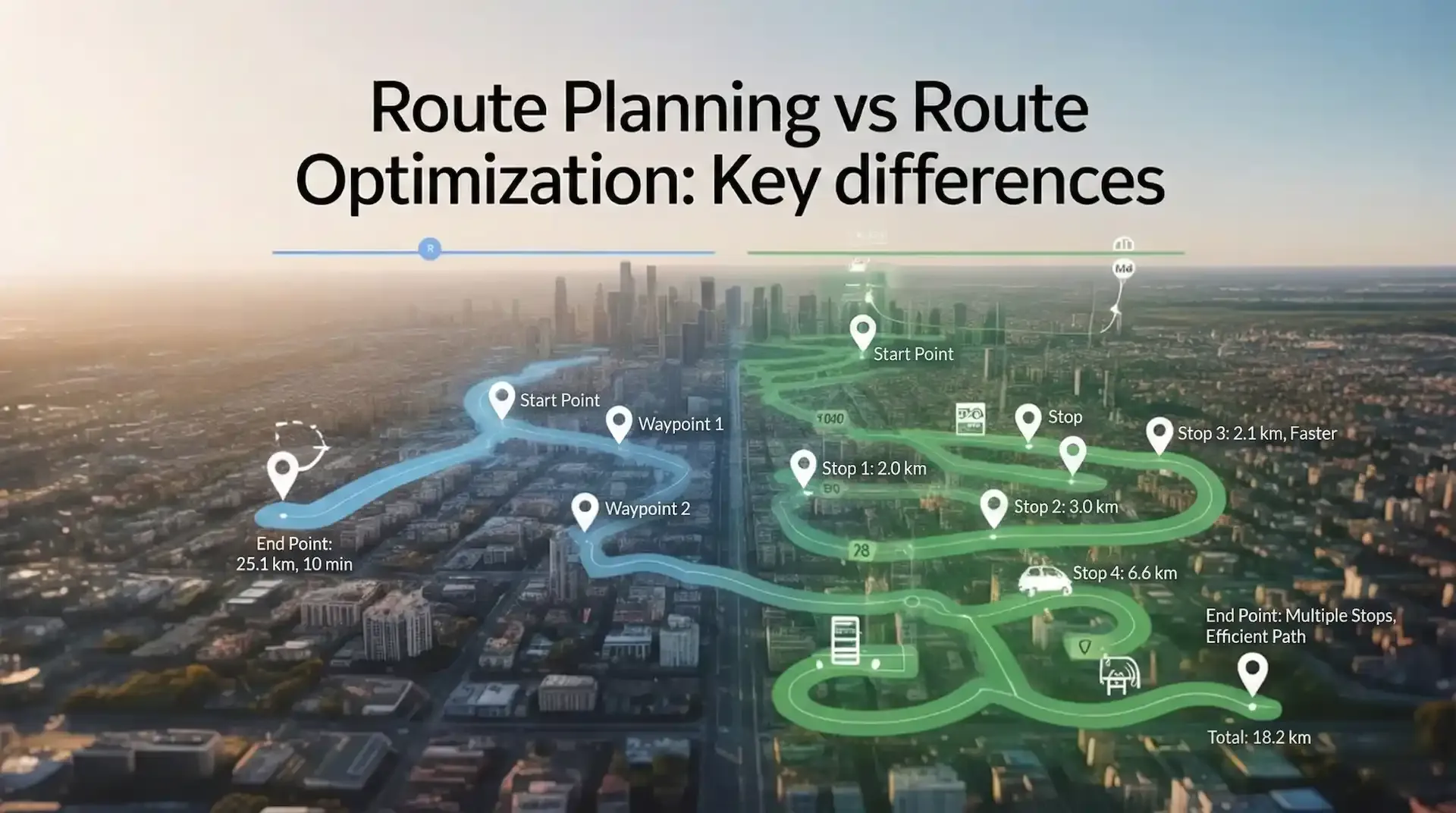
Route Management vs Route Planning vs Route Optimization
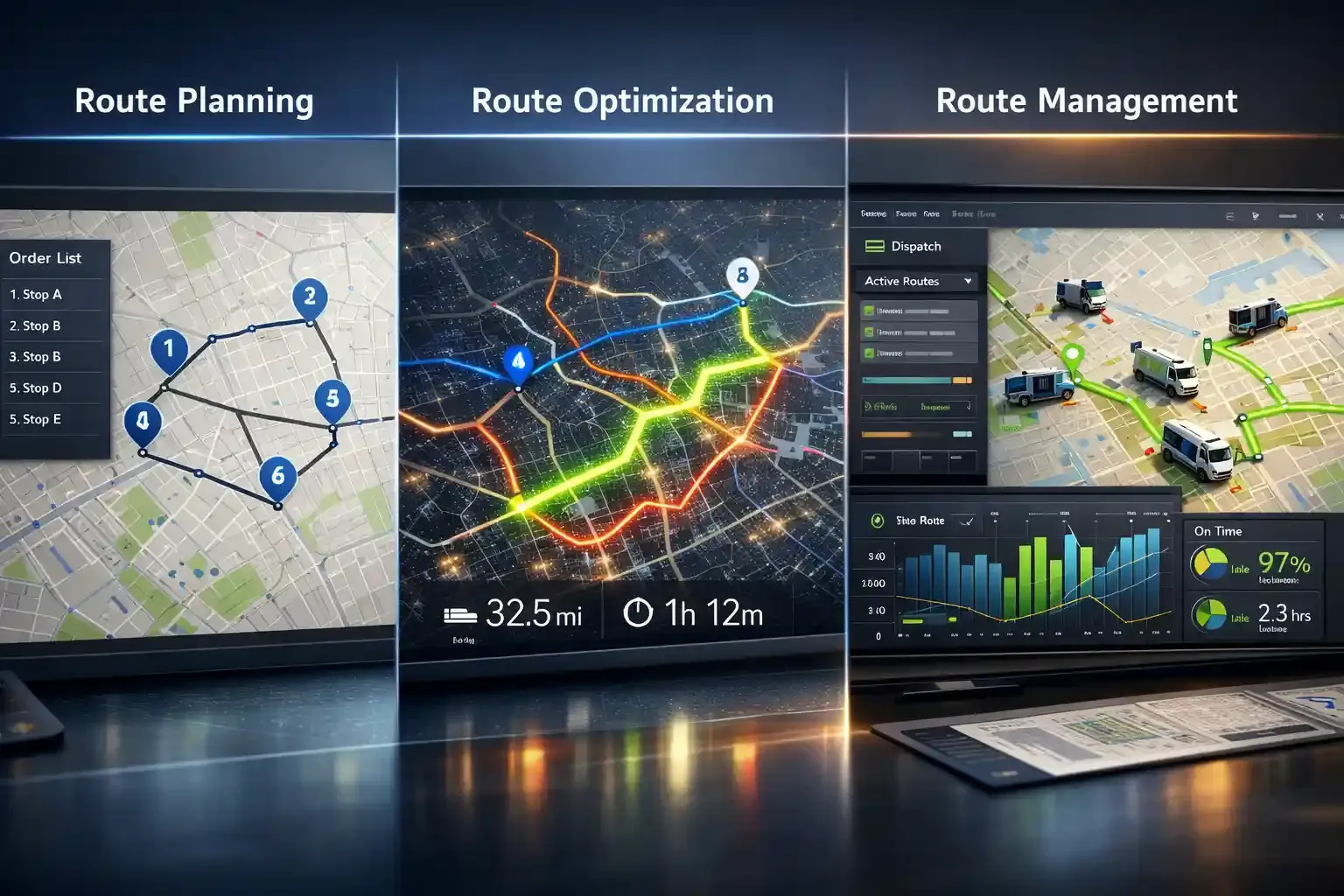
Many people use route management, route planning, and route optimization as if they mean the same thing. In practice, they describe three different layers of delivery operations.
Let’s break them down clearly.
| Aspect | Route Planning | Route Optimization | Route Management |
|---|---|---|---|
Definition | Creates routes and stop orders. | Calculates the most efficient route. | Manages the full routing lifecycle. |
Goal | Organize stops into a workable route. | Reduce distance, time, or cost. | Control and improve routing operations. |
How It Works | Dispatchers arrange stops manually or with maps. | Algorithms evaluate many route combinations. | Systems coordinate planning, tracking, and reporting. |
Methods Used | Manual planning or basic mapping tools. | Mathematical models solving the VRP. | GPS tracking, dispatch tools, and analytics. |
Scope | Focuses only on creating routes. | Focuses on route efficiency. | Covers planning, dispatch, tracking, and analysis. |
Limitation | Manual planning struggles beyond ~20 stops. | Handles complex routing scenarios. | Requires connected systems and data. |
Output | Ordered list of stops. | Optimized route sequence. | Performance insights and route control. |
Route Planning
Route planning focuses on creating a basic delivery route.
It answers a simple operational question: which stops should a driver visit and in what order? Dispatchers use route planning to organize addresses, group stops geographically, and assign deliveries to drivers.
In smaller operations, teams often do this manually. This approach works when the number of stops is small.
But as delivery volume grows, manual planning becomes difficult. Even a route with 20 stops can be arranged in millions of possible sequences, making it extremely hard for humans to identify the most efficient path without software support.
Route Optimization
Route optimization improves the route created during planning.
Instead of guessing the best order of stops, it uses route optimization algorithms to calculate the most efficient sequence. These systems evaluate travel distance, traffic patterns, delivery windows, vehicle capacity, and driver availability.
The core problem behind this process is known as the Vehicle Routing Problem (VRP).
VRP describes the challenge of determining the most efficient routes for multiple vehicles delivering to many locations. Once a route contains more than a handful of stops, the number of possible route combinations grows extremely fast.
This complexity makes manual planning unrealistic. Route optimization software solves this challenge.
The system analyzes thousands or even millions of possible route sequences and selects the one that minimizes cost, distance, or delivery time.
However, optimization alone does not run delivery operations. That is where route management comes in.
Route Management
Route management covers the entire delivery lifecycle. While route planning creates routes and route optimization improves them, route management controls how those routes actually operate in the real world.
This includes several operational functions working together.
First, route management handles planning, where stops and deliveries are organized. Next comes dispatching, where routes are assigned to drivers and sent to mobile devices.
During the day, the system provides real-time tracking, so dispatch teams can monitor vehicle locations and delivery progress.
When unexpected problems occur, route management supports exception handling. Dispatchers can reroute drivers around traffic congestion, adjust delivery schedules, or reassign stops to other vehicles.
Finally, route management includes KPI reporting and performance analysis.
In simple terms, route management acts as the control center for fleet operations.
Planning routes is only the first step
Control planning, optimization, and live tracking in one platform
Key Components of Effective Route Management
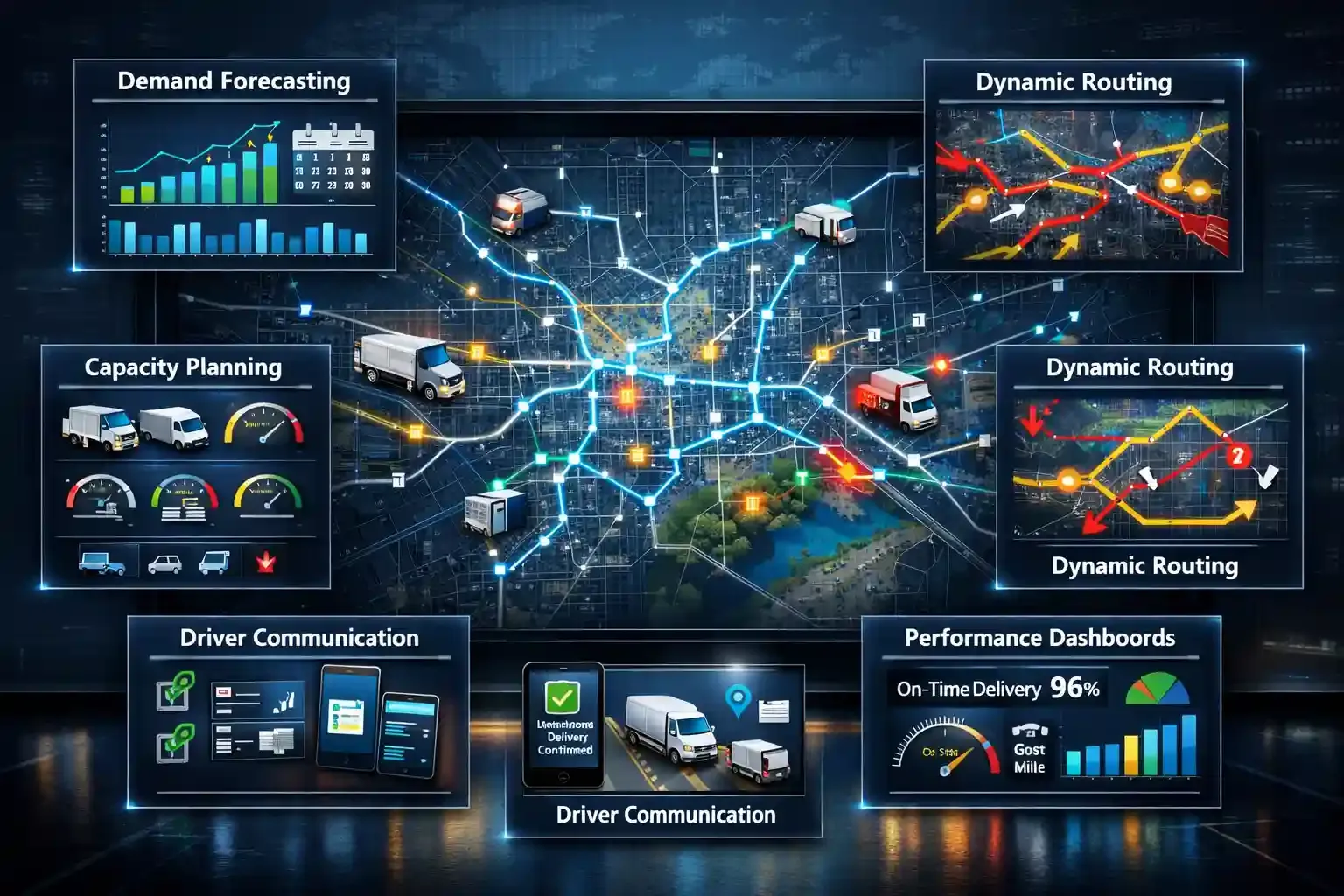
Effective route management runs on a few core components that work together every day. These components control demand, fleet capacity, real-time changes, driver coordination, legal compliance, and performance tracking.
Demand Forecasting
Everything starts with volume.
If you don’t know how many orders are coming tomorrow, your routes are already broken before they begin. Strong demand forecasting uses past order data, seasonal spikes, and real buying patterns to predict how many stops you will actually handle.
According to the National Retail Federation, retail sales are projected to grow between 2.7% and 3.7%, driven heavily by online and omnichannel demand. More sales mean more deliveries. More deliveries mean route systems must scale without falling apart.
Capacity Planning
Now volume alone is not enough. You also need to know whether your fleet can handle it. Capacity planning matches forecasted orders with available vehicles, driver hours, and load limits.
According to a report, the organization views driver retention as a persistent issue. That means capacity is no longer just about trucks. It is about people.
If you assign 180 stops to a fleet realistically built for 140, something will break. Either service levels drop or payroll costs surge.
Dynamic Routing
Even the best plan will fail by 10 a.m. Traffic accidents, urgent same-day orders, vehicle breakdowns, and weather disruptions change the day instantly. Static routing cannot handle that pressure.
Did you know Americans lost an average of 63 hours sitting in traffic in 2024? Not only that, national congestion costs have increased, totaling an estimated $269 billion annually.
Dynamic routing recalculates routes in real time. It pushes updates to drivers immediately, rather than relying on manual phone calls and guesswork.
Driver Communication
A perfect route means nothing if drivers cannot act on it.
Modern route management depends on fast, clear, two-way communication. Drivers need mobile access to updated stops, proof-of-delivery capture, and instant change notifications.
Companies that rely on calls and paper notes lose speed and visibility.
When dispatch sees a delay instantly, and drivers confirm updates in seconds, small issues stay small.
Compliance Tracking
Operations also have to stay legal.
Route management systems track driving hours, rest periods, inspection logs, and route adherence to meet regulatory standards. This protects both the business and the driver.
Ignoring this is not just inefficient. It is expensive. When compliance is integrated into route planning itself, managers avoid fines and reduce burnout risk.
Performance Dashboards
Finally, performance tells the truth.
Route management must measure on-time delivery rate, cost per mile, fuel efficiency, idle time, and route deviations. Without dashboards, managers operate on instinct instead of data.
When managers can see which routes underperform and why, they can redesign territories and rebalance workloads confidently.
Drivers need clear instructions and live updates
Send routes, track progress, and confirm deliveries instantly
Why Route Management Matters in Real Business Operations?
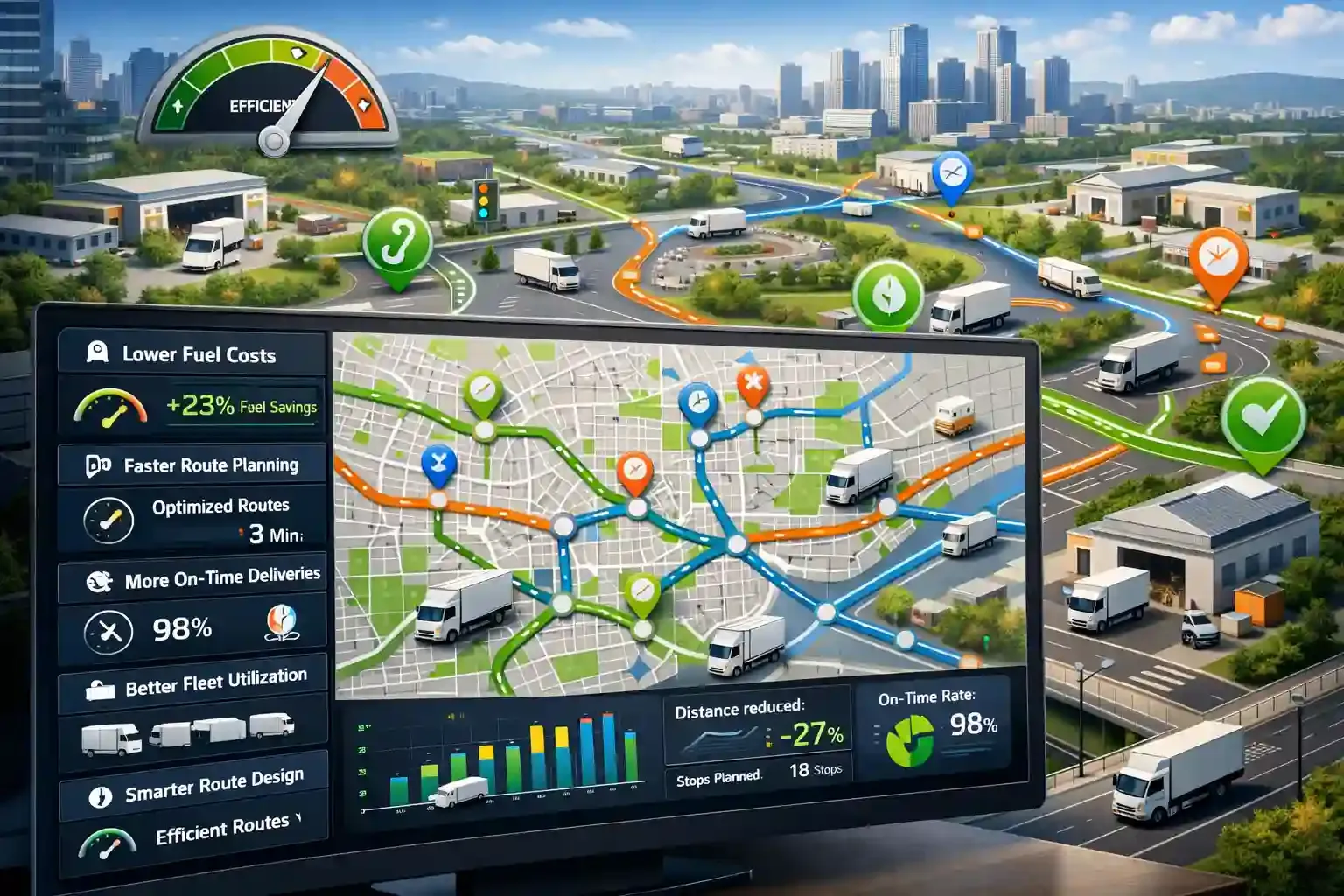
Route management matters because small routing mistakes quickly turn into high operational costs.
Here is where the real business impact shows up.
Lower Fuel Costs
Fuel is usually the first place companies see savings.
Optimized routes remove unnecessary miles, reduce idling in traffic, and prevent drivers from backtracking across the same area. In many fleets, better routing cuts driving distance by 10 to 30 percent, depending on route density.
Fuel efficiency matters because transportation burns massive volumes of diesel every year. Did you know the U.S. transportation sector consumes about 2.98 million barrels of diesel per day?
Even small routing improvements can save thousands of dollars across a fleet.
Faster Route Planning
Route planning used to take hours.
Dispatchers had to review orders, manually map stops, and guess the best sequence for drivers. That process quickly breaks when delivery volume increases. Automation solves this problem.
Modern route management systems generate optimized routes in minutes by simultaneously evaluating traffic patterns, delivery windows, and vehicle capacity.
Predictive routing models that use real-time traffic and operational data can generate significantly more efficient delivery routes than traditional static planning approaches. [Source: European Journal of Logistics]
Planning time dropped dramatically while delivery capacity increased.
More On-Time Deliveries
Reliable routing improves customer experience immediately.
Drivers who follow realistic routes arrive within delivery windows more often. Customers receive accurate arrival estimates instead of vague promises.
Delivery reliability now plays a direct role in customer loyalty. 65% of regular shoppers say a positive delivery experience convinced them to buy again from the retailer.
Missed deliveries therefore affect more than operations. They affect revenue.
Better Fleet Utilization
Better routing also improves how fleets use their vehicles.
Poor route planning often creates uneven workloads. Some drivers run overloaded routes while other vehicles remain underused.
Route management balances deliveries across the fleet. This reduces idle vehicles and prevents drivers from running unrealistic routes that lead to overtime.
According to Geotab, fleets using telematics and connected vehicle data are increasingly leveraging real-time analytics to optimize routes. Balanced routes, therefore, help companies handle more deliveries without expanding their fleets.
Smarter Route Design
Large logistics companies prove how powerful routing improvements can be.
UPS redesigned many of its delivery routes to reduce left turns, which often cause vehicles to wait longer at intersections. That strategy shortened routes and reduced fuel waste.
According to a report, ORION reduces about 100 million miles of driving annually across UPS routes. That example shows something important.
Small routing improvements across thousands of vehicles create massive operational savings. Route management, therefore, becomes a strategic advantage, not just a dispatch tool.
When route planning, dispatching, and tracking work together in one system, teams gain far more control over daily operations. Platforms like FieldServicely bring these functions into a single dashboard
It helps managers schedule jobs, track technicians in real time, and adjust routes when conditions change. Over time, this visibility makes it easier to reduce delays, control travel costs, and keep field teams working efficiently.
Late deliveries damage customer trust
Create accurate routes and improve on-time delivery rates
How Route Management Works in Practice
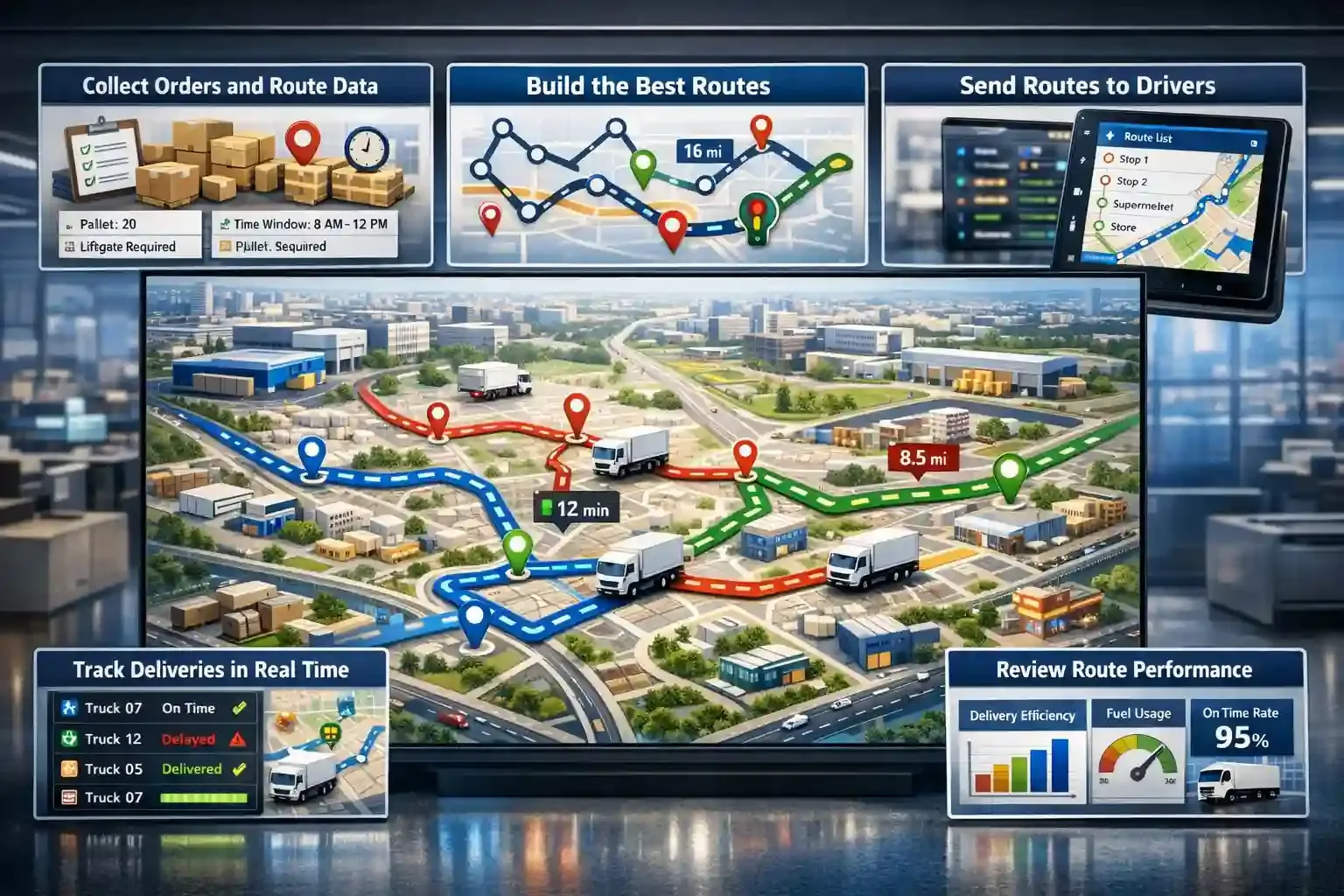
Route management sounds complicated until you watch it. Let me walk you through what actually happens during a typical day:
Collect Orders and Route Data
The day usually starts early.
For the beverage distributor, orders begin arriving before sunrise. Restaurants need keg deliveries before lunch service. Grocery stores request pallets of soft drinks before the afternoon rush.
All those orders go straight into the routing system.
Each one carries the same details: the address, delivery window, pallet size, and sometimes even unloading instructions. The system also knows which trucks can carry heavier loads and which drivers have shift limits.
According to Geotab, operational data from telematics systems allows fleets to compare planned routes with actual trips. It identifies missed stops, route deviations, and other operational inefficiencies.
Once the system understands the day’s orders, it’s ready to build the routes.
Build the Best Routes
This is where most people expect complicated math. And yes, there are algorithms involved.
The routing software looks at every delivery location and starts comparing route possibilities. It considers traffic patterns, distance between stops, delivery deadlines, and how much space remains in each truck.
Within minutes, the system proposes a set of routes that balance the workload.
For the beverage distributor, those 120 stops usually become five or six routes across the metro area. Each driver receives a route that makes geographic sense and still respects delivery time windows.
One of the dispatcher told me something interesting when I asked about their old process.
“Before this system, we spent three hours every morning drawing routes,” he said. Now it takes about five minutes.
Send Routes to Drivers
Once the routes are ready, drivers receive them instantly.
Instead of printed route sheets, drivers open a mobile app that lists every stop for the day. The app provides navigation directions, product details, and any notes about the delivery location.
That small change removes a lot of confusion.
Drivers no longer need to call dispatch to double-check addresses or delivery instructions. Everything they need is already in front of them.
Digital dispatch tools have become standard for modern fleets. According to a report, intelligent transport systems integrate technologies that improve efficiency and coordination through real-time information exchange.
Track Deliveries in Real Time
Once the trucks leave the yard, dispatch switches roles. They stop planning routes and start monitoring them.
A large screen in the dispatcher’s office shows every truck moving across the city. Each vehicle appears as a moving dot with delivery progress updating in real time.
That visibility matters more than you might expect.
City traffic rarely behaves the way route planners hope. Accidents happen. Roads close. Construction zones slow everything down.
The 2025 Urban Mobility Report found that Americans lost an average of 63 hours sitting in traffic in 2024, the highest level ever recorded. If a major traffic jam blocks a highway, the system can reroute drivers automatically. Drivers receive the new directions directly on their tablets.
Review Route Performance
After deliveries finish, the system analyzes what happened during the day.
Managers review performance metrics like on-time delivery rate, fuel consumption, cost per stop, and driver productivity. These insights help improve tomorrow’s routes.
For example, the beverage distributor might discover that certain neighborhoods always cause delays. Managers can adjust delivery windows or shift those stops to different routes.
Fleet analytics tools make this possible. But how?
Research shows that fleets using telematics systems can monitor vehicle performance, location, and driver behavior in real time. This enables route optimization and helps reduce idle time across commercial fleets.
Manual route planning wastes valuable time
Build optimized routes in minutes, not hours
Industries That Rely on Route Management
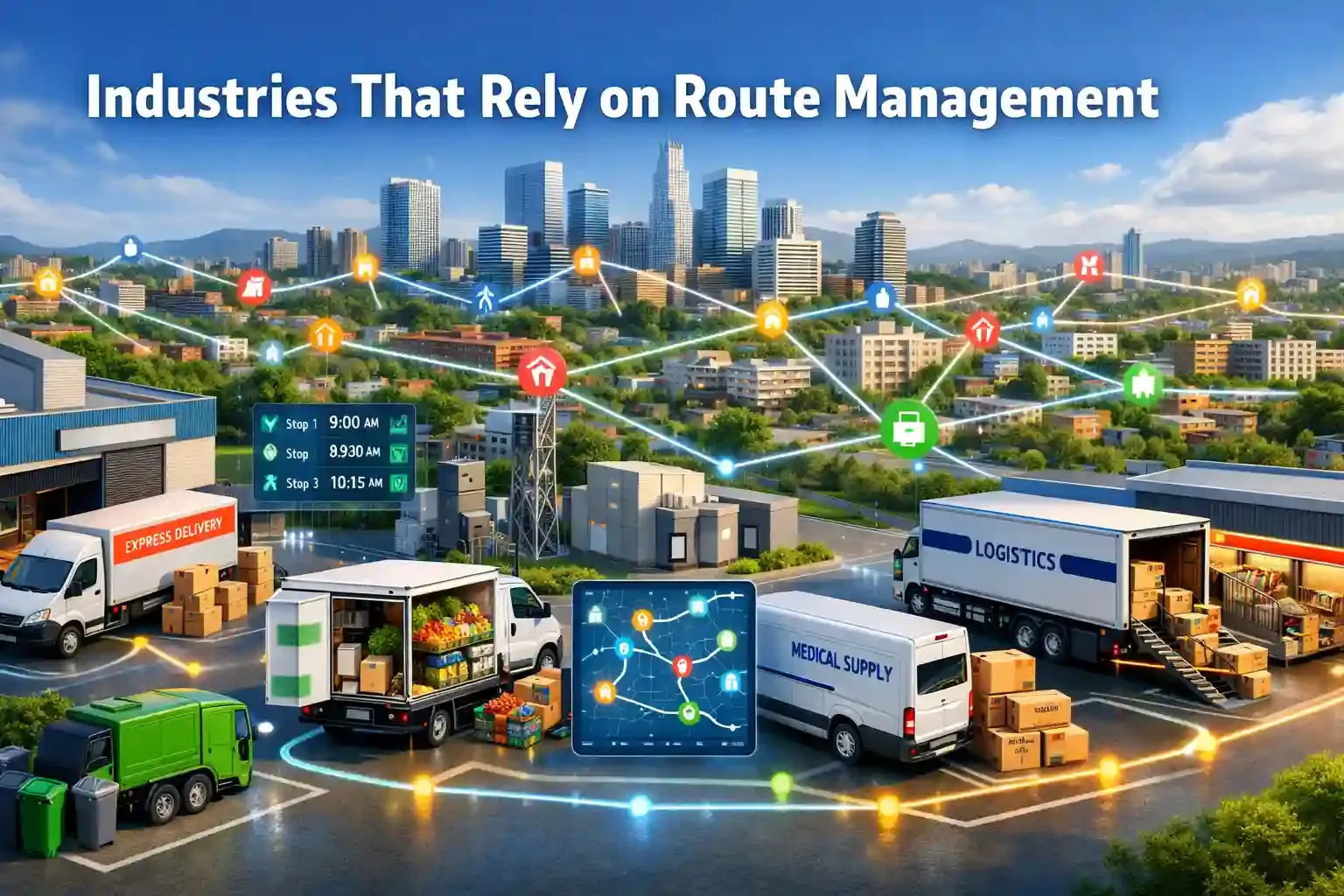
Any industry that sends vehicles, drivers, or technicians to multiple locations every day eventually runs into the same challenge. Once operations grow past a few stops per day, route management becomes essential.
Here are some industries where routing systems power daily operations:
Last-Mile E-commerce
Last-mile delivery depends heavily on route management.
E-commerce companies must deliver hundreds or thousands of packages across cities every day while meeting strict delivery windows. Routing software helps sequence stops, reduce travel distance, and provide accurate arrival estimates for customers.
The scale of this challenge keeps growing.
According to Pitney Bowes’ Shipping Index, U.S. parcel volume reached about 22.37 billion shipments in 2024. Without route management, handling that delivery volume would be nearly impossible.
Grocery Delivery
Grocery delivery operations rely on routing to manage tight delivery schedules.
Customers usually choose specific delivery slots, which means drivers must follow precise schedules while carrying perishable goods. Route management ensures deliveries happen before products spoil or miss their time window.
Efficient routing allows companies to deliver more orders without adding vehicles or increasing driver overtime.
Field Service Technicians
Field service industries use route management to dispatch technicians efficiently.
Electricians, HVAC specialists, and telecom engineers often visit multiple job sites every day. Routing systems help dispatchers assign the nearest technician and schedule visits based on urgency and travel time.
This approach improves response times significantly.
Optimized scheduling algorithms can reduce travel time by roughly 16% in real service operations, improving operational efficiency.
Pharmaceutical Distribution
Pharmaceutical distribution depends on precise routing because many medical products require strict delivery conditions.
Medications, vaccines, and medical supplies often travel under temperature-controlled conditions and must arrive within specific time windows. Route management ensures drivers follow efficient routes while maintaining product safety.
Global medicine is increasing steadily and will reach about $2.3 trillion by 2028 as more patients gain access to treatments and new therapies enter the market. This increases pressure on logistics networks to deliver quickly and reliably.
Waste Collection
Waste collection services rely on route management more than many people realize.
Sanitation trucks follow daily routes across neighborhoods, collecting waste from hundreds of locations. Efficient routing prevents unnecessary driving and reduces fuel consumption for municipal fleets.
Smart waste routing systems allow municipalities to adjust routes based on collection volume, which reduces unnecessary trips and improves fleet efficiency.
FMCG Distribution
Fast-moving consumer goods companies depend heavily on route management.
These businesses deliver products like beverages, snacks, and household goods to retail stores almost every day. Delivery routes must balance store delivery windows, truck capacity, and warehouse schedules.
A typical FMCG distributor may handle 100 or more store deliveries per day across a metro region.
Route management systems help planners assign stops efficiently, reduce travel distance, and ensure shelves remain stocked without delays.
Field teams perform better with organized routes
Dispatch technicians faster and track service visits live
The Business Impact of Poor Route Management
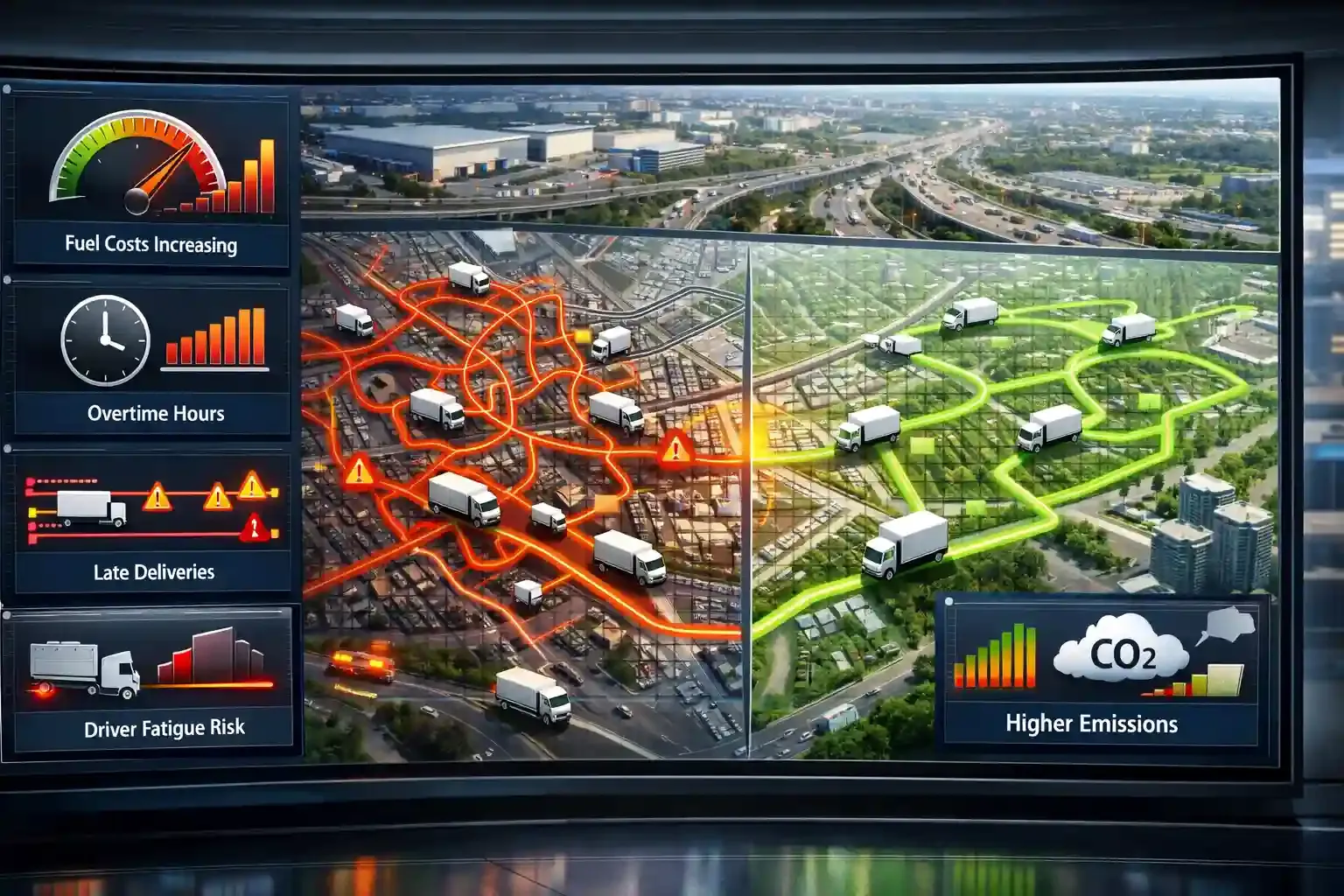
Let’s break down what poor route management actually does to a business:
Fuel Costs Start Climbing
The first place you notice poor routing is the fuel bill.
When routes are poorly planned, drivers travel longer distances, backtrack across neighborhoods, and spend more time idling in traffic. Each unnecessary mile burns fuel that produces no revenue.
Now imagine this small mistake happening across a fleet.
Even five extra miles per route across 50 vehicles equals 250 wasted miles every day. Over a month, that turns into more than 7,000 unnecessary miles, and every mile carries fuel costs and vehicle wear.
Fuel consumption already sits at a massive scale. The U.S. Energy Information Administration reported that U.S. transportation consumed more than 45 billion gallons of diesel annually.
When routes stretch longer than necessary, the fuel budget grows quickly.
Overtime Wages Begin to Appear
Poor routing also shows up on payroll.
Drivers who receive unrealistic routes often cannot finish deliveries within their normal shifts. Traffic delays, inefficient stop sequences, and unnecessary travel force them to work longer hours.
At first, dispatch teams might see this as a temporary issue. But repeated overtime becomes expensive.
Driver wages and benefits remain major cost components, with driver pay continuing to increase and contributing significantly to overall operating expenses. Every additional hour spent on the road increases operating costs significantly.
Customers Start Losing Patience
Late deliveries quickly affect customer trust.
Customers today expect precise delivery windows, especially in e-commerce and retail distribution. When deliveries arrive late, customers lose confidence in the service.
This matters more than many companies realize.
65% of regular online shoppers say a positive delivery experience makes them more likely to buy again from the same retailer. When customers repeatedly experience missed delivery times, they often switch to competitors.
Poor routing, therefore, creates a ripple effect.
Driver Fatigue Builds Up
Poorly planned routes often create unrealistic schedules that force drivers to rush through deliveries. Drivers skip breaks, fight traffic longer than expected, and spend more hours behind the wheel.
Over time, this leads to fatigue and frustration.
The WHO highlights fatigue as a major contributor to road crashes globally, particularly among commercial drivers and long-distance transport operators. Long and inefficient routes increase the likelihood of fatigue-related incidents.
Carbon Emissions Increase
Finally, poor routing increases environmental impact.
Every unnecessary mile produces additional emissions. Delivery vehicles already contribute significantly to urban traffic emissions.
Road freight remains a major contributor to global transport emissions due to fuel consumption and inefficient logistics operations. Longer routes mean higher emissions.
When fleets drive thousands of unnecessary miles each month, the environmental impact grows quickly.
Overtime and delays signal inefficient routing
Plan smarter routes and balance driver workloads
Common Challenges in Route Management
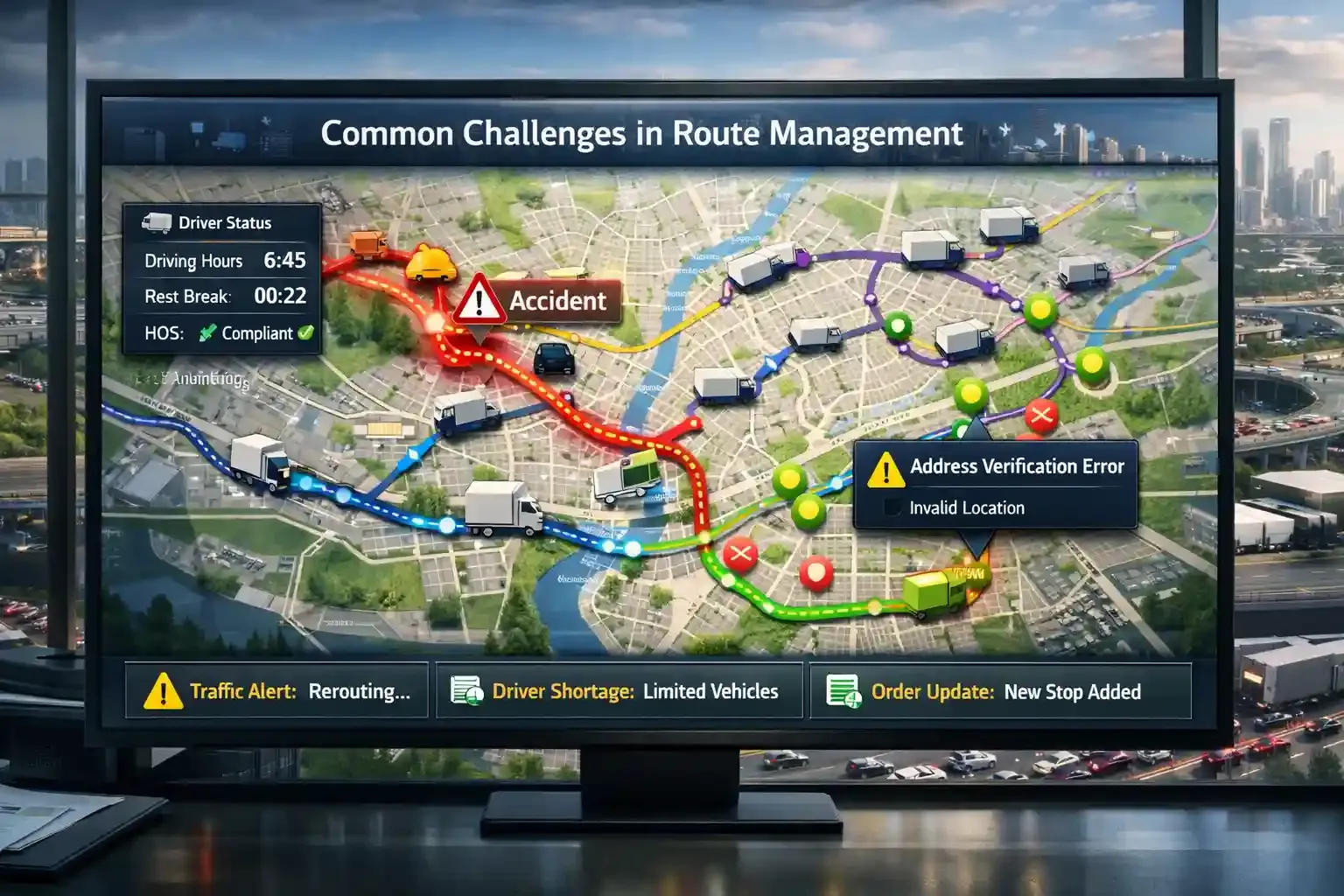
Route management always comes with real operational challenges. Understanding these challenges helps businesses plan routes more realistically and avoid costly mistakes.
Traffic Unpredictability
Traffic remains the biggest disruptor for delivery operations.
Even the most optimized route can break when an accident blocks a highway or rush-hour congestion builds unexpectedly. Drivers then lose time, and delivery schedules quickly fall behind.
Congestion continues to impact fleets across major cities.
In 2024, U.S. drivers lost about 63 hours on average sitting in traffic annually in major urban areas. For route managers, that means plans must remain flexible.
Real-time tracking and rerouting become essential when road conditions change suddenly.
Driver Shortages
Driver shortages make route planning harder than many companies expect.
When fewer drivers are available, dispatch teams must assign more stops to each route. This often leads to longer routes, increased overtime, and higher driver stress.
The driver shortage issue continues across logistics. ATRI surveys consistently rank driver availability and retention among the top issues affecting trucking fleets.
This shortage forces companies to optimize routes carefully. Without efficient route planning, limited drivers cannot handle growing delivery demand.
Regulatory Compliance
Regulations add another layer of complexity to route management.
Fleet operators must follow strict rules about driver working hours, rest periods, and vehicle operation limits. Ignoring these regulations can lead to fines, safety risks, and operational disruptions.
Compliance monitoring has become stricter in recent years. Route managers, therefore, cannot simply choose the fastest route. They must build routes that also respect legal working limits.
Data Inaccuracy
Route planning depends heavily on accurate operational data.
Incorrect addresses, outdated customer information, or missing delivery notes can cause serious disruptions. Drivers may waste time searching for locations or calling dispatch for clarification.
These errors create delays across the entire route.
Last-Minute Order Changes
Last-minute changes happen more often than planners expect.
Customers cancel orders, request earlier deliveries, or add urgent shipments after routes are already created. These changes force dispatch teams to adjust routes quickly.
Without flexible routing systems, these adjustments become chaotic.
Dynamic routing tools help managers insert new stops or rearrange deliveries without disrupting the entire schedule. In busy delivery environments, this flexibility becomes essential.
Unexpected traffic and delays disrupt delivery plans
Track routes live and adjust schedules instantly
Conclusion
Route management plays a central role in how modern delivery and service operations function every day. When businesses plan and manage routes effectively, they reduce unnecessary miles, control fuel costs, improve on-time performance, and use drivers and vehicles more efficiently.
But real-world routing always comes with challenges such as traffic disruptions, driver shortages, data inaccuracies, and rising fuel costs. Businesses that invest in better route planning tools like FieldServicely can overcome these challenges and build faster, more reliable delivery operations over time.
Frequently Asked Questions
What is the difference between route planning and route management?
Route planning focuses only on creating the best path between stops. Route management covers the entire delivery process, including planning, dispatching, tracking, and analyzing route performance. In simple terms, planning creates the route, while route management controls and improves how that route runs in real operations.
What software is commonly used for route management?
Businesses usually rely on route optimization and fleet management software to manage routes efficiently. These tools use GPS tracking, traffic data, and delivery constraints to generate optimized routes and monitor drivers in real time.
How does route management improve delivery accuracy?
Route management improves delivery accuracy by organizing stops based on delivery windows, traffic conditions, and driver capacity. This structured approach helps drivers follow logical stop sequences instead of guessing the best path. As a result, companies reduce missed deliveries, failed attempts, and customer complaints.
Can small businesses benefit from route management?
Yes, small businesses often see immediate benefits from route management. Even fleets with a few vehicles can reduce travel distance, save fuel, and complete more deliveries within the same workday. As order volumes grow, route management also helps small teams scale operations without hiring additional dispatch planners.
How does route management support sustainability goals?
Route management supports sustainability by reducing unnecessary driving distance and fuel consumption. Shorter routes lower vehicle emissions and reduce the environmental impact of delivery fleets.
What to read next