- Scheduling and Dispatch
What is Construction Scheduling? Types, Methods & Benefits
Updated on 21 Apr 2026
Jump to
Summary

Construction scheduling organizes tasks, timelines, and resources so projects run in the right order and stay on track
Clear schedules improve coordination, reduce delays, and help control costs across teams and phases
Different schedule types and methods solve different problems, from high-level planning to daily execution
Real-world challenges like weather, resources, and communication gaps often disrupt even well-planned timelines
Using the right strategies, tools, and tracking systems helps teams manage changes and keep projects predictable
Construction scheduling is the process of planning, organizing, and timing all tasks in a construction project so that work happens in the right order and finishes on time. It helps teams coordinate activities, manage resources, and keep costs under control.
When done right, it improves efficiency, reduces delays, and keeps everyone aligned on the same timeline. But in real projects, things don’t always go as planned.
Teams face issues like weather delays, resource shortages, miscommunication, and last-minute changes that disrupt the schedule. These challenges make scheduling harder than it looks on paper.
That’s why understanding how scheduling actually works is important. In this blog, we will discuss construction scheduling, its types, methods, challenges, and practical ways to manage it effectively.
What is Construction Scheduling?
Construction scheduling is the process of planning, sequencing, and timing all tasks in a construction project. It defines what work happens, when it happens, and in what order, so the project stays on track.
In simple terms, it works like a project timeline, keeping everything moving without confusion.
I’ve seen projects where one crew finished early, but the next team wasn’t ready. That gap caused delays, wasted labor hours, and unnecessary costs. This is exactly where strong construction planning and scheduling start to show their value.
Construction scheduling also helps control time and budget. A report shows projects took 73% longer than planned on average, mostly due to weak coordination.
That’s why proper project scheduling is critical, especially when multiple teams work simultaneously.
You will also hear different terms across projects.
Some teams call it work scheduling when focusing on daily execution, while others use construction planning during the early stages. In more complex jobs, teams may refer to it as resource-oriented scheduling when managing limited labor or equipment.
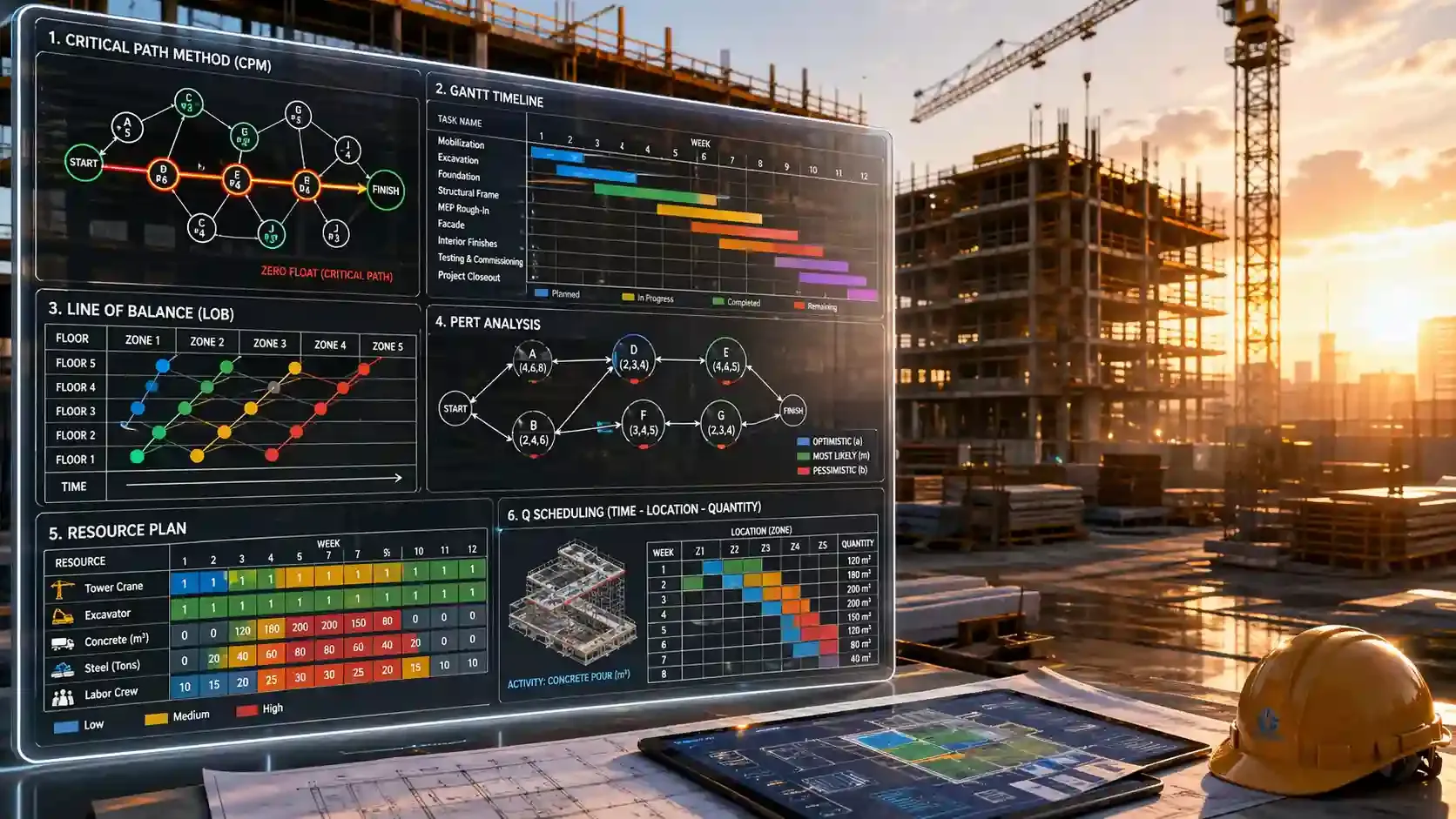
A construction schedule only works when its core parts are clearly defined. Let’s break down what actually holds a schedule together in real projects.
Tasks
Tasks are the foundation of any construction schedule. They define exactly what needs to be done, from site prep to final inspection.
Ever seen projects where tasks were too broad, like “complete structure”? That kind of vagueness creates confusion, and teams end up wasting time figuring out the next step instead of doing the work.
Clear task breakdowns fix this. According to research, projects with detailed task definitions improve delivery success rates by enhancing strategic alignment, agility, and value delivery.
Duration
Duration decides how long each task should take. This is where most schedules quietly fail.
If you underestimate time, everything downstream gets delayed. If you overestimate, you waste labor and inflate costs.
In real projects, duration depends on crew size, equipment, and site conditions. According to research, poor time estimation remains one of the biggest reasons construction projects miss deadlines.
Dependencies
Dependencies control the order of work. They decide what must happen first and what comes next.
Think about it this way. You cannot install electrical wiring before framing is done. If you ignore that sequence, the entire workflow breaks.
This is not just theory. Poor dependency planning and coordination drive rework, with planning-related factors contributing to about 25% of total rework costs.
Resources
Resources answer a simple question. Do you actually have what you need to do the job?
This includes workers, materials, and equipment. And when these don’t line up with your schedule, things go sideways fast.
I’ve seen cranes sit idle for hours because crews weren’t ready. Inefficient resource planning can reduce productivity, which directly impacts project cost.
Milestones
Milestones mark the moments that actually matter. They show when a major phase is complete, like finishing the foundation or passing inspection.
Without milestones, you’re just moving without checkpoints. That makes it hard to know if the project is ahead or falling behind.
Also, large projects rely heavily on this. Milestone tracking improves monitoring accuracy, helping teams detect delays early and take corrective action.
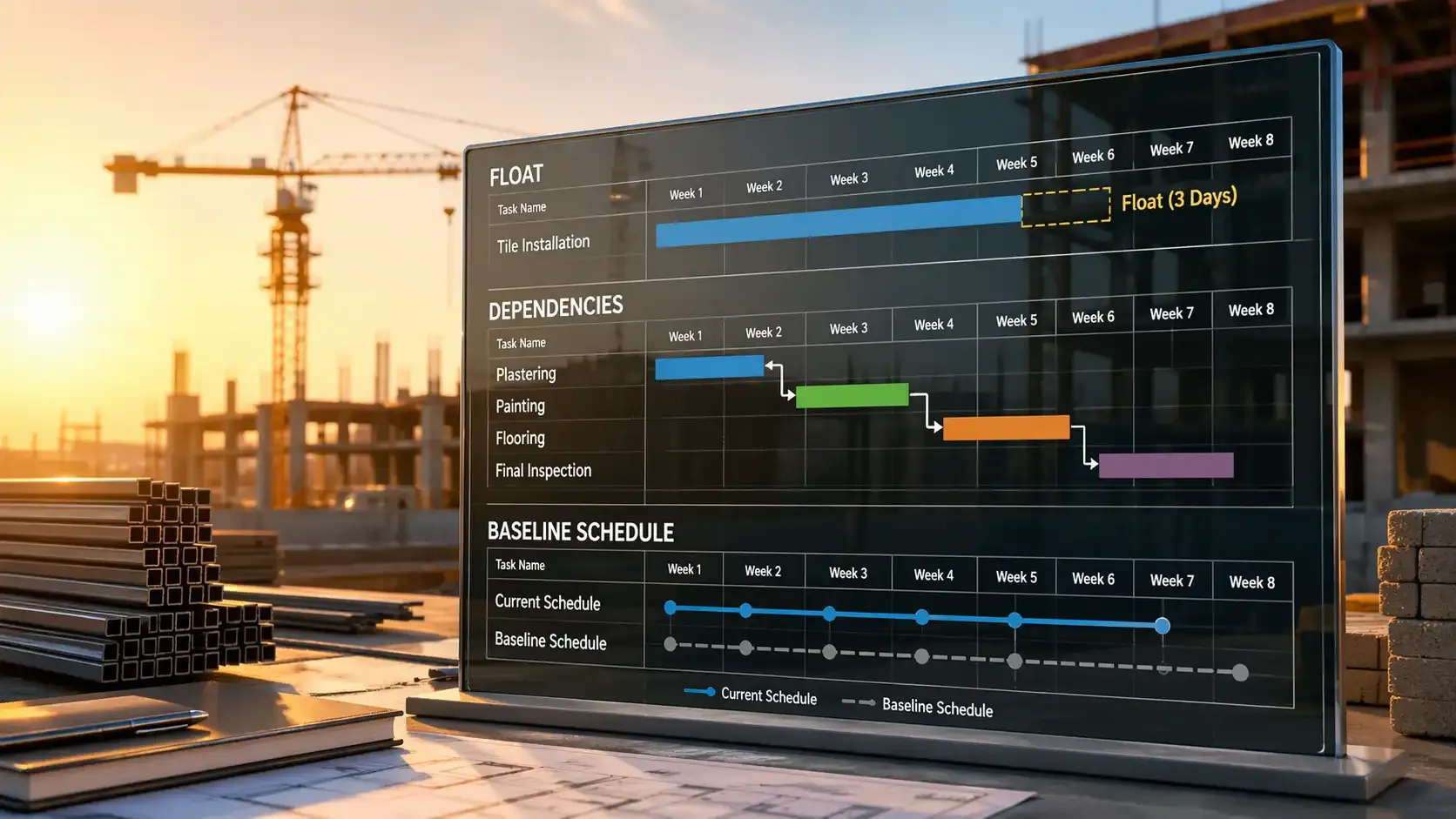
Baseline
Baseline is your original plan. It shows what the schedule was supposed to look like before work started.
This is what project managers use to measure reality. If your baseline says 10 days and the task takes 14, you instantly know there’s a problem.
Without a baseline, there’s no accountability. Just so you know, AACE guidelines highlight baseline tracking as one of the most reliable ways to detect delays early and prevent major schedule overruns.
Turn your task list into clear, actionable work
Break down jobs and assign tasks without confusion
Why Is Construction Scheduling Important?
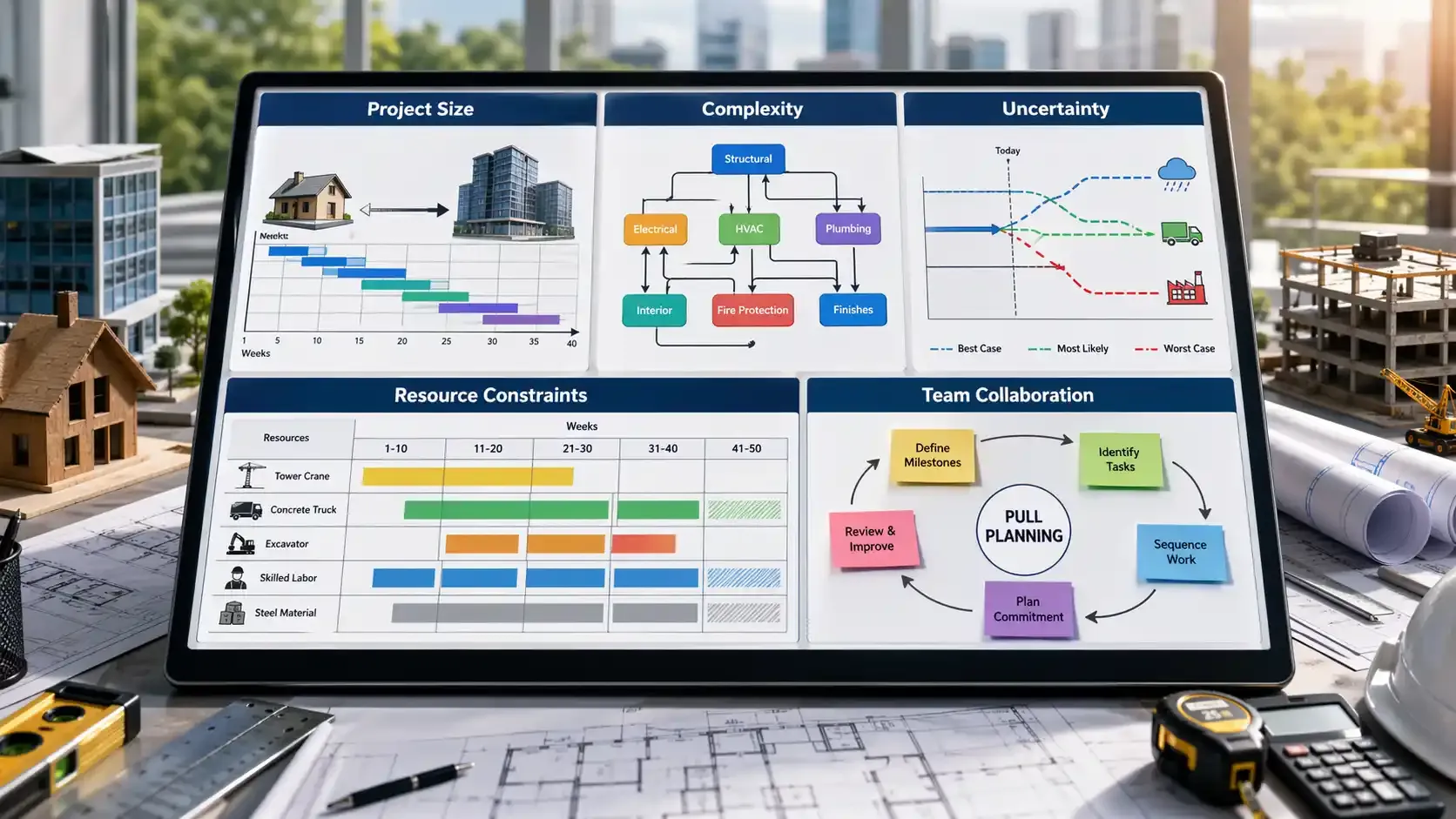
Construction scheduling matters because it directly impacts time, cost, and how smoothly teams work together. When it’s done right, projects feel controlled. When it’s ignored, things fall apart fast.
Delay Prevention & Project Control
Scheduling prevents delays by setting a clear sequence of work. It shows what must happen first and what cannot start yet.
I’ve seen projects where one delay in foundation work pushed every other task by days. That small slip turned into a full-week delay because nothing was planned around dependencies.
This is not rare. According to a study, poor planning and sequencing remain one of the top drivers of schedule delays in large construction projects.
Cost Control & Budget Protection
Scheduling software controls cost because time directly affects money. When work runs late, labor costs increase, equipment stays longer, and budgets start slipping.
This becomes serious very quickly. According to a report, only 31% of projects were successful, mainly due to weak coordination and scheduling issues.
This happens with equipment rentals alone. A crane booked for 3 days ended up staying for 6 because upstream work wasn’t ready. That single mistake can blow thousands from the budget.
Team Coordination & Trade Conflict Avoidance
Optimized scheduling improves coordination by giving every team a shared plan. It tells each trade exactly when to start and when to leave.
Without that clarity, conflicts show up instantly. Many times, electricians and plumbers arrive at the same time for the same area, and one team has to wait or redo work later.
This is more common than you think. Poor coordination leads to over 25% of rework issues on construction sites.
Good field service scheduling removes these overlaps before they happen. Each team gets a defined window, and work flows without friction.
Labor Efficiency & Resource Optimization
Scheduling improves labor efficiency by aligning people with the right tasks at the right time. It ensures crews are working, not waiting.
Idle labor is one of the highest hidden costs in construction. Workers show up, but they cannot start because materials are missing or tasks are incomplete.
Sometimes crews sit for hours waiting for approvals or deliveries. Since labor accounts for 20% to 50% of total project costs, even minor productivity losses can quickly drive up expenses.
Proper scheduling reduces this waste. Crews move from one task to another without gaps.
Project Forecasting & Alignment
Scheduling enables forecasting by showing what might happen next. It helps project managers predict delays, risks, and future workload.
For example, if one task slips by two days, you can immediately see how it affects the next five tasks. That visibility allows quick adjustments before problems grow.
See, projects that use structured scheduling and forecasting improve on-time delivery by increasing planning accuracy and enabling early risk detection. [Source: PMI]
Scheduling also keeps everyone aligned. It acts as a single source of truth, so teams don’t rely on assumptions. When everyone follows the same timeline, decisions become faster and more accurate.
Keep every team working in sync
Assign tasks and avoid on-site conflicts easily
Types of Construction Schedules
.webp?2026-04-24T08%3A25%3A23.815Z=&w=3840&q=100)
Construction scheduling is not just one fixed format. Different projects use different schedule types depending on size, complexity, and how teams operate on-site.
Once you understand these types, you can choose the right approach instead of forcing one system everywhere.
Master Schedule
A master schedule shows the entire project from start to finish. It includes major phases like site preparation, foundation, structure, and finishing.
This is the schedule that stakeholders care about. Owners, investors, and senior managers use it to track big deadlines and overall progress.
According to a report, high-level planning improves visibility, but execution depends on detailed short-term scheduling. In real projects, teams rely too much on this.
They knew the end date, but they had no idea what needed to happen tomorrow. That’s where the next type comes in.
Look-Ahead Schedule
A look-ahead schedule focuses on the next few weeks, usually between 2 to 6 weeks. It translates the master schedule into actionable work.
This is where construction scheduling starts becoming practical. Site managers use this to prepare crews, confirm material delivery, and check if everything is ready before work begins.
Let me give you a real situation.
A project had all materials scheduled in the master plan, but no one confirmed delivery dates in advance. When the work week started, materials were missing, and crews had nothing to do.
That’s exactly what look-ahead scheduling prevents. According to the Lean Construction Institute, short-term planning improves workflow reliability by reducing variability and making work ready before execution.
Weekly Schedule
A weekly schedule is where execution becomes real. It breaks work into daily tasks that crews follow on-site.
This schedule answers a simple question. What exactly are we doing today?
Now, this is where most projects either run smoothly or fall apart. Teams may show up without a clear weekly plan, and the entire day turns into coordination meetings instead of actual work.
A strong weekly schedule removes that confusion. It assigns tasks, timelines, and responsibilities clearly so work starts immediately.
Baseline Schedule
A baseline schedule is your original approved plan. It shows what the project timeline looked like before any work started.
This becomes your reference point. Every delay, every change, and every cost increase is measured against this baseline.
Now let’s be real. Without a baseline, you don’t even know if you’re behind. You’re just moving forward without context.
That’s why baseline tracking matters. Comparing actual progress against a productivity baseline is one of the most effective ways to detect schedule slippage early. [Source: Dee Project Manager]
Track progress against your original plan
Compare actual work with your schedule in real time
Popular Construction Scheduling Systems
Construction scheduling methods define how you actually plan, track, and control work. Each method focuses on a different problem, so picking the wrong one can slow your entire project.
Typically, organizations perform construction scheduling using one of the following techniques:
Critical Path Method (CPM)
Critical Path Method focuses on the sequence of tasks that cannot be delayed. It shows the exact chain of activities that controls your project deadline.
Gantt Charts
Gantt charts display tasks on a timeline using horizontal bars. They make it easy to see what is happening and when.
Program Evaluation and Review Technique (PERT)
PERT handles uncertainty by using multiple time estimates instead of one fixed duration. It helps you plan for best-case, worst-case, and realistic scenarios.
Lean / Pull Planning
Lean or pull planning focuses on collaboration instead of control. Teams plan work backward from a target date and commit to what they can realistically deliver.
Line of Balance (LOB)
Line of Balance focuses on repetitive work across multiple units. It tracks how tasks move from one unit to another at a steady pace.
Manage complex schedules without slowing down
Handle multiple workflows and tasks in one place
Common Challenges in Construction Scheduling
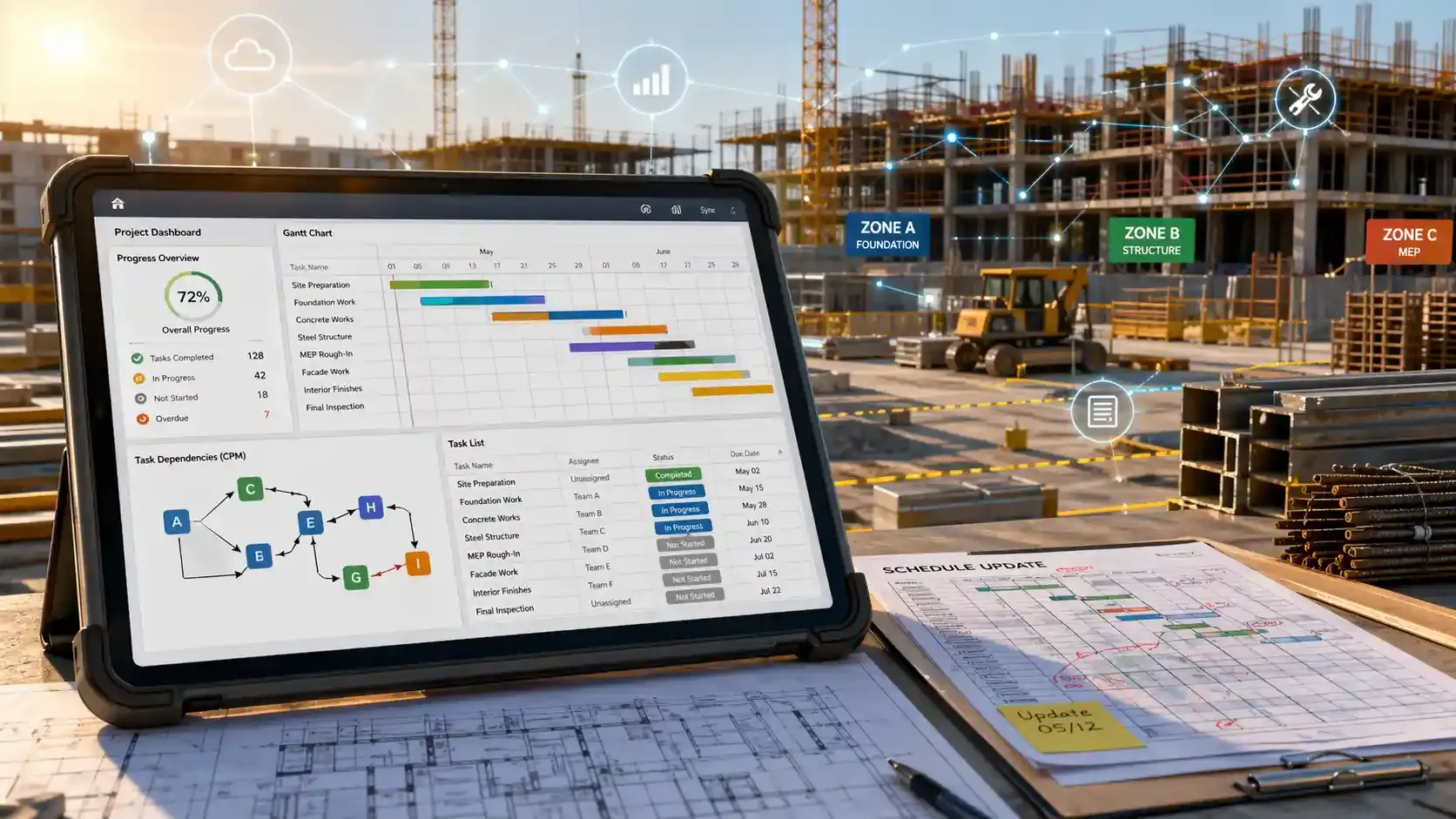
Construction scheduling looks clean on paper, but real projects rarely follow the plan. Most delays come from small issues stacking up across time, resources, and communication.
Weather Delays
Weather delays disrupt schedules because construction depends heavily on outdoor conditions. Rain, extreme heat, or storms can stop work instantly.
This is one of the hardest things to control. You can plan everything perfectly, but a few days of bad weather can push the entire timeline forward.
Projects can lose a full week due to unexpected rain during foundation work. According to research, increasing climate variability continues to impact construction timelines globally.
Resource Shortages
Resource shortages slow down projects because work cannot continue without the right people or equipment. This includes skilled labor, machinery, and even site supervisors.
This issue is getting worse. A report states that Labor shortages cause over $10.8 billion annual economic impact due to delays and lost production.
Many times, my crews were ready to work, but they had to wait because a key machine was unavailable. When resources don’t match the schedule, everything starts slipping.
Supply Chain Issues
Supply chain issues delay projects because materials do not arrive on time. Without materials, crews cannot complete tasks, even if everything else is ready.
This problem became more visible in recent years. Global supply chain disruptions increased by 40% in 2024. And it continues to affect construction timelines, especially for imported materials.
I’ve seen projects where steel delivery delays forced teams to reschedule entire phases. That kind of disruption breaks workflow and increases cost quickly.
Scope Changes
Scope changes create delays because they force teams to adjust plans mid-project. These changes often come from clients, design updates, or unexpected site conditions.
This is where schedules lose stability. Even small changes can affect multiple downstream tasks.
A simple design change can delay finishing work by several days because earlier tasks had to be reworked. According to research, frequent change orders remain a major cause of schedule overruns by up to 200%.
Communication Gaps
Communication gaps create confusion because teams do not have the same information. When schedules are not shared clearly, mistakes start happening.
This is one of the most common issues on-site. Field teams, subcontractors, and managers often operate on different versions of the plan.
Still, teams start work based on outdated schedules, which leads to rework and wasted time. Even poor communication continues to be a major reason for project failure, contributing 56% of projects that failed
Keep your entire team on the same page
Avoid miscommunication and reduce costly rework
Strategies to Mitigate Scheduling Problems
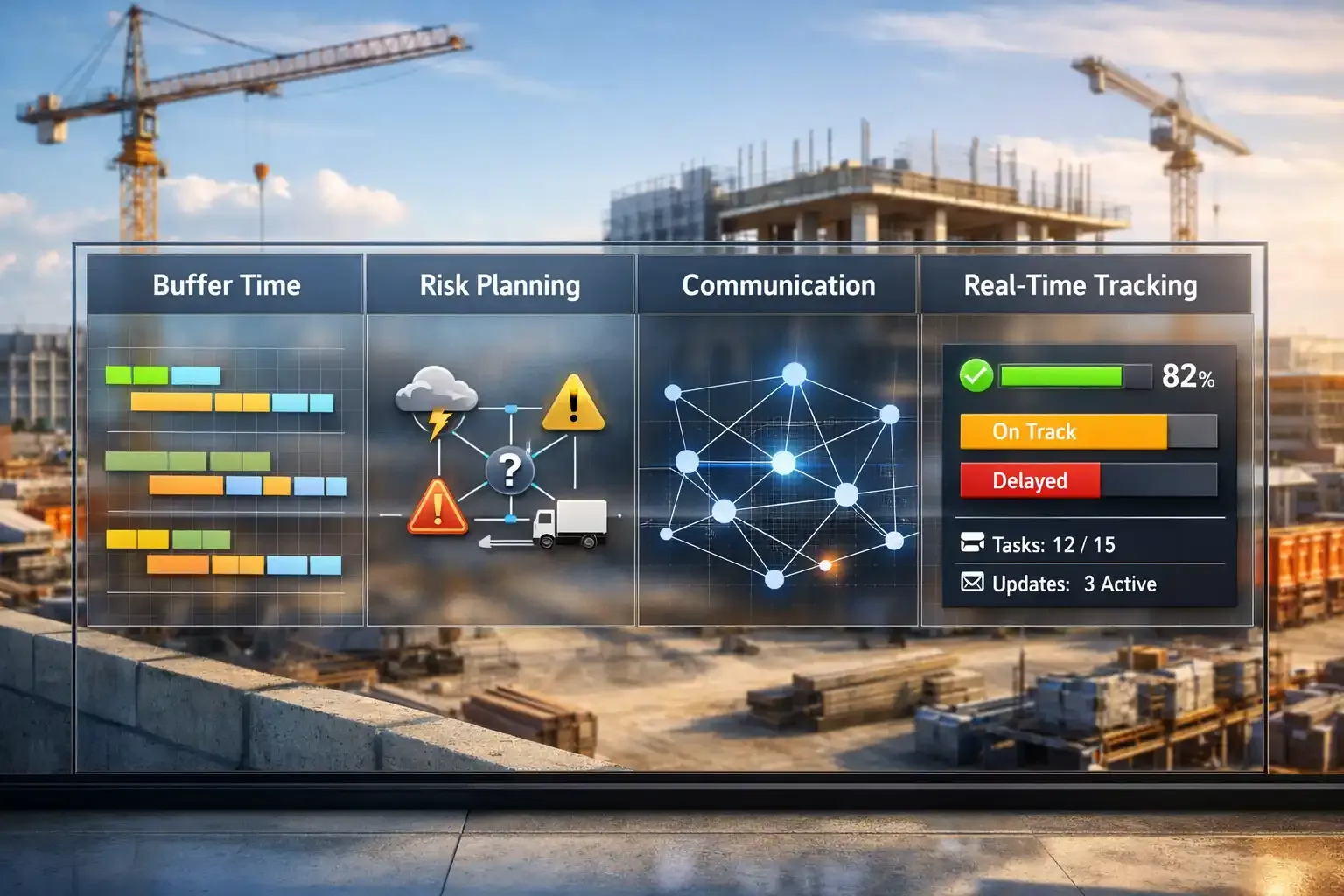
Buffer Time
Buffer time gives your schedule breathing space. It absorbs small delays before they spread across the entire project.
Most teams try to keep timelines tight to look efficient. In reality, that creates fragile schedules that break under pressure.
Projects with built-in contingency perform better under real conditions. Even a one-day buffer between critical tasks can stop a delay from turning into a chain reaction.
Risk Planning
Risk planning forces you to think ahead. It answers one simple question: what could go wrong next?
Construction projects deal with uncertainty every day. Weather shifts, supplier delays, and permit issues don’t wait for your schedule to catch up.
Teams that map these risks early tend to recover faster. According to research, structured risk planning improves schedule reliability, especially in multi-phase projects.
Better Communication
Communication keeps the schedule alive. Without it, even the best plan becomes outdated within days.
Problems usually don’t start with delays. They start when teams don’t know about the delay.
A 2024 Construction Industry Council report highlights that poor communication still drives a large share of rework and missed timelines in over 57% of project failures.
Real-Time Tracking
Real-time tracking shows what’s actually happening, not what was supposed to happen. That difference matters more than most teams realize.
Static schedules create blind spots. By the time a delay shows up in reports, it has already caused damage.
Teams that track progress daily react faster. According to research, real-time visibility improves response speed and helps reduce schedule slippage before it escalates.
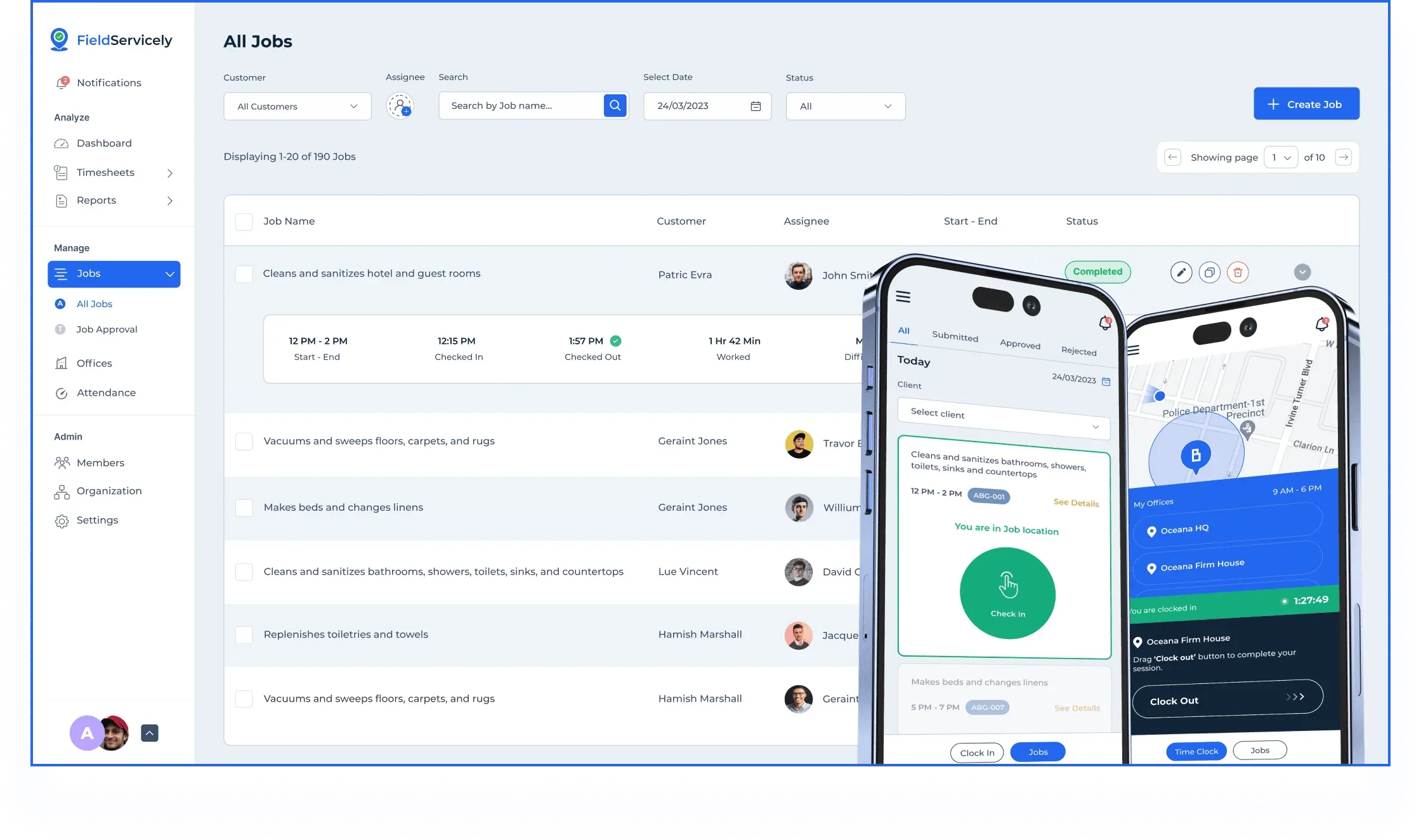
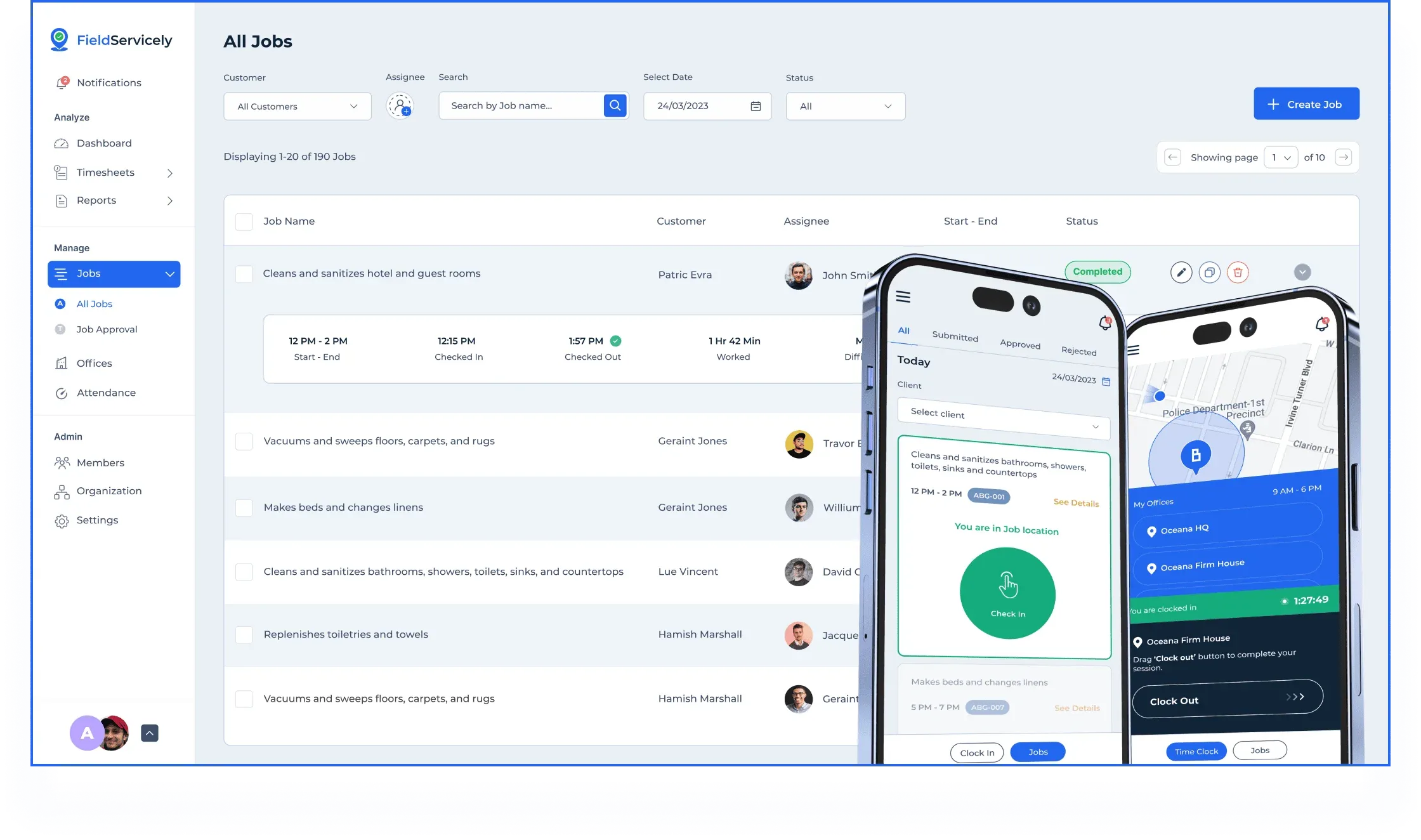
Managing all this manually becomes difficult as projects grow. That’s where FieldServicely scheduling software starts to make sense.
It helps teams assign jobs, track progress in real time, and keep everyone aligned through live updates and notifications.
Instead of chasing updates across calls and messages, everything stays visible in one place. That alone reduces delays caused by miscommunication and poor tracking.
Keep your team aligned at every stage
Share updates instantly and avoid costly miscommunication
Construction Schedule Template
Below is an ideal template for construction schedule:
| Task | Start Date | End Date | Dependencies |
|---|---|---|---|
[Task Name] | [Mention a start date] | [Estimated completion date] | [What dependencies does each task have?] |
Common Mistakes in Construction Scheduling
- Setting unrealistic timelines that ignore actual site conditions and task complexity
- Ignoring task dependencies, which breaks the logical flow of work
- Failing to update schedules regularly as real progress changes
- Poor resource planning that leads to idle crews or equipment shortages
- Overlapping trades without proper coordination, causing site conflicts
- Not accounting for risks like weather, permits, or material delays
- Treating the schedule as static instead of a living, adjustable plan
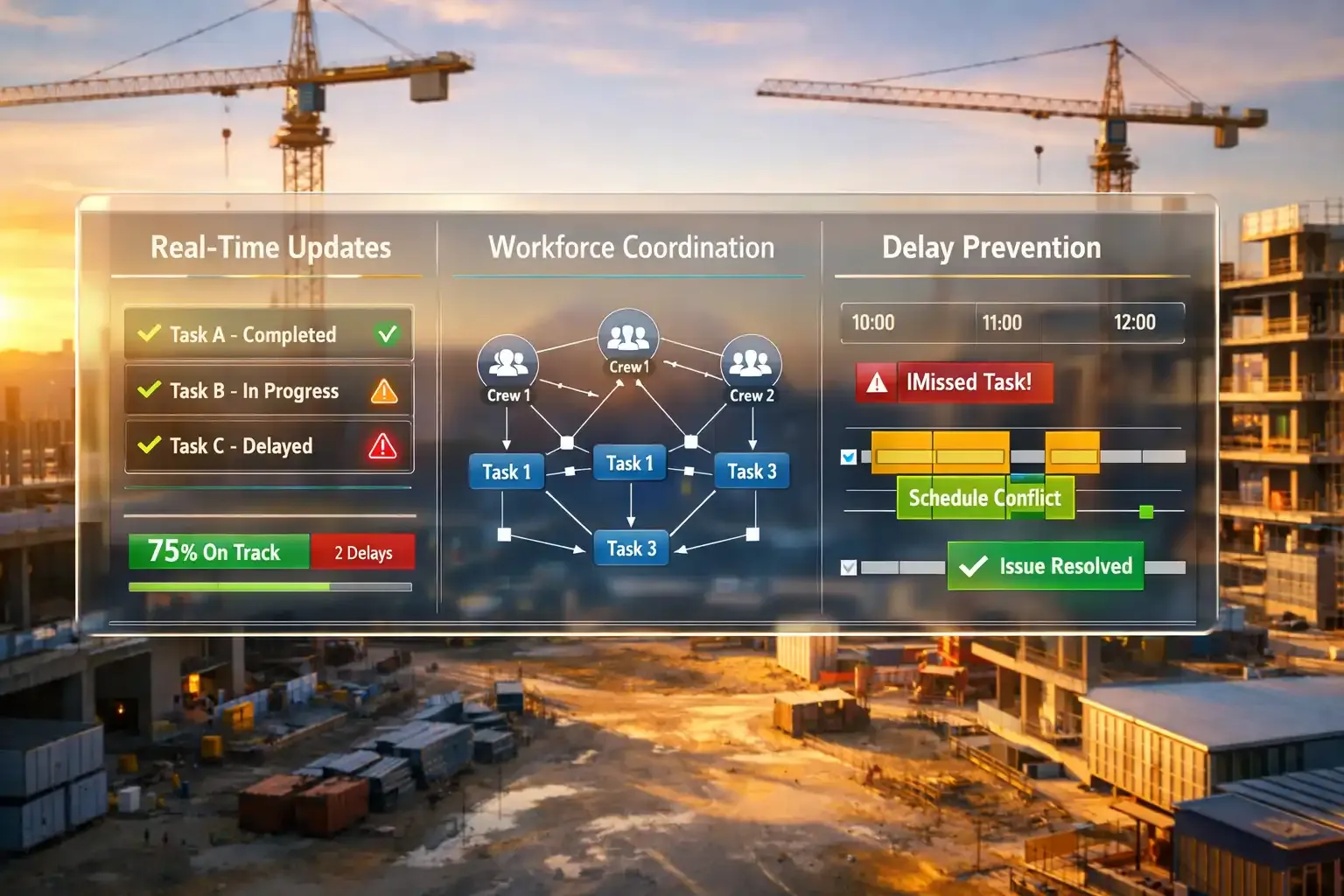
FieldServicely improves construction scheduling by turning your plan into something you can actually manage day to day. Instead of static timelines, it keeps everything connected to real work happening on-site.
Real-Time Updates
Real-time updates keep your schedule accurate as tasks move forward. Teams can update job status instantly, so you always know what is done and what is delayed.
This removes the guesswork. Instead of waiting for reports, you see problems as they happen and act before they spread.
Workforce Coordination
Workforce coordination becomes easier when everyone follows the same system. FieldServicely lets you assign tasks, track crews, and adjust schedules without confusion.
This is where most projects struggle. When teams don’t know where to go or what to do next, time gets wasted quickly.
Delay Prevention
Delay prevention becomes practical when issues are visible early. FieldServicely highlights missed tasks, overlaps, and gaps in the schedule.
This helps you fix small problems before they turn into major delays. When your schedule stays updated and connected, projects run more smoothly and stay under control.
Manage your schedule with FieldServicely
Track tasks, crews, and updates in real time
Conclusion
Construction scheduling is about managing moving parts in a way that keeps the project stable under real conditions. The difference comes from how well you adapt, track, and coordinate work as things change. When the right methods, tools, and strategies come together, scheduling becomes easier to control.
Frequently Asked Questions
What is the difference between construction planning and scheduling?
Construction planning focuses on what needs to be done, including scope, resources, and strategy. Construction scheduling focuses on when and in what order tasks should happen. In simple terms, planning sets the direction, while scheduling defines the timeline.
What makes a good construction schedule?
A good construction schedule is clear, realistic, and regularly updated. It includes accurate task durations, proper dependencies, and aligned resources. It also adapts to changes instead of staying fixed.
How often should a construction schedule be updated?
A construction schedule should be updated regularly based on actual progress. Most teams update it daily or weekly to reflect delays, completed tasks, and changes. Frequent updates help catch problems early.
What happens if a construction schedule is not followed?
A construction schedule failing leads to delays, cost overruns, and team conflicts. Tasks overlap, resources get wasted, and the project becomes difficult to control. Small issues quickly turn into larger problems.
What tools are commonly used for construction scheduling?
Construction teams use tools like Gantt chart software, project management systems, and scheduling platforms. These tools help visualize timelines, track progress, and coordinate teams more effectively.