- GPS Tracking for Field Service
Benefits of GPS Time Clock: Prevent Time Theft & Cost
Updated on 31 Mar 2026
Jump to
Summary

GPS time clocks replace guesswork with real-time, location-based tracking to improve accuracy and control.
Businesses reduce payroll loss and eliminate fake entries by validating actual work hours and locations.
Managers gain instant visibility into teams, which improves decisions, planning, and daily operations.
Employees benefit from fair pay, fewer disputes, and better transparency in work records.
Overall efficiency improves as automation cuts admin work and helps teams allocate resources smarter.
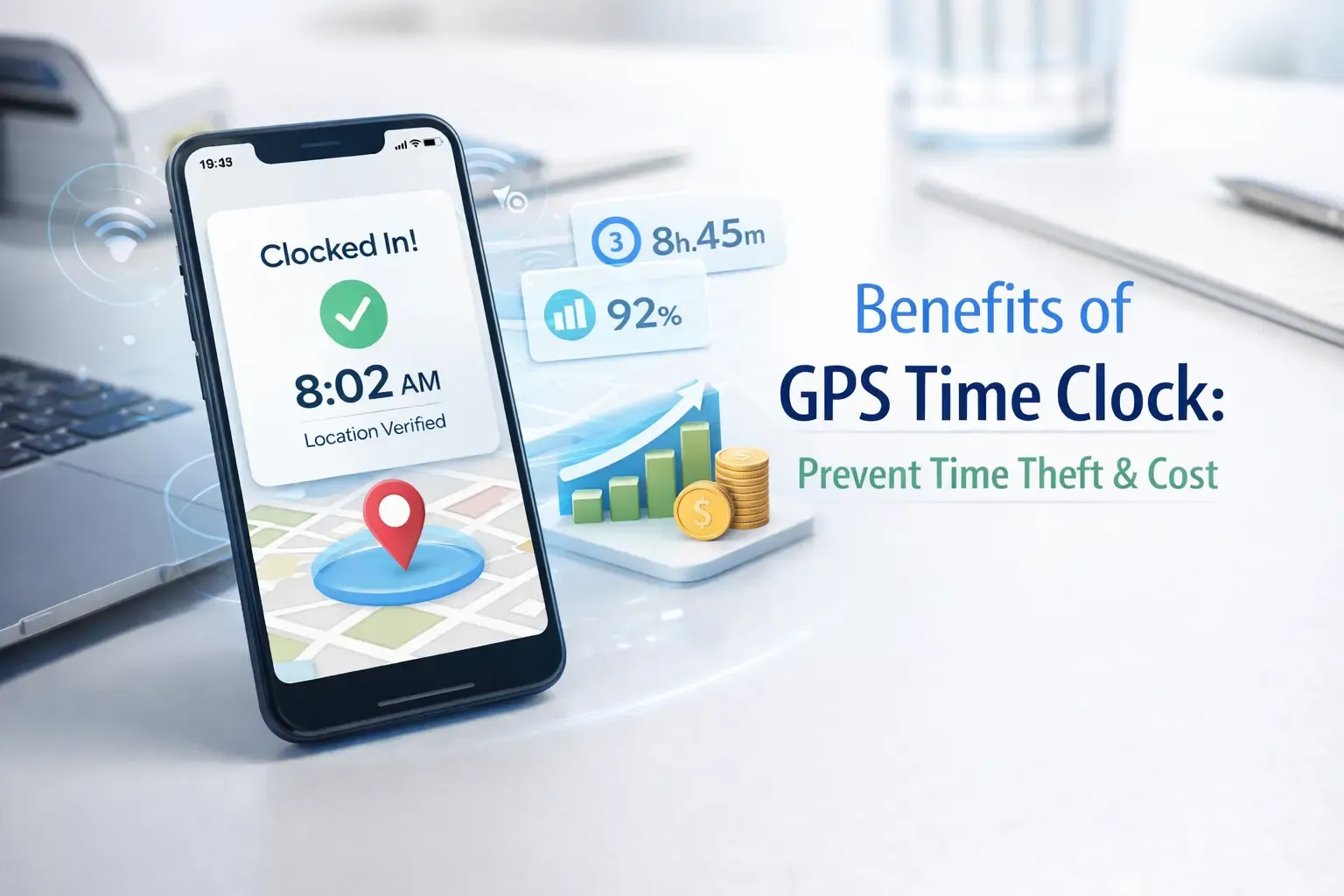
The benefits of a GPS time clock is it helps businesses track work hours accurately while reducing hidden costs.
Many companies still rely on manual timesheets or basic apps. But these methods often lead to payroll errors, time theft, and poor visibility into employee activity.
Think about it. How often do you question if hours logged actually match the work done? Or struggle to know where your field team is during the day?
GPS time clocks solve these problems by combining time tracking with real-time location data. This gives managers control while keeping records accurate and transparent.
In this blog, we will break down the real benefits of GPS time clocks and how they impact your business. We will also help you understand if it is the right solution for your team.
Key Benefits of GPS Time Clock for Businesses
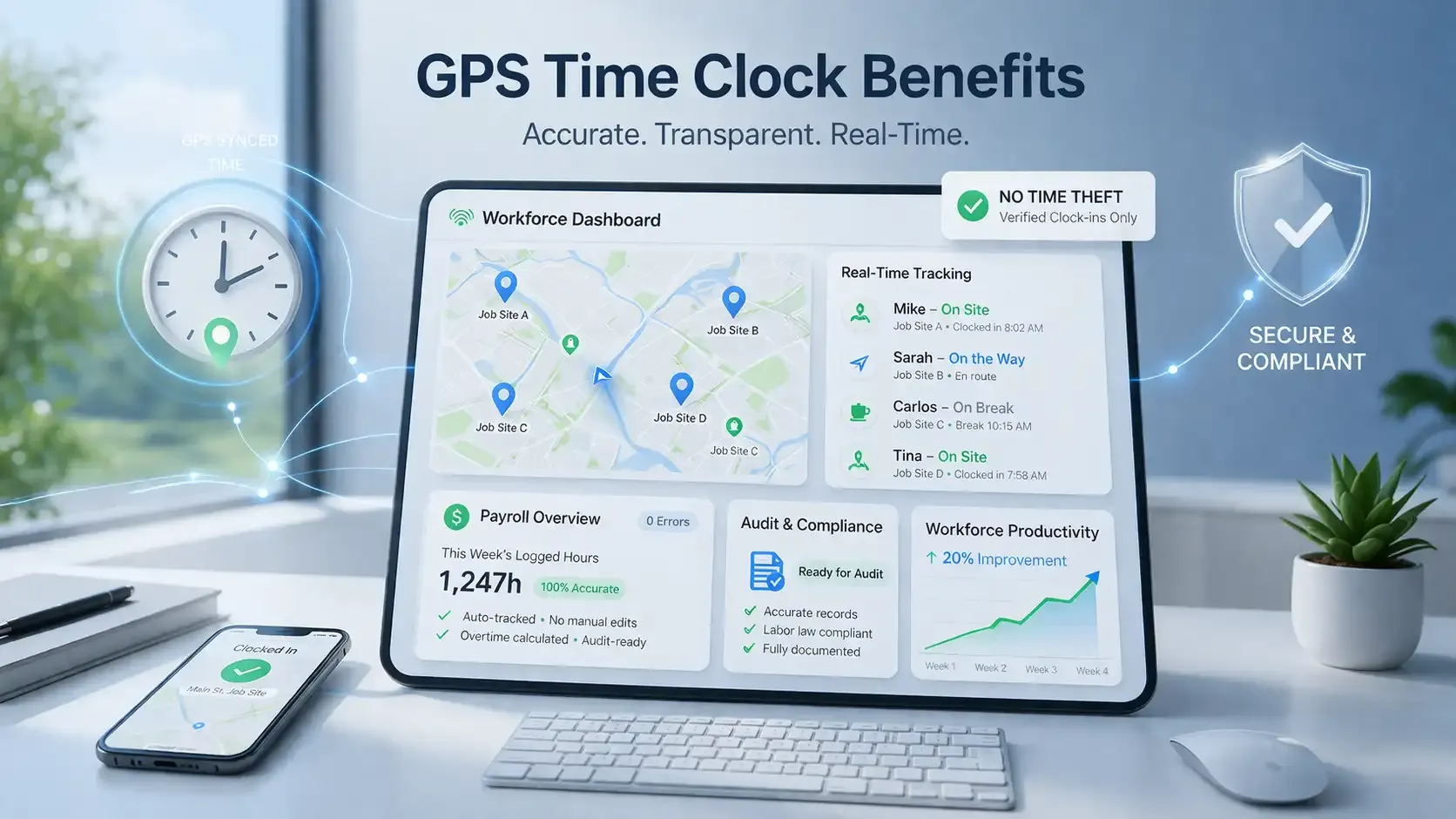
Benefits of GPS Time Clocks for Managers
Improved Payroll Accuracy and Cost Control
I used to believe payroll errors were just part of running a business. A few extra minutes here, a missed clock-out there. Nothing serious, right?
But when I actually checked the numbers, it wasn’t small at all. 53% of companies faced payroll penalties due to errors. That’s real money leaving your business.
GPS time clocks don’t “estimate” hours. They record the exact time and exact location. And honestly, once I saw clean payroll reports for the first time, I stopped worrying about overpayments altogether.
Reduced Time Theft and Buddy Punching
Have you ever had that gut feeling someone clocked in… but wasn’t really there yet? I had that feeling too. And it turns out, it’s not paranoia.
24% of employees admit to manipulating reported work hours.
GPS time clocks change the game here. If someone is not physically at the job site, they simply cannot clock in. It’s that simple. And buddy punching was finally gone. Because no one can fake a location.
Enhanced Workforce Visibility in Real Time
Managing a field team without visibility feels like guessing in the dark. You keep calling. You keep checking. And still, you’re not sure what’s actually happening.
And it slows everything down.
With employee GPS tracking, you open a dashboard and instantly see where everyone is. You don’t need to chase updates. You already have them.
Increased Accountability Without Micromanagement
Here’s the tricky part. You want accountability, but you don’t want to feel like a micromanager.
So how do you balance that?
GPS time clocks solve this quietly. They create automatic proof of work without constant supervision. Every entry has a time and location attached. No arguments, no back-and-forth.
And the interesting part? Employees don’t push back as much. Because the system feels fair, not intrusive.
Streamlined Compliance and Audit Readiness
Compliance sounds boring until it becomes a problem. Then it becomes expensive.
Labor laws now expect accurate records for hours, overtime, and breaks. Missing or inconsistent data can quickly turn into penalties.
GPS time clocks handle this automatically. According to research, an AI-driven audit model achieved 95.7% accuracy in identifying low-risk filings.
So instead of scrambling during audits, you already have everything documented and ready.
Improved Job Site and Field Operations Management
Let’s say you’re managing multiple job sites. How do you know which site is understaffed right now?
Without real-time data, you’re guessing. And guesses cost time and money.
GPS tracking shows exactly who is working where and for how long. According to a report, companies using advanced field service management systems saw 20% improvement in workforce productivity.
That’s when I started making decisions based on actual data, not assumptions. And that changed everything.
Better Customer Service Through Accurate ETAs
How many times have you heard this from a client: “Where is your team right now?”
I used to hear it all the time. And honestly, I didn’t always have a clear answer.
GPS tracking fixes that instantly. You can see where your team is and give accurate arrival times. That’s important because 88% of customers expect real-time updates.
When you start giving precise ETAs instead of vague answers, customers notice. And they trust you more.
Get full visibility into your team without constant follow-ups.
See real-time locations and work activity so you can manage faster without chasing updates.
Benefits of GPS Time Clocks for Team Members
Improved Payroll Accuracy and Fair Payments
Now flip the perspective for a second.
If you were an employee, what would matter most? Getting paid correctly. Every single time.
GPS time clocks make sure every minute worked is recorded. No missing hours, no manual corrections.
And when employees see their exact logged time, they stop second-guessing payroll. That builds trust fast.
Reduced Disputes Over Work Hours
Ever seen arguments over timesheets? Well, it’s messy and unnecessary. GPS tracking removes that completely. Every entry has proof from time to location and everything.
Once I implemented this, those conversations disappeared almost overnight.
Enhanced Time Management for Daily Work
Manual tracking relies too much on memory. And let’s be honest, people forget. Missed clock-ins, late entries, messy records. It happens all the time.
GPS time clocks simplify this. Employees clock in from their phone, often with reminders or automation. And once they see their own work patterns, they naturally manage time better.
Increased Transparency and Trust
Here’s a concern I had early on. Would employees feel like they’re being watched?
Surprisingly, the opposite happened.
When employees can access their own time data, the system feels transparent. Not controlling. And that transparency reduces tension because everything is visible and fair.
Improved Safety and Location Awareness
Now think about teams working in remote or risky locations. What happens if something goes wrong?
Without location data, response time slows down. And that can be dangerous.
GPS tracking provides real-time location visibility. According to research, location tracking improves response time during workplace incidents.
Knowing someone can locate you quickly adds a layer of safety that employees actually appreciate.
Faster Payments and Fewer Delays
Payroll delays usually don’t happen because of bad intent. They happen because of missing or incorrect data.
Timesheets are incomplete. Entries are unclear. Someone forgot to submit something.
GPS time tracking fixes this by automating everything. Data is already there, ready to process. And when payroll runs smoothly, employees get paid faster.
Better Work-Life Balance Through Accurate Tracking
Staying 10 minutes late every day doesn’t feel like much. Until you calculate it over a month. GPS time clocks capture every minute worked, including overtime. That ensures employees are paid fairly.
And when work hours are clear, managers can also prevent burnout by balancing workloads better.
Take control of your daily work hours easily.
Clock in from your phone and track your time automatically.
Real Cost Savings: ROI of GPS Time Tracking
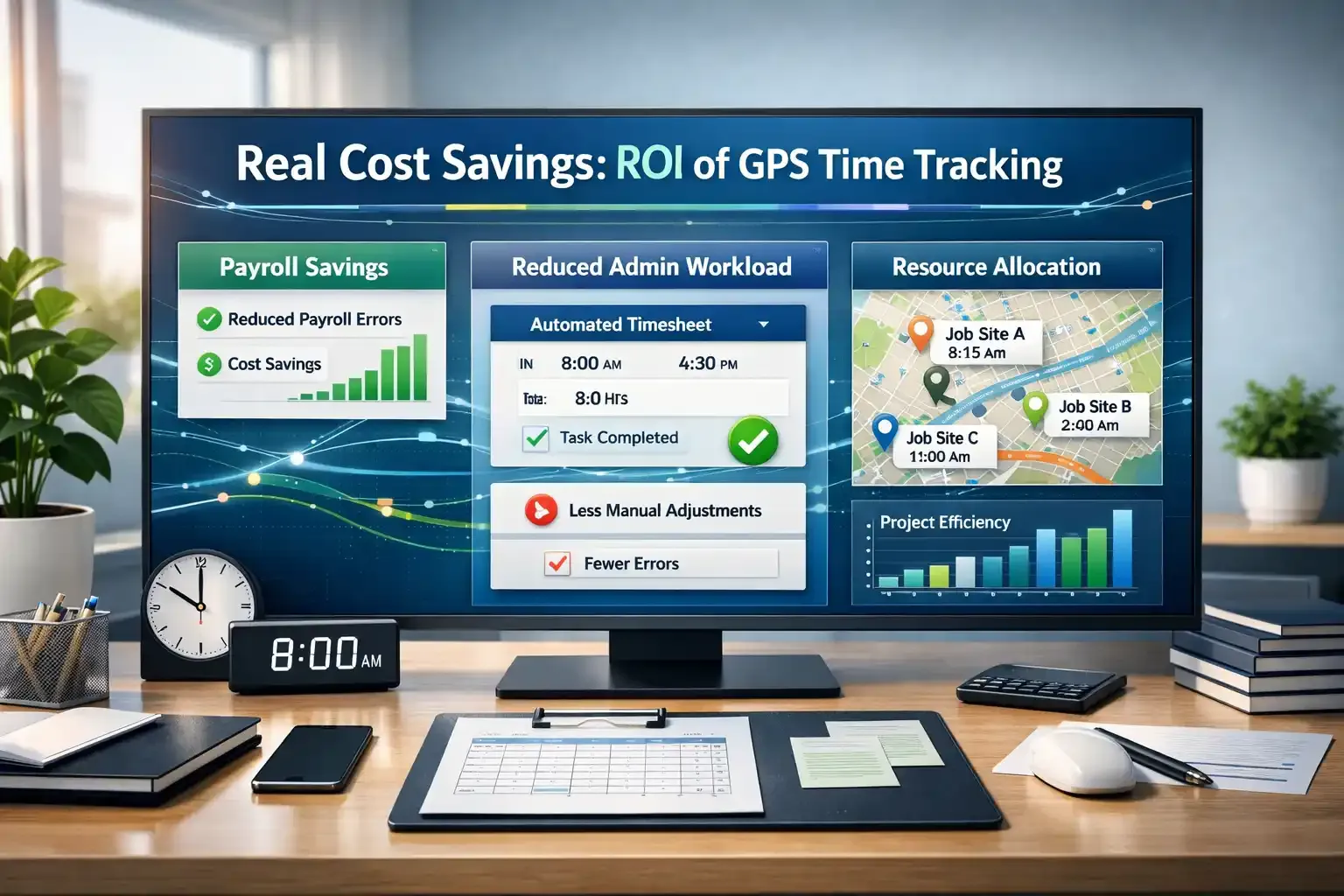
Payroll Savings
Payroll savings come from removing small errors that add up over time. A 2025 UKG Workforce Institute report shows inaccurate time tracking still drives major payroll leakage across hourly businesses.
GPS time tracking fixes this by capturing the exact time and location together. This means no early clock-ins, no extended breaks counted as work, and no manual adjustments later.
Reduced Admin Workload
Admin workload drops when time tracking becomes automatic. According to research, companies reduce administrative effort by up to 30% with automation tools.
GPS time clocks remove manual timesheets, email follow-ups, and corrections. Employees clock in once, and the system records everything in real time.
This changes how teams work daily. Payroll teams stop fixing errors, and managers stop chasing missing entries.
Better Resource Allocation
Resource allocation improves when decisions rely on real data instead of guesswork. GPS time tracking shows exactly who is working, where they are, and how long tasks take. This allows managers to shift teams based on actual demand.
Cut down hours wasted on manual admin work.
Automate time tracking and remove timesheets, follow-ups, and constant corrections.
Who Should Use GPS Time Clocks (And Who Shouldn’t)
.webp?2026-03-31T11%3A22%3A38.254Z=&w=3840&q=100)
Who Should Use GPS Time Clocks
- Field service teams need GPS to verify job site attendance and reduce payroll fraud.
- Construction companies benefit from tracking multiple sites and labor in real time.
- Delivery and logistics teams use GPS to confirm routes and improve timing.
- Home healthcare providers need it to verify visits and ensure accurate billing.
- Remote teams use GPS to confirm work location and improve coordination.
- Businesses with buddy punching issues use GPS to prevent fake clock-ins.
- Companies focused on payroll accuracy use GPS to eliminate manual errors.
Who Shouldn’t Use GPS Time Clocks (Consider Alternatives)
- Office or retail teams don’t need GPS because work happens in one location.
- Creative roles don’t benefit since performance depends on output, not hours.
- High-trust cultures may avoid it to prevent morale issues.
- Small teams may not need it if basic tools already work well.
Businesses without clear policies risk confusion and resistance.
How to Choose the Right GPS Time Clock Solution
Choosing the right GPS time clock is not about popularity. It is about how well it fits your team’s daily work.
Features to Look For
- Geofencing ensures clock-ins happen only at job sites.
- Simple mobile apps help teams clock in quickly.
- Offline mode saves data in low-network areas.
- Payroll integration removes manual errors.
- Real-time tracking shows instant team activity.
- Scalability supports team and business growth.
How to Choose the Right One
- Identify your main problem first.
- Test the tool with real workflows.
- Check how easy it is to use.
- Focus on fit, not feature count.
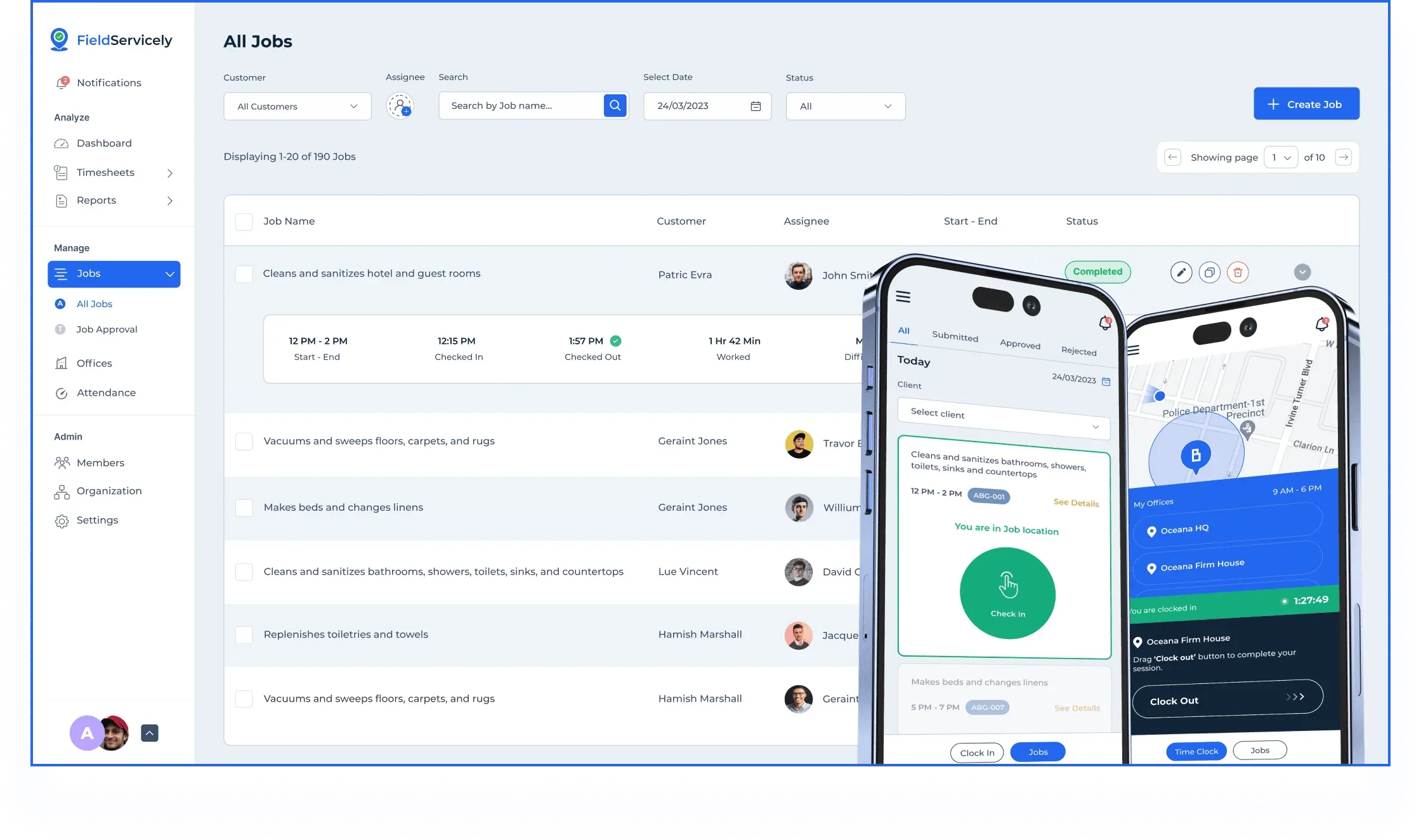
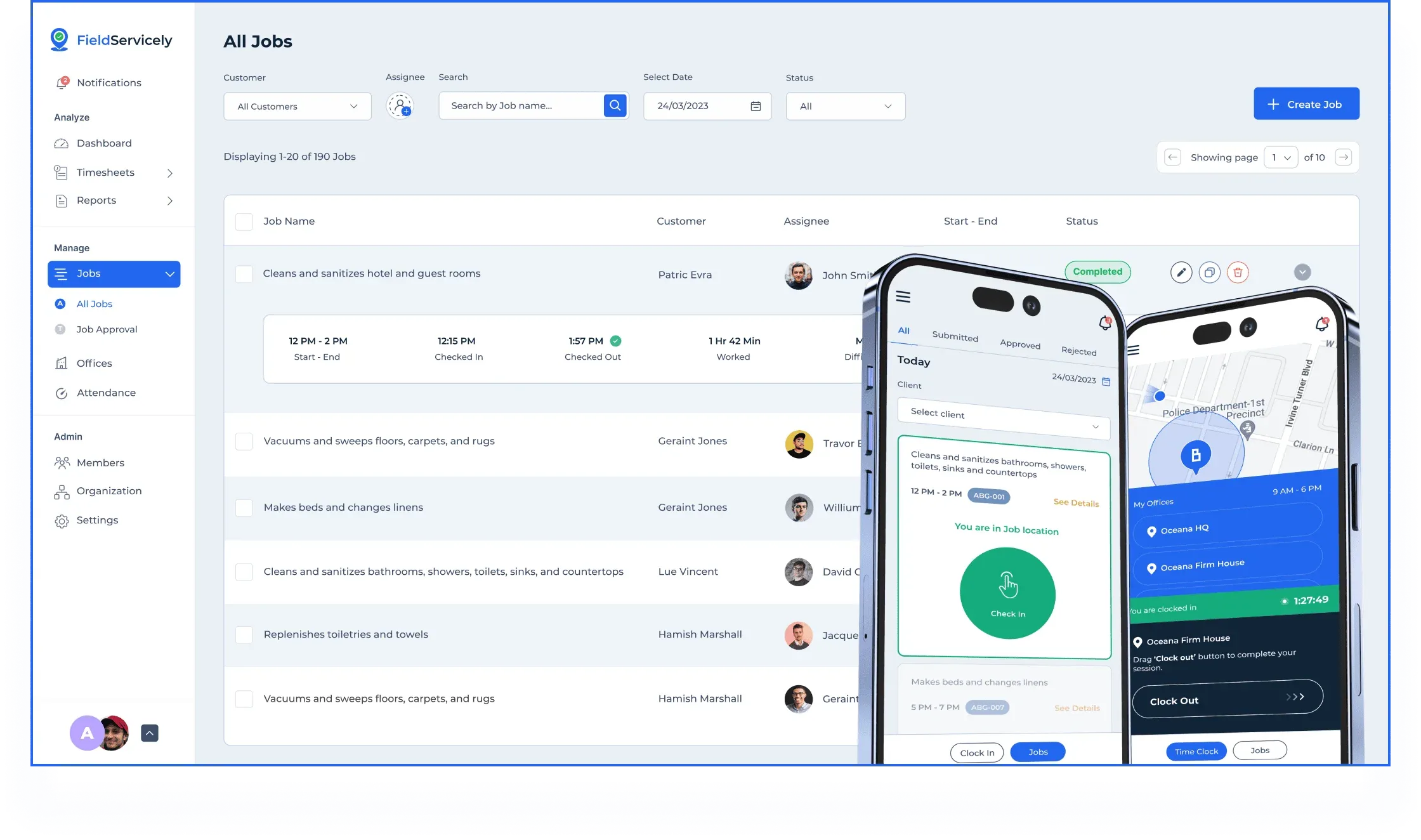
FieldServicely works well for teams needing tracking and job management together. It combines GPS tracking, scheduling, and real-time visibility in one place.
It stays simple for employees while giving managers full control. That balance makes it practical for growing teams.
Choose FieldServicely to simplify your GPS time tracking setup.
Get geofencing, real-time tracking, and payroll integration in one system that fits your daily workflow.
Conclusion
The benefits of a GPS time clock go far beyond simple tracking. They help remove hidden costs, improve accuracy, and give you real control over your workforce. From payroll to daily operations, everything becomes clearer and easier to manage. Making the right move here can simplify operations and improve how your business runs every day.
Frequently Asked Questions
Is GPS time tracking legal for employees?
GPS time tracking is legal if you clearly inform employees and get consent. Most 2025 regulations focus on transparency and proper use during work hours only. You cannot track employees secretly or outside working time.
Does GPS time tracking work without internet?
Most GPS time clocks work even without an internet connection. They store data locally on the device and sync it once the network is available. This ensures no work hours are lost in remote areas.
How accurate is a GPS time clock?
GPS time clocks are generally accurate within a few meters, depending on the device. This level of precision is enough to confirm if an employee is at the job site. It makes location-based tracking reliable for most businesses.
Can employees turn off GPS tracking?
Most systems allow tracking only when employees are clocked in. Once they clock out, tracking stops automatically to protect privacy. This ensures a balance between monitoring and employee trust.
Does GPS tracking drain the phone battery quickly?
Modern GPS apps are designed to use minimal battery power. They track location only during clock-ins or at set intervals instead of continuously. So the battery impact remains low throughout the workday.