- GPS Tracking for Field Service
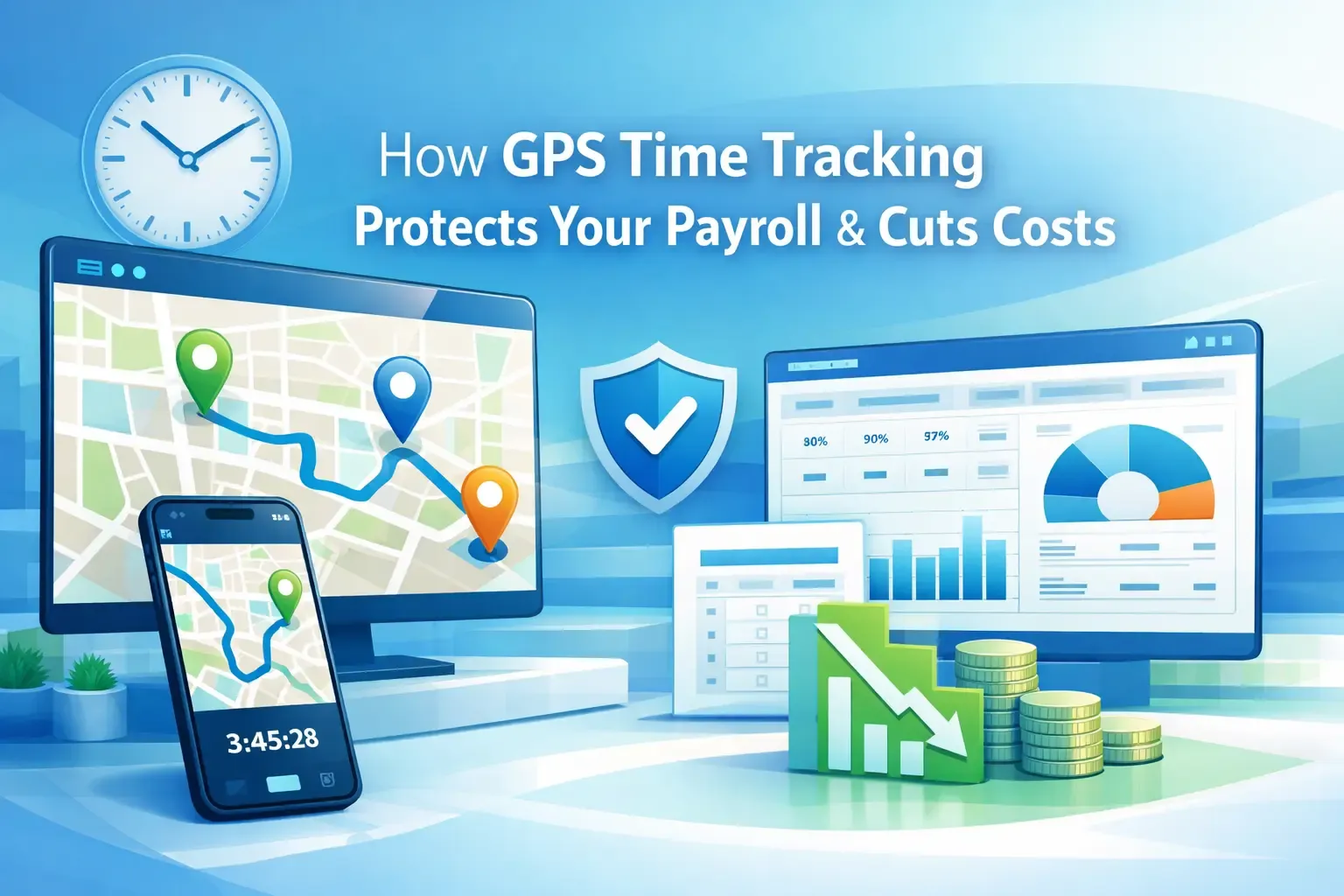
How GPS Time Tracking Protects Your Payroll & Cuts Costs
Updated on 31 Mar 2026
Jump to
Summary

GPS time tracking protects payroll by ensuring only verified work hours get paid
Small payroll errors and time theft quietly drain thousands over time
Linking time with location removes fraud, disputes, and inaccurate job costing
Clear visibility improves compliance, billing accuracy, and workforce control
Accurate data reduces labor costs, saves admin time, and protects profit margins
GPS time tracking protects your payroll by ensuring employees get paid only for verified hours at real job locations. It removes guesswork and replaces it with accurate, location-based data.
Many businesses still rely on manual timesheets or basic clock-ins. These methods fail to show where work actually happens, leading to time theft, payroll errors, and rising labor costs.
Over time, these small issues grow into serious financial leaks and admin headaches. GPS tracking solves this by connecting time with location and automating records.
In this blog, we will explore how GPS tracking protects payroll and reduces hidden costs. So let’s start!
Why Payroll Errors and Time Theft Are Costing You More Than You Think?
Payroll errors and time theft cost more than you think because they quietly drain money, waste time, and damage trust. I’ve seen teams believe their payroll was accurate, only to find small gaps adding up to thousands each month.
It usually starts small. Someone adds a few extra minutes. Someone forgets to clock out. It feels harmless. But over time, these small gaps grow into real losses.
I once worked with a team that found they were overpaying nearly 8 percent on labor without realizing it.
Payroll errors make things worse because they repeat every cycle. According to EY, about 20 percent of payroll records contain errors, and each one costs around $291 to fix. That means even a small team can lose thousands just correcting mistakes.
Then comes time theft. According to a case study in the U.S., businesses lose $373 million/year due to buddy punching. And these losses are constant.
What surprised me most was the impact on people. One payroll mistake can break trust fast. 53% of employees would consider leaving if payroll problems continue.
How GPS Time Tracking Directly Protects Your Payroll
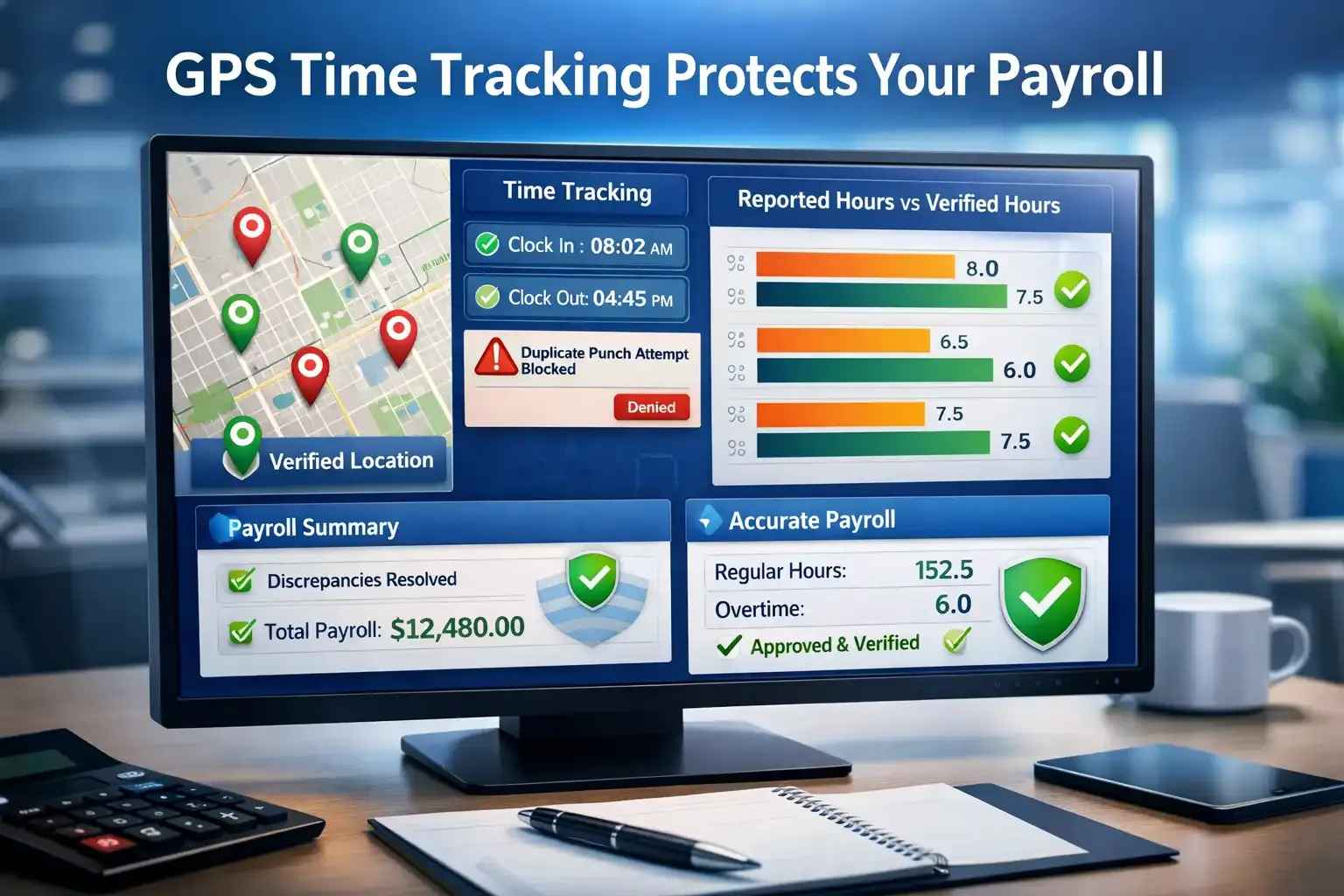
I didn’t realize how much payroll was leaking until I actually sat down and compared “reported hours” with “real work.”
But the moment we introduced GPS time tracking, everything changed. Here’s how GPS time tracking protects your payroll:
Stops Buddy Punching
Buddy punching was something I used to think only happened in large teams. But I was wrong.
I noticed a strange pattern. Two employees always clocked in at the same second. Every single day. Once we switched to GPS-based clock-ins, that pattern disappeared instantly.
Why? Because the system required physical presence. The system simply removed the possibility.
That’s what I liked the most. You don’t have to act like a supervisor watching over everyone. The system enforces the rule silently.
And according to recent workforce data, time theft drains U.S. businesses around $400 billion per year. That means this is not a small issue. It’s everywhere.
Prevents Hour Padding
I always assumed employees tracked time honestly. What I didn’t realize was how much time rounding happens naturally.
Someone works 7 hours and 40 minutes. They log 8 hours. Someone finishes early but forgets to clock out. Someone adds a few minutes because it’s close enough.
When you multiply that across a team, it becomes expensive.
After switching to the GPS tracking app, we saw the reported hours drop. Not because people worked less, but because time was no longer estimated.
Verifies Work Hours
Before GPS tracking, verifying work hours felt like shooting in the dark.
If a client said, “Your technician came late”, we had to check the timesheets and ask the employee. Sometimes the answers didn’t match.
Now, it’s simple. We open the dashboard and check:
- When the employee clocked in
- Where they were
- How long did they stay
That’s when I realized GPS tracking doesn’t just protect payroll. It protects your team as well. Because now, they have proof of their work.
Reduces Payroll Disputes
Payroll disputes used to be part of the routine.
Someone says they worked extra hours. Payroll says the system shows less. Then HR steps in. Then it turns into a back-and-forth.
It takes time. It creates tension. And honestly, it drains energy.
After GPS tracking, those disputes almost disappeared. Because now, everyone sees the same data. There’s no “my version” vs “your version.” There’s just one source of truth.
Blocks Unworked Payments
This was the biggest eye-opener for me. We weren’t paying for fake hours. We were paying for unverified hours.
You can only clock in at the job location. You can’t log time from somewhere else. And if you leave early, the system captures it.
I remember reviewing payroll after implementing GPS tracking. The total labor cost dropped slightly. Not drastically, but noticeably. That’s when I realized how much we were overpaying without even knowing.
Ensures Accurate Wages
Once your time data is clean, payroll becomes simple.
Before, we spent hours reviewing entries. Checking overtime. Fixing inconsistencies. Even then, mistakes slipped through.
Now, the process feels different. Hours are calculated based on actual work. Over time is clear. Payroll runs faster.
In my case, we saved around 3 to 4 hours every payroll cycle. But more importantly, we stopped questioning the numbers. That’s a big deal.
Hidden time leaks add up faster than you think
Capture exact work hours and locations with GPS time tracking
Key Payroll Risks GPS Tracking Helps You Eliminate
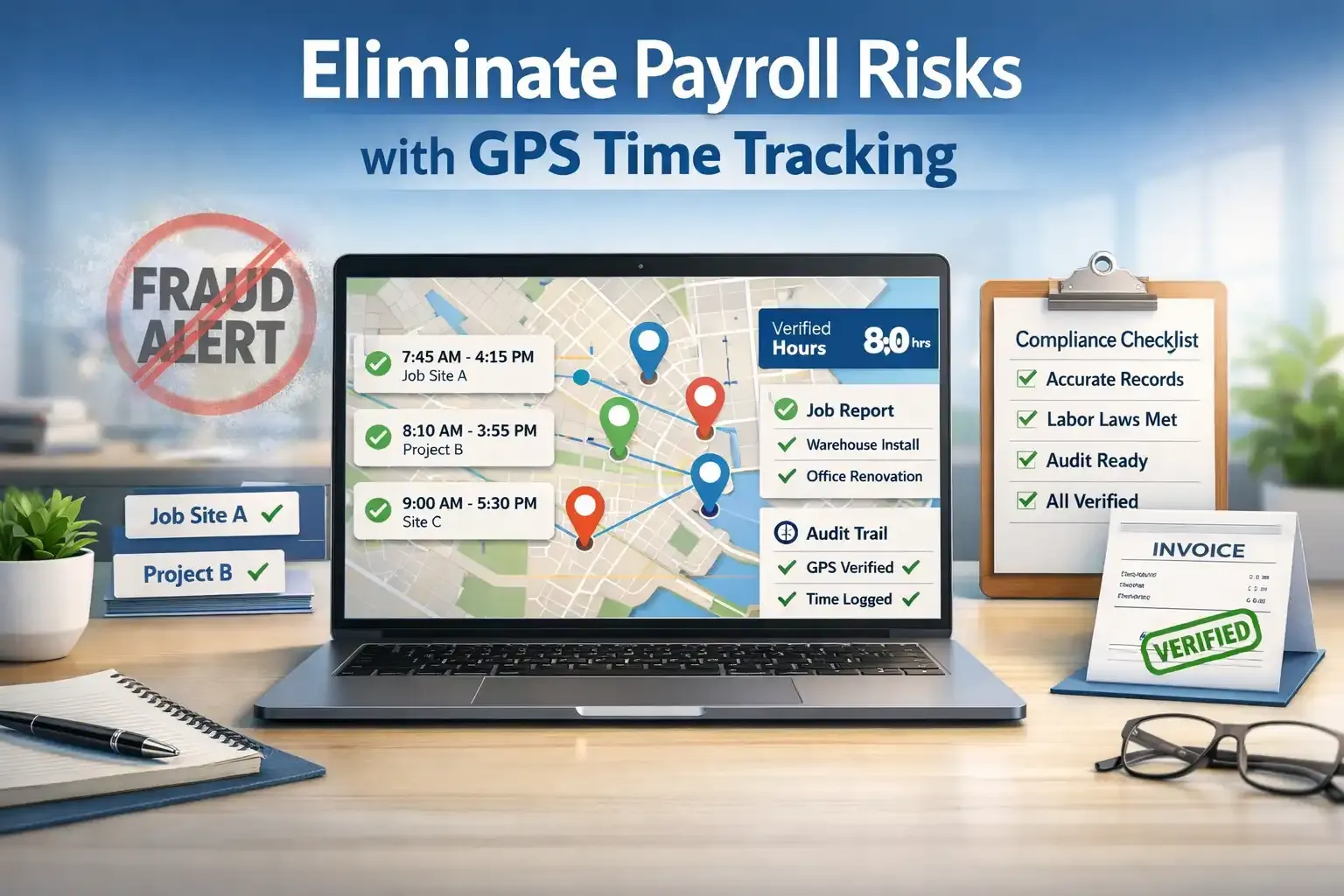
Payroll Fraud Risks
Payroll fraud happens when systems accept time without proof. I’ve seen teams where no one openly cheated, yet payroll kept increasing month after month.
In one case, a few employees consistently logged slightly higher hours than others doing the same work. It didn’t look serious. But once GPS tracking was introduced, those extra hours vanished.
That’s when it became clear. The issue was a lack of verification.
According to a report, organizations still lose 5% of revenue annually due to occupational fraud. When time is tied to location, that gap closes. You simply can’t log hours from a place you were never at.
Job Costing Errors
Job costing errors happen when time is not linked to the correct work. I’ve worked on projects that looked profitable until we reviewed the actual labor distribution.
The numbers didn’t match reality. Workers were logging hours under the wrong jobs because manual entry made it easy.
Once GPS tracking came in, time started aligning with job locations automatically. We could finally see which jobs were over budget and which ones were actually profitable.
That shift turns job costing from guesswork into something you can trust.
Compliance Issues
Compliance risks appear when payroll records cannot be verified. Companies face stress during audits even when their reports look complete. The issue was simple. They had records, but no proof behind those records.
GPS tracking changes that completely. Every entry now includes both time and location, which creates a verifiable audit trail.
Labor laws require accurate tracking of hours, overtime, and wages. Without verified data, even small errors can trigger penalties.
Client Billing Disputes
Client disputes happen when work cannot be clearly proven. This happens in service businesses where invoices get questioned regularly.
A client says the job took less time. The timesheet says otherwise. Now you’re stuck explaining without evidence.
With GPS tracking, that situation changes. You can show exactly when the employee arrived, where they worked, and how long they stayed. Once clients see proof, the conversation becomes shorter and much easier.
Wrong job logs distort your project costs and reduce profits
Match work hours to job sites automatically with GPS tracking
Real Business Impact: Cost Savings and Profit Protection

I didn’t fully understand the financial impact of GPS time tracking until I saw the numbers change in real time. Here’s the real business impact I noticed:
Cuts Labor Costs
GPS time tracking cuts labor costs by removing unverified hours from payroll. Teams can drop labor costs within the first month after switching, because reported hours become accurate.
Did you know that automated tracking can reduce payroll errors by up to 60%?
Once time is tracked automatically, you stop paying for time that was never actually worked.
Improves Profit Margins
GPS tracking improves profit margins by aligning labor costs with actual work output. When payroll reflects real hours instead of estimated ones, project profitability becomes clearer.
Incorrect time data often hides margin erosion. Projects appear profitable while labor silently exceeds planned budgets.
According to a journal, improved workforce visibility improves labor planning accuracy by 22%. When labor cost matches actual work, margins stabilize and become predictable.
Saves Admin Time
GPS time tracking saves admin time by removing manual payroll processes. When time data flows directly from field tracking to payroll systems, there is no need for repeated verification or corrections.
Manual payroll requires checking timesheets, fixing errors, and resolving mismatches. Automated systems remove those steps entirely.
Even payroll automation can reduce processing time by up to 50%. That time shifts from correction work to productive business tasks.
Improves Cost Forecasting
GPS time tracking improves cost forecasting by providing real, historical labor data. When businesses rely on estimates, planning remains uncertain and inconsistent.
Accurate time tracking shows how long tasks actually take and how labor is distributed across projects. This data improves budgeting and pricing decisions.
Real-time labor insights improve forecasting accuracy and support better cost control. With reliable data, forecasting becomes data-driven instead of assumption-based.
Manual payroll processes slow down your operations
Automate time tracking and free up admin hours every cycle
How to Choose the Right GPS Time Tracking Solution
- Choose tools with geofencing, real-time tracking, and offline mode for accurate tracking
- Pick software that syncs directly with payroll to avoid manual entry and errors
- Select simple apps your team can use daily without confusion or training
- Ensure the system can handle more users, projects, and locations as you grow
- Check if the tool reduces labor costs, saves time, and improves payroll accuracy
Fieldservicely already combines GPS tracking, payroll sync, and job data in one place, so you don’t have to piece things together manually. It naturally fits teams that want accuracy without adding complexity.
Conclusion
GPS time tracking is a control system for your payroll and labor costs. When time, location, and work data stay connected, errors drop, and decisions improve.
Instead of reacting to payroll issues, you start preventing them. That shift protects your margins and keeps operations stable.
As businesses grow, accurate tracking becomes essential. The sooner you move to verified data, the faster you stop hidden losses and gain full control over your workforce costs.
Frequently Asked Questions
Does GPS time tracking invade employee privacy?
No, GPS tracking only works during active work hours. It records location for attendance, not personal movement. Most tools also allow clear policies and controls. This keeps tracking transparent and fair for employees.
Can GPS time tracking work without the internet?
Yes, most GPS systems support offline mode. Data is stored on the device when there’s no connection. Once the internet is available, everything syncs automatically. This ensures no work hours are lost.
Is GPS time tracking suitable for small businesses?
Yes, small businesses benefit the most from accurate tracking. Even small payroll errors impact margins heavily. GPS tracking helps control labor costs early. It also reduces admin work for small teams.
How accurate is GPS time tracking?
GPS tracking is highly accurate, usually within a few meters. This is enough to confirm job site presence. It provides reliable proof of work location and time. That makes payroll and reporting more trustworthy.