- Scheduling and Dispatch
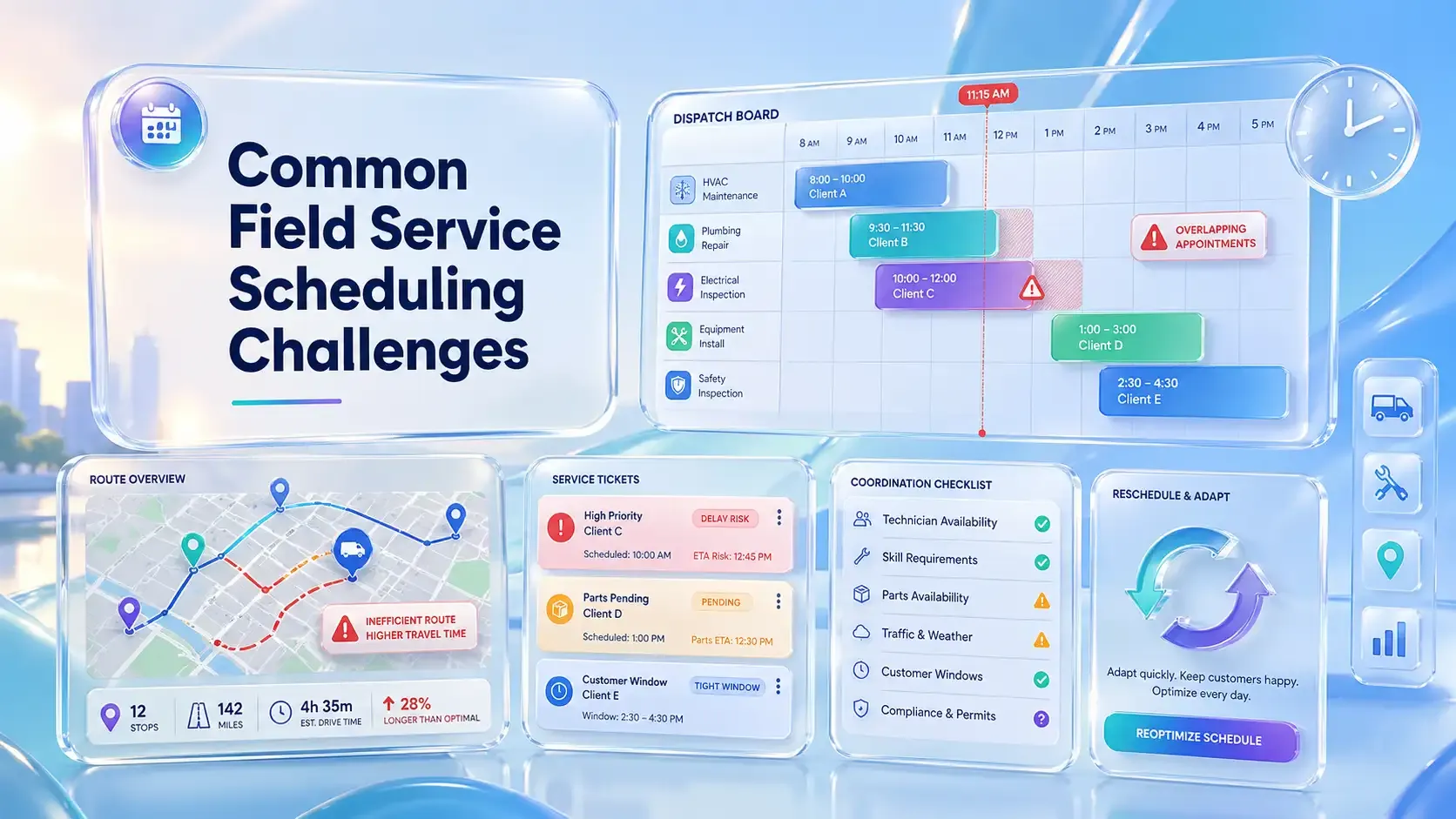
Common Field Service Scheduling Challenges and How I’d Solve Them
Updated on 30 Apr 2026
Jump to
Summary

Scheduling challenges grow quickly with scale, especially due to availability gaps, last-minute changes, and poor communication
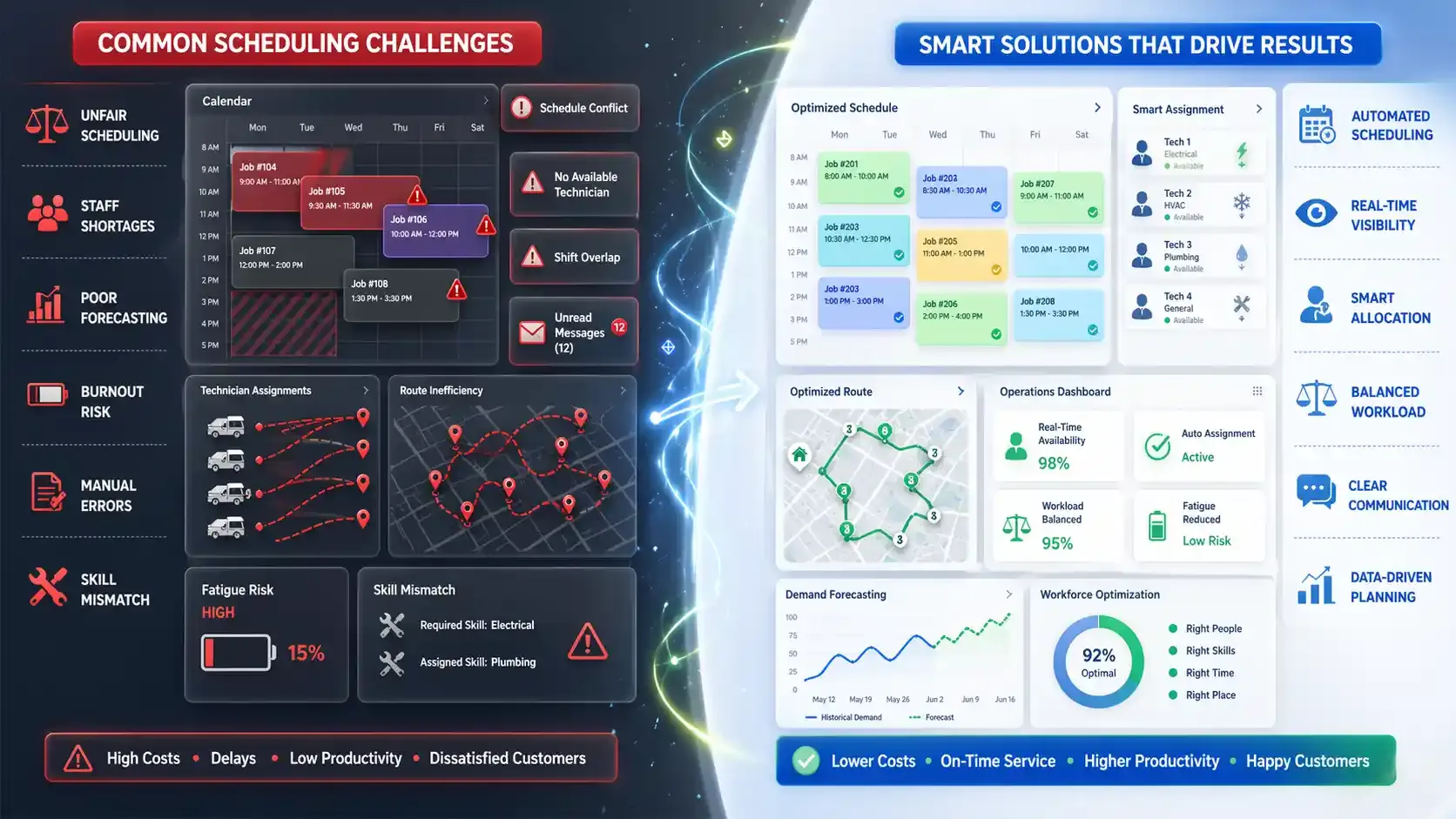
Common issues include unfair scheduling, staff shortages, poor forecasting, burnout, manual processes, and wrong skill assignment
Poor scheduling leads to higher costs, lower productivity, employee burnout, and increased turnover
It also damages customer experience, creates operational chaos, and increases safety risks
The best solutions include automation, planning, better communication, flexibility, and data-driven decisions
Scheduling challenges start small but grow fast as operations scale. What begins as simple shift planning turns into managing employee availability, job priorities, and constant changes.
I’ve dealt with days where one availability issue delayed jobs, last-minute changes forced rescheduling, and communication gaps caused missed updates. These problems increase costs, create confusion, and affect customer trust.
In this blog, we will break down the most common scheduling challenges and why they happen. We will also go through practical ways to solve them and improve scheduling without adding complexity.
Scheduling Challenges Examples
Let’s take it from the top. These issues show up more often than most teams admit.
Double booking is something I see quite often. A technician gets assigned to two jobs at the same time, and the problem only shows up when customers start calling. That’s when the schedule of jobs begins to slip.
Now, last-minute absences add more pressure. Teams struggle when someone calls in sick, and there is no backup ready. One small gap quickly turns into multiple delays.
Then comes the wrong skill assignment. Often, available technicians are assigned without checking the right expertise. This usually leads to rework and wasted time.
And missed updates still happen across teams. Even after sharing changes, someone misses the message and shows up late or at the wrong location.
Now let’s get into the real challenges behind these situations.
Common Scheduling Challenges and How I’d Solve Them
Fairness and Transparency
Unfair scheduling creates tension inside teams very quickly. Employees start questioning decisions when schedules come out late. Or when the same names keep getting preferred shifts.
For example, 62% of dissatisfied employees don’t have a high-quality work schedule. And affects engagement and retention.
The issue usually starts with unclear rules. Managers assign shifts based on urgency or familiarity instead of a structured system. When shift swaps are not allowed, employees feel stuck and disconnected from the process.
How I’d Solve It
I fix this by building transparency into the system. I publish schedules at least two weeks ahead so employees can plan properly. Then I define clear shift allocation rules and allow controlled swaps to keep things fair. That is without losing operational control.
Employee Availability and Shortages
Staff gaps create immediate disruption in field service. One absence can delay multiple jobs because schedules are tightly packed. This becomes more critical when demand is already high.
The real breakdown comes from poor visibility. Teams often don’t know who is available in real time or who can step in. Without backup resources, managers are forced to make rushed decisions.
How I’d Solve It
I solve this by tracking availability continuously. I maintain a backup pool of trained staff who can fill gaps quickly. Then I assign work based on real-time data instead of assumptions. This keeps operations stable even during unexpected changes.
Forecasting Demand
Poor forecasting leads to two costly outcomes. Overstaffing increases labor costs, while understaffing causes delays and poor customer experience.
Both problems reduce efficiency.
The main issue is reliance on guesswork. Many teams do not use historical job data or demand trends when planning schedules. Without data, decisions are based on assumptions rather than facts.
How I’d Solve It
I rely on data-driven planning. I analyze past workload patterns, seasonal trends, and service demand. Then I adjust schedules dynamically so staffing matches actual demand instead of fixed estimates.
Fatigue and Burnout
Overworked teams cannot perform consistently. Long shifts and repeated overtime reduce focus and increase mistakes. Fatigue also raises safety risks, especially in field operations.
Did you know 82% of workers are at risk of burnout?
The causes are usually poor scheduling decisions. Closing shifts and uneven workload distribution push some employees beyond their limits. When rest time is ignored, productivity drops quickly.
How I’d Solve It
I focus on balance and recovery. I enforce proper rest gaps between shifts and avoid back-to-back scheduling. Then I distribute workload evenly across the team so no one gets overloaded.
Manual Processes and Communication
Manual scheduling slows down operations. Teams still rely on spreadsheets, phone calls, and messages to manage schedules. This creates confusion when changes happen.
The failure comes from human error and a lack of real-time updates. Around 40% of employees still depend on email to receive scheduling information, which leads to missed updates and delays.
How I’d Solve It
I move everything into a centralized system. A single platform keeps all scheduling data in one place. Then I use real-time notifications, so every team member receives updates instantly without relying on manual communication.
Skill Matching (Most Overlooked Problem)
Wrong assignments create hidden inefficiencies. Assigning an available technician without checking skills often leads to poor job execution. This results in rework and wasted time.
The issue comes from ignoring skill data. Teams focus on filling slots quickly instead of matching the right expertise. Under pressure, managers prioritize speed over accuracy.
How I’d Solve It
I prioritize skill-based scheduling. I map technician skills clearly and match jobs based on qualifications first. Then I use automated scheduling software like FieldServicely to reduce human error and ensure every job is handled by the right person.
Tired of Unfair Scheduling Complaints?
Bring clarity to every shift, set fair rules, and give your team full visibility with FieldServicely.
What is The Impact of Poor Scheduling?
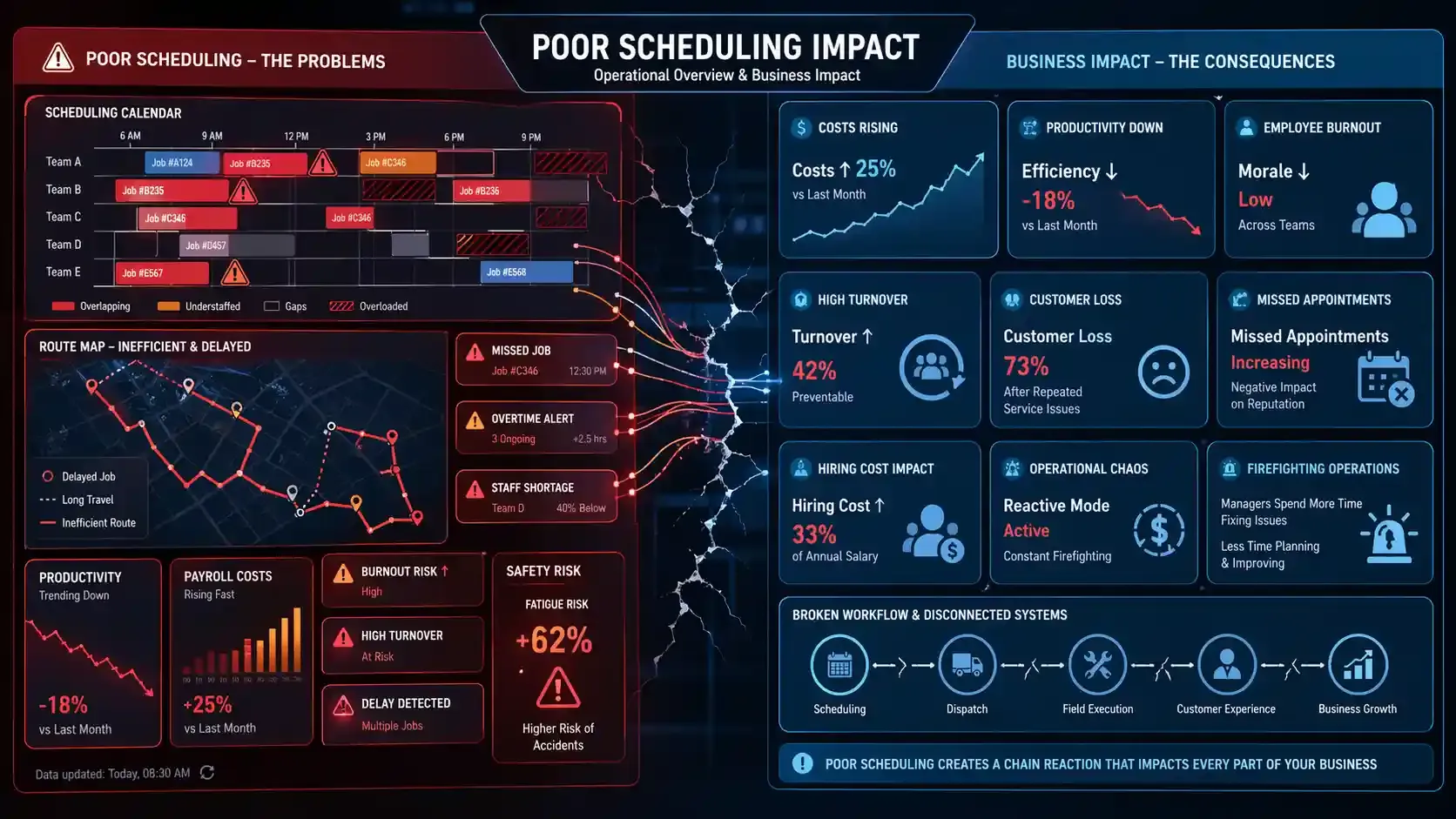
Financial Loss
Poor scheduling increases costs very quickly. Overstaffing wastes payroll, while understaffing forces overtime and missed jobs. This imbalance keeps repeating and slowly eats into profit margins.
And the cost issue does not stay isolated. Poor workforce planning increases labor costs by 15%–25%.
Declining Productivity and Work Quality
That same imbalance starts affecting productivity next. Teams rush work during peak hours and slow down when there is less work, which breaks the workflow. This inconsistency reduces overall efficiency.
This drop in efficiency then impacts quality. Poor scheduling leads to delays, rework, and weak coordination between teams. Poor task alignment can weaken productivity. While better workforce and task design is linked to productivity gains in the 10%–21% range.
Reduced Employee Morale and Burnout
As productivity drops, pressure builds on employees. Unstable schedules and uneven workloads create frustration across the team. That frustration gradually affects morale.
Then it turns into burnout. Long hours and poor rest make it hard for employees to stay consistent.
High Employee Turnover
Once burnout increases, employees start looking for stability elsewhere. Unpredictable schedules make it difficult to maintain a work-life balance. That is when turnover begins to rise.
But 42% of employee turnover is preventable, often stemming from frustration over scheduling.
This creates another problem for the business. Replacing employees adds cost and disrupts team performance. Workforce data shows replacing a worker can cost up to 33% of their annual salary.
Customer Experience and Reputation Damage
As team stability drops, customer experience starts to suffer. Delays, missed appointments, and inconsistent service become more frequent. This directly affects how customers view the business.
Customer behavior reflects this clearly. 73% of customers switch providers after repeated service issues. That loss of trust impacts long-term growth.
Operational Chaos and Constant Firefighting
As customer issues increase, operations become harder to control. Managers spend more time reacting to problems instead of planning work. This creates a constant cycle of fixing issues.
This reactive approach reduces efficiency further. Teams lose structure when every task becomes urgent. That makes long-term improvement difficult to achieve.
Safety Risks and Compliance Issues
As pressure builds across operations, safety risks start to rise. Fatigue from long hours leads to more mistakes, especially in field environments. This puts both employees and the small business at risk.
Even a fatigued worker has an approximately 62% higher risk of accidents!
Fix Productivity Loss from Scheduling Gaps
Align tasks better, reduce idle time, and keep your team working efficiently every day.
Solutions for Scheduling Challenges
- Automated scheduling tools reduce manual errors and improve visibility. Using FieldServicely helps assign the right job to the right person faster.
- Advance planning improves stability. Posting schedules at least two weeks ahead gives employees time to plan and reduces last-minute changes.
- Strong communication keeps teams aligned. A centralized system ensures all schedule updates reach everyone in real time.
- Built-in flexibility supports smoother operations. Allowing controlled shift swaps and availability preferences helps balance workload without disruption.
- Data monitoring strengthens decision-making. Tracking absenteeism and turnover helps identify scheduling gaps before they grow.
Conclusion
Scheduling will never be perfect, and that’s the reality every manager faces. But with the right systems and clear processes, you can stay in control instead of reacting to problems.
Automation reduces errors, clarity keeps everyone aligned, and flexibility helps teams handle change without breaking the schedule. When these elements work together, scheduling becomes more stable and predictable.
Frequently Asked Questions
What is the biggest mistake managers make in scheduling?
The biggest mistake is relying on guesswork instead of data. Many managers create schedules based on habit or urgency, which leads to conflicts and inefficiency. A structured, data-driven approach always performs better.
How often should schedules be updated in field service?
Schedules should be reviewed daily and adjusted when needed. Field operations change fast due to delays, cancellations, or urgent jobs. Regular updates help maintain control without disrupting the entire plan.
Can small teams benefit from scheduling systems?
Yes, small teams benefit even more from proper scheduling. Limited staff means every mistake has a bigger impact. A simple system improves coordination and prevents overload.
How do scheduling challenges affect business growth?
Scheduling issues slow down operations and reduce service quality. Missed jobs and delays lead to lost customers and lower revenue. Over time, this limits business expansion.
What role does technology play in modern scheduling?
Technology helps manage complexity that manual methods cannot handle. It improves visibility, reduces errors, and speeds up decision-making. This makes scheduling more accurate and reliable.
What to read next